
Reviewed · HISTORICAL TOURS
Lisbon: History, Stories and Lifestyle Walking Tour
Lisbon works because it is a city of levels, not just streets. This walk strings together hilltop scenes and historic neighborhoods so you understand how Lisbon grew, rebuilt, and still sings today, even on a short schedule. I like the storytelling pace, where big events get tied to real streets, and I like that you get views built into the route, not just photos at the end. One drawback to plan for is the walking and stairs, since the route moves across steep neighborhoods.
What makes this tour especially useful is that it mixes the practical, orientation stuff with emotional history. You’ll hit places tied to the 1755 earthquake recovery, the Jesuits, and the Carnation Revolution of 1974, then end in Old Lisbon at the Cathedral. With guides like Paulo, Ana, Ricardo, and Ana who keep their groups laughing and moving, the vibe tends to feel small and personal, even when you are in a group.
Key takeaways before you go
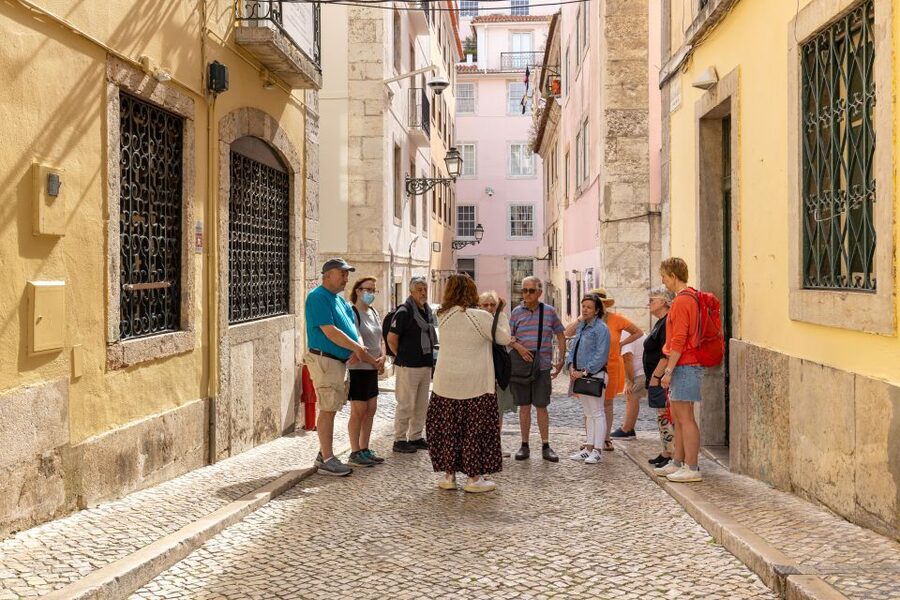
- Bairro Alto and miradouro stops: hilltop outlooks that explain why Lisbon is built the way it is
- A live guide who connects eras: stories that link churches, convents, and political change to street life
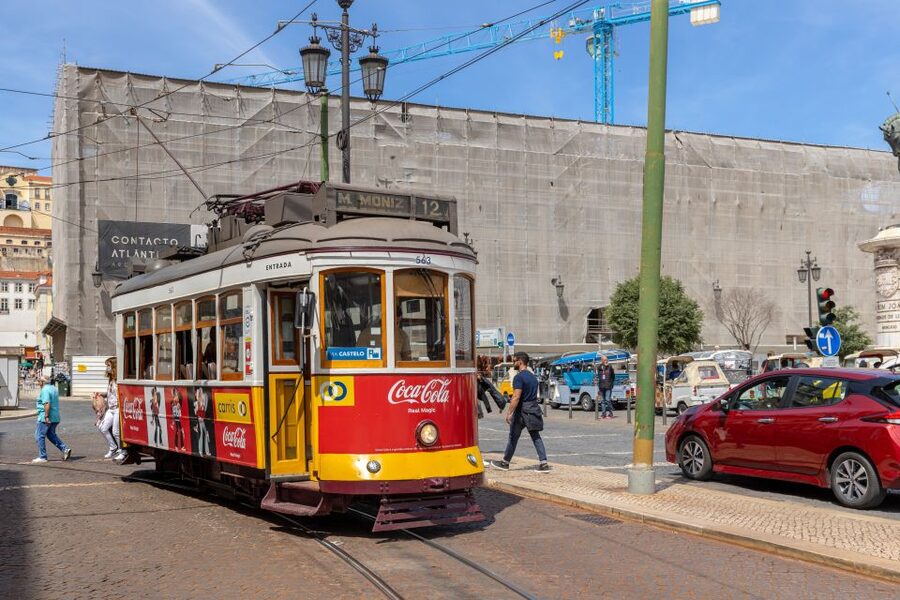
- Tram time is part of the lesson: an iconic ride that helps you “feel” the city’s layout
- Alfama as the oldest stage: fado streets plus the church festival rhythm around St. Anthony
- Coffee and cake included: a real break, not just a box-checking stop
- Good value for 3 hours: highlights plus transport without needing tickets you would otherwise buy
Entering Lisbon the fast way, with real neighborhood texture
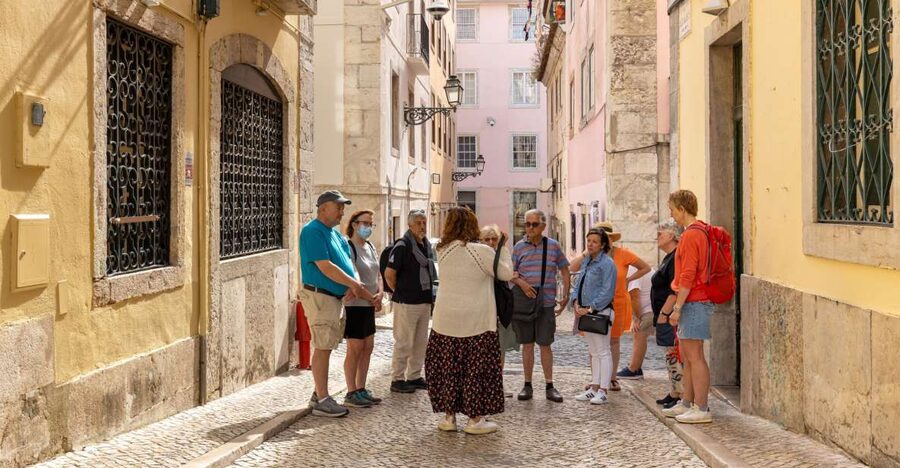
A good short tour should do one thing well, help you orient. This one does that by taking you through Lisbon’s layers, from the older hillside quarters to the oldest streets near the river. In about three hours, you get the big landmarks and the “why here” context that makes the city start to click.
I like that the route feels like a guided walk, not a race. You pause at viewpoints, you step into atmospheric church spaces, and you get a small break with coffee and cake. That matters because Lisbon is a city where your legs work and your brain does too, and this plan respects both.
A practical note: you should expect uphill moments and stone steps. Even if you can walk comfortably for an hour or two, Lisbon’s surfaces and gradients can slow you down, and that can be tiring if you arrive already jet-lagged or dehydrated.
More Historical Tours in Lisbon
- Lisbon: Daytime or Sunset Boat Cruise with History and Wine
★ 5.0 · 1,053 reviews - Explore Lisbon by Tuk Tuk: History and Viewpoints
★ 5.0 · 840 reviews - Private Tuk Tuk Tour Through Lisbon’s Historical Streets
★ 5.0 · 734 reviews
Bairro Alto starts the story, from 16th-century streets to after 1755
You begin in Bairro Alto, a 16th-century neighborhood that helps explain why Lisbon feels like it is built from angles. This is where the city’s evolution becomes visible, because the streets were shaped by waves of people and shifting needs. Your guide frames it in human terms, with what changed in everyday life rather than just dates.
I especially like the earthquake connection, because it turns an event into a city lesson. After the 1755 disaster, parts of Lisbon were repopulated and renewed, and the hills became attractive again for families relocating from other districts. That background gives you a better read on what you see: why some areas feel rebuilt, why others feel older, and why the city’s layout looks the way it does.
Then the tour moves toward the São Pedro de Alcântara garden area. This is one of those places where Lisbon suddenly feels wide and layered, with views toward Baixa and across the south bank of the Tagus. If you are trying to understand orientation quickly, these viewpoint breaks are what make the walking tour feel worth it.
Miradouro São Pedro de Alcântara and the art of pausing for Lisbon views
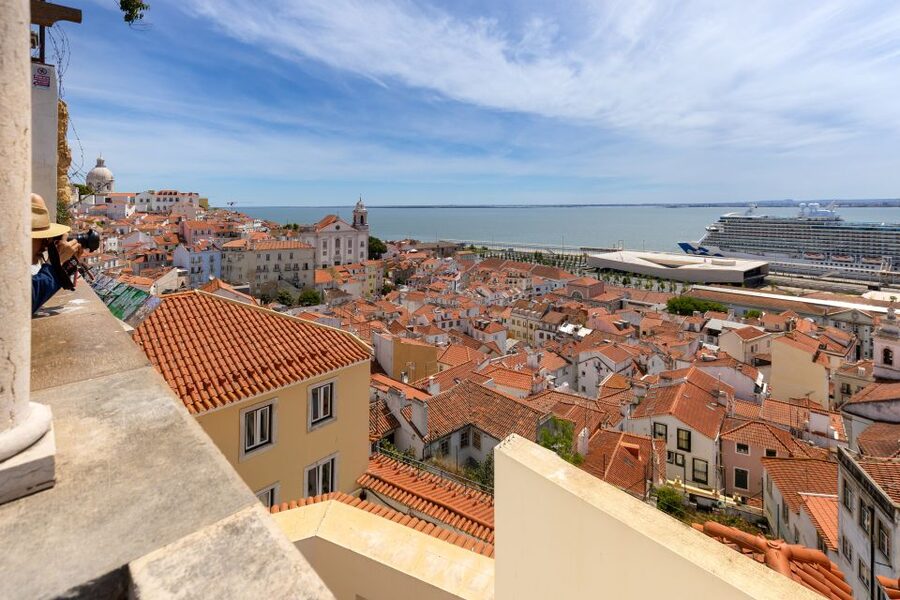
Lisbon viewpoint culture is not just for tourists. It is part of how locals enjoy the city, and this stop is timed well for that reason. From São Pedro de Alcântara, you get a broader map view, so suddenly the streets you walked and will walk connect in your mind.
The tour also keeps the stops picture-friendly, but not only photo-friendly. Your guide uses what you can see to explain the geography and the relationship between hills, neighborhoods, and the river. That is a big deal for first timers, because Lisbon can otherwise feel like a blur of stairs and tiled facades.
If you get light rain or wind, the viewpoints can be a bit exposed. One good sign from past tours is that guides handle weather with flexibility, like when routes shift due to tram issues or pouring rain and the experience stays on track.
São Roque Church: Jesuit austerity outside, baroque inside
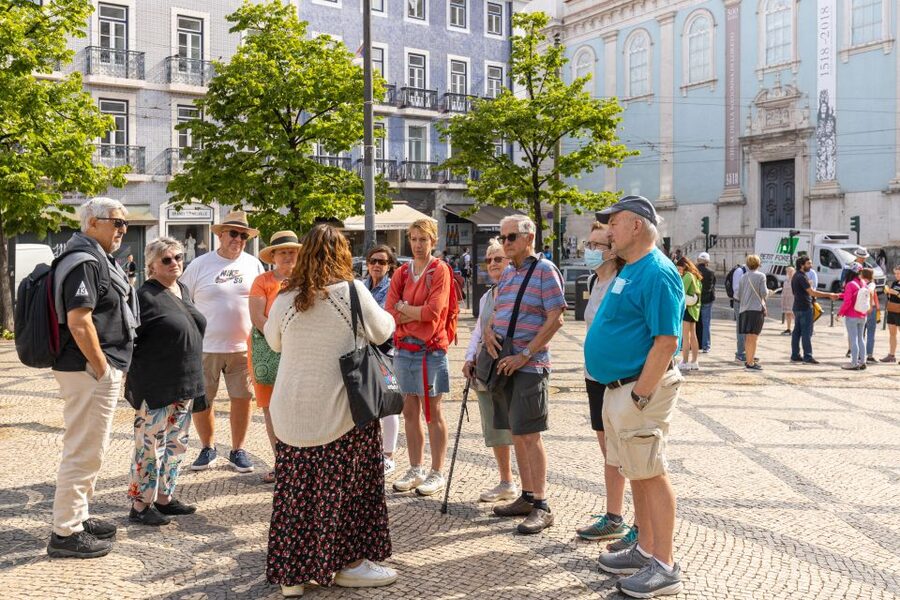
Next comes a church that looks restrained from the outside but rewards you for stepping in. São Roque Church, built by the Jesuits, is a great example of how Lisbon hides visual drama behind plain stone. From the austere facade, you move into a space that turns into a kind of museum experience, with gilding, tiles, and painted works.
This stop is valuable because it gives you a different side of Lisbon beyond the typical photo circuit. You get a feel for how religious art functioned as public storytelling, and how style can reflect power and belief. If you are the kind of traveler who likes your sightseeing with some meaning, this is the part that usually sticks in your memory.
Also, if you have limited time, churches are practical. They are close to other stops, they cool you down briefly, and they offer a structured pause in your walking rhythm.
More Walking Tours in Lisbon
- Best of Lisbon Small-Group Guided Walking Tour
★ 5.0 · 4,869 reviews - Lisbon: Food and Wine Small Group Walking Tour
★ 4.9 · 4,082 reviews - Best of Lisbon Walking Tour: Rossio, Chiado & Alfama
★ 4.9 · 2,700 reviews - Age of Discoveries Walking Tour in Belém
★ 5.0 · 1,513 reviews
Carmo Convent and Church: Gothic architecture with a 1974 turning point
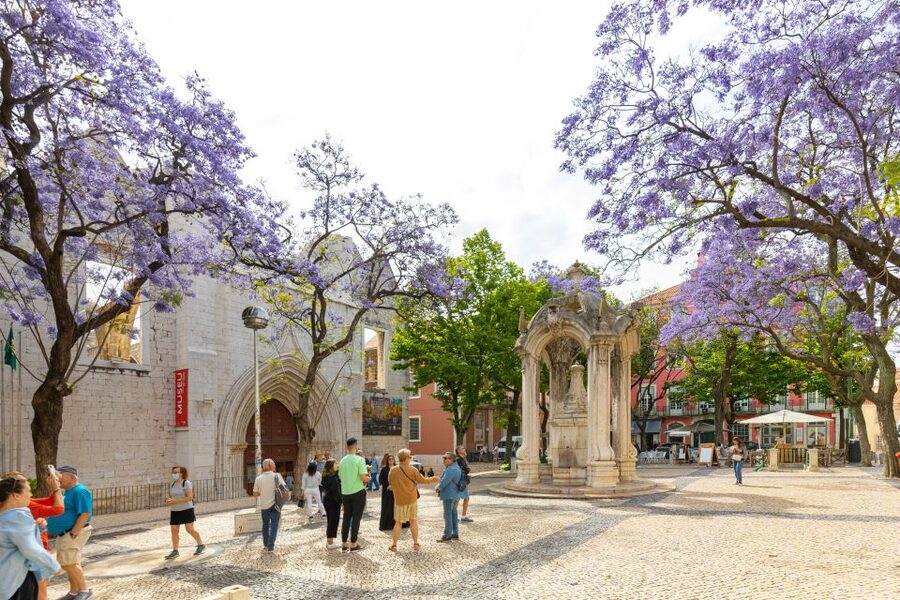
From there you head down toward the Carmo convent and church, known for Gothic architecture. This is another stop where the physical details matter, because you can see why the building stands out among Lisbon’s varied styles.
But what makes Carmo special in the tour context is the historical layer connected to the Carnation Revolution in 1974. In plain terms, this is where a symbolic turning point became tied to place, and your guide helps you understand why that matters in Lisbon’s modern identity. It is one thing to hear about revolution dates. It is another to link those events to actual walls and a real neighborhood setting.
If you have any interest in how Portugal’s political history shapes daily culture, this is an ideal moment to slow down. It gives your walking tour emotional weight.
Santa Justa and Baixa views: why the elevator stop is more than a photo op
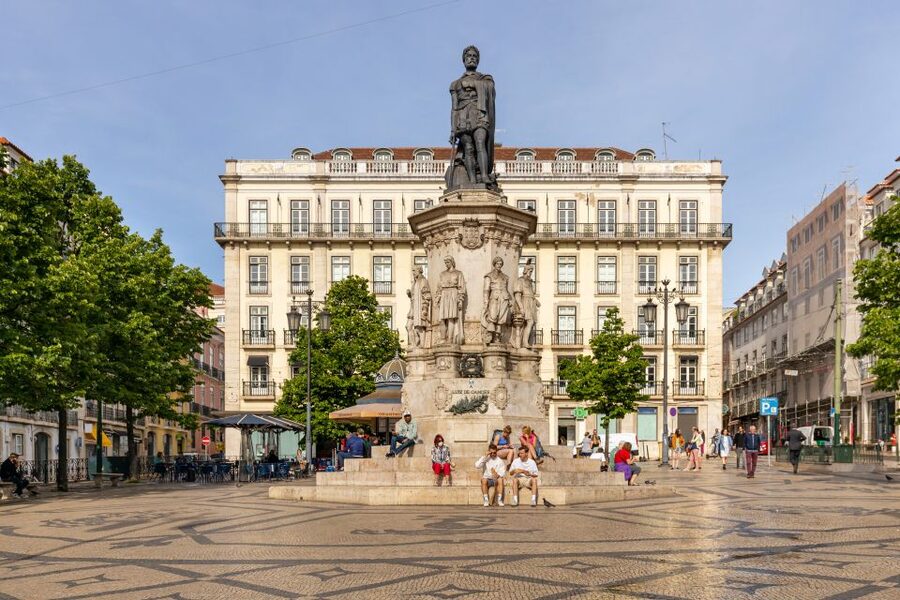
Then the route heads to Santa Justa elevator, a striking monument in Gothic Revival style. Even if you do not ride it, the area around it is useful because the viewpoint helps you read the city like a diagram. You see connections between districts and understand how people moved through the hills.
After that, the tour covers sights in Baixa, the heart of Lisbon. Baixa is where Lisbon’s city planning energy shows up, with a more open feel compared to Alfama’s tight streets. This contrast helps you understand what you are seeing later, because Alfama’s maze of lanes makes more sense after you have seen the more structured center.
Keep your eyes open for architectural details, because Baixa is full of repeating patterns. Your guide ties these elements back to how Lisbon rebuilt after major events, so you are not just sightseeing, you are learning how the city was designed and redesigned.
Riding the iconic tram from the castle area to Portas do Sol
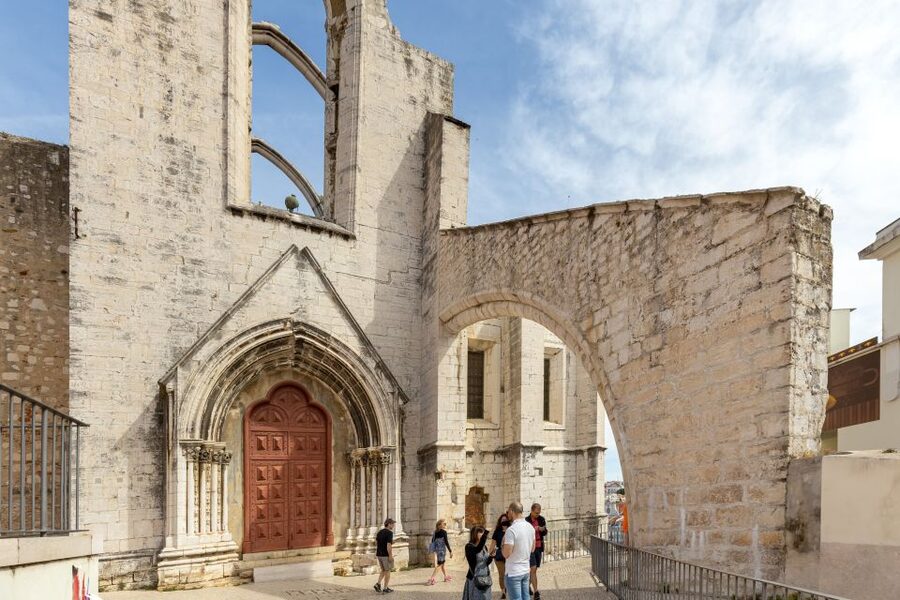
The tour then adds transport, which is where Lisbon turns from walkable to memorable. You take a ride on an iconic tram, and the route direction matters because it links viewpoints and neighborhoods. In many seasons, this tram ride helps you feel the climb and the descent in a way that walking alone cannot.
From the castle area, you go up toward Portas do Sol, and that transition is part of the story. At Portas do Sol, you get a platform viewpoint that frames Lisbon and sets up your next district, Alfama.
Some guides have even referenced specific tram routing in past experiences, like riding the number 12 in some cases, which is a fun detail if you have tram nostalgia. Either way, the key is the sequence: viewpoint first, neighborhood shift next.
Portas do Sol to Alfama: Monastery of São Vicente de Fora and the St. Anthony rhythm
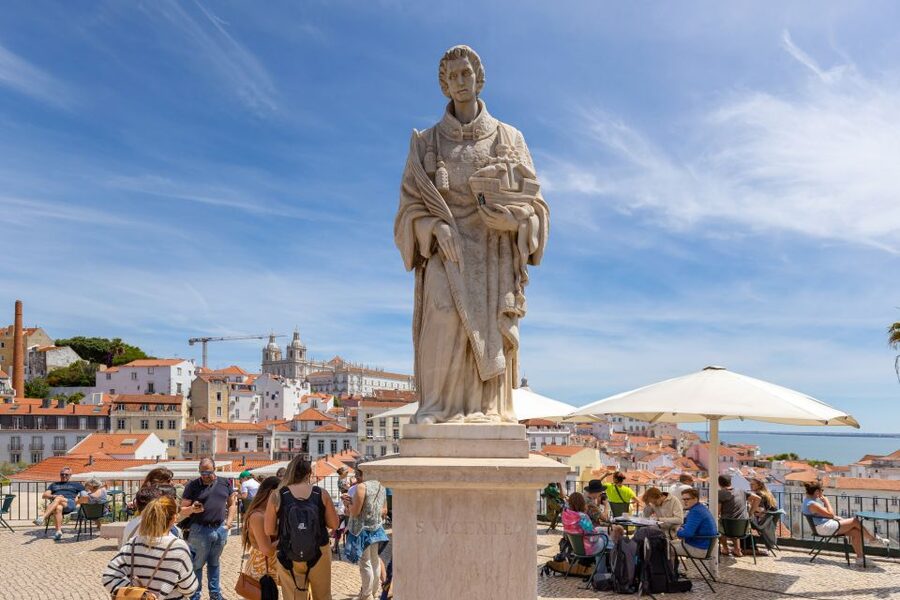
At Portas do Sol, the tour points you toward major landmarks, including the Monastery of São Vicente de Fora and the National Pantheon. These are big names, but the tour helps you connect them to the streets around them, so you are not just ticking off buildings.
Then you move into Alfama, Lisbon’s oldest and most traditional neighborhood. Alfama is famous for fado houses and for the festival rhythm centered on saints, especially St. Anthony. Your guide frames what you will see in the streets, where the traditions show up in everyday atmosphere, not just in an event calendar.
This part of the tour is often the emotional payoff. Alfama can feel like stepping into a slower Lisbon, even when it is crowded. Your guide’s storytelling style matters here, because the same lane can feel chaotic or meaningful depending on the context you bring to it.
Ending at Lisbon Cathedral: 1150 origins and layered architecture
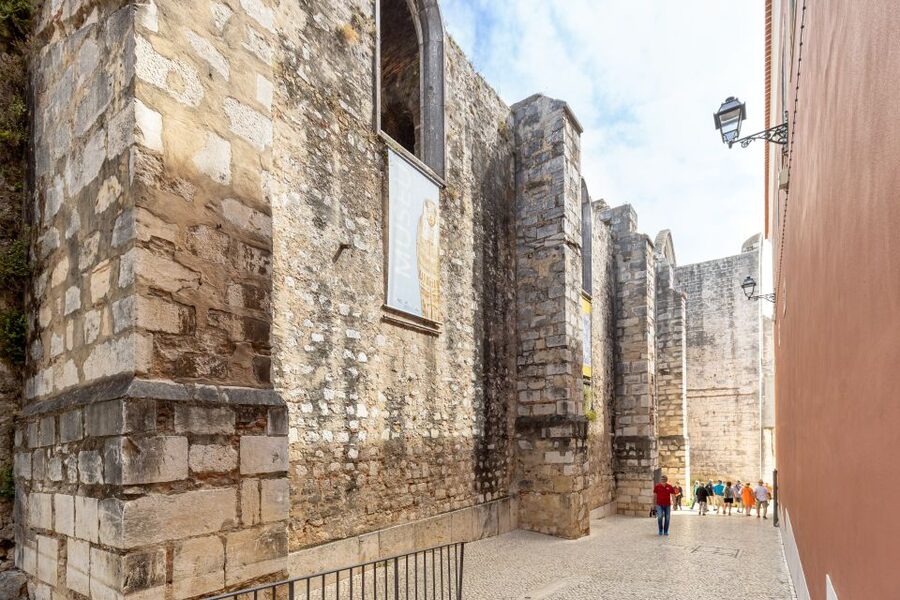
The tour ends at Lisbon Cathedral, built in 1150, around three years after Lisbon was taken back from the Moors. That origin story gives you a direct line from medieval times into the city you see today.
Over time, the cathedral absorbed different architectural changes, so it becomes a patchwork of styles rather than a single uniform look. That layering is one of Lisbon’s trademarks. You see how eras overlap, and you start to realize the city’s identity is built from additions, repairs, and redesigns.
If you are wondering what to do after the tour, this ending helps. It places you near a cluster of Old Lisbon activity, so you can keep exploring with a clearer sense of where you are and where the hills lead next.
The coffee and cake stop: a small inclusion with big timing value
The tour includes coffee and cake, which sounds small until you are halfway through Lisbon hills on a schedule. This break is timed so you can reset your legs and your head before the next steep stretch and viewpoint.
In past guides, this stop has often been a highlight. Some guides also steer you toward local espresso styles and the pastry moments that Lisbon is famous for. Even when the exact pastry options vary, the lesson is consistent: Lisbon’s best edible souvenirs are the ones you eat in the middle of the walking, not at the end when you are already tired.
That is why I like this tour’s structure. It uses food as a breather, not as an afterthought, and that turns a simple inclusion into a practical benefit.
Guide impact: why Paulo, Ana, Ricardo, and Beatrice get people coming back
The strongest pattern in guide reviews is how they teach through stories and humor. Guides like Paulo and Ricardo often come through as warm hosts who connect history to how Lisbon feels right now. Ana, Beatrice, and others also get praise for keeping the group engaged and for answering questions without making it feel like a lecture.
Small group sizes also show up as a value driver. When your group is small, you get more chances to hear details and ask questions, and it is easier to keep the pace without leaving people behind. You also tend to get more personal recommendations, which is how you find the kind of places you would not stumble into at random.
One more reason to care about your guide, weather happens. There are examples of guides adapting gracefully when tram problems come up or when rain hits hard. That matters because Lisbon is outdoors and hills are exposed, so your best experience often depends on how someone handles the moment.
Price and value: $29 for a 3-hour hit of transport, viewpoints, and breaks
At $29 per person for a 3-hour tour, this is priced like a solid “first Lisbon day” activity. You are paying for a live guide, a tram ride, a walking route across multiple districts, and the coffee and cake break. If you were to do these parts separately, you would likely spend more time managing tickets and navigation.
Where the value really shows is in how the route is layered. You get Bairro Alto history context, São Pedro de Alcântara views, church interiors with meaning, the Carmo Revolution link, a Santa Justa viewpoint stop, and Alfama with fado and St. Anthony festival context. That combination is hard to recreate on your own in a single half-morning or early afternoon without planning fatigue.
The main tradeoff is that you do not linger long at any one site. If you want museum-grade time or deep prayer time, this is not the right format. But if you want orientation plus memorable highlights in one go, it is good value.
Who this tour fits best, and who should skip it
This is a strong fit if you are visiting Lisbon for the first time and you want a structured introduction. It is also a good match if you like history that is connected to streets, not just timelines on a page.
You might not love it as much if you need a slow, step-free experience. The route includes hillside walking, and you should assume stairs and uneven surfaces are part of the bargain in Alfama and the older quarters.
If you travel solo, a small group setup can be a plus, because you get conversation without feeling stuck in a huge crowd. If you travel as a couple or small family unit, the pacing and stops can feel manageable, especially since there are breaks and viewpoints built into the plan.
Should you book this Lisbon History, Stories and Lifestyle walking tour?
Book it if you want a fast, story-driven way to connect Lisbon’s hills, neighborhoods, and big moments. You are getting multiple districts, a tram ride, and included coffee and cake, all in a compact 3-hour window.
Skip it only if your priority is long museum time or if you cannot handle steep walking and steps. If that is you, it may be worth looking for a more accessible option instead.
If you do book, do it early in your trip. I like this plan on day one or day two, because it helps you pick neighborhoods confidently afterward, instead of guessing from a map and a first bus ride.
Latest reviews from Lisbon
- Private Tour: Sintra, Cabo da Roca and Cascais Day Trip from Lisbon★ 5.0 · 225 reviews
- Lisbon: Food Tasting Tour by Tuk Tuk with 2 Stops★ 4.8 · 226 reviews
- Berlenga Island Small-Group Day Trip from Lisbon★ 4.5 · 227 reviews
- Sintra Deluxe from Lisbon with Pena Palace ticket★ 4.0 · 228 reviews
- Fátima, Nazaré, Óbidos and S. Martinho do Porto Small-Group Tour from Lisbon★ 5.0 · 229 reviews
- Évora and Monsaraz with Regional Wine Tasting from Lisbon★ 4.5 · 229 reviews
- Expert Plus Lisbon Tour with Local Guide in Private Eco Tuk Tuk★ 5.0 · 230 reviews
- Magical Day Trip: Pena Palace, Sintra, CaboDa Roca & Cascais★ 5.0 · 232 reviews
Historical Tours, compared.
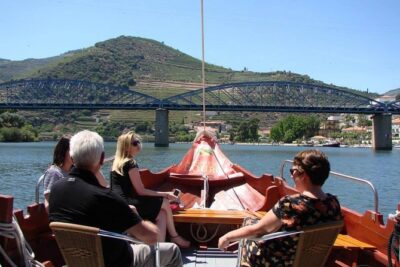
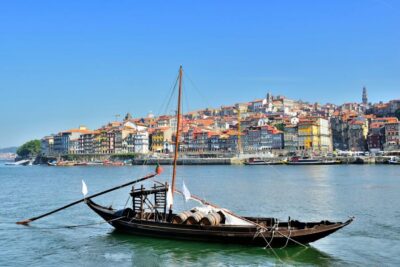
Douro Valley: Historical Sites, Wine Experience, Lunch & Cruise
Read our review →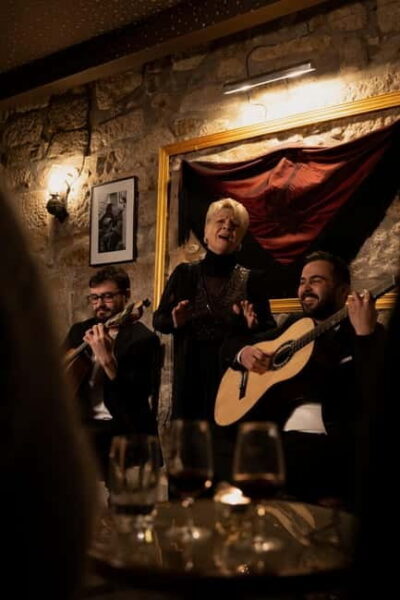
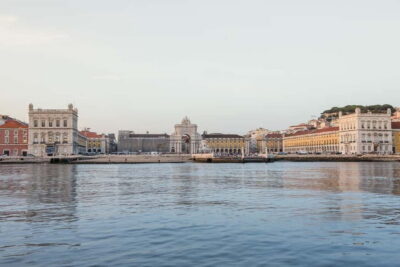
Daytime or Sunset Boat Cruise with History and Wine
Read our review →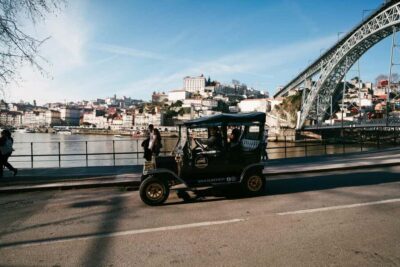
Private Tour of the Historic City in a Ford T Car
Read our review →
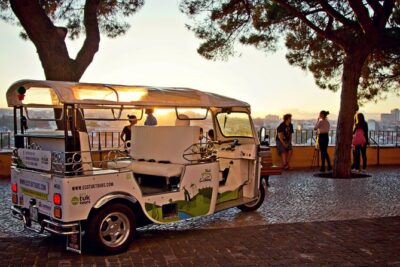
Explore Lisbon by Tuk Tuk: History and Viewpoints
Read our review →Browse the lists this tour appears in