
Reviewed · MUSEUMS
Paint your tile and create your unique piece in an art gallery in Lisbon
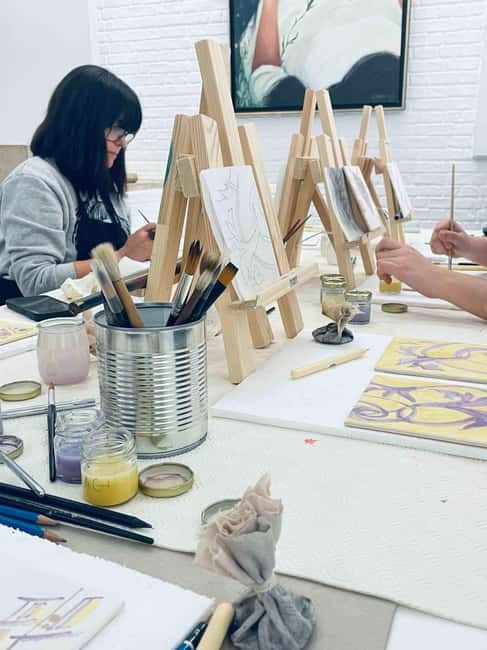
Paint your own Portuguese tile in a real art studio, then watch it become a souvenir you actually made. This workshop turns the famous Lisbon azulejo tradition into a hands-on session where you can focus, take your time, and end up with something one-of-a-kind. I like that it gives you both history and practical painting steps, and I like that you do real hand work instead of just watching. The one drawback to plan around is timing, your traditional fired tile needs a day or more, so you will pick it up later, not at the end of class.
I also like the vibe at Galeria 1758. It feels relaxed, cozy, and well run, with clear guidance from Cristina, including lots of patience for people who do not consider themselves artistic. You get two 15×15 cm tiles per person, so it is a great way to bring home a personal Lisbon piece without overthinking the design.
Key things I think you will care about
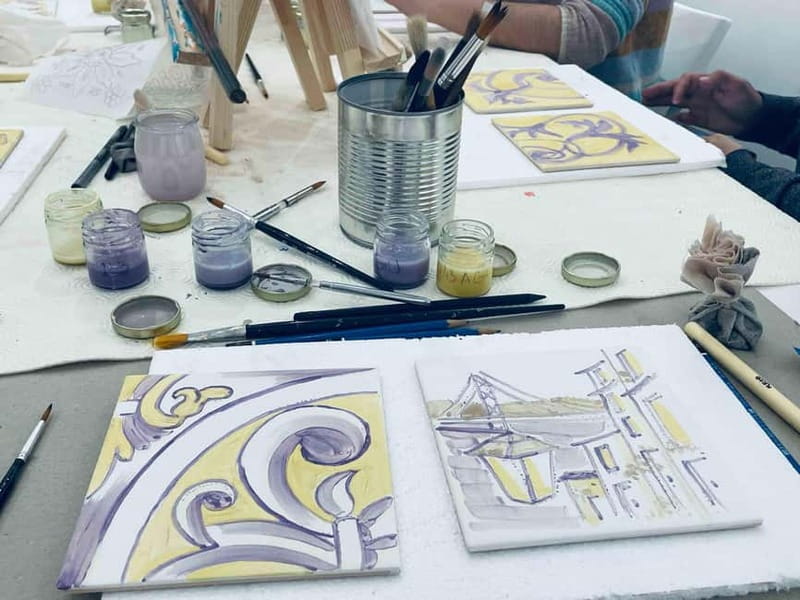
- You paint two 15×15 tiles with materials and guidance included, so the class output is clear.
- You learn the real technique behind Portuguese tile painting, including painting on glaze (majolica style) and basic composition.
- You get support without pressure, and even non-artsy folks can finish with confident-looking results.
- Traditional firing takes time, so schedule the workshop earlier in your trip if you want pickup at the studio.
- You can choose your style, from stencil-based patterns to your own creative design decisions.
- Languages are covered with Portuguese, English, and Spanish, led by Cristina in a friendly, step-by-step way.
Why Portuguese azulejos make a perfect Lisbon souvenir
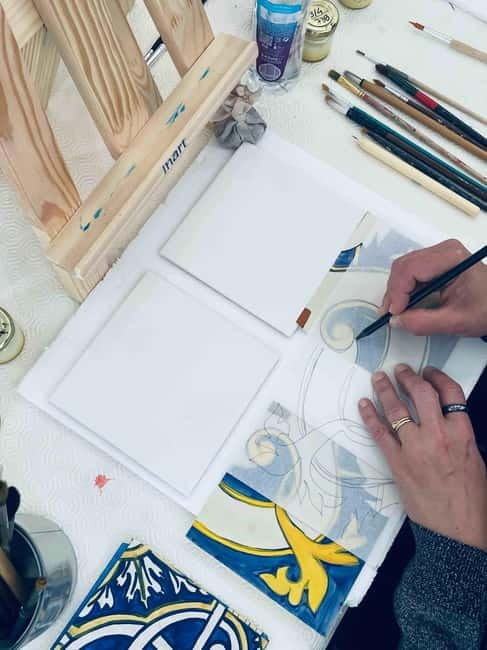
Lisbon is famous for tiled walls. But a workshop like this gives you the best part, the story behind the tiles and the muscle memory of how they are made. You are not just buying art, you are learning how painters translate a pattern into color and then into glazed ceramic.
I like that the experience connects art and culture without turning it into a lecture marathon. You start with a short introduction to Portuguese tile history and the patterns people recognize, then you move into painting with real ceramic pigments.
The final result feels meaningful. A store souvenir is nice, but a tile you painted yourself has a story that follows you home.
More Museums in Lisbon
- Lisbon: Luz Stadium Tour & SL Benfica Museum Entry
★ 4.7 · 4,102 reviews - Lisbon: MAAT Gallery and MAAT Central Entry Tickets
★ 4.0 · 559 reviews - Lisbon: Banksy Museum Permanent Exhibition Entry Ticket
★ 4.7 · 506 reviews
Entering Galeria 1758 and getting set up to paint
The class takes place at Galeria 1758 in Lisbon. You step into an art-gallery style studio where the room is designed for making things, not just looking at them.
At the start, the facilitator welcomes you, introduces the workshop, and talks about tiles in Portuguese culture. There is also time for you to look at examples, both traditional and more contemporary pieces, so you can get ideas before you commit to your design.
You will work at a table with all the tools provided. That includes pigments suitable for tiles, brushes, and support utensils, plus optional aprons if you want to keep your clothes safe.
For drinks, the venue may offer tea, coffee, or wine depending on what they are serving that day. It is the kind of detail that makes the workshop feel like an evening activity, even though it runs in a tight 2.5-hour window.
The 15 to 20 minute introduction that actually helps you paint
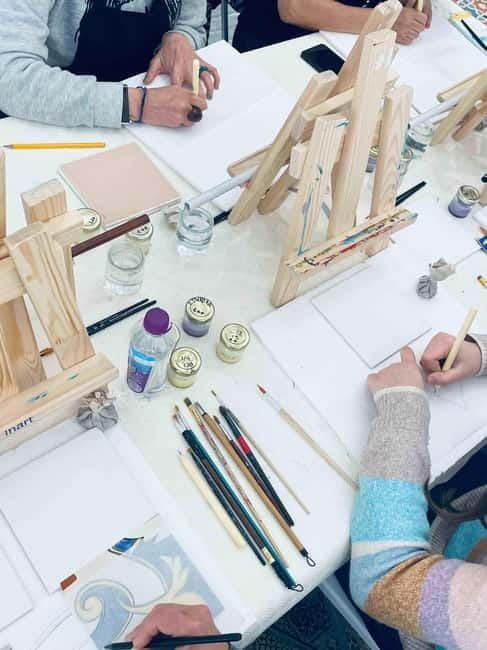
This workshop is not only about getting paint on ceramic. The early introduction matters because it sets up how you should think about patterns and color.
You get a short chat about the history of Portuguese tiles and what makes them Portuguese. You also get examples of typical tile motifs, patterns, and design choices, so you are not staring at a blank tile feeling lost.
Cristina’s style comes through here in the reviews. People highlight how warm and patient the guidance feels, and how the history is delivered in a way that supports your painting, not distracts from it.
The technical demo: majolica basics without the art-class intimidation
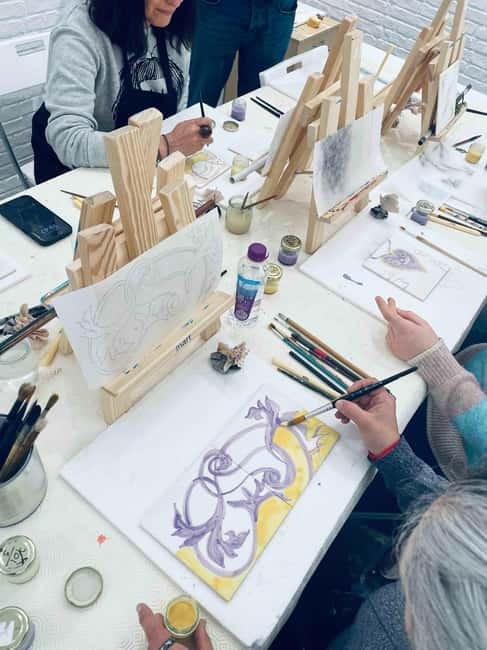
Next comes the technical demo, roughly 20 to 30 minutes. This part is where the workshop earns its keep, because you learn what will make your tile look right after firing.
They walk you through the materials first. Then they show basic ceramic painting techniques, including painting on a glazed surface using a majolica technique. You also learn basics of composition and color, which is useful even if your design is simple.
One practical detail I like is that you learn how patterns are built up, not just how to hold a brush. You are taught about lines, fillings, and working with the glazed base so your paint shows the way it should.
Another Lisbon day, differently spent:
- Lisbon City Center Tour – The Unmissable Lisbon
★ 5.0 · 22,234 reviews - Lisbon: Sintra, Pena, Regaleira, Cabo da Roca & Cascais
★ 4.7 · 19,656 reviews - Lisbon Card: 24, 48, or 72-Hour Pass
★ 4.5 · 17,944 reviews - Lisbon: Jerónimos Monastery Entrance Ticket
★ 4.1 · 14,164 reviews
Your 1 to 1.5 hours of individual tile making
This is where the experience becomes yours. The main creation time runs about 1 hour to 1 hour 30 minutes, and you paint your own tile(s) with individual support.
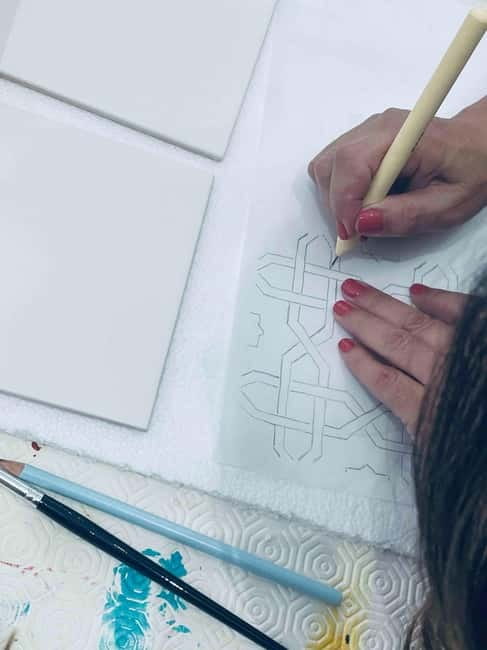
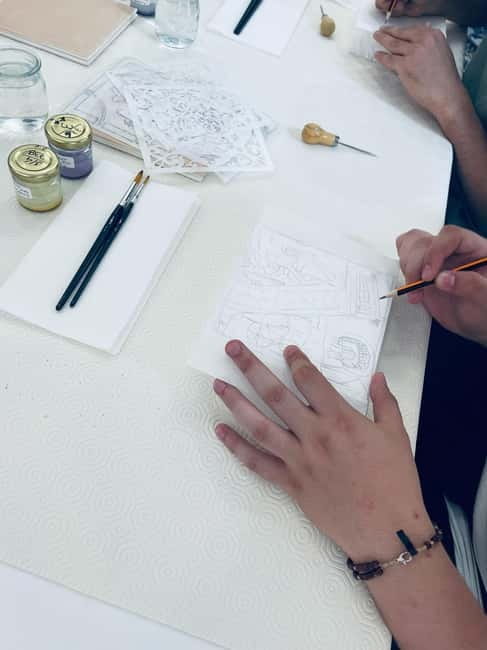
You can usually start by sketching. If you want to bring a plan, there is tracing paper or pencil support if you are using a previous drawing. Many people also follow a stencil approach, and at least one class setup includes charcoal stencilling so you have a guide before color goes on.
You get freedom, but you are not sent out into the wild. Cristina and the facilitator provide guidance as you paint, and they help you with color decisions and technique when something is not working yet.
This is where you will notice why people call it relaxing. You concentrate, you slow down, and you get feedback when you need it. Even if you are painting with limited confidence, the structure helps you finish something you feel proud to pick up later.
What you learn as you paint, and why it matters
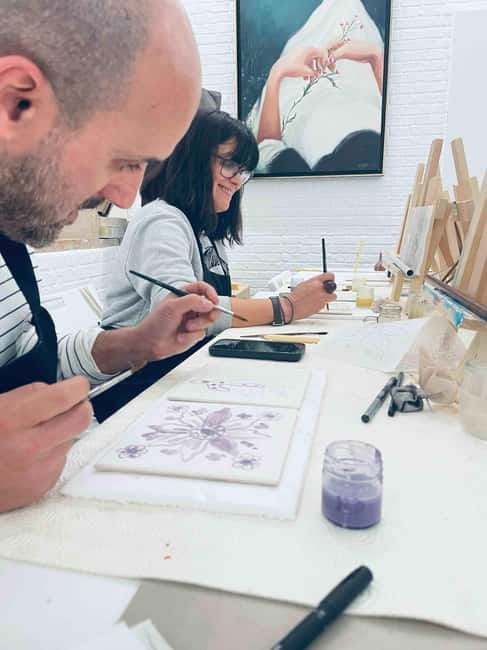
You are making two tiles per person, so you get two chances to experiment. That small decision has a big payoff. You can do one tile closer to a traditional pattern and one tile closer to your own style, which helps you avoid regret.
Also, the workshop teaches you a key idea behind Portuguese tile art. The beauty comes from repeated motifs, careful line work, and color choices that work with the glazed surface and the final firing.
I like that the workshop balances technique and expression. You end up with a personal piece, but it still feels connected to the Portuguese tradition you came to experience.
And because the class is set in an art gallery studio, it does not feel like a factory. It feels like a creative session guided by someone who knows how the tiles should be treated.
Wrap-up time: drying, firing, and what happens next
The wrap-up is about 15 minutes. You share your pieces, and you talk through what happens after you leave.
Here is the important part for planning: for the traditional technique, firing requires time. The process takes at least 24 hours, and the studio arranges delivery or pickup afterward, on a date to be agreed with you. A couple of people noted it can be a few extra days after the painting session, so take that seriously.
After firing, you will receive the finished tile at Galeria 1758 in person. The date for pickup is coordinated with you.
They also explain what to expect in terms of drying and firing. This is useful because you will not want to panic or over-handle the tile while it is still curing.
The “take it home now” option, and when to choose it
The workshop offers two approaches. The traditional method includes firing in a ceramic oven, and that is the one that results in the finished tile you pick up after the process.
But they also offer a faster painting technique that allows you to take the tile home the same day without firing. That can be a lifesaver if you are short on time or you cannot manage a later pickup.
One thing to consider: the traditional option is what connects to the full centuries-old method and includes the firing in the price. The same-day option is more about convenience. If you care most about the authentic finished ceramic result, plan for the traditional timing.
Price and value: what $58 covers, and what it does not
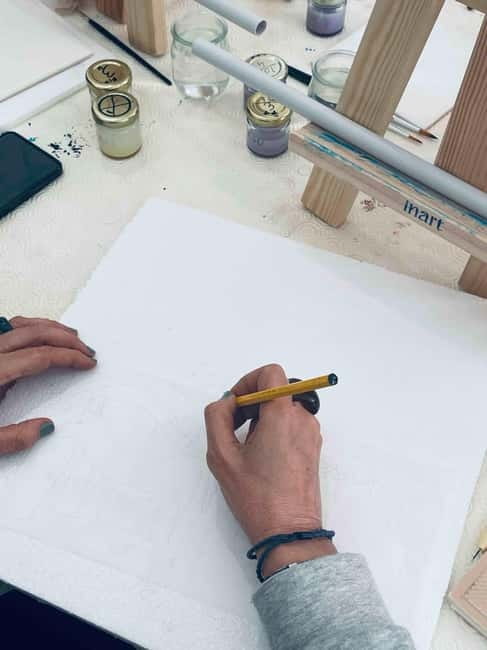
This costs $58 per person for the 2.5-hour session. In practical terms, it is not just a craft class, it is also materials and the firing step built into the traditional option.
What you get included, per person:
- Two tiles (15×15 cm each)
- Ceramic pigments and brushes and painting support tools
- Guidance throughout the process
- Final firing in a ceramic oven (for the traditional method)
- You take the finished tile after firing, with pickup arranged at the studio
What is not included:
- Transport or postal delivery of the finished tile
- If you want mailed delivery, shipping costs are additional and you pay them
- If you paint extra pieces beyond the included tiles, firing extra pieces is not included
- Other decorative pieces, like sardines or swallows, are paid separately
So the real value is this: you are buying the materials, instruction, and the hardest part, firing. For a souvenir, that matters because the “store-bought tile” feel comes from the fired glazed ceramic, not just paint on a blank surface.
Design tips that help your tile look good after firing
You can absolutely copy a traditional pattern, or you can go more personal. Either way, a few choices make your tile look stronger once it is fired.
First, start with a design that has clear shapes. Lines and sections help the paint read well on a ceramic surface. If your pattern is too detailed for your time, simplify it so each painted area is readable.
Second, treat color like a decision, not a mood. The demo’s color guidance is meant to help your tile stay cohesive. Pick a main color theme, then add one or two contrasting accents.
Third, use the guidance during painting. People highlighted Cristina’s patience and helpful technique tips. If your lines are wobbly or your color looks uneven, ask for feedback early rather than trying to “fix it later.”
Finally, think about your second tile as practice. Two tiles means you can try a more ambitious motif on one and keep the other safer.
Who should book this workshop, and who might skip it
This is a great fit if you want something cultural that is also hands-on. If you like Portuguese art, love crafts, or want a calmer activity in Lisbon that is not a long museum day, this works well.
It is also friendly for mixed groups. A review specifically mentioned families, including teens and adults who did not all feel “artsy,” and everyone still finished with results. If you are traveling with friends and people have different comfort levels, tile painting is often one of the better compromise activities.
You might skip it if:
- You cannot handle a pickup a few days after your class
- You want a hands-on ceramics experience beyond painting (this is focused on tile painting, not modeling or sculpting)
- You need a souvenir you can carry home instantly with no extra logistics
Booking it in the right part of your trip
Here is my practical advice. If you choose the traditional fired technique, do this earlier in your trip. That way, any delay in drying and firing or any pickup scheduling stays painless.
Also plan around the fact that you will be painting for about 2.5 hours, then waiting for the kiln step. If you do it on your last day, your options get smaller.
If your trip is tight, consider the faster same-day take-home technique. It is there for a reason.
Should you book this Lisbon tile-painting workshop?
Yes, if you want a souvenir with real meaning and you like the idea of making it yourself in a calm, guided studio setting. The combination of Portuguese tile history, clear painting instruction, and final firing included in the traditional option makes it feel like good value, not just a casual activity.
I would especially book it if you are traveling with mixed skill levels, because Cristina’s guidance is described as warm, patient, and very practical. You leave with something that looks like Lisbon, not like generic tourist crafts.
Book it earlier rather than later so you can handle the pickup timing comfortably. And if you cannot wait for firing, choose the same-day technique option so you still get the experience without the wait.
Latest reviews from Lisbon
- Lisbon Street Art – Private Guided Tour in a Electric Tuk Tuk★ 5.0 · 72 reviews
- Private Lisbon Walking Tour★ 5.0 · 72 reviews
- Pastel de Nata Workshop in Lisbon★ 5.0 · 72 reviews
- Palace Penna entrance included, Sintra, Cascais, Cabo Roca, private★ 5.0 · 72 reviews
- Group to Pena Palace, Sintra (pass by Regaleira) and Cascais★ 5.0 · 73 reviews
- Lisbon: Transfer to Porto with Obidos and Nazare★ 4.9 · 73 reviews
- Secret Walking Food Tours in Lisbon – Belém★ 5.0 · 73 reviews
- Lisbon: Private Food Tour – 10 Tastings with Locals★ 4.8 · 73 reviews
Museums, compared.

Cálem Cellar Tour, Interactive Museum & Wine Tasting
Read our review →

The Wine Experience, Best Wine Museum in the World
Read our review →

Banksy Museum Permanent Exhibition Entry Ticket
Read our review →
Belem, Jeronimos Monastery, and Coach Museum Tour
Read our review →
Browse the lists this tour appears in