
Reviewed · COOKING CLASSES
Portuguese Cooking Experience in Lisbon
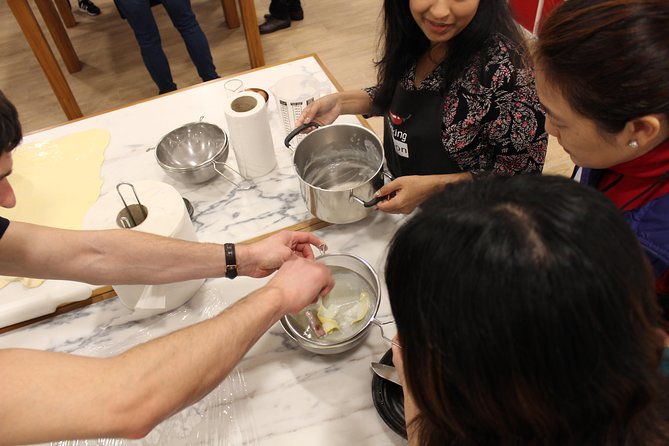
A Portuguese cooking class in Lisbon is already a win, but this one is extra appealing because you cook a full 3-course meal and taste Portuguese flavors like olive oil and wine while you work. I love the small-group feel, up to 14 people, which keeps you involved instead of stuck watching. One thing to consider is that the format can be team-based, so if you expect solo cooking stations for every step, you may need to adjust your expectations.
The evening starts at 6:30 pm and runs about 3 hours 30 minutes, centered around a cookery school on R. Bernardim Ribeiro, near public transportation. You’ll also get practical structure right away, wash your hands, put on an apron, and get the menu and jobs for the night.
Most people leave with more than full plates. You’ll get recipes after the class as PDF files, and you’ll sit down together to eat what you made. If you are traveling with kids under 17, alcohol is not served to them, and you should plan on water or juice for the younger crowd.
Key Highlights You’ll Care About
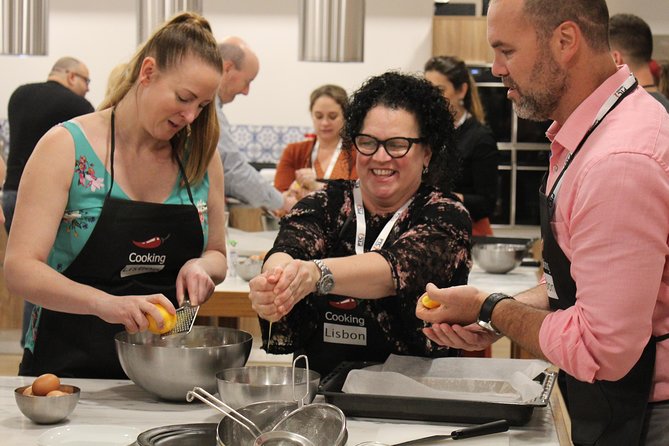
- 3-course Portuguese meal: fish main, meat main, and dessert, with changes for health and religious restrictions
- Chef-guided cooking with real prep work, not just demos
- Tastings included: premium olive oil samples and wine (adult pours) as you cook
- Small-group cap of 14 people so you can actually participate
- Drinks included: wine, beer, soft drinks, water, and coffee
- PDF recipes after class so you can recreate the dishes at home
6:30 pm in Lisbon, Easy to Reach and Built for an Evening Out
This is an evening class, and that matters. A 6:30 pm start means you can spend the daytime exploring Lisbon, then switch gears to something hands-on after dinner time would usually begin. The total length is about 3 hours 30 minutes, long enough to feel like a full activity, not a quick tasting and run.
The meeting point is at R. Bernardim Ribeiro 9, 1150-068 Lisboa, right in central Lisbon. It is also described as near public transportation, which is a big deal because this experience does not include pick-up or drop-off. You show up yourself, find the cookery school, and you end back at the same place.
Another practical plus is the format. The class is offered in English, and you get a mobile ticket. That keeps things simple on your phone, and it reduces last-minute paper chaos. There is also mandatory insurance included, which is the kind of unglamorous detail that can save stress if anything unexpected happens.
Group size is capped at 14 travelers, and that is part of the value. Too many cooking classes end up with a crowd where only a couple people do the cutting and everyone else waits. Here, the cap supports a more interactive experience, where you get to work at the cutting board, the stove, and the finishing steps.
One more thing I appreciate: the experience is set up for an intimate evening. You greet your small group and the professional chef, then you get moving right away. It is not a long lecture marathon.
More Cooking Classes in Lisbon
- Lisbon: Pastel de Nata Baking Class
★ 4.9 · 2,106 reviews - Lisbon: Traditional Portuguese Cooking Class
★ 4.9 · 592 reviews - Lisbon: 2-Hour Pastel de Nata Cooking Class
★ 4.8 · 461 reviews
The Real Star: A 3-Course Portuguese Meal You Cook, Not Just Taste
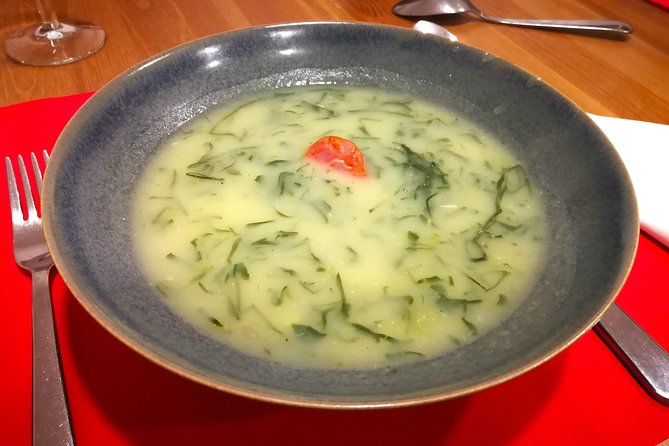
The core of the class is straightforward: you prepare a 3-course meal with a starter, a fish dish, a meat dish, and a dessert. The exact menu can change based on health and religious restrictions, so the school is not asking everyone to “tough it out” if they need adjustments.
From a learning standpoint, this structure works. Starter to main to dessert means you rotate through multiple cooking skills in one sitting. You might start with ingredient prep, then move into stovetop or pan work, then finish with dessert technique. That mix is how you leave with practical confidence, even if you only cook at home occasionally.
A couple of details from real instructors show how hands-on the teaching can be. One person talked about learning how to separate an egg properly, and another referenced becoming a garlic pro. The takeaway for you is that the class is designed to fix the little home-cook mistakes you might not notice until someone points them out.
On top of cooking, there are tastings built in. You get to taste premium olive oil and wine while you cook, and you learn about Portuguese culinary traditions in the process. That is more than food theater. When you taste ingredients early, it helps you understand why the dish tastes the way it does after you cook it.
Dessert can also be a confidence booster. In past classes, people reported learning desserts such as custard-style options and meringue preparations. Even if your exact dessert is different, dessert training tends to be where home cooks feel “out of depth,” so having a chef guide you through the process is useful.
Food is one thing. Skills are the point. If the chef keeps the group moving and explains what is happening as you go, you leave with techniques you can repeat, not just memories of a nice dinner.
Team Cooking Reality Check: Hands-On Work, but Expect Shared Flow
Here is the part you should read carefully before you book. Many people come to a cooking class wanting an “everyone at their own station” setup. This experience is hands-on, but it can work like shared team cooking, where the group collaborates across the meal.
In most cases, that is a good thing. You wash your hands, put on your apron, and then you get assigned tasks. Multiple people highlighted that everyone contributed, with different jobs happening at the same time. With a cap of 14, the class can keep pace without leaving you idle too long.
The possible downside shows up in a minority of experiences: if the chef leans more toward preparing some components in front of the group, you might do fewer steps than you expected. One person was frustrated because they felt like they only handled basic cutting, like onions, while other prep happened mainly off to the side. Another wanted a more technique-heavy focus.
So what should you do? Bring the right mindset. If you want to learn the “why” behind Portuguese cooking, show up ready to ask questions. If you want to do as much of the cooking as possible, speak up at the start. A simple, polite question like What should I focus on today? can help you get better tasks instead of hovering.
Also, make sure you are comfortable with a shared pace. Team cooking means you might be chopping while someone else is simmering. That is normal. The key is whether the chef and staff keep turning participants into active cooks rather than passive observers. With the small-group cap, you have a strong chance that you’ll be busy most of the time.
What You’ll Taste: Olive Oil, Wine, and a Table Where You Eat What You Cook
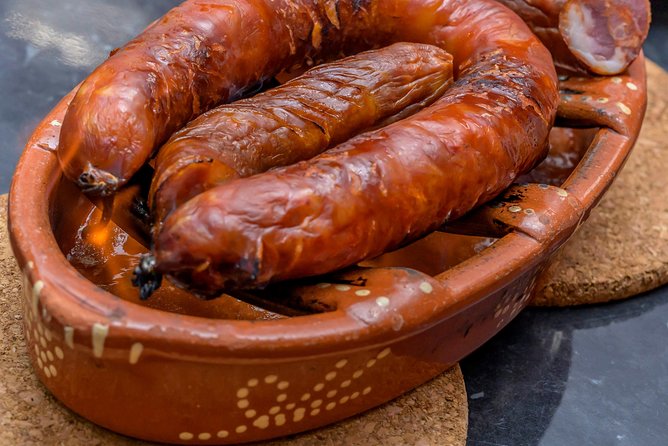
This is not just a kitchen class. It is an evening where you sit down and eat together at the end, after you finish the 3 courses. The satisfaction of that is real. It is one thing to cook and then walk away. It is another to taste your work with your group and talk food while it is still warm.
Drinks are included, and that helps the vibe. You get wine, plus water, juice, beer, coke, and coffee. In practice, people often remember the wine as a big part of the atmosphere, with plenty to go around. Coffee comes at the end, which is perfect for resetting after dessert.
If you are traveling with kids, the alcohol policy is clear. Alcohol will not be served to children under 17 years old, and in those cases water or juice is provided. That makes planning easier for mixed groups.
The olive oil tasting is also worth your attention. Portuguese cooking leans on good olive oil, and tasting it helps you notice the difference between bland and actually flavorful. When the chef guides you through that, it turns a simple ingredient into something you understand.
And because the class is in central Lisbon, this works nicely as a stand-alone evening. You are not spending your night commuting to multiple stops or coordinating dinner reservations. You get the meal inside the experience.
Another Lisbon day, differently spent:
- Lisbon City Center Tour – The Unmissable Lisbon
★ 5.0 · 22,234 reviews - Lisbon: Sintra, Pena, Regaleira, Cabo da Roca & Cascais
★ 4.7 · 19,656 reviews - Lisbon Card: 24, 48, or 72-Hour Pass
★ 4.5 · 17,944 reviews - Lisbon: Jerónimos Monastery Entrance Ticket
★ 4.1 · 14,164 reviews
Recipes Sent After the Class, Plus the Little Extras That Matter
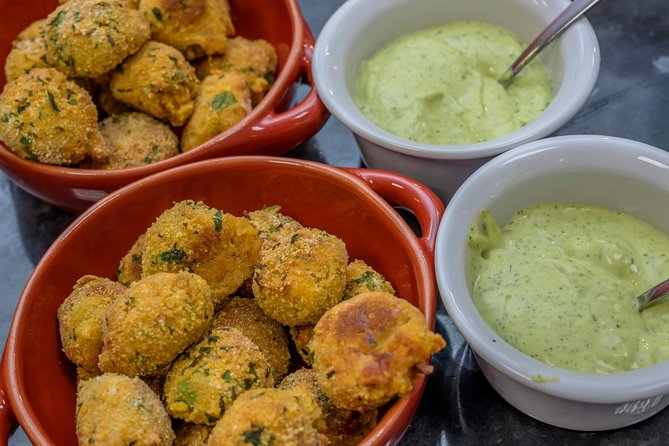
One of the best reasons to book a cooking class is leaving with something you can reproduce at home. Here, you get recipes sent after the cooking experience in PDF files. That is practical, because you can save them on your phone and follow them later without digging through paper.
You should also know that the menu can be modified for health and religious restrictions, which means your PDF recipes should match what you cooked that night. That is a key point for value: you do not want a generic recipe that ignores your needs.
Some people also mention receiving an apron and being able to keep it. That is not the most important detail in the grand scheme, but it is one of those small memories that makes the evening feel like more than a one-time dinner.
There is also mandatory insurance included. It does not change the food, but it is part of a well-run operation. It signals that the school is prepared for real-life scenarios.
Finally, there is the social piece. Several people highlighted how welcoming the chef and the group felt, and how conversation came naturally while cooking and eating. That matters if you are traveling solo, or if you want a structured way to meet new people without turning it into a nightlife mission.
Price and Value: Is $108.89 Worth It?

At $108.89 per person, this is not a bargain, but it is also not priced like a high-end tasting menu. You are paying for a professional chef, an organized kitchen setup, and a full meal you actually make.
Here is what you get that supports the price:
- A hands-on class where you cook a starter, fish dish, meat dish, and dessert
- Chef instruction and guided prep techniques
- Drinks included, which can easily be expensive if you try to recreate it by going out for wine
- Recipes in PDF after the class, which boosts the long-term value
- A small-group cap of 14, which improves how much participation you can realistically have
The most important value test for you is your expectations. If you want a fun night out with real cooking and plenty of food, the format can feel like a great deal. If you expect a strictly technique-focused course where you learn advanced methods step by step at your own station, you might feel you got less instruction than hoped.
My advice: think of this as an introduction to Portuguese home cooking you can repeat. Many people come away saying they learned practical moves, like better egg handling and garlic technique, and that is the kind of value that lasts longer than a nice meal you can’t recreate.
Also, the duration helps. At about 3.5 hours, you are not paying for 45 minutes of cooking and a snack. This has time for prep, cooking, tasting, and eating together.
Who Should Book, and Who Might Want a Different Style
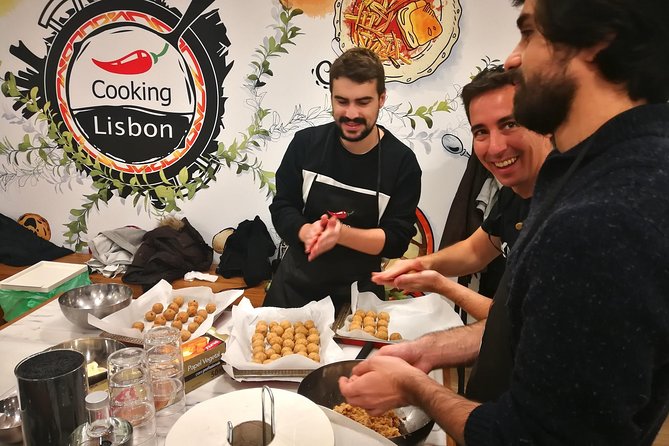
This class tends to work well for a wide range of skill levels. Multiple people described it as enjoyable regardless of experience, because the chef breaks steps into manageable parts and keeps tasks moving.
It is also a good fit if you:
- Want to learn about Portuguese culinary traditions through cooking
- Like social dinners, but prefer a structured reason to meet people
- Want English instruction in a small-group format
- Appreciate ingredient learning, like olive oil tasting, not just eating
You might reconsider if:
- You want a heavy emphasis on advanced technique and solo station practice
- You dislike shared kitchen flow and would rather watch one chef explain step-by-step to you personally
- You are very picky about dessert or specific dishes, since the menu can change and dietary needs can affect what gets served
If you are bringing a teen or child under 17, you can still book, and you should plan around the alcohol rule. The requirement is that children up to 17 must be accompanied by an adult participating in the activity too.
The best way to decide is to match your goal to the format. If your goal is hands-on Portuguese cooking with an evening meal and social energy, this is likely a strong choice.
Should You Book This Portuguese Cooking Experience in Lisbon?
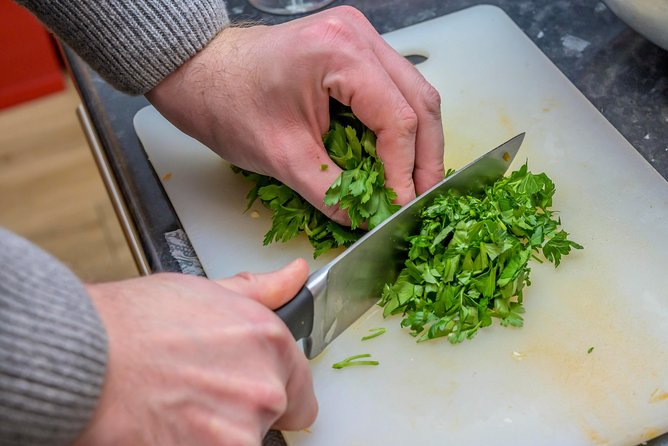
I would book it if you want a full evening of Portuguese food, guided by a chef, with enough wine and coffee included to make it feel like a true Lisbon night out. The combination of hands-on cooking, olive oil and wine tasting, small-group size, and PDF recipes is a solid package for the money.
I would hesitate only if you are expecting a strict “every person cooks every step” setup or you are specifically looking for advanced, technique-only training. In that case, the shared team rhythm might feel less satisfying.
If you want an authentic, practical way to understand Portuguese cooking, this class is a strong bet. Go in hungry, ask questions when you get your task list, and treat the kitchen work as part of the fun.
FAQ
How long is the Portuguese cooking class in Lisbon?
The class runs for about 3 hours 30 minutes.
What time does it start, and where is the meeting point?
It starts at 6:30 pm. The meeting point is R. Bernardim Ribeiro 9, 1150-068 Lisboa, Portugal.
What’s included with the price?
You get a hands-on Portuguese cooking class, the meal (starter, main, dessert), and drinks included such as wines, water, juice, beer, coke, and coffee. Recipes are sent after the experience as PDF files, and mandatory insurance is included.
Is wine included, and how does it work with kids?
Wine is included, but alcohol will not be served to children under 17. In that case, water or juice is provided. Children up to 17 must be accompanied by one adult participating on the activity.
How many people are in the group?
The class has a maximum of 14 travelers.
What is the cancellation window for a full refund?
You can cancel for a full refund up to 24 hours in advance of the experience start time. If you cancel less than 24 hours before, the amount paid is not refunded.
Latest reviews from Lisbon
- Lisbon Street Art – Private Guided Tour in a Electric Tuk Tuk★ 5.0 · 72 reviews
- Private Lisbon Walking Tour★ 5.0 · 72 reviews
- Pastel de Nata Workshop in Lisbon★ 5.0 · 72 reviews
- Palace Penna entrance included, Sintra, Cascais, Cabo Roca, private★ 5.0 · 72 reviews
- Group to Pena Palace, Sintra (pass by Regaleira) and Cascais★ 5.0 · 73 reviews
- Lisbon: Transfer to Porto with Obidos and Nazare★ 4.9 · 73 reviews
- Secret Walking Food Tours in Lisbon – Belém★ 5.0 · 73 reviews
- Lisbon: Private Food Tour – 10 Tastings with Locals★ 4.8 · 73 reviews
Cooking Classes, compared.

Pastel de Nata Cooking Class with Grandma’s Recipe
Read our review →
Pastel de Nata Cooking Class with Port Wine – Sé
Read our review →



Lisbon Portuguese Cooking Class with 3-Course Dinner
Read our review →
Pastel de Nata Cooking Class with Porto Wine (Sé do Porto)
Read our review →Browse the lists this tour appears in