Reviewed · PORT WINE CELLAR TOURS
Porto Douro River Cruise With Port Wine – Daytime or Sunset
A Douro cruise is interesting because Porto and Gaia look totally different from the water. This one is extra easy to love, thanks to the glass of port you get while you slide past the river’s biggest landmarks. I also like that the crew and guides keep pointing out what you are seeing, from bridges to wine history, not just facts for facts’ sake.
The main drawback is simple: weather. If skies are gray, the sunset magic can fade. And even on sailboats, you may not see the sails fully up, since some trips cruise quietly by motor instead.
Key Things to Know Before You Go
- Port wine included: You get a glass during the ride, no extra purchase needed.
- Views you cannot get from the street: Bridges, churches, and cellars look better from the river.
- Wildlife focus near the estuary: You are in the area where birds migrate along the East Atlantic Route.
- Small trip feel, big sight coverage: The tour caps at 58 people, and many reviews highlight friendly, helpful crew.
- Comfort extras for cooler evenings: Blankets are mentioned on sunset departures.
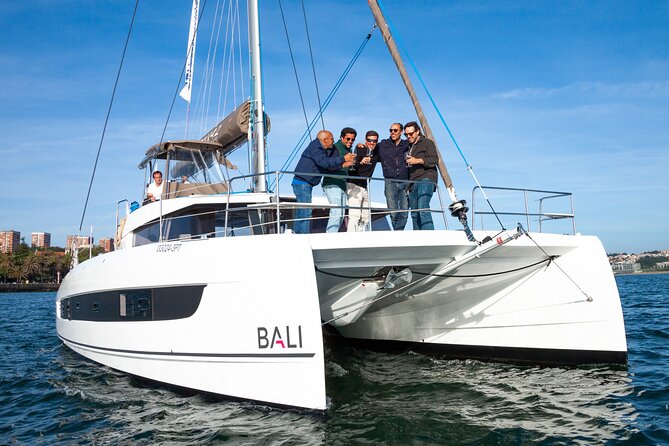
- Boat type can vary: Some passengers expected a larger catamaran and ended up on a smaller sailboat setup.
Where You Board at Marina da Afurada (and Why It Matters)
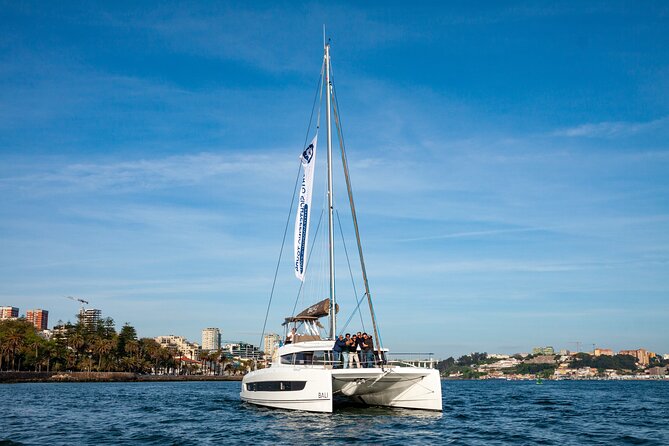
You start at Marina da Afurada in Vila Nova de Gaia, at R. da Praia 430, 4400-554. That matters because it sets the tone for the cruise. You are not beginning in the thickest tourist crush of Porto, and you get a straight path to the river without doing a long transit shuffle.
The meeting point is right by the water, which is also why check-in timing is worth taking seriously. One clear review tip: check in at the BBDouro office located at the marina. The product details also say to wait by pier D gate for a skipper with BBDouro gear to confirm you and lead you to the boat.
A good practical move: plan to arrive a bit early and orient yourself to the pier gates. This avoids the kind of stress that happens when you assume the tour departs from the closest-looking quay in the area.
More Boat Trips in Porto
- From Porto: Douro Valley w/ Boat Tour, Wine Tasting & Lunch
★ 4.7 · 19,061 reviews - Complete Douro Valley Wine Tour with Lunch, Wine Tastings and River Cruise
★ 5.0 · 12,920 reviews - Porto: Six Bridges Cruise
★ 4.2 · 11,680 reviews
The 2-Hour Cruise Route: Douro River, Estuary Views, and Gaia Waterfront
This is a roughly 2-hour cruise, and the value is in how much you see without walking the steep streets. The run is designed around the Douro River corridor, key bridge crossings, and the estuary area near Afurada and the mouth.
Here is the sight rhythm you can expect as you move through the route, mostly as a guided panorama from the water:
Douro River: Wine Caves, Clergy Church, and Rabelo Boat History
As you head along the Douro River, you get pointed out to the places that made this river famous. You will see references to wine caves, the kind of urban riverfront that grew around commerce, and the Rabelo boats used historically to carry barrels.
You also get the Clerics Church called out in the overall stop pattern. Even if you already know Porto’s major sights from postcards, the river angle changes how you register them. The buildings feel taller, the bridges feel closer, and the waterline feels like the real front door of the city.
Douro Marina: A Modern Port Life Moment
You also pass by Douro Marina, which opened to the public in February 2012. It was built as a large-scale dock area with capacity for up to 300 vessels and includes shops, restaurants, and repair and maintenance space.
This stop is useful because it grounds the cruise in real present-day river life. You are not only viewing heritage. You are also seeing how the city keeps living with the water.
More Boat Trips in the Douro Valley
- Porto: Douro Valley with Winery Lunch, Tastings & Cruise
★ 4.7 · 7,002 reviews - Porto: 6 Bridges Douro River Cruise
★ 4.3 · 6,472 reviews - Porto: Guided Tour by Tuk-Tuk & Optional Douro River Cruise
★ 4.5 · 5,980 reviews - Douro Valley: Historical Sites, Wine Experience, Lunch & Cruise
★ 5.0 · 5,133 reviews
Afurada Interpretive Center: Fishing Village at the River Mouth
Afurada sits near the mouth of the Douro. The interpretive center stop is a reminder that this coastline is not just a view. It is a working fishing edge, with a community of about 6,500 residents described by the tour stop notes.
If you like understanding place names as people names, this kind of stop context helps. It makes the estuary segment feel less like scenery and more like a functioning ecosystem tied to daily life.
Ponte da Arrábida: A Bridge Story With Big Engineering Cred
Ponte da Arrábida connects Porto and Vila Nova de Gaia. The tour stop notes emphasize the construction and the reinforced concrete arch detail, plus its role in easing traffic demands as the older bridges were outpaced.
From the river, the bridge becomes more than a crossing. It becomes a frame, splitting water views into layers. That makes photos easier and also helps you track the relation between Porto’s waterfront and Gaia’s side.
Museu do Carro Electrico: The Tram Museum in a Former Power Plant
This stop highlights the tram museum housed in a building that used to operate as a thermoelectric plant built in 1915. The tour notes describe the look and feel of the trams as time-machine style, with wood and iron interiors.
Even if you do not go inside during the cruise, you get the context. Then when you later wander the city, you know what that distinctive waterfront building is and why it is there.
Igreja da Confraria das Almas do Corpo Santo de Massarelos: Tile Facade and 18th-Century Details
This church stop is built around architecture you can spot from the river, especially the tile facade and the segmented layout described in the tour notes. It was built in 1776, and the facade includes a gate with a broken pediment and a niche for the patron saint image.
This is another example of what makes the cruise feel guided. You are not just seeing a blur of churches. You are being told what to look for as the boat passes.
The New Customs Building: Jean Colson and the Mercantile Era
The New Customs building is described as a major congress center today, originally tied to Porto’s mercantile dynamism along the Douro banks. The stop notes give you a specific creator, French architect Jean Colson, and mention the contrast with older 15th-century riverside architecture.
There is also detail on construction materials, including iron and other elements, and a distinctive Riga oak roof mentioned as part of the main central body.
If you like tracing how cities evolved, this stop context is gold. It explains why Porto’s waterfront looks like it has chapters from different eras.
Passeio das Virtudes: Vertical Gardens With Terrace Views
Passeio das Virtudes is a municipal park that was designed as terraces down a slope, so viewpoints open over Alfândega, the Douro River, and Vila Nova de Gaia. From the cruise, that vertical layout becomes visible because the river sits below everything like a stage.
This stop also sets up a nice post-cruise walk option. If you want to extend the day on land, this park is the kind of place that gives you a similar view but from up higher.
Torre dos Clérigos: A Landmark Tower With Maritime Use
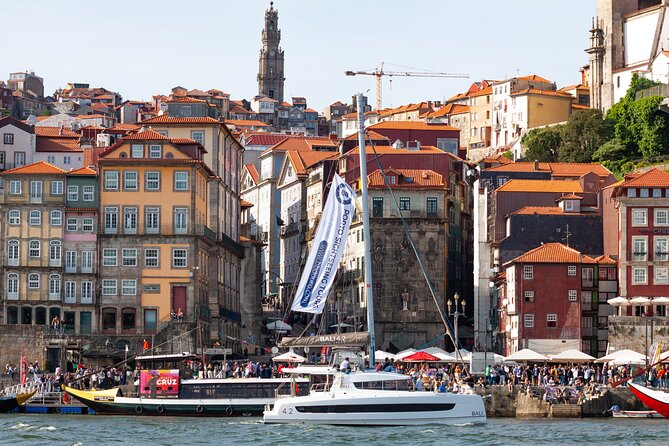
The Clérigos Tower is completed in 1763 and designed by Italian architect Nicolau Nasoni. The tour stop notes also say it functioned not only as a bell tower, but as an orientation point for boats and even a strategic military point.
That maritime detail is exactly why it works on a cruise. You can literally connect the tower’s job to the boats passing by every day.
Gaia Quay and the Cais de Gaia: Port Wine Cellars in Plain Sight
Now you are in Port Wine territory. Cais de Gaia is the waterfront linked to centuries of wine export, with Rabelo boats anchoring and unloading barrels for aging in Gaia cellars.
The tour notes mention about 30 wine companies and that many of the cellars offer guided tours plus tastings where you learn to distinguish types of port wine. Even if you are not entering a cellar during the cruise, seeing this quay area is the best kind of teaser. It tells you where to go next if you want to go deeper.
Barcos Rabelos: How the River Transport Story Fits the Wine Story
The stop on Rabelo boats explains how they historically transported wine when roads and railways were not the main option, and notes that the river could be treacherous with fast currents before dams were built.
The notes also connect this to a timeline: with the railway line, the last voyage for transport is believed to have been around 1964. That gives the cruise a feeling of continuity, from working river to modern tourism.
Praça da Ribeira: UNESCO Old Porto and a Local Hero Story
Praca da Ribeira is part of the UNESCO World Heritage Historic Center of Porto. The stop notes place it as one of the oldest and most popular areas, with medieval origins tied to river commerce and movement.
There is also a colorful reference to the Ribeira’s Duque, linked to saving people from drowning. Even if you do not remember details later, having a local hero tied to a river edge makes the place more human.
Jardim do Morro and Serra do Pilar: Circular Monastery and Wide Views
Jardim do Morro gives panoramic views over Porto and the Douro River. The cruise stop pattern then includes Miradouro Serra do Pilar and the monastery church described as a 17th-century UNESCO site with a circular plan, hemispherical vault, and distinctive interior woodwork.
This area is also connected to historical military use during the Napoleonic invasions and later liberal struggles, with fortress status and artillery barracks conversion mentioned in the tour notes.
From the water, the key takeaway is the vantage. You are seeing why people built viewpoints here: it commands the river corridor.
Dom Luis I Bridge: The Iconic Metal Connection
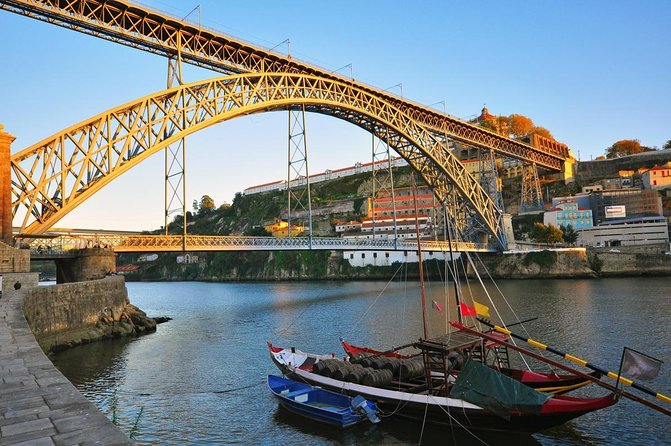
Luís I Bridge is the main connection between Porto and Vila Nova de Gaia, built in 1888 by Theophile Seyrig, with two decks connecting upper and lower city zones. The tour notes emphasize it as one of Porto’s emblematic points.
When a bridge is that iconic, you can think you already know it. Cruising is where it clicks. The structure becomes a measurement tool for scale, and the city blocks line up in ways you do not get from walking.
Estuary Nature Reserve: Birds, Migratory Corridor, and a Free Walkway
Reserva Natural Estuario do Douro is a protected area of 66.35 hectares near Afurada, including Cabedelo and São Paio Bay. The tour notes focus on birds, especially because the area lies on the East Atlantic Route migratory corridor.
The stop notes also mention the visit can be made freely through a suspended walkway. On the cruise, you cannot control bird sightings, but the guide context helps you actually notice what you might see.
Passeio Alegre Garden: The Turtle Fountain and Atlantic Meeting Point
Passeio Alegre Garden is a late 19th-century public garden designed by Émile David, with centuries-old trees and a granite fountain described as the turtle fountain by Nicolau Nasoni. The tour notes also mention the fountain was moved in the 20th century from Quinta da Prelada.
This stop is great for readers who like small specifics. Even from the water, having that name attached gives you a mental hook.
Port Wine on Board: What You Actually Taste and How to Use It
This tour includes a glass of port wine, and it is not just a random freebie. It is timed to keep you looking up and around, instead of down at your phone.
Port wine also fits the route. Gaia is the port cellar zone, and the cruise keeps returning to Rabelo boats and the wine trade story. So when you sip, the city is not abstract anymore. It becomes part of the same timeline.
Two practical notes from the general ride experience:
- Food and drinks are not included, so if you get hungry, plan a snack or meal before or after. The tour notes also say you cannot bring outside food or drinks on shared tours.
- If you are doing sunset, you might get cooler air on the water after the sun drops. Blankets are mentioned in reviews, and a sweater is a smart move.
Crew, Comfort, and the Small-Group Feel
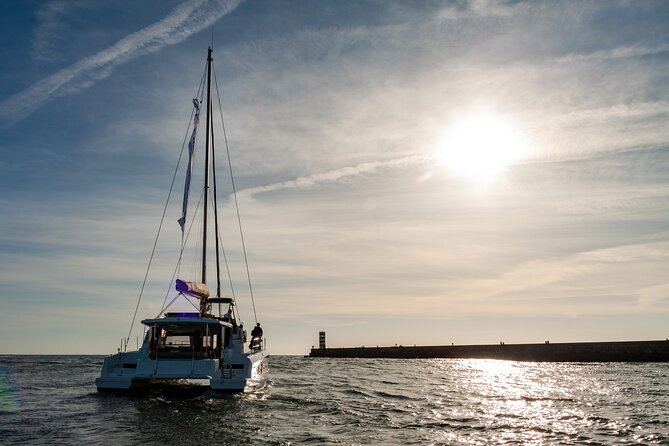
The cruise’s best praise is consistent: friendly captains, helpful crew, and guides who actually explain what you are seeing.
You will see names like Fernando and Miguel called out for knowledge and friendliness, and Junior and Lorraine for clear, engaging city and river talk. Other crews are mentioned as both personable and good at keeping everyone comfortable.
Comfort-wise, there are a few real-world details worth factoring in:
- The boat is comfortable, and blankets show up on cooler evenings.
- Some trips are described as motor-driven even on sailboat, with sails down. Reviews say the motor is quiet, but it is still worth mentally planning for a calm power cruise.
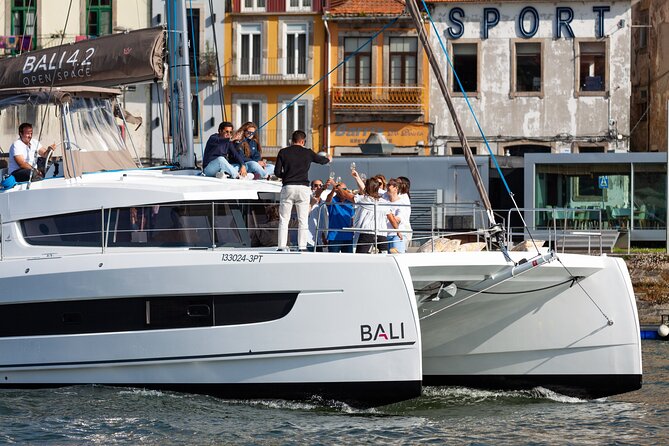
- Boat size can vary. One reviewer expected a larger catamaran based on photos and ended up on a smaller sailboat that held fewer people comfortably. The lesson is not to assume the vessel will match what you picture.
Seating is another small logistics detail: the distribution on boats is random, and you cannot request preferences. That is normal for shared sailing trips, but it matters if you have a strong preference for being near the front or out of the rain line. Arriving early to check in properly can help you get settled smoothly once you board.
Daytime vs Sunset: How to Choose Without Regrets
You can book daytime or sunset. If your goal is romance, sunset is the obvious draw. Reviews specifically call out stunning sunset and Atlantic views, with one note that the cruise goes toward the sea for the sunset portion.
Here is how I would choose:
- Pick daytime if you want flexibility and clearer sightseeing light. You still see bridges, churches, and Gaia quays, just with fewer color surprises.
- Pick sunset if you want the whole experience to feel like a finish. Expect it to get chilly on the water. Reviews mention blankets and recommend bringing warmer layers.
Also, do not gamble your whole plan on a perfect sunset sky. Overcast days are real in Portugal, and while the boat ride stays enjoyable in gray weather, the mood is different.
Price and Value for a 2-Hour Douro Sail
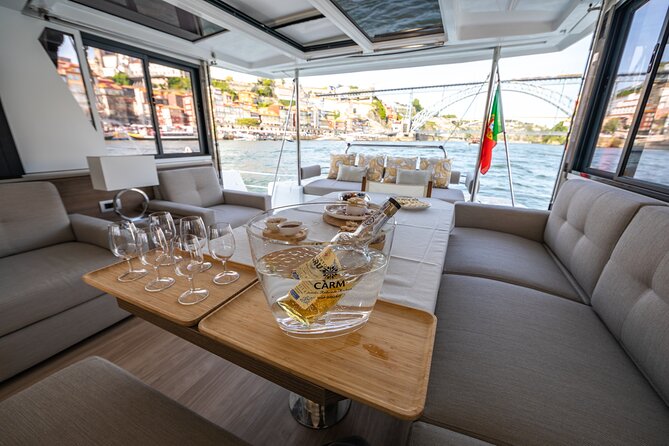
At $54.42 per person for about 2 hours, the pricing feels fair when you add up what’s included. You get Wi-Fi, a glass of port wine, and the boat tour itself. You are also buying a shortcut: a guided view of major Porto and Gaia landmarks without spending half your day on stairs and tram lines.
What is not included is also important. Food and other drinks are not included. So if you want a full meal experience, you will need to plan that separately.
Value check in one sentence: this price makes more sense when you treat it as a scenic, guided break plus a port tasting, not as a food tour or a long excursion.
If you want maximum value, consider:
- Eat before you board so the ride stays relaxed.
- Bring a light layer for sunset.
- Keep a little time buffer for check-in and boarding so you do not cut into your sightseeing day.
Should You Book This Douro Cruise?
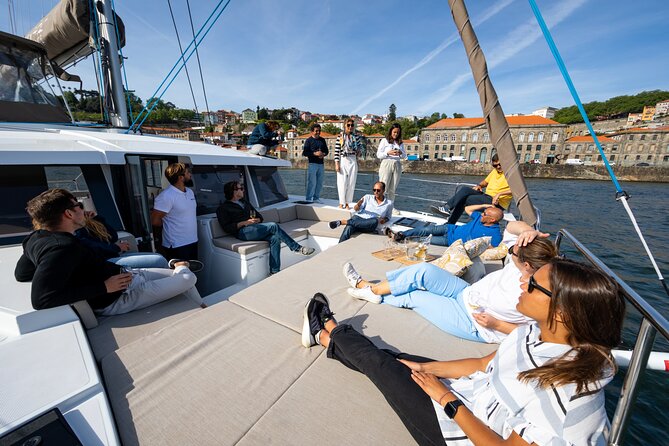
Book it if you want an efficient, scenic break that connects Porto’s big landmarks to the river and the Port Wine story. It is a great choice for couples, solo travelers, and anyone who wants to see a lot without walking steep neighborhoods for hours.
Skip it or switch expectations if:
- You are very sensitive to weather conditions and need a guaranteed sunset.
- You imagined a specific boat size. Vessel type and capacity can vary, and you might not get the exact setup you pictured.
- You want lots of formal history stops inside buildings. This is mainly a guided view from the water, with context pointed out as you pass key areas.
For most first-time Porto travelers, this is one of those “small effort, big payoff” days: you get the river perspective, a port glass, and a calmer rhythm than zigzagging streets.
FAQ
How long is the Porto Douro River Cruise With Port Wine?
The cruise is about 2 hours.
Where is the meeting point?
The tour starts at Marina da Afurada, R. da Praia 430, 4400-554 Vila Nova de Gaia, Portugal.
What is included in the ticket price?
Wi-Fi, a glass of port wine, and the boat tour are included.
Are food and drinks included?
No. Food and drinks are not included, and for shared tours you are not allowed to bring outside food or drinks.
Does the cruise require good weather?
Yes. The experience requires good weather. If it is canceled due to poor weather, you will be offered a different date or a full refund.
How big is the group?
This tour/activity has a maximum of 58 travelers.
Can I cancel for a full refund?
Yes. You can cancel up to 24 hours in advance for a full refund. If you cancel less than 24 hours before the experience starts, the amount paid is not refunded.
More Wine Tastings in the Douro Valley
- Douro Valley Small-Group Tour with Wine Tasting, Lunch and Boat
★ 5.0 · 3,642 reviews - Douro Valley Tour: 2 Vineyard Visits, River Cruise, Winery Lunch
★ 5.0 · 3,542 reviews - Porto: Douro Valley Tour with Wine Tasting, Cruise and Lunch
★ 4.7 · 2,714 reviews - Douro Valley Tour: Wine Tasting, Cruise and Lunch from Porto
★ 4.5 · 2,645 reviews
More Wine Tastings in Porto
- Porto: Live Fado Show with Glass of Port Wine
★ 4.8 · 6,498 reviews - From Porto: 2 Wine Regions, Farm-to-Table Lunch & Boat
★ 4.9 · 5,724 reviews - Authentic Small Group Douro Wine Tour with Lunch & River Cruise
★ 5.0 · 4,775 reviews - Porto: Bridges Cruise & Sunset & Port Wine Cellar Option
★ 4.2 · 4,180 reviews
Latest reviews from Porto
- Porto: City Center Walking Tour★ 4.6 · 227 reviews
- Porto Food Tour of 8 Tastings: Custard Tart, Bifana & Hidden Gems★ 5.0 · 229 reviews
- Aveiro and Coimbra Small Group Tour with Moliceiro Boat Cruise★ 4.5 · 236 reviews
- Transfer from Porto Airport to Porto City Hotels★ 5.0 · 236 reviews
- Day Trip Braga and Guimarães from Porto★ 4.5 · 237 reviews
- The Best Douro Boat Tour★ 5.0 · 243 reviews
- Beyond the Barrel: From Decadent to Down-home in the Heart of Porto★ 5.0 · 243 reviews
- Porto: Historic Center Tuk-Tuk Tour★ 4.5 · 244 reviews
Port Wine Cellar Tours, compared.
Live Fado Show with Port Wine at Lisboa em Fado
Read our review →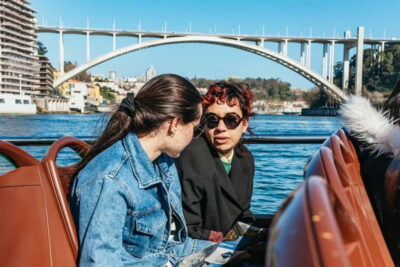
Bridges Cruise & Sunset & Port Wine Cellar Option
Read our review →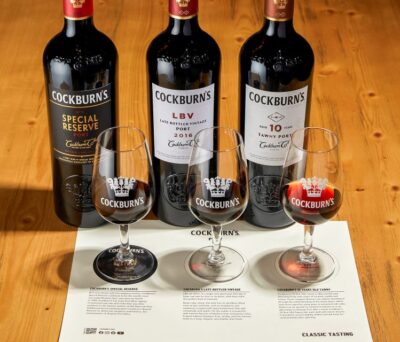
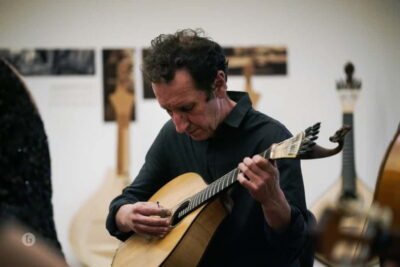
Fado & Port Wine in Traditional Portuguese Music Shop
Read our review →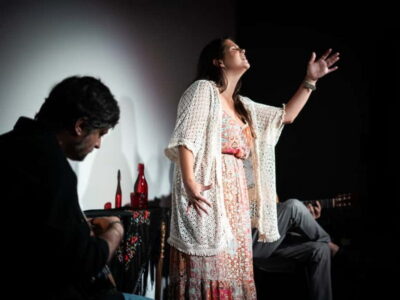
What is Fado? Commented Live Concert with Port Wine
Read our review →