
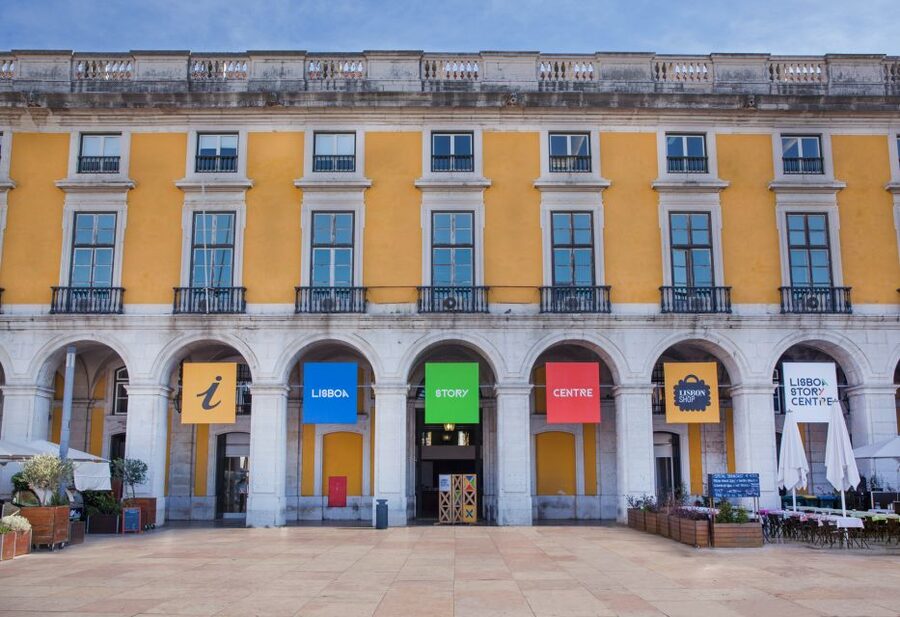
Reviewed · DAY TRIPS IN LISBON
Lisboa Story Centre: 1-Day Admission Ticket
Lisboa Story Centre is interesting because it turns Lisbon’s turning points into a guided walk through time, using sets plus multimedia and sensory moments in a compact, well laid out space. It is interactive, and it is designed so you can follow the story without feeling lost. You get a clear sense of how events changed the city’s look and spirit over centuries.
I like that the exhibits move chronologically, so the story builds instead of jumping around. I also like the multilingual audio guide model, which keeps the pace flexible while still giving you a storyteller’s thread.
One drawback to consider is that this experience leans heavily on earlier chapters of Lisbon, so if you are hoping for a big focus on the far contemporary era, you may feel the timeline thins out toward the end.
Key things you will notice
- A 60-minute journey built to fit a day that includes other Lisbon stops
- Six exhibition areas across about 2,200 square meters
- Five ground-floor galleries in chronological order, each tied to a historical episode
- All Saints’ Day 1755, the Great Earthquake, explained with dramatic reenactment style storytelling
- A first-floor virtual scale model that helps you connect past architecture to modern Lisbon
- Audio guides in many languages, including Portuguese, English, Spanish, French, Italian, German, Russian, and Mandarin, plus a child option for Portuguese
Where Lisboa Story Centre fits into your day at Terreiro do Paço
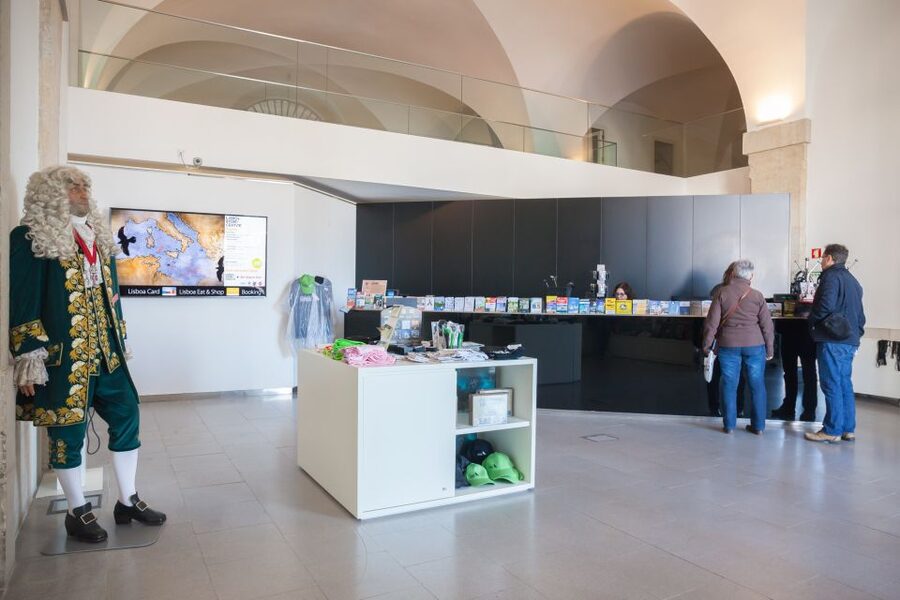
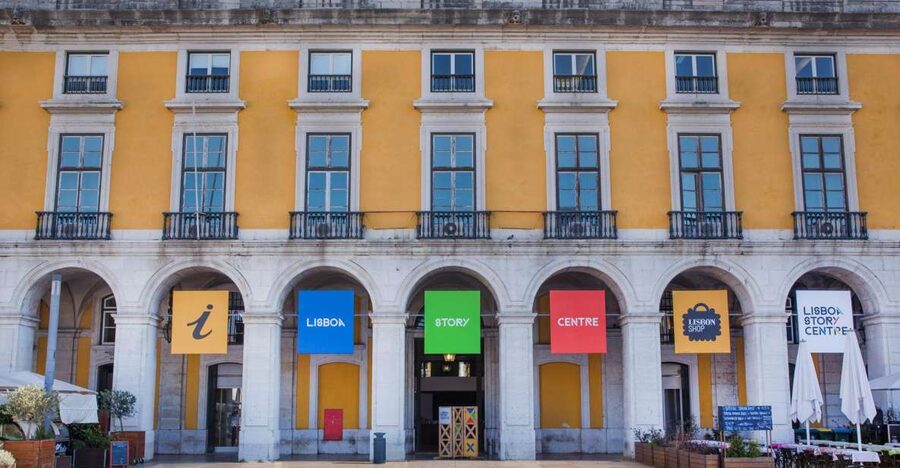
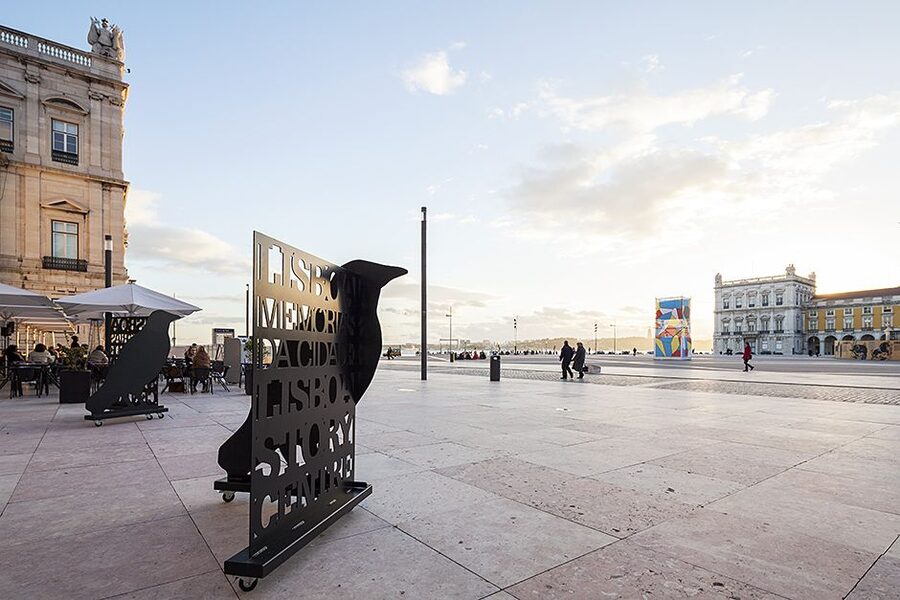
This center is in Lisbon’s Terreiro do Paço area, inside the East Wing of the newly renovated space there. It is open daily from 10:00 to 19:00, with last entrance at 18:00, so it works well as a mid day plan or an early evening one when you still want something inside.
If you want a smooth day, I suggest timing it so you are not rushing. The experience is built as a focused 60-minute circuit, but you will probably want extra minutes for the temporary exhibition area and for taking a breath between rooms.
The location is also helpful because you can combine it with nearby waterfront and historic walks. You are not isolated in a far away museum district, which makes this feel like something you can actually fit in.
More Day Trips in Lisbon
- Sintra and Cascais Small-Group Day Trip from Lisbon
★ 5.0 · 7,018 reviews - Three Cities in One Day: Porto, Nazare and Obidos from Lisbon
★ 4.5 · 3,572 reviews - Fátima, Nazaré and Óbidos Small-Group Day Trip from Lisbon
★ 4.5 · 3,444 reviews
The heart of the visit: five ground-floor exhibitions in time order
Your ticket gets you a route on the ground floor through five main exhibition areas. They are arranged in chronological order, which matters more than it sounds. When history is told out of sequence, you end up memorizing names. Here, you get cause and effect, so the city’s changes make sense as you go.
You will follow a recorded multilingual storyteller. That means the narration is consistent, and you can go at your own pace without needing a live group guide. It also makes the place feel easier with families, because the audio does not require everyone to be at the exact same speed.
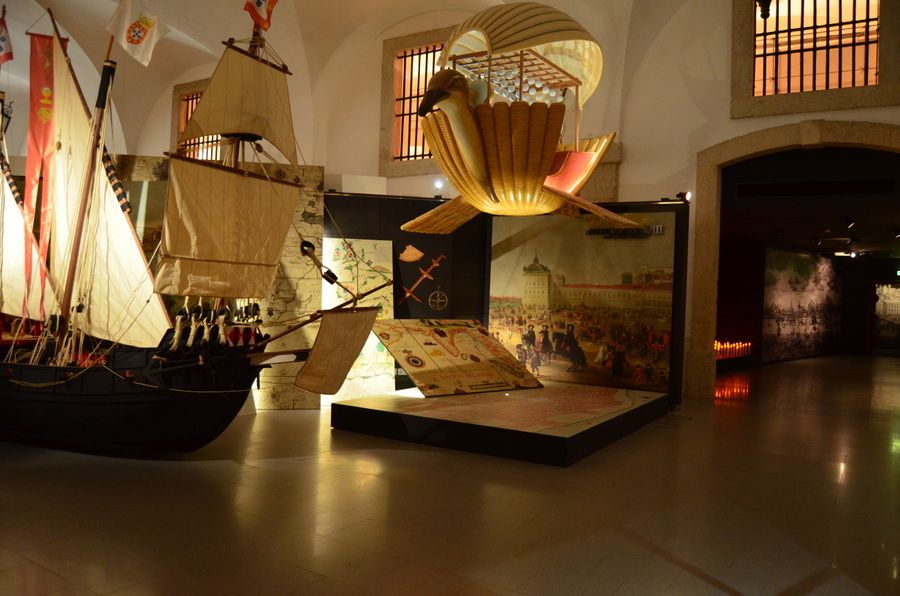
1) The 16th-century warehouse world, New World goods and caravels
One of the standout chapters is a 16th-century warehouse atmosphere. You see products connected to the New World, shipped by caravela ships, and presented with sets that help you picture how trade arrived before modern logistics existed.
This is a good section to pay attention to because it shows Lisbon as more than famous earthquakes and palaces. It helps you understand Lisbon as a hub that moved people, ideas, and goods. Even if you only catch parts while walking, the visual storytelling does the heavy lifting.
Practical note: if you like looking closely at details, take your time here. This is the kind of room where you might want to pause, rewind in your head, and read what you are seeing.
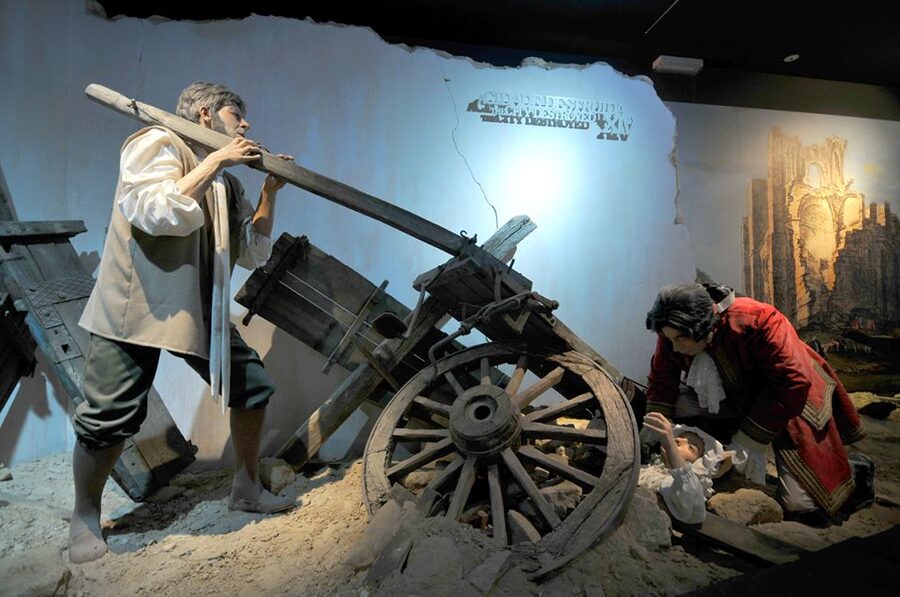
2) The Great Earthquake of All Saints’ Day in 1755
Another major highlight is the tragedy of All Saints’ Day in 1755, shown through a recreated experience focused on the Great Earthquake and its consequences. Instead of listing events, the center stages them in a way that makes the impact feel immediate.
This part is emotionally heavy by topic, so go in with the right expectations. You are not watching a quiet documentary, you are moving through a historical moment that uses strong sensory elements. If you prefer lighter, upbeat museum content, you might want to schedule this earlier in your day, when you still have energy for the rest.
More of Lisbon to look at
- From Lisbon: Day Trip to Porto, Óbidos, and Nazaré
★ 4.5 · 1,311 reviews - Lisbon: 4 Cities in One Day Óbidos, Nazaré, Batalha & Fátima
★ 4.3 · 796 reviews - From Lisbon: Fatima Batalha Nazare & Obidos Small Group Day Trip
★ 4.5 · 533 reviews - Arrabida and Sesimbra Small-Group Day Trip from Lisbon with Wine Tasting
★ 5.0 · 494 reviews
3) Marquis of Pombal and the reconstruction story
Right after the earthquake chapter, you accompany the Marquis of Pombal as he implements a far-reaching vision for reconstruction. This is the logical next step, and it is one of the reasons the order of the galleries matters. You do not just learn what happened, you learn how the city tried to respond.
What I like about this section is that it connects policy and planning to real city change. You start to see how decisions made after disaster shape streets, buildings, and a city’s identity long after the crisis fades.
4) The remaining ground-floor chapters you will still feel in your bones
The other two ground-floor exhibition areas cover Lisbon’s earlier and later history as part of the same chronological storyline. The center does not treat these as filler. Each area is built around an episode and uses sets plus multimedia to keep the story moving.
You may not remember every name, and that is okay. The goal here is understanding Lisbon’s arc. By the time you hit the earthquake and reconstruction content, those earlier segments help the big story click.
A small reality check on pacing
Because everything is presented as a guided circuit through rooms, you will likely cover more than you expect in a single hour. That can be a win if you want a compact experience. It can be a challenge if you hate museum speed.
If you know you get tired in indoor attractions, plan for breaks by stepping out to the next gallery only when you feel ready.
Upstairs on the first floor: the virtual scale model of Lisbon
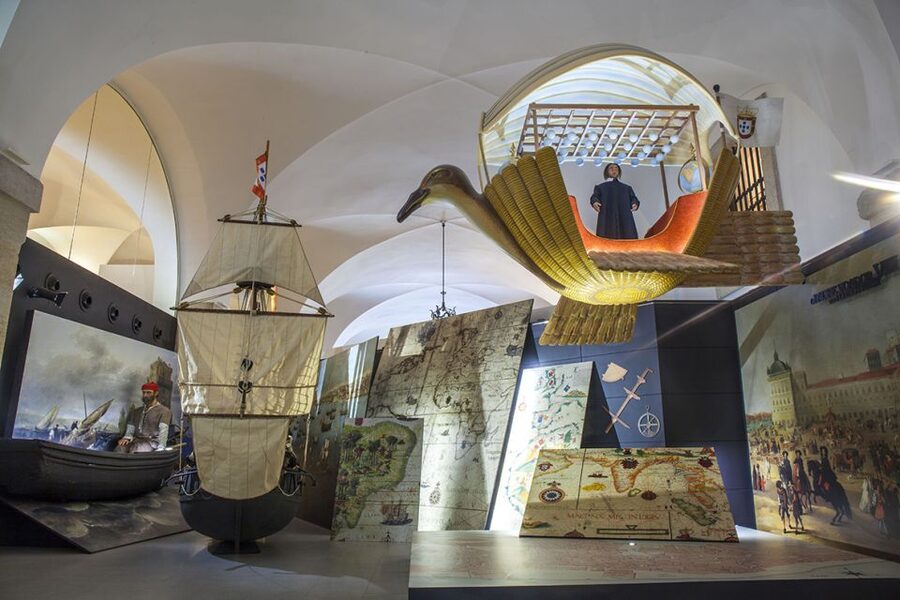
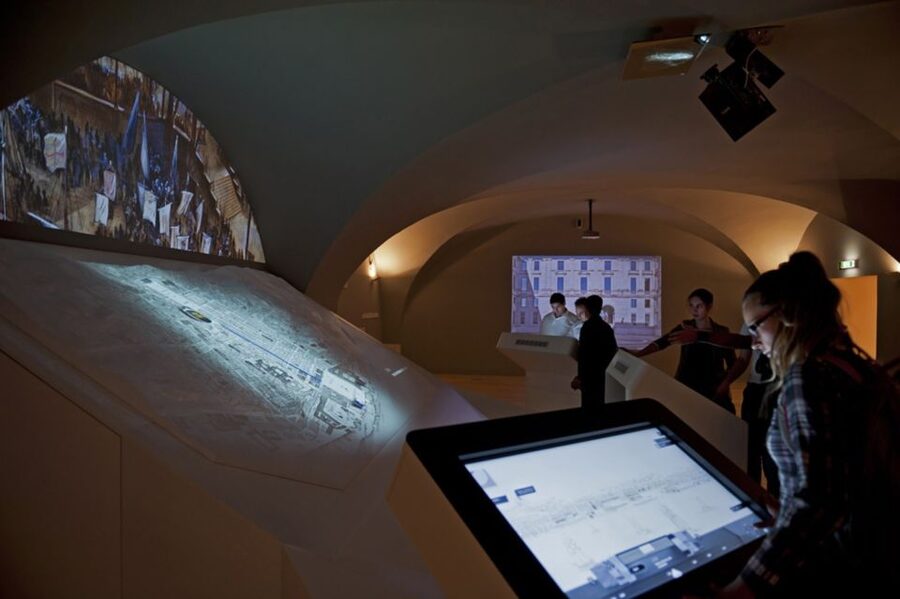
The sixth exhibition area is on the first floor and focuses on a virtual scale model of the capital. This part does two useful things.
First, it gives you a visual way to connect the past to the layout of the city. Second, it encourages you to notice modern Lisbon as something shaped by earlier patterns of architecture.
This is where a lot of people get their strongest takeaways for future sightseeing. When you walk outside later, you can translate what you saw on the model into street level curiosity: what parts look older, what looks rebuilt, and how different building styles show different eras.
Temporary exhibition area: a rotating add-on
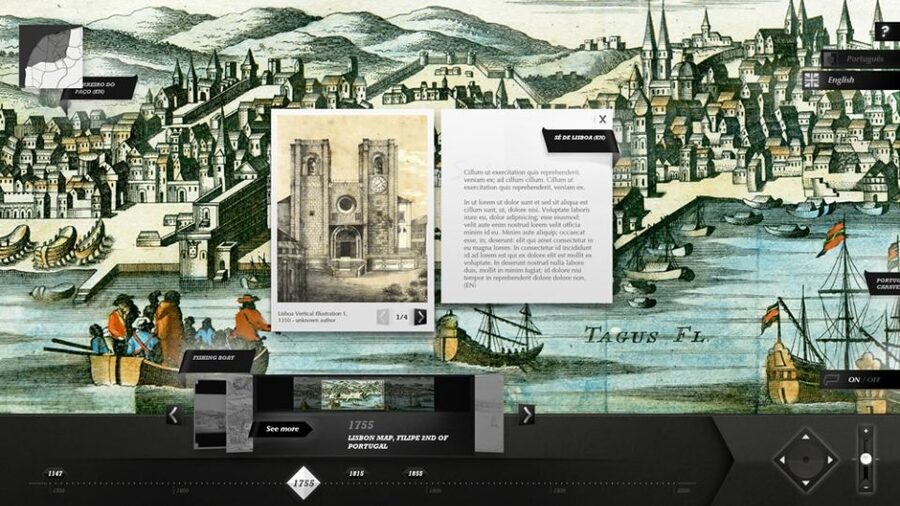
You also have access to a temporary exhibition area tied to the center’s themes. This is a nice bonus because it adds variety even if you want one main story and one extra layer.
I treat this section as flexible time. If you are tired after the main galleries, you can spend less time here. If you are energized, it is a good place to slow down and read more carefully.
The audio guide: your best tool for getting the most out of each room
Your admission includes an audio guide, and that matters because the experience is built as a narrated walk. The languages include Portuguese (adult and child versions), English, Spanish, French, Italian, German, Russian, Mandarin, and Japanese.
Here is how to get more value out of it:
- Start fresh at the beginning of the route so you hear the context before you reach the heavier scenes.
- If you see something that sparks a question, pause and let the next part of the narration connect it.
- Use the child Portuguese version if you are traveling with kids who do better with a lighter, shorter format.
Also, the center gives you a recorded multilingual storyteller. That helps because you avoid the classic problem of museum tours where your experience depends on which guide you happen to get.
Comfort and practical details that can affect your experience
Two practical points can really change how you enjoy the visit.
1) Indoor comfort in warm weather
One review note calls out that the installations are not air-conditioned. If you visit during hot months, dress for warmth, and bring a plan for hydration.
2) Shoes and movement
This is a walk-through design across multiple rooms and levels. You do not need hiking shoes, but you will be happiest in comfortable footwear.
If your day includes lots of outdoor walking, schedule this as a break, not as the final stop when your legs are already done.
Value for money: why this works as a 1-day ticket
Even without a formal price in front of you, you can still judge the value. Here is what you are paying for, in practical terms.
You are getting a 60-minute journey across time and space, staged in a way that is built for real understanding, not just passive viewing. The center covers Lisbon’s history from the earliest civilizations through the present day, with a structure that stays easy to follow.
You are also getting a setup that reduces common travel headaches. The ticket includes skipping the ticket line, and the audio guide handles language on your schedule. That combination is a big deal in a city where queues can eat up your sightseeing momentum.
Finally, the total area is about 2,200 square meters. That sounds like a number, but it helps you understand the scale: it is substantial enough to feel like a real experience, but compact enough for a single day.
Who will like Lisboa Story Centre most?
I think this works especially well for you if:
- You want a structured introduction to Lisbon history without reading a stack of books
- You like museum storytelling that uses sets plus multimedia rather than only text panels
- You travel with kids or teens who need an active experience, not a lecture
- You want to connect indoor learning to later outdoor walks
It might not be your best choice if you mainly want a modern Lisbon focus, or if you strongly prefer air-conditioned, calm museum rooms in hot weather.
For anyone trying to balance a first visit with authentic-feeling sightseeing, this is a smart way to get context fast.
Should you book this 1-day ticket?
Yes, I would book Lisboa Story Centre if you want a high clarity intro to how key Lisbon events shaped the city you will see outside. The chronological design, the audio guide in many languages, and the standout historical moments around the 1755 earthquake and reconstruction make it a strong use of a single day.
I would think twice if your priority is mainly very recent Lisbon, or if hot indoor spaces would ruin your day. If those are your needs, you might save your time and budget for other stops.
If you are flexible, go early or mid day, use the audio guide actively, and treat the first-floor model as your bridge to walking Lisbon afterwards. That is when the ticket tends to feel most worth it.
FAQ
How long is the Lisboa Story Centre visit?
The experience is designed as a 60-minute journey across time and space.
Where is the meeting point?
The meeting point is Terreiro do Paço, 78-81, 1100-148 Lisboa.
Is the audio guide included?
Yes. Your ticket includes an audio guide.
What languages are available on the audio guide?
Portuguese (adult and child versions), English, Spanish, French, Italian, German, Russian, Mandarin, and Japanese.
How much time do I need in total if I want to see everything?
The main route is 60 minutes, and you can also include the temporary exhibition area. Plan extra time if you want to linger in certain rooms.
What are the opening hours?
Lisboa Story Centre is open every day from 10:00 to 19:00, with last entrance at 18:00.
Is there a way to avoid the ticket line?
Yes, the ticket lets you skip the ticket line.
Is Lisboa Story Centre wheelchair accessible?
Yes, it is wheelchair accessible.
Is the facility air-conditioned?
One note you should consider is that the installations are not air-conditioned, so plan for warmer indoor conditions.
What if my plans change?
You can cancel up to 24 hours in advance for a full refund, and you can reserve now and pay later.
Latest reviews from Lisbon
- Lisbon Street Art – Private Guided Tour in a Electric Tuk Tuk★ 5.0 · 72 reviews
- Private Lisbon Walking Tour★ 5.0 · 72 reviews
- Pastel de Nata Workshop in Lisbon★ 5.0 · 72 reviews
- Palace Penna entrance included, Sintra, Cascais, Cabo Roca, private★ 5.0 · 72 reviews
- Group to Pena Palace, Sintra (pass by Regaleira) and Cascais★ 5.0 · 73 reviews
- Lisbon: Private Food Tour – 10 Tastings with Locals★ 4.8 · 73 reviews
- Lisbon: Transfer to Porto with Obidos and Nazare★ 4.9 · 73 reviews
- Secret Walking Food Tours in Lisbon – Belém★ 5.0 · 73 reviews
Day Trips in Lisbon, compared.

Sintra and Cascais Small-Group Day Trip from Lisbon
Read our review →
Three Cities in One Day: Porto, Nazare and Obidos from Lisbon
Read our review →
Fátima, Nazaré and Óbidos Small-Group Day Trip from Lisbon
Read our review →
4 Cities in One Day Óbidos, Nazaré, Batalha & Fátima
Read our review →
Fatima Batalha Nazare & Obidos Small Group Day Trip
Read our review →
Arrabida and Sesimbra Small-Group Day Trip from Lisbon with Wine Tasting
Read our review →
Best Sintra Day Trip From Lisbon – Pena, Cabo Da Roca & Cascais
Read our review →Browse the lists this tour appears in