
Reviewed · HISTORICAL TOURS
Lisbon Essential Walking Tour: History, Stories and Lifestyle
Lisbon is a city of layers, and this tour strings those layers together fast, in a way that actually helps you walk the rest of your trip with confidence. You start up in Bairro Alto, then work your way through viewpoints, churches, and classic neighborhoods, ending at Lisbon Cathedral.
Two things I really like about this experience are the story-driven stops (you hit key moments like the Jesuit church of São Roque and the 1974 Carnation Revolution site at Carmo) and the included coffee and cake break that gives you a breather before the next climb.
One heads-up: this is a hillside walking tour, so bring comfortable shoes, and know the Santa Justa elevator is not included in the price.
Key highlights at a glance
- Essential Lisbon sights in about 3 hours, built for first-timers who want the big picture
- Free admission for most stops, so you spend time seeing instead of paying
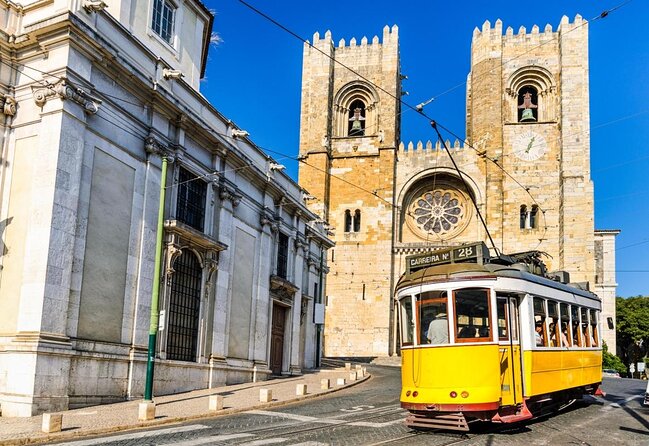
- Tram ride included, including the famous feel of Tram 28 during the route
- Iconic viewpoints over Baixa and the Tagus from miradouros
- Coffee with pastry included, a real local café break, not just a quick snack
- Small group size (max 15), which makes questions and pacing easier
Why this Lisbon walking tour is such a strong first move
If you only have a short window in Lisbon, you want two things: a route you can follow later and context you can reuse every day. This tour delivers both. It is short enough to fit into a busy schedule, but it covers neighborhoods that shape Lisbon’s identity, from the hilltop viewpoints down to the cathedral area.
I also like that the tour keeps your feet moving at a sensible pace. You get frequent “set piece” stops where the guide can explain what you’re seeing, then you move on, like going from chapter to chapter rather than getting stuck in one museum forever.
Finally, the best part is how human it feels. Guides like Paolo, Beatrice, Ricardo, Ana, Lucie, Sofia, and Joao are repeatedly highlighted for keeping the group engaged, with clear explanations and good local tips you can actually use.
More Historical Tours in Lisbon
- Lisbon: History, Stories and Lifestyle Walking Tour
★ 4.8 · 10,902 reviews - Lisbon: Daytime or Sunset Boat Cruise with History and Wine
★ 5.0 · 1,053 reviews - Explore Lisbon by Tuk Tuk: History and Viewpoints
★ 5.0 · 840 reviews
Price and what you really get for $30.25
At $30.25 per person for roughly 3 hours, this is strong value because a lot of the key stops are free. Several churches on the route are listed with free admission, and the tour also includes a tram ride plus an actual café break with coffee and pastry.
Here’s how I think about value on tours like this:
- You are paying primarily for a local guide’s narration and route planning.
- You save money because most sightseeing stops are not extra-ticket additions.
- You also save energy because you are not trying to connect all these places on your own, uphill and all over town.
The only notable exception in the route is the Santa Justa elevator, which is not included. So if you know you want that elevator ride, plan to add that cost when you get there.
Bairro Alto start: the neighborhood that explains Lisbon’s hills
The tour begins in Bairro Alto, a hillside area with a five-century-old history. This is where Lisbon’s layout starts to make sense. Instead of treating the city like a flat postcard, you see it as built on slopes, switchbacks, and viewpoints.
You’ll learn how the earthquake of 1755 changed where families lived, and how people moved and rebuilt after the damage. That matters because Lisbon is not just old buildings. It is also a city that keeps remaking itself after big shocks.
Why I love this opening: it sets your mental map. You start high, you look around, and the guide helps you understand what you’re seeing before you head downward.
Practical note: expect uneven sidewalks and stairs. This is normal Lisbon, not a gimmick.
Miradouro Sao Pedro de Alcantara: your first big payoff view
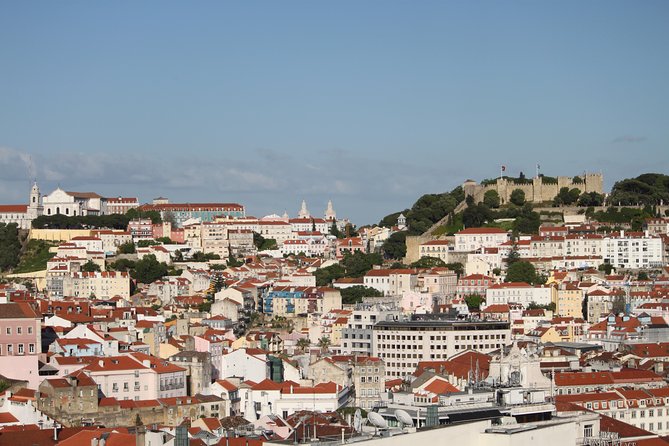
Next up is Miradouro São Pedro de Alcântara, passing through the garden area and then stepping into one of those “okay, now I get it” moments. From here you look toward Baixa and across the south bank of the Tagus River.
This stop is only about 15 minutes, but it works because it gives your eyes a reset. After churches and streets, a viewpoint helps you regroup. It also makes the later stops easier to understand because you now have a visual reference.
If you like photos, this is one of your best chances early on. Just remember that miradouros can be breezy, and you will still be climbing soon after.
More Walking Tours in Lisbon
- Best of Lisbon Small-Group Guided Walking Tour
★ 5.0 · 4,869 reviews - Lisbon: Food and Wine Small Group Walking Tour
★ 4.9 · 4,082 reviews - Best of Lisbon Walking Tour: Rossio, Chiado & Alfama
★ 4.9 · 2,700 reviews - Age of Discoveries Walking Tour in Belém
★ 5.0 · 1,513 reviews
Igreja de São Roque: where Jesuit design turns into an art museum
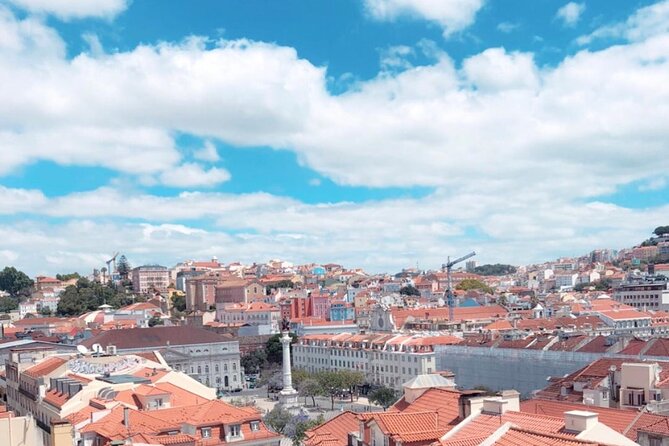
At Igreja de São Roque, you go into a church and museum built by the Jesuits. The exterior is described as austere, but the interior is the point, with gilding, tiles, and paintings in Mannerist and Baroque style.
This is the kind of stop that changes how you see Lisbon architecture. Outside, churches can look severe or plain. Inside, they can feel like they are showing off for a reason, and the guide’s job is to connect that art to the people and ideas behind it.
Timing is about 20 minutes. That is enough to see key highlights without getting buried in details, especially on a walking tour day.
Igreja do Carmo and the Carnation Revolution link
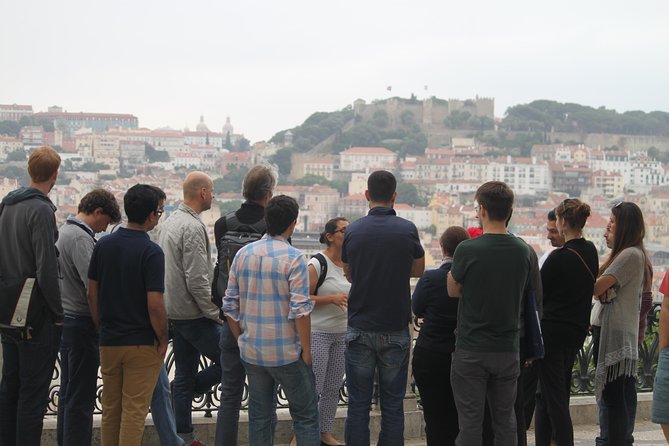
Then you head down toward Igreja do Carmo, a church and convent tied to Gothic architecture. This is also where the tour becomes more than sightseeing.
The site is historically important as the place where the Carnation Revolution began in 1974, which ended nearly five decades of dictatorship. Even if you only know Portugal’s modern history in broad strokes, this is a clear moment that puts political change into a physical setting.
I like it when tours do this, when they take a landmark and show you why it matters beyond its postcard value. This stop gives that kind of grounding.
Santa Justa elevator: the best viewpoint, with a separate ticket
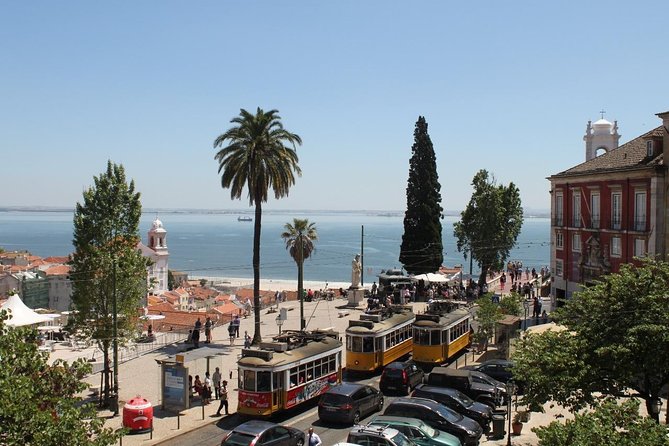
After heading further along, you reach Elevador de Santa Justa, an imposing structure in Gothic Revival style. The goal here is to give you a top-level view of Lisbon, because Santa Justa is known for viewpoints.
Important detail: the elevator ticket is not included. So consider what you want:
- If you just want the view from outside and a sense of place, you can treat this as a great photo stop.
- If you want to ride up and down inside, budget for that extra ticket.
This is also one of those moments where the hill-work you did earlier starts to feel worth it.
Baixa break: coffee and pastry to recharge before the ride
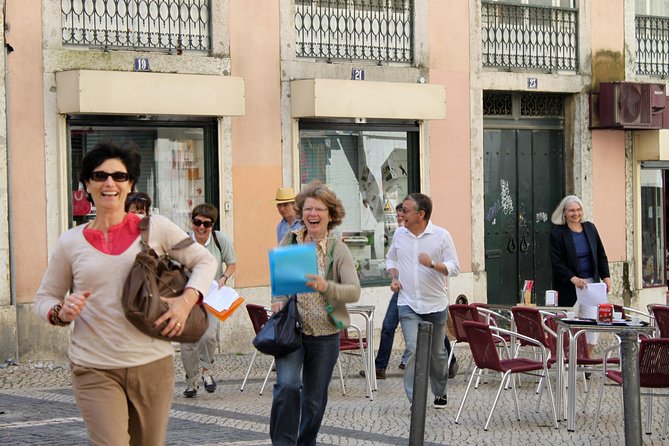
Now you shift gears into the everyday rhythm of Lisbon. There is a coffee with pastry break at a local café, and that is included.
This matters more than you might think. Lisbon walking tours often feel like a string of “look, look, look.” Here you get a chance to sit, reset, and ask questions without rushing.
If your group includes teens or older relatives, this stop is often the difference between a tour that feels exhausting and one that feels doable.
Praca da Figueira to Portas do Sol: the tram that saves your legs
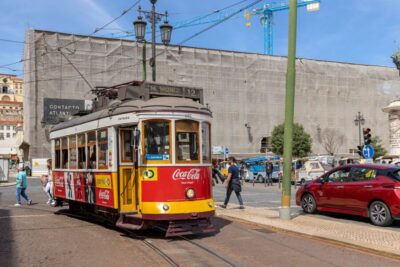
From Praca da Figueira, you’ll see attractions in the heart of Baixa, then take a tram ride going up from the castle area to Portas do Sol.
This is where the tour becomes more than a walking route. The tram helps you connect two major areas while also cutting down the time you spend on steep steps.
Many participants specifically mention the fun of the Tram 28 route experience during this part of the day. That matters because Tram 28 is one of those Lisbon things people talk about for years, not just because it is famous, but because it fits the city’s “hill-to-hill” geography.
Alfama at Portas do Sol: fado streets, saint festivals, and river views
At Portas do Sol, you are positioned perfectly to take in the Alfama district, one of Lisbon’s oldest traditional neighborhoods. The streets here are narrow and winding, and you can feel why Alfama is so tied to daily life.
You’ll also see the Monastery of São Vicente de Fora and the National Pantheon area as the tour connects major landmarks to the neighborhood vibe.
The guide ties Alfama to two key cultural themes:
- Fado houses, a major piece of Lisbon’s music identity
- Local saint festivals, especially St. Anthony, which helps explain why Lisbon’s calendar includes so much community celebration
This stop is about 20 minutes. It is long enough to walk through a small slice of the neighborhood feel, but short enough to keep the pace comfortable.
One tip: Alfama streets can feel crowded and slippery if it has rained. Watch your footing, then enjoy the view back toward the Tagus.
Ending at Lisbon Cathedral: why the city’s timeline is written in stone
The tour ends at Lisbon Cathedral, built in 1150, about three years after Lisbon was taken back from the Moors. That is your history anchor.
Over time, the cathedral has gone through architectural changes, so you experience it as a mixture of styles rather than one pure era. This is very Lisbon. The city keeps rewriting itself, even when the walls stay standing.
I like ending here because it turns your earlier stops into context. You started high, you walked through layers of religious power, you heard about political change, and then you land at a place that literally marks Lisbon’s long timeline.
What to wear, bring, and plan for during the day
This is a hillside walking tour. Even if you are an active traveler, you will feel it in your legs. One review highlighted close to four miles of walking, so treat the tour as a real half-day commitment.
Bring:
- Comfortable shoes with traction
- Water, especially in warm weather
- A phone with enough battery for photos at the viewpoints
If you get winded easily, plan breaks when the guide pauses for photos or questions. Also, use the café break to recover, then keep your pace steady in the late part of the route around Alfama.
Guides make the difference: what the best versions of this tour feel like
The most praised aspect is how the guide turns landmarks into stories. You do not just get facts. You get explanations that make the city’s layout make sense.
Guides mentioned by name in feedback include Paolo, Beatrice, Ricardo, Ana, Lucie, Sofia, and Joao, and the recurring theme is clear, engaging communication plus useful suggestions for what to do next after the tour.
If you want to maximize the value, do this simple thing: ask a question at the café break. Ask how the neighborhoods connect or what to prioritize after you finish. That’s when you are most likely to get a personalized recommendation.
Who should book this tour (and who might want a different plan)
This tour is perfect for:
- First-time visitors who want a quick, structured orientation
- People who like history told in the real places where it happened
- Travelers who want both viewpoints and major landmarks in one morning or afternoon block
- Small groups (max 15) where you want interaction and questions
Consider a different format if:
- You have trouble walking or handling stairs and hills. This route includes multiple steep segments.
- You are looking for a long museum-heavy day, because most stops are short, focused visits plus viewpoints.
Should you book it? My practical take
Book it if you want to get oriented fast and leave with the sense that Lisbon finally makes sense. The included coffee and pastry, the tram ride, and the fact that most sites have free admission make the price feel fair, not inflated.
Skip it or add more time only if you know you need more rest than a hillside walking route provides. And if the Santa Justa elevator is a must for you, plan on paying separately.
If you do book, treat it like your Lisbon “starter kit.” Wear the right shoes, show up with a curious mindset, and you’ll be able to build the rest of your trip on top of what you learn here.
FAQ
How long is the Lisbon Essential Walking Tour?
It runs for about 3 hours.
How much does it cost?
The price is $30.25 per person.
What is included in the tour price?
You get a professional guide, a tram trip, coffee with pastry, and liability and personal accident insurance.
Is admission included for all the stops?
Most stops listed are free to enter. The Santa Justa elevator admission is not included.
What language is the tour offered in?
It is offered in English, and the tour is also available in multiple languages if you select them at booking.
How big is the group?
The tour has a maximum of 15 travelers.
What is the cancellation rule?
Free cancellation is available if you cancel up to 24 hours in advance for a full refund. If you cancel less than 24 hours before the start time, the amount paid will not be refunded.
Latest reviews from Lisbon
- Private Tour: Sintra, Cabo da Roca and Cascais Day Trip from Lisbon★ 5.0 · 225 reviews
- Lisbon: Food Tasting Tour by Tuk Tuk with 2 Stops★ 4.8 · 226 reviews
- Berlenga Island Small-Group Day Trip from Lisbon★ 4.5 · 227 reviews
- Sintra Deluxe from Lisbon with Pena Palace ticket★ 4.0 · 228 reviews
- Fátima, Nazaré, Óbidos and S. Martinho do Porto Small-Group Tour from Lisbon★ 5.0 · 229 reviews
- Évora and Monsaraz with Regional Wine Tasting from Lisbon★ 4.5 · 229 reviews
- Expert Plus Lisbon Tour with Local Guide in Private Eco Tuk Tuk★ 5.0 · 230 reviews
- Historic Walking Tour Through Lisbon’s Oldest Neighborhood★ 5.0 · 233 reviews
Historical Tours, compared.
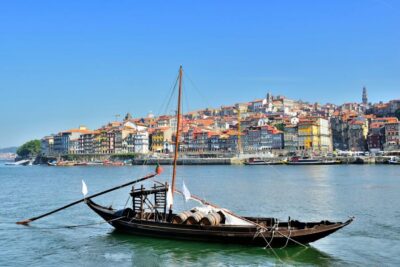
Douro Valley: Historical Sites, Wine Experience, Lunch & Cruise
Read our review →
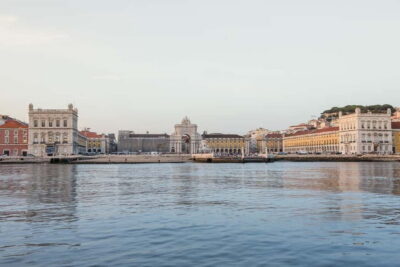
Daytime or Sunset Boat Cruise with History and Wine
Read our review →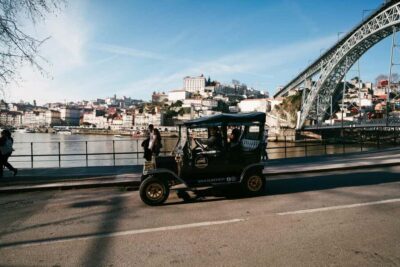
Private Tour of the Historic City in a Ford T Car
Read our review →
Browse the lists this tour appears in