
Reviewed · PASTEL DE NATA WORKSHOPS
Lisbon: Pastel de Nata Masterclass at a Real Bakery
A Pastel de Nata masterclass in a real bakery kitchen is a fun way to learn Lisbon food, not just watch it. I especially like the hands-on coaching from a pro pastry chef, and I love that you learn the method behind the puff pastry, not just the final tart. The one thing to consider is that it is active and kitchen hot, so if mobility is a challenge, this may not be the best fit.
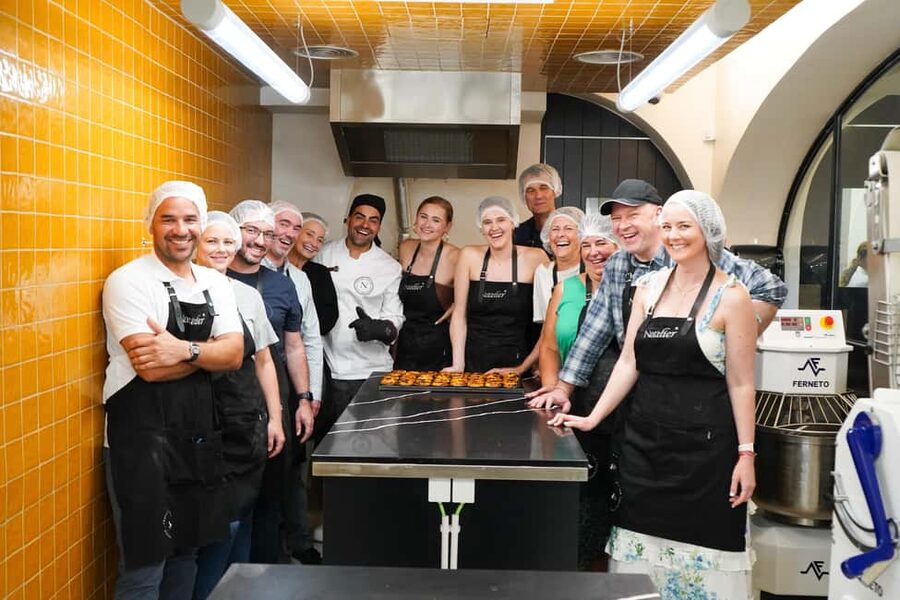
You’ll spend about 2 hours working as a team, max 12 people, and end up with 3 Pastéis de Nata you made yourself plus a beverage of your choice. Chefs you might cook with include João Batalha, Silvia Sousa, Adriano Cardoso, or Sergio Garcia, and instructors like Adriano and Silvia also get mentioned a lot for clear, patient guidance.
Key things that make this Pastel de Nata class worth your time
- Real bakery kitchen, real baking setup: you work where pastry gets made, not in a classroom corner.
- You learn puff pastry lamination from scratch: folding and layering is a big part of the lesson.
- At least 3 tarts per person: you do, you bake, you taste, and you go home proud.
- Small group size (max 12): enough attention that you can actually copy the technique.
- Pro oven baking, then a tasting moment: warm tarts plus a barista-made drink.
- Chefs with named credibility: you might train with João Batalha or other in-house pastry chefs.
Enter Nat’elier: Lisbon’s Pastel de Nata lesson that feels like the real thing
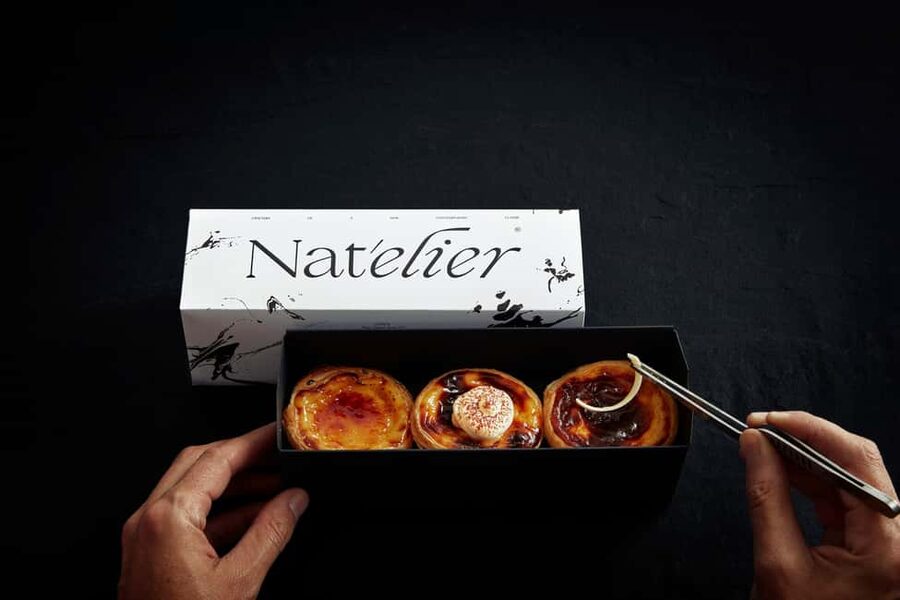
If Lisbon has a snack you feel in your bones, it is Pastel de Nata, the Portuguese egg tart with that blistered, caramel-edged crust. What makes this class stand out is not the dessert theme. It is the fact that you learn in a working bakery kitchen with a professional pastry chef, and you make the dough and bake the tarts yourself.
I like that the experience is designed as a true skill workshop. You start with a short introduction to the tart’s history, then you get into the kitchen and learn the steps that create the signature texture. Even if you have never baked before, you are not left with a vague demo and a paper recipe.
The class also has a social side that is actually useful. With a max group size of 12, you can meet fellow food lovers and still get coaching on your own technique. One solo traveler note that group time is a big reason people book this sort of experience, and it makes sense here because you do real tasks side by side.
More pastel de nata baking:
- Lisbon: Pastel de Nata Baking Class
★ 4.9 · 2,106 reviews - Pastel de Nata Masterclass at a Real Bakery in Downtown Lisbon
★ 5.0 · 491 reviews - Pastel de Nata Pastry Class: Bake and Enjoy Your Own Treats
★ 5.0 · 485 reviews
Meeting point near Baixa-Chiado: how to get there without stress
You meet at Nat’elier, the pastry store linked to this masterclass. It is located outside the metro station of Baixa-Chiado on the blue line, and the easiest plan is to search for Nat’elier on Google Maps and follow the street directions from there.
Wear what you can move in. You will be working at a station, handling dough, and wearing an apron and hair net. Closed-toe shoes are smart since you are in a bakery environment.
Also, give yourself a little extra time to find the entrance. Lisbon streets are charming, which also means they can be slightly confusing when you are looking for a door at the end of a busy block.
The 2-hour game plan: history, dough, custard, and an oven that does the heavy lifting
This is a tight 2 hours, and you feel it in a good way. You are not wandering between stations like a typical tour. Instead, the rhythm is: learn the why, then do the step, then move to the next one.
Here is the flow you should expect:
1) Intro and tart history context
You begin with an introduction to Pastel de Nata, including background on why the tart became such a Lisbon staple. This part helps your brain understand what you are about to make, especially when a chef explains how small techniques change texture.
More time in Lisbon:
- Lisbon City Center Tour – The Unmissable Lisbon
★ 5.0 · 22,234 reviews - Lisbon: Sintra, Pena, Regaleira, Cabo da Roca & Cascais
★ 4.7 · 19,656 reviews - Lisbon Card: 24, 48, or 72-Hour Pass
★ 4.5 · 17,944 reviews - Lisbon: Jerónimos Monastery Entrance Ticket
★ 4.1 · 14,164 reviews
2) Gear up inside a pro pastry kitchen
You put on aprons and hair nets, then you go into the working kitchen area. This is where the experience becomes more than hands-on fun. You see and use pro tools and you learn in the environment where the pastry process is done correctly, day after day.
3) Puff pastry from zero, with lamination practice
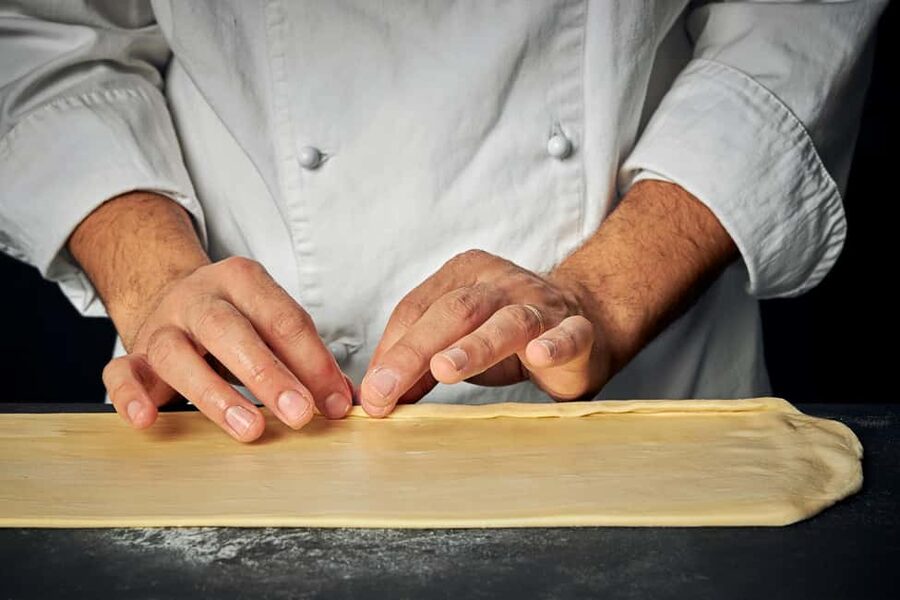
This masterclass includes making puff pastry from scratch. That means lamination practice, folding, layering, and handling dough in a way that creates those flaky, shattery layers later. It can sound intimidating, but the key is that you get coached through the steps rather than being sent off to figure it out.
A lot of the highest praise from past students focuses on clear instruction, patience, and the sense that you finish the class understanding what you did and why you did it. That is the difference between learning a recipe and learning a technique.
4) Make at least 3 Pastéis de Nata by hand
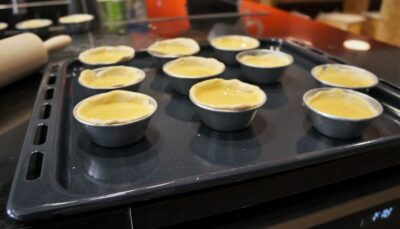
Once the dough part is underway, each participant makes at least 3 tarts. You do it by hand, not as a bystander. You learn the specific Pastel de Nata technique for spreading and shaping, then you fill the custard.
This matters because it gives you repetition in a short window. You get more than one attempt, and that is how a beginner actually improves fast.
5) Bake in a professional oven, then taste
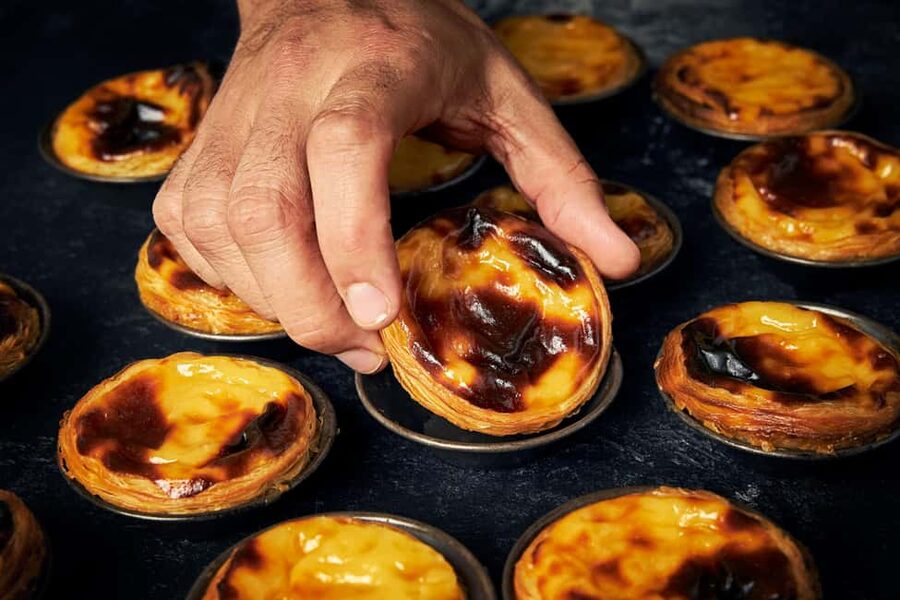
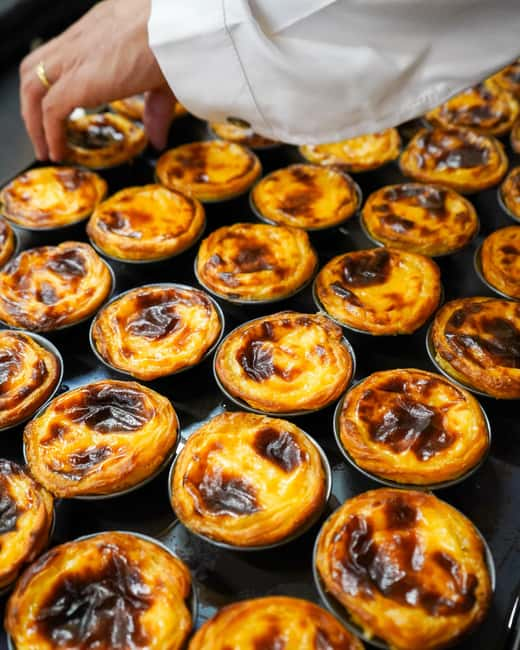
After you assemble and fill the tarts, you bake them in a professional oven. When they come out warm, that is when you get the payoff: blistered edges, custard set just right, pastry crispness.
Then you taste your creation, with a drink of your choice. Alcohol is excluded, but hot or cold non-alcoholic beverages are included, and baristas craft the drink.
What you actually learn about puff pastry lamination, and why it matters
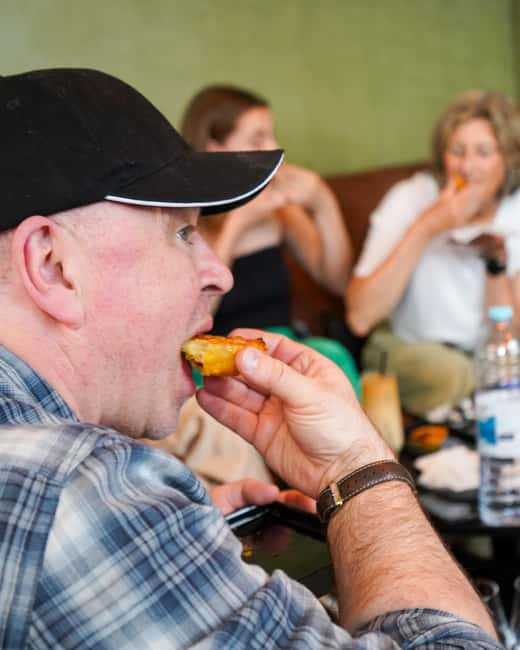
The puff pastry portion is the big education moment. Many people think they are signing up to make custard tarts. You are, but the pastry shell is where most beginners struggle, and it is where your results will rise or fall at home.
In class, you learn lamination by doing the folds and handling steps that build layers. You also learn how to work with the dough so it does not get sloppy or collapse. That hands-on guidance is a huge reason this class earns such strong ratings.
One practical benefit for you: when someone explains why a step matters, you can translate it to your own kitchen later. Instead of guessing, you understand what texture you should aim for. That is exactly what multiple participants highlight, including people who mention chefs explaining the purpose of each step.
If you have zero baking experience, good. This class is built for beginners. Just be ready for the fact that dough work is physical and a little messy. That is normal. Your apron is there for a reason.
Custard filling and shaping: where the technique turns into that signature tart look
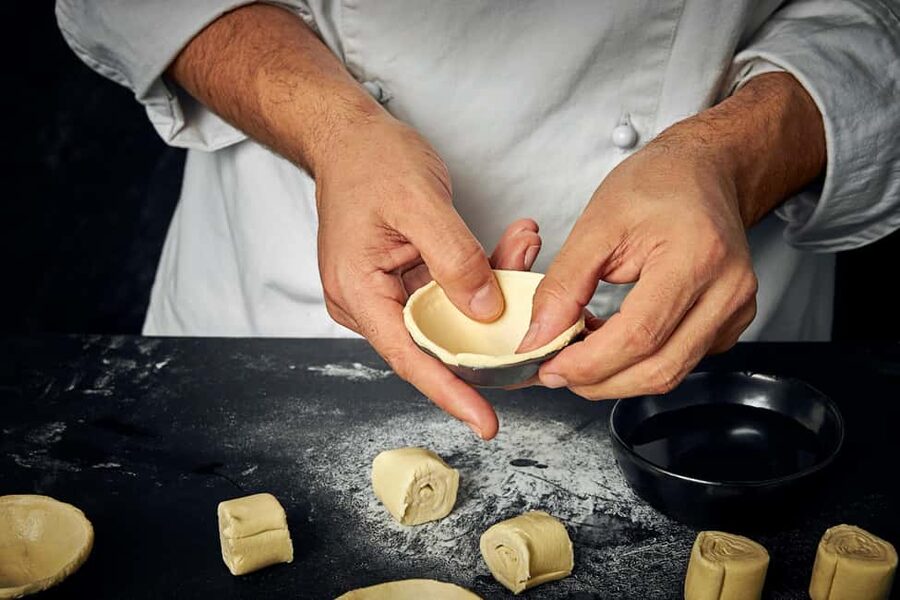
Pastéis de Nata have a look that is hard to fake if you rush: a thin, crisp shell with a custard that sets into a tender top. The filling step is where you learn how much custard to use and how to fill correctly so the tart bakes evenly.
You learn a Pastel de Nata specific technique for spreading and filling. Since you make multiple tarts yourself, you get to see the differences that small changes create.
Here is a detail worth noting from the way instructors are praised: the best classes do not just tell you what to do, they help you correct as you go. Instructors like Adriano and Silvia are repeatedly praised for clear instructions, encouragement, and patience, and that matters because custard timing and filling amount can be tricky.
Baking for real: professional oven timing and the warm-tart reward
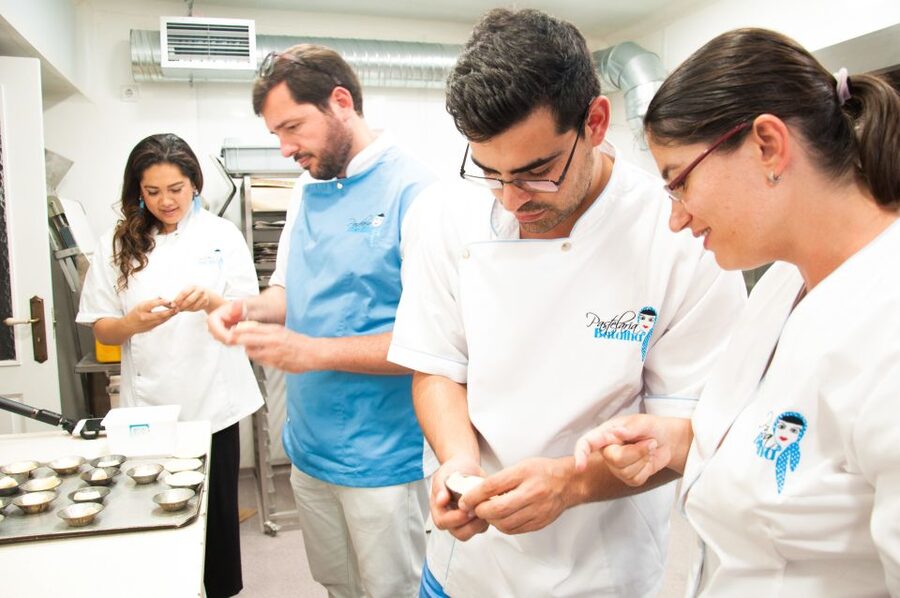
The class uses a professional oven, so you are baking with a stable setup that you will not perfectly match at home. Still, the oven part is more than convenience. It teaches you how the pastry shell should transform, and it shows you what set custard looks like when you nail the process.
When the tarts come out warm, you taste right away. This is not an afterthought. Warm Pastéis de Nata taste different from cooled ones. Crisp edges, aromatic custard, and that fresh pastry scent are part of what you came for.
If you are a food photo person, you also get multiple photo opportunities in the process. Some past students also note group photos and the ability to take pastries home in a box if you want to extend the joy.
Drinks, certificate, and the take-home value beyond one snack
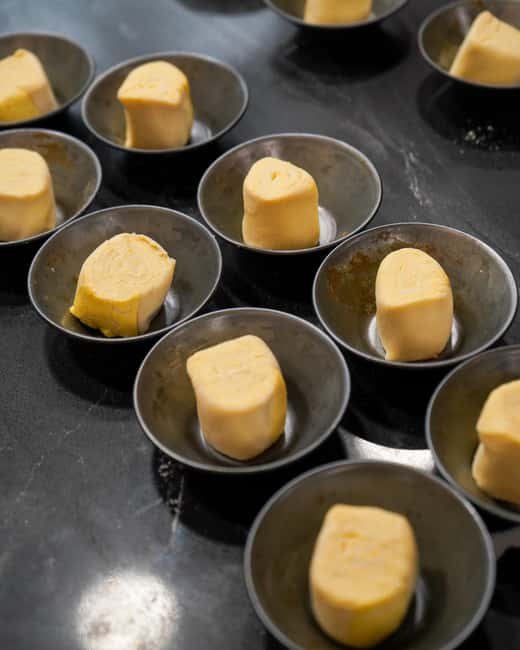
You do not just leave with something to eat. You leave with tools for future success.
Included:
- 3 Pastéis de Nata (so you have more than one tart to share or compare)
- A barista-crafted hot or cold beverage of your choice, alcohol excluded
- Ingredients, all baking equipment, aprons, hair nets, and water
- A certificate of participation
Extra value shows up in reviews, and it is useful if you like recreating food at home. Several participants mention receiving a recipe by email after the class. That helps you keep momentum rather than starting from memory weeks later.
For drink pairing, keep it simple. Espresso is a classic in Portugal for a reason. If you choose something else, you still get the included beverage and a chance to slow down and taste your results.
Price and value: why $82 can make sense for this kind of class
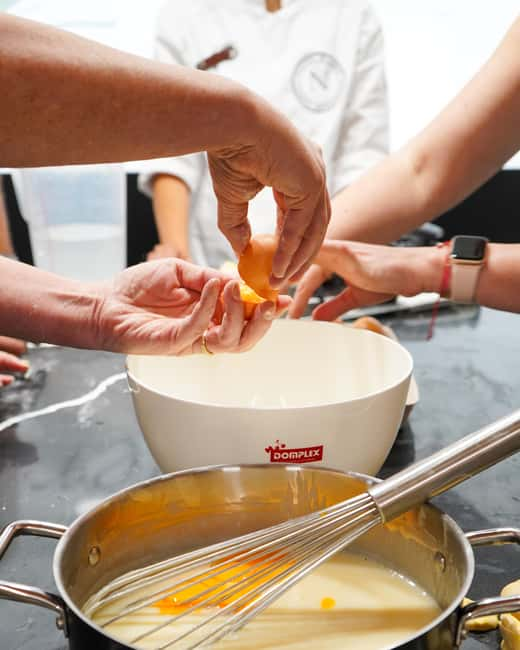
At $82 per person for a 2-hour masterclass, you are paying for more than dessert. You are paying for:
- A real bakery kitchen environment
- Pro chef instruction while you work
- Equipment, ingredients, aprons, hair nets, and water
- A small group format (max 12)
- Baking with a professional oven
- A tangible outcome: at least 3 tarts you made
Compare that to the cost of taking home a box of pastries. Yes, you get pastries from this class. The big difference is the skill you gain. If you bake at all, you will likely feel the value quickly because you can reuse what you learn.
Also, the class is built so beginners succeed. Many top-rated comments focus on confidence after the workshop, including people saying they can make Pastéis de Nata at home. That is the real currency here.
Could it be expensive for some budgets? Sure. But for food lovers, it can be one of the most memorable, hands-on experiences in Lisbon.
Who should book, and who might want a different plan
This is ideal if:
- You want a hands-on Lisbon food experience, not just a tasting
- You enjoy learning techniques, especially pastry lamination and custard filling
- You like small groups where you can talk to instructors and other students
- You travel solo and want a structured social activity
You might skip it if:
- You have mobility impairments, since the class is not suitable for mobility issues
- You are looking for a super relaxed, watch-only activity. This is active baking work.
Language-wise, the class is offered in English and Portuguese. If you speak English confidently, you should be fine. If you need very detailed communication and you are the only person relying on a second language, you might find it harder to catch every nuance, based on one participant’s experience.
Practical tips to get the best results (and enjoy the process)
Here are a few things that will help you enjoy the class and come out with tarts you feel proud of:
- Pay attention to the dough handling cues: lamination depends on technique, not willpower.
- Ask the chef to repeat a step if you miss one. Instructors are there to guide you.
- Go slow with the filling. Custard amount affects baking and look.
- Come with an appetite. By the time you taste, you will want to focus on the warm pastry and custard texture.
- If you are hungry later, plan your next meal carefully. You may not need much after eating your own tarts plus a beverage.
Should you book this Pastel de Nata masterclass?
If you like food with a story and you want to learn a real technique, I think this class is a strong yes. The combination of a real bakery kitchen, a max group of 12, named pastry chefs like João Batalha or Silvia Sousa, and the fact that you bake at least 3 tarts yourself makes it feel like genuine value, not a gimmick.
Book it if you want Lisbon flavor plus a skill you can carry home. Skip it if you want something purely observational, or if mobility limitations are an issue for you.
If you are choosing between a pastry tasting and an actual baking workshop, this is the one that turns tasting into confidence.
FAQ
What will I make and eat during the class?
You’ll make at least 3 Pastéis de Nata by hand and bake them in a professional oven. You also get to taste the warm tarts at the end, with a drink of your choice included.
How long is the Pastel de Nata masterclass?
The class lasts about 2 hours.
Where do I meet for the masterclass?
You meet at Nat’elier, located outside the metro station of Baixa-Chiado on the blue line.
Is the class taught in English?
Yes. Instruction is available in English and Portuguese.
Is a beverage included, and can I choose hot or cold?
Yes. A barista-crafted hot or cold beverage of your choice is included. Alcohol is excluded.
What is included in the price?
Included are ingredients for the baking class, all baking equipment, aprons and hair nets, water, 3 Pastéis de Nata, a beverage (alcohol excluded), and a certificate of participation.
Can I cancel if my plans change?
Yes. You can cancel up to 24 hours in advance for a full refund.
Latest reviews from Lisbon
- Lisbon Street Art – Private Guided Tour in a Electric Tuk Tuk★ 5.0 · 72 reviews
- Private Lisbon Walking Tour★ 5.0 · 72 reviews
- Pastel de Nata Workshop in Lisbon★ 5.0 · 72 reviews
- Palace Penna entrance included, Sintra, Cascais, Cabo Roca, private★ 5.0 · 72 reviews
- Group to Pena Palace, Sintra (pass by Regaleira) and Cascais★ 5.0 · 73 reviews
- Lisbon: Private Food Tour – 10 Tastings with Locals★ 4.8 · 73 reviews
- Lisbon: Transfer to Porto with Obidos and Nazare★ 4.9 · 73 reviews
- Secret Walking Food Tours in Lisbon – Belém★ 5.0 · 73 reviews
Pastel de Nata Workshops, compared.
Pastel de Nata Cooking Class with Grandma’s Recipe
Read our review →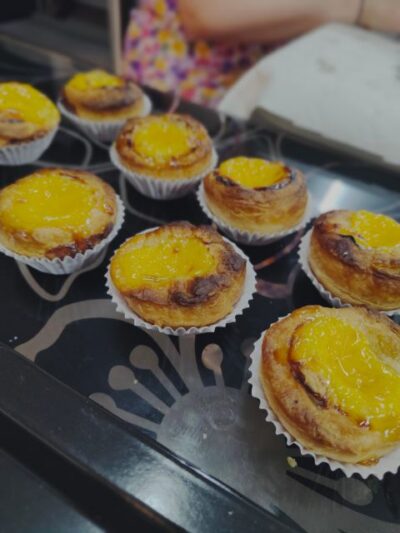
Pastel de Nata Cooking Class with Port Wine – Sé
Read our review →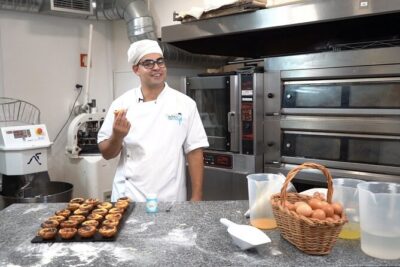
Pastel de Nata Masterclass at a Real Bakery in Downtown Lisbon
Read our review →
Pastel de Nata Pastry Class: Bake and Enjoy Your Own Treats
Read our review →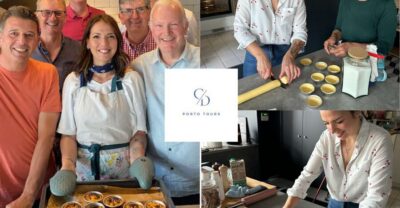
Browse the lists this tour appears in