
Reviewed · SURF LESSONS
Madeira: Surf Lessons for All Levels
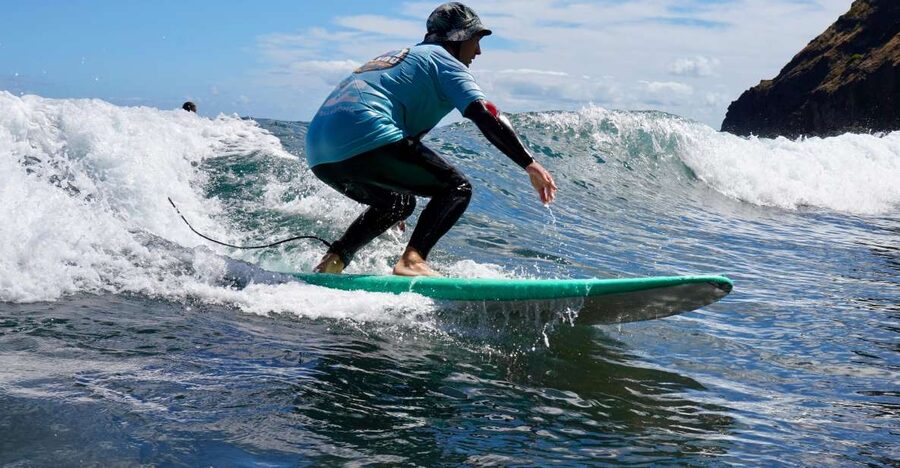
Surfing in Madeira is interesting because the Atlantic does the heavy lifting for you. You show up in Porto da Cruz, then get coached on a real, working beach break plan. I love how the lesson stays small, max 5, so coaches can correct you fast, and I also love that the instructors are Portuguese Surfing Federation certified. One thing to watch is that lesson times depend on tides and swell, and you must confirm the exact schedule the day before by 8:00 PM.
In a typical session, you’ll spend around 2 hours actually surfing inside a total 3-hour experience. You get a changing room, a freshwater shower afterward, and gear that is ready to go, like you just walked into surf practice, not a complicated production. Guides I noticed in the mix, like Jonathan and Augusto, keep the vibe friendly and focused, especially for first-timers.
Key Points You Will Care About
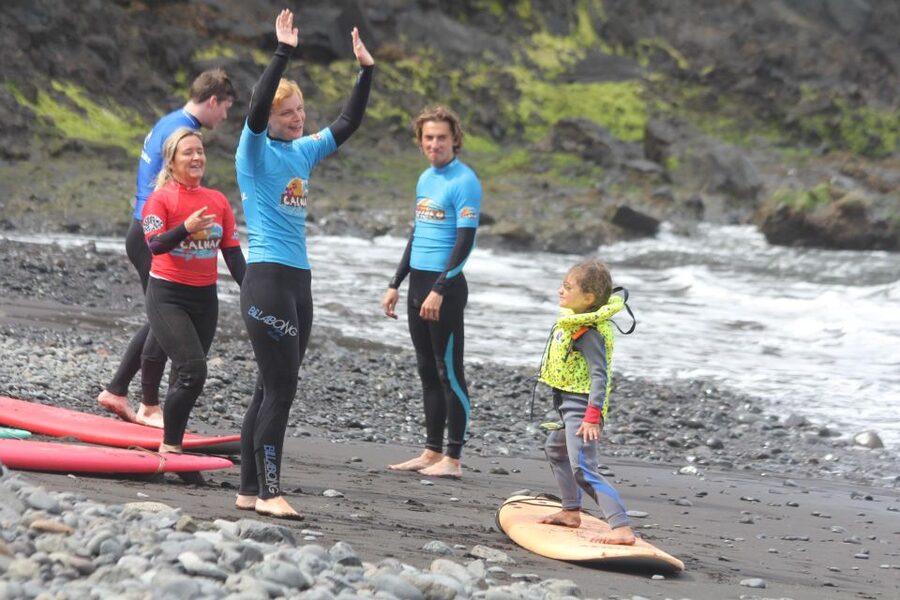
- Max 5 participants means real feedback, not vague advice
- Certified safety briefing plus insurance included
- Surfboard, wetsuit, and leash are provided
- Expect plenty of photos, and often a first wave goal
- The plan shifts with tides and swell, so confirm by 8:00 PM the day before
Madeira Surf Lessons for All Levels: What You Really Get in 3 Hours
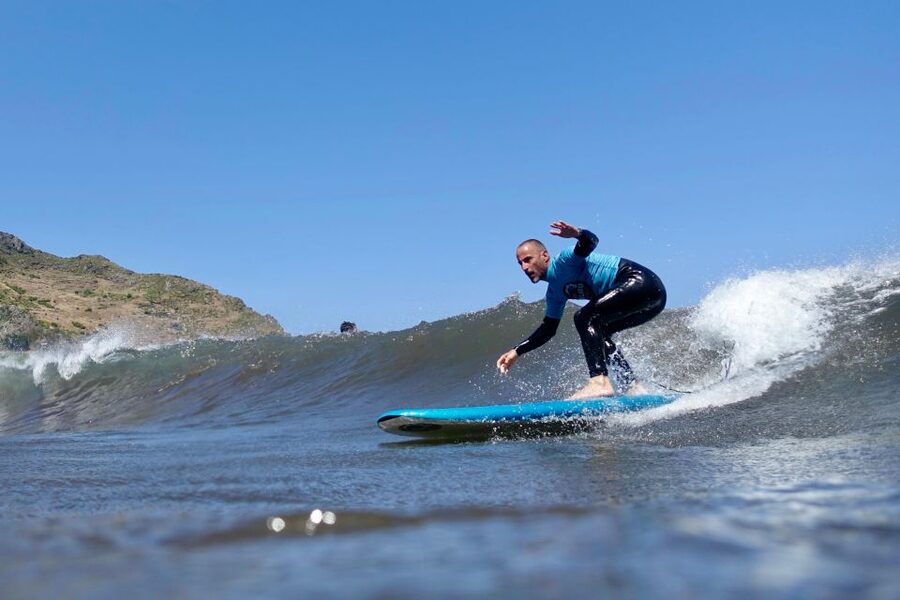
This surf lesson is built for all levels, but it does not treat everyone the same way. The instructors coach you according to where you are right now, from first-time wobble to refining technique. If you came to Madeira for active days and want a memorable skill, this is one of those experiences that turns fun into progress pretty quickly.
The setting helps. Porto da Cruz is a practical surf town, and the school setup makes the day flow. You do not need to figure out where to store gear, how to change, or how to get ready. Your main job is to show up, bring what they ask for, and listen carefully when it matters.
And yes, you’ll get that classic surf moment where standing up feels unreal until it happens. Even on a first attempt, the instruction approach is designed to get you on the board in a safe, controlled way.
More Surf Lessons in Madeira:
- Funchal: Madeira Island Group Surf Lesson
★ 4.7 · 282 reviews - Surfing Lessons in Madeira
★ 5.0 · 168 reviews - Madeira Surfing Lessons – Aroundfreedom Surf School
★ 5.0 · 104 reviews
Where You Meet and How the Day Starts Without Stress
You meet in front of hotel Vila Bela reception in Porto da Cruz. That matters more than it sounds, because surf timing can be tight. When your meeting point is clear, you lose less time and stress before the water.
Also, lesson start times can be indicative, so you should not assume a fixed hour. The school schedules sessions based on tides and swell forecasts, and the exact time and location should be confirmed the day before by 8:00 PM via WhatsApp. In real life, this is one of the easiest ways to increase your odds of getting good conditions, but it does require you to check your phone.
The lesson happens in all weather conditions, rain or shine. That means you plan for a “water day,” not a “sun day.” If you are the type who hates wet clothes and wants perfect skies, this may feel annoying. If you are flexible and just want to surf, it is part of the Madeira deal.
The Small-Group Setup: Why It Helps Beginners and Improves Intermediates
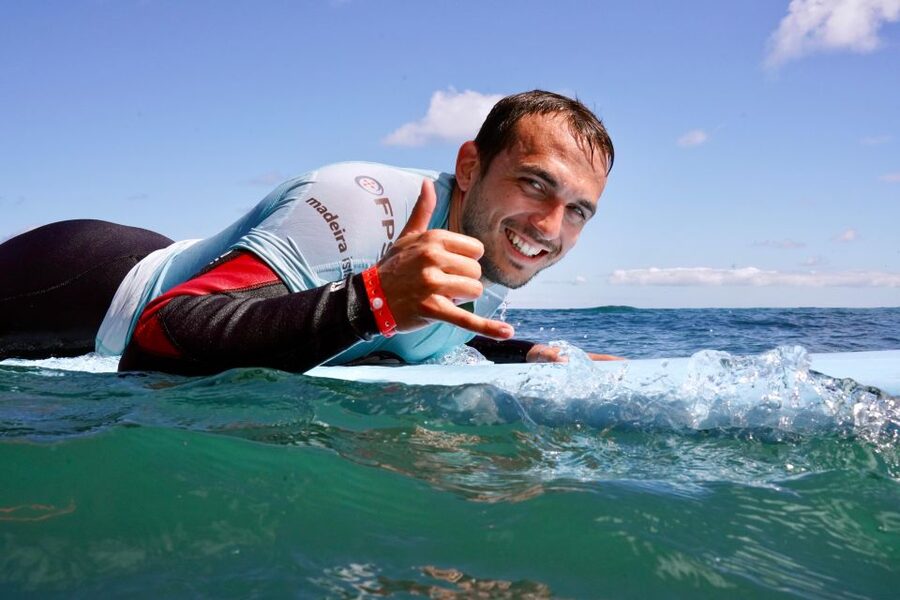
The group is limited to 5 participants, and the instructors run coaching with that size in mind. That limit is not just a marketing detail. It directly affects how often you get specific feedback in the water, and how quickly you can correct your timing.
For beginners, that matters because the first barrier is not wave surfing, it is confidence and understanding. You need to learn how to handle your board, how to read simple coaching cues, and how to avoid risky moves. When a coach can watch you closely, you get safer reps and less wandering.
For intermediate surfers, the value is different, but just as important. You are not paying to repeat what you already know. You’re there to fine-tune technique. Coaches can point out what your body is doing, how you’re taking off, and what to adjust for more control. That is the kind of feedback that usually costs extra if you try to get it elsewhere.
The school uses a big team of certified instructors, so you do not feel stuck with one coaching style. Depending on the day, you may meet different coaches, but the teaching standards stay consistent.
Gear and What You Should Bring (So You Do Not Lose Time)
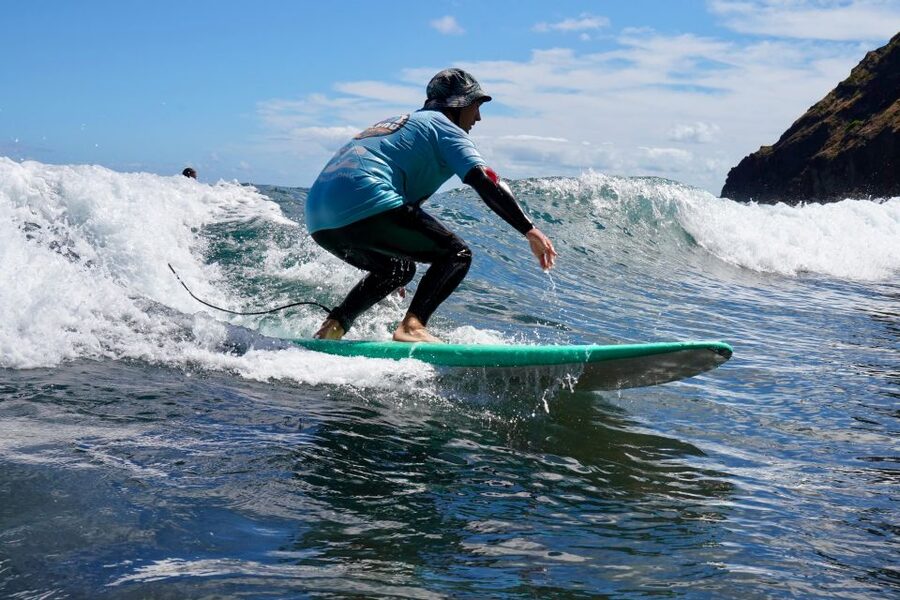
Your surf lesson includes a surfboard, a wetsuit, and a leash. That is huge because it reduces packing. You also get a security briefing, insurance, and a certified instructor from the Portuguese Surfing Federation.
They do not include a towel or sunscreen. Bring them. This is not glamorous advice, but it is practical. After 2 hours in the Atlantic, you will want a towel that is actually yours, not something borrowed late in the day.
Bring swimwear, beachwear, and sunscreen. If you tend to burn easily, pick a reliable sunscreen and apply before you head to the water. Even if the sky looks dramatic rather than sunny, Madeira UV can still surprise you.
A small but useful tip: wear something easy to rinse or that can get sandy. You will be moving between land and water, and comfort saves energy.
More of Madeira to look at
- Lisbon: Pastel de Nata Baking Class
★ 4.9 · 2,106 reviews - Porto: Pastel de Nata Cooking Class with Grandma’s Recipe
★ 5.0 · 1,565 reviews - Porto: Pastel de Nata Pastry-Making Workshop
★ 4.9 · 1,542 reviews - Porto: Tile Painting Workshop with Porto Wine – Sé do Porto
★ 4.9 · 1,095 reviews
Before You Paddle Out: Warm-Up, Tides, and Safety That Actually Makes Sense
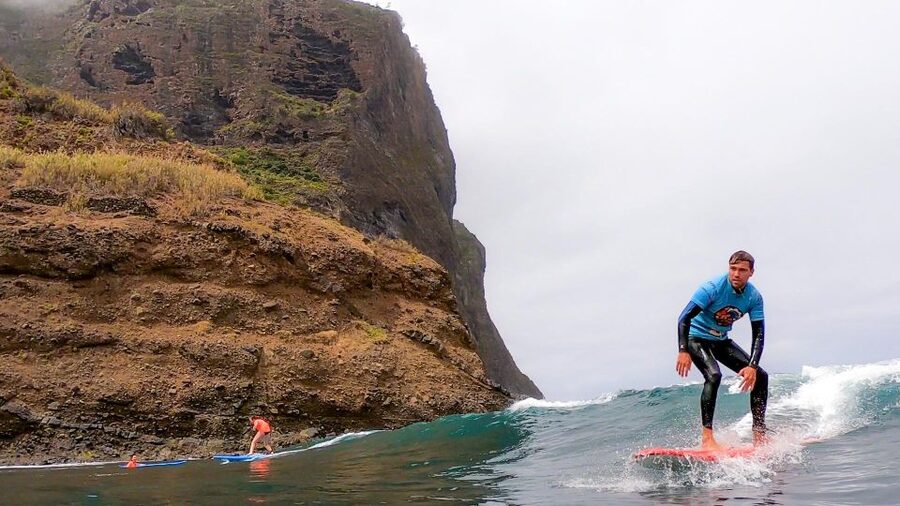
You start with a preparation flow that usually includes warm-up and technical explanations. This is not a long lecture. The goal is to get you ready, teach safety basics, and explain what you will focus on in the water.
You also learn about the environment. The coaching model includes your involvement with the surrounding conditions, plus weather and tide awareness. You do not just get instructions for what to do with your arms and legs. You also learn when it is smart to go and when it is better to wait.
Safety measures are part of the session structure, and you get a security briefing. Since you’re in a dynamic ocean, that matters. Surfing can be simple when you know the basics, and risky when you do not. This lesson is set up to cover the basics without overcomplicating them.
If you like clear, friendly coaching, you will likely feel comfortable fast. In many sessions, coaches do a beach intro first, then shift most of the time to practicing in the water. That ratio keeps the day moving and helps you learn through doing.
What You Learn: From First Stand-Up to Better Take-Offs
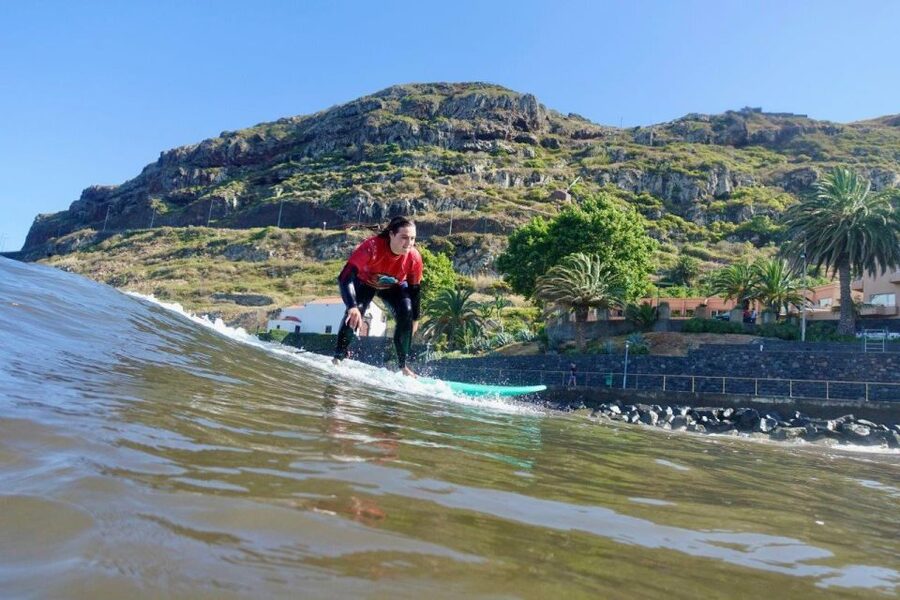
If you are a total beginner, the lesson is designed as an initiation. The promise is practical: you should stand up on your board during the lesson, in a safe and fun way. In plain terms, the instructors work on getting you onto the board and giving you the right technique cues without letting the day turn into a failure parade.
In beginner coaching, you will likely work on:
- getting into position on the board
- timing your attempt to catch a wave
- simple posture and balance cues
- leash handling and safety awareness
You might also get coached on how to catch waves, when to stand, and what to do right after you pop up. Coaches tend to call out these moments because they are where progress happens quickly.
If you’re intermediate or advanced, the lesson still focuses on technique. Coaches adjust the program to your level and keep the lesson moving toward improvement. You may get tips for better control and a smoother ride, rather than just more time on your feet.
The key detail is that the school does not run one lesson that hopes you will adapt. They tailor the coaching to your surfing level, and they plan the session based on surf conditions.
Picking the Best Conditions: Tides, Swell, and Real Weather Plans
The Atlantic does not always cooperate on schedule. That is why your lesson time is based on tides and swell forecasts, not just a fixed clock. The school is upfront about this, and it means you are more likely to get an ocean that lets you learn rather than just get tossed around.
The lesson takes place in all weather conditions. That sounds tough until you realize it is often how good surf training happens. If you plan for the session to be a water day, you stop treating rain as a problem and start treating it as part of the experience.
The coaches also choose surf spots based on weather conditions. That matters for learning. A spot that is too powerful or too inconsistent can turn your session into survival. A spot that matches your level makes skill building possible, especially for first-timers.
If you are flexible and you check the schedule message the day before by 8:00 PM, you’ll likely feel like the session is set up for the conditions, not forced on them.
Photos and Coaching Style: The Part You Will Thank Yourself For Later
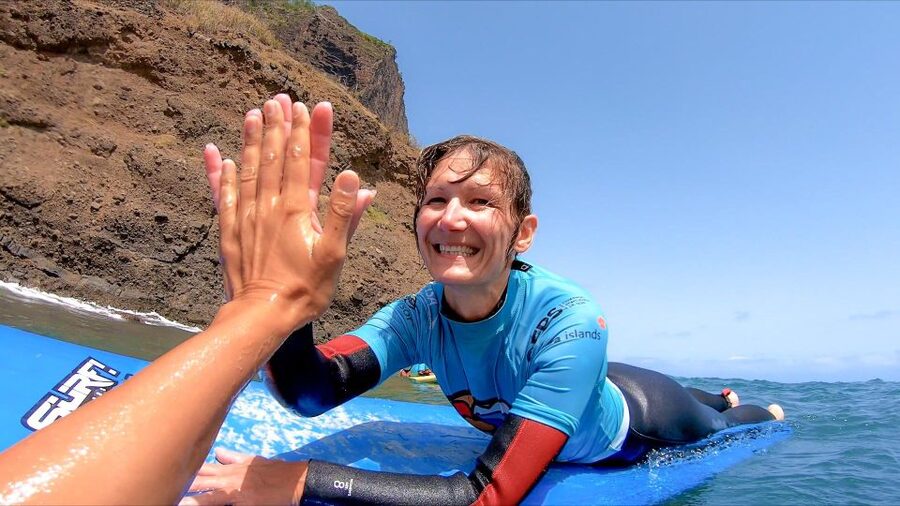
One of the most praised parts is the photos. You get free photos from the school, except in cases of technical issues or severe weather. In practice, this means you can focus on surfing without constantly worrying about getting your own shots.
Many people also mention lots of photos shared after the session. For first-timers, that matters because your memory can get blurry once you’re tired and cold. Seeing yourself catch a wave or stand up is a fast confidence boost.
If more students join, you may also have optional photo analysis. That can help you connect what your body felt like with what the camera shows. Even if you do not get analysis every time, the fact that the school captures you is a big quality-of-life win.
Coaching style also comes through in the feedback. Instructors are friendly and patient, with a habit of explaining things clearly. Coaches like Jonathan, Milton, and Rodolfo show up in accounts as people who took time to explain, point out what to adjust, and keep the mood fun.
You should expect corrections while you’re learning. Stand-up advice, timing cues, and encouragement show up often, especially for beginners who need reassurance that they are doing something right.
Facilities on the Beach: Changing Room, Shower, and the Not-So-Fun Part
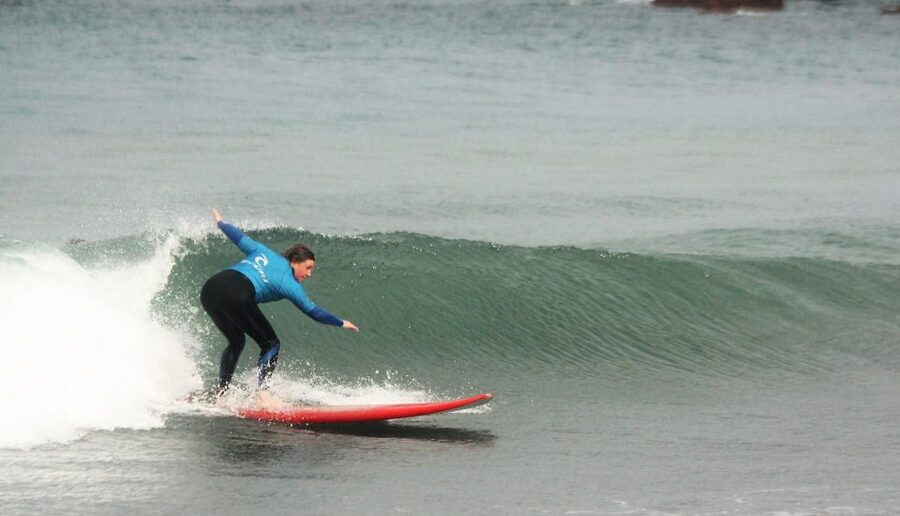
The school has its own facilities with a changing room. That’s a big deal on a wet Atlantic day. You can gear up without doing it in a crowded public area.
They also provide a freshwater shower at the end. After surfing, you want to rinse off salt and get comfortable again. It makes the day feel complete, not just tiring.
There is also an end-of-session board handling step you should be aware of. One person shared that after returning to the school terrace with the surfboards, they were asked to rinse the boards in sea water before rinsing with fresh water. The access to the sea was described as steep and rocky, and dragging a board that way can be difficult.
That does not mean the whole process is unsafe. It is an operational detail to plan for. If you have mobility limits or you are worried about carrying a board over uneven ground, bring that concern up with the school in advance.
In short, the facilities are a plus. Just know there can be some hands-on board care at the end, depending on how the session runs.
Price and Value: Is $82 Reasonable for a 3-Hour, Small-Group Session?
At $82 per person for a total of about 3 hours, with a 2-hour surf lesson, the value comes from what is included. You get the board, wetsuit, and leash. You also get insurance and a certified instructor. Add the safety briefing and the free photos, and you’re not paying extra for the basics that usually tack on costs.
Most surf lessons charge you for instruction and gear separately. Here, the structure is closer to: you pay for coaching plus the equipment and the support system around it. For a small group of up to 5, that coaching time is spread efficiently.
It is also worth considering the skill angle. If you’re a first-timer, standing up and catching waves on day one can be a turning point. If you’re improving, technique corrections can help you progress faster than random practice.
One more small value point: the session is planned around conditions. When coaches adjust the plan based on tides and swell forecasts, you spend less time waiting and more time learning.
If you hate uncertainty, the need to confirm the day before might feel like a downside. But if you like better odds of good surf, it is part of the value equation.
Who Should Book This Surf Lesson in Madeira
This lesson fits best if you want structure, safety, and coaching that matches your level.
It is a great pick for:
- absolute beginners who want a guided path to standing up
- people who have surf experience and want technique feedback
- anyone who prefers small groups and direct instruction
- travelers who want surf gear and photos handled for them
It is not suitable for children under 5 years and it is not suitable for pregnant women. If you are close to that age range, check with the school directly since policies can be strict for safety.
If you are an experienced surfer looking for advanced, high-performance training, you might find this feels more instructional than hardcore. The program is built for all levels, not only elite progression.
Quick Practical Tips Before You Go
Here are the choices that make the day smoother:
- Confirm the exact lesson time and location by WhatsApp the day before by 8:00 PM.
- Bring a towel and sunscreen. They are not included.
- Wear swimwear under your beach clothes so you can change fast.
- Pack beachwear you can get sandy and wet without worry.
- Bring a dry bag if you have one, so you can protect your phone and valuables.
- Wear shoes you do not mind getting salty, because Porto da Cruz is a working coastal area.
Also, assume the weather can change fast. The lesson runs rain or shine, so plan for wet conditions rather than hoping for perfect sun.
Should You Book This Madeira Surf Lesson or Skip It?
If you want a guided, small-group surf session in Madeira where you get certified coaching, included equipment, and photo memories, I think you should book it. The overall pattern is clear: friendly instructors, patient technique help, lots of time in the water, and a real effort to teach for your level, not just throw you in.
Skip it only if you dislike last-minute schedule confirmation or you are uncomfortable with the idea of surfing in rain or shine. Also think twice if you have mobility concerns and you’re worried about any end-of-session board rinsing that can involve uneven, rocky access.
If you can follow the basics, show up with swimwear and sunscreen, and check that WhatsApp confirmation, you’re set up for a fun day that teaches real surf skills.
Latest reviews from Madeira
- Sunrise in Areeiro Peak★ 5.0 · 71 reviews
- Rabaçal 25 Fontes Levada Walk in Small Groups★ 4.5 · 71 reviews
- West of Madeira Tour★ 4.5 · 72 reviews
- Full day East Adventure Jeep Tour in Madeira Portugal★ 5.0 · 72 reviews
- Madeira: Private Monte tour on a Tukxi★ 4.7 · 72 reviews
- Madeira: Porto da Cruz to Machico Hiking Tour with Transfer★ 4.9 · 72 reviews
- Canyoning Experience Level II Moderate★ 5.0 · 72 reviews
- Madeira: Amazing West – Porto Moniz★ 4.9 · 72 reviews
Surf Lessons, compared.
Learn to Surf in Chill Beach Vibes & Good Times
Read our review →
Beginner Surf Lesson at the Beautiful Algarvian West Coast
Read our review →Browse the lists this tour appears in