
Reviewed · HISTORICAL TOURS
Queer Lisbon – A Treasure Hunt in LGBT History
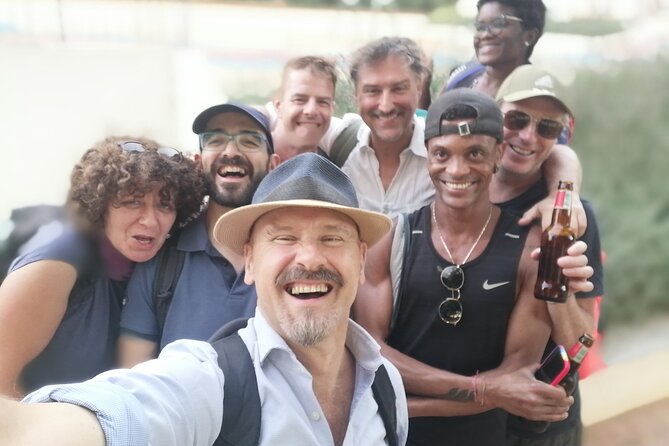
This Lisbon tour is interesting because it turns the city into a LGBT treasure hunt, threading queer history through landmarks you would otherwise walk past. I love the relaxed small-group pace, with real space for questions and back-and-forth, not just a lecture.
I also like the added value beyond sightseeing: you get a PDF guide with insider stops and a finish at Late Birds Hotel where you can grab a drink and keep talking with your new friends. One possible drawback is that it is a walking tour for about 3.5 hours, and the schedule keeps moving even if the weather turns messy, so plan for shoes that handle cobblestones.
Key Things to Know Before You Go
- A theme-first route, not generic sightseeing, so you learn more per stop
- Small group size (up to 15), which makes questions feel natural
- A story-driven guide experience focused on queer life past and present
- Practical nightlife pointers tied to real historic locations and venues
- Free-entry style stops that keep the cost down as you walk
- A social finish at Late Birds Hotel, plus a pub-quiz moment and swimsuit if weather allows
A Queer Lisbon Walking Hunt That Feels Like a Story Map
Think of this as Lisbon with a second set of eyes. You start in Príncipe Real, move through squares, churches, courts, and old hangouts, and each stop adds a piece of the city’s queer past and how it connects to the nightlife and rights you see today.
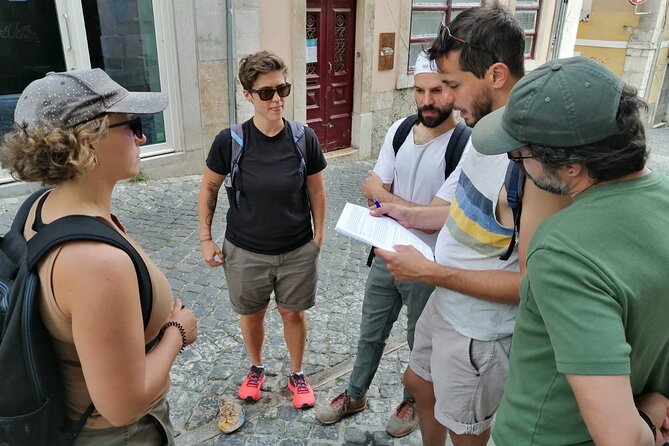
The best part is the pace. This is not a sprint, and it is not just “look, read, leave.” The guide is set up to slow down, answer questions, and tailor the level of detail to what you care about, which makes a 3.5 hour tour feel like a conversation that happens to cover a lot of ground.
More Historical Tours in Lisbon
- Lisbon: History, Stories and Lifestyle Walking Tour
★ 4.8 · 10,902 reviews - Lisbon: Daytime or Sunset Boat Cruise with History and Wine
★ 5.0 · 1,053 reviews - Explore Lisbon by Tuk Tuk: History and Viewpoints
★ 5.0 · 840 reviews
Meeting Point to Final Drink: The Route in One Logical Sweep
The walk is built around Central Lisbon, starting at the Príncipe Real Playground near Praça do Príncipe Real. From there, you follow a route that mixes neighborhood context with specific queer sites, including dance clubs, early lesbian and drag bars, cruising stories, and legal milestones tied to LGBTQ rights.
You end at Late Birds Hotel, Lisbon’s largest gay hotel, in the lounge or bar area, plus garden and pool space. If the weather is decent, bring your swimming costume, because the final stop includes a social vibe with a pub quiz and prizes.
Príncipe Real Gardens and the First Thread of Queer Lisbon
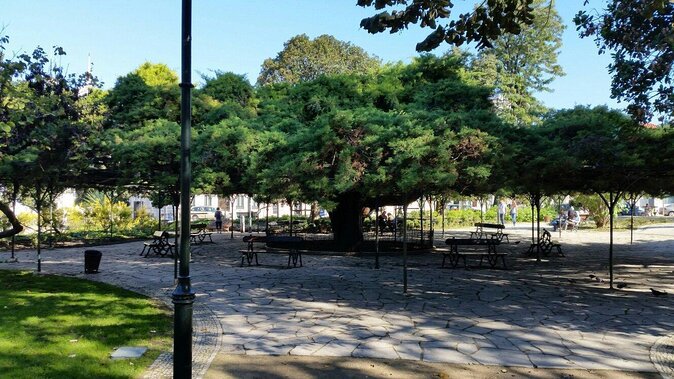
You begin at Jardim do Príncipe Real, where the guide sets the tone and offers introductions in the gardens. It is a calm start that helps you get oriented before the stories start getting sharper and more specific.
Then the tour moves to a monument honoring the victims of homophobia. This is one of those moments where you pause and remember that today’s progress did not arrive by magic. The guide balances that solemn acknowledgment with a look at how Lisbon became a thriving queer scene.
Lisbon Pride Roots at Praca do Principe Real (Plus EuroPride Energy)
Next you head to Praça do Príncipe Real, a square tied to Lisbon Pride and EuroPride planning. The idea here is that Pride is not just a party day. It has roots, history, and a location you can literally stand in while you learn why it matters.
It is also a good reminder that queer culture in Lisbon is both celebratory and political. If you care about how communities organize, this section gives you context that makes Pride feel more grounded and less like a generic event.
Another Lisbon day, differently spent:
- Lisbon City Center Tour – The Unmissable Lisbon
★ 5.0 · 22,234 reviews - Lisbon: Sintra, Pena, Regaleira, Cabo da Roca & Cascais
★ 4.7 · 19,656 reviews - Lisbon Card: 24, 48, or 72-Hour Pass
★ 4.5 · 17,944 reviews - Lisbon: Jerónimos Monastery Entrance Ticket
★ 4.1 · 14,164 reviews
HIV History and Health Care Info at GAT Checkpoint LX
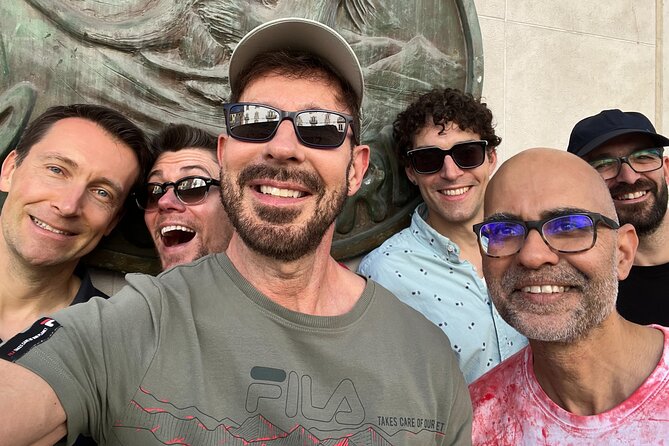
At GAT Checkpoint LX, the focus shifts to the HIV pandemic and how Lisbon managed it over time. This part is presented in a practical way, with essential health service information for queer men and women.
This stop matters because it connects social history with real-world resources. You get a sense of how public health shaped queer life, and you leave with concrete info rather than only emotional storytelling.
Dance Venues and the Evolution of Queer Nightlife

The route then leans into nightlife history, starting with Construction Lisbon Club. You get a sense of how long-running dance venues and neighboring lesbian spaces built a community, not just a place to dance.
From there, you reach the Botanical Garden of Lisbon, where the guide shares cruising stories from the 1950s. It also covers the tension of “offending morals,” and how men navigated police pressure at the time. Even if you are not into cruising culture, this stop helps explain why public spaces mattered so much for queer connection.
Trumps and Two Floors of Nightlife Identity Since 1980
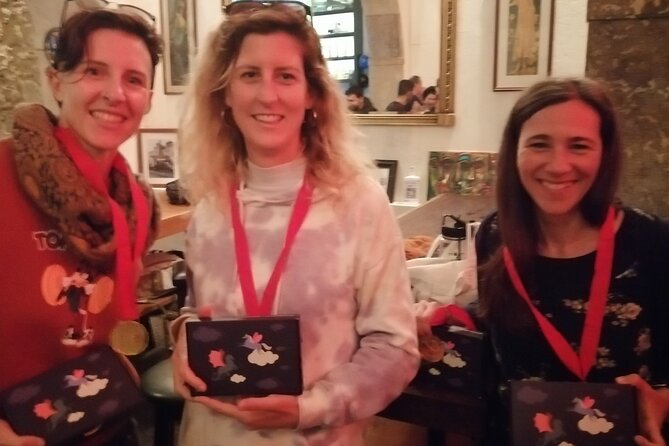
One of the biggest modern landmarks on this route is Trumps, Lisbon’s large queer nightclub. The guide points out what makes it a long-running institution, including the fact that it has two floors with different vibes.
It is not just “go party here.” This stop is framed as a window into how queer spaces evolve and stay relevant across decades. If you want a place to start for a first night out, you will likely get a clearer sense of what mood you want before you ever buy a drink.
Early Lesbian Bars and the First Drag Stage in Town
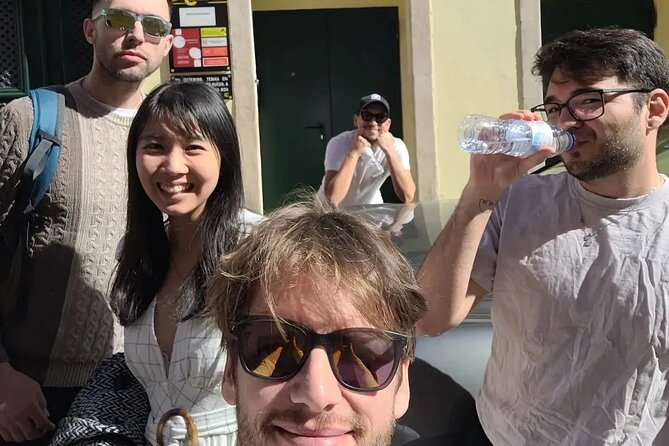
You also get specific names, not vague references. In the area of R. de Gustavo de Matos Sequeira 42, the tour tells the story tied to Lisbon’s first lesbian bar, O Gato Verde (The Green Cat). It is treated as a local institution with history you can feel in the streets.
Then comes Praça das Flores 7, tied to the first drag bar in Lisbon. You hear how the 1974 revolution changed the room for drag enthusiasm, and then how it shifted again. The guide also brings in the rise and fall story of Lisbon’s early drag figure, so you understand drag as both art and social pressure.
Between Bars: Messages, Bears, and Drag Schedules You Can Actually Use
The walk continues through more nightlife touchpoints, each with a clear reason for being on the route. At Bar 106, you leave a message for friends, which is simple but memorable, and it gives you a small ritual that anchors the tour.
Then you hit Shelter Bar Lisboa for a bears-themed stop, followed by Finalmente Club for what the tour frames as the oldest drag in Lisbon. Importantly, you do not just hear the label. The guide explains different shows and different times, which is the kind of practical detail that makes the tour useful for planning your nights.
Bar TR3S Lisboa continues the bears theme and expands it with mentions of Bear Pride energy, beach clubs, party nights, and even elements like a sauna and sports sponsorship. It is a good example of how queer identity in Lisbon is not one single scene. It is many different social lanes.
Purex and Maria Caxuxa: Women-Run Spaces and Resistance
Purex enters as a women-run dance floor for everyone, including mention of vagina-themed jewelry. The tour uses this kind of detail to show that queer nightlife comes with style, signals, and community codes, not just music.
Then the route pivots back to the people behind the headlines with Maria Caxuxa. You learn about a woman who confounded conventions and dismissed nosey journalists in the 1940s. Even though this is not a nightclub stop, it fits the same theme: resisting control and refusing to disappear.
Legal Milestones: Constitutional Court to Homosexual Manifestos
A huge reason to do this tour is the legal side. Queer life is shaped by courts, laws, and political fights, not only bars and festivals.
At the Constitutional Court, you hear about legal challenges and Portugal’s path from dictatorship values to constitutional protection for LGBTQ rights. This stop gives you a framework for understanding why today’s protections exist, and why legal language matters in daily life.
Later, at R. Luz Soriano 44, the tour discusses Long Live Homosexuality, described as an early homosexual manifesto. You learn about early steps being suppressed, then eventual success. It is a sobering but empowering arc, because it makes activism feel human, not abstract.
Scandal, Saunas, and a Two Fernandes Story That Shows How Times Shift
At R. do Trombeta 10, the guide tells the steamy story of the Two Fernandes, including scandal and saunas. The tour uses this to show how private behavior and public reputation collided in earlier centuries, and how the same themes keep showing up in new forms.
You also get the 19th century scandal connected to Tv. da Espera 50, with the Marquis of Valada in a story involving political blackmail and eventual survival. You might not love every topic, but it is part of how queer history is documented, often through shock, rumor, and the official record trying to control the narrative.
Josephine Baker at Teatro da Trindade: Art, Bisexual Identity, and Wartime Spying
At Teatro da Trindade, the tour brings in bisexual jazz legend Josephine Baker and her wartime Lisbon connection. The key point here is that she uses disguise and dodges secret police and spying.
This stop works well if you like the intersection of identity and history. You see how famous queer artists navigated danger, and you get a story that feels cinematic without turning into pure fantasy.
Censorship, Fiction, and the Igreja de Sao Roque Inquisition Stories
The route includes R. da Misericórdia 125, focused on queer fiction, censorship, and compromised censors. It is one of those stops where the guide shows how controlling books and language can control people, too.
Then the tour finishes a major thematic segment at Igreja de São Roque, using Portuguese Inquisition history to discuss sex in church, lesbian nuns, and even a trans love story mentioned as surviving from the 16th, 17th, and 18th centuries. You should expect a mix of grim and extraordinary details, told with care, and with the point that queer lives existed even when institutions tried to erase them.
Closing With Fernand Pessoa at Hospital St. Louis, Then Late Birds for the Social Finish
At Hospital St. Louis, you hear a reclaimed LGBT connection tied to Fernand Pessoa and the idea of loving someone because of who you are, not in spite of it. The tour frames Pessoa as a writer whose gay writing is now recognized, which is a powerful end note to the legal and social stories.
Then you land at Late Birds Hotel for the final stop. It is not just a drop-off. The guide keeps the energy social, with a lounge, bar, garden, and pool setting, plus pub-quiz style fun and prizes. If you are traveling solo, this ending is a gentle way to meet people without forcing small talk from scratch.
Price, Value, and Why the PDF Can Matter More Than You Think
At $60.34 per person for roughly 3 hours 30 minutes, you are paying for a focused guide, a structured route, and a set of specific local names and places you likely would not find on your own quickly. Many tours give you a highlight list. This one gives you a themed roadmap that helps you keep seeing after the walk ends.
You also get a PDF copy of Alex’s LONG LIST, normally listed as 15 Euros. That matters because it shifts the tour from a single morning event into a planning tool. You can use it to pick free activities, decide which nightlife venues match your vibe, and find streets you might otherwise miss.
Who This Tour Fits Best, and Who Might Want a Different Plan
This tour is a strong fit if you want more than generic history and you like stories that connect rights, health, and nightlife to real streets. It also works well for allies who want a straight, respectful guide to queer Lisbon without filtering it into stereotypes.
You might want to choose another option if you dislike walking or you need lots of long stops. The tour is paced for moderate fitness and keeps moving through many sites, mostly on foot. Also note the drinking detail at the end: the legal drinking age is 18+, so if you are younger, you can still enjoy the social ending, but plan around local rules.
Should You Book Queer Lisbon?
Yes, if you want a themed LGBT history tour that feels like a real route through Lisbon, not a list of facts. This one gives you practical nightlife context, legal and social history, and a guided ending that helps you keep the conversation going at Late Birds Hotel.
If you are on the fence, read the tour’s promise like this: if you want queer Lisbon with names, places, and meaning tied together, this is a smart use of half a day.
FAQ
How long is the Queer Lisbon tour?
It runs for about 3 hours 30 minutes.
How much does the tour cost?
The price is $60.34 per person.
What language is the tour offered in?
The tour is offered in English.
How many people are in the group?
The group size has a maximum of 15 travelers.
Where do I start and where does it end?
You start at Principe Real Playground, Praça do Príncipe Real, and you end at Tv. André Valente 25 at Late Birds Hotel.
Is there a lot of walking?
Yes. It is a walking tour through central Lisbon, and it recommends a moderate physical fitness level.
What is included in the price?
You get fun stories and scandals, modern gay scene discovery as you stroll, meeting new friends with an end at Late Birds Hotel, and a PDF copy of Alex’s LONG LIST.
Do I need to pay admission tickets at stops?
Admission is listed as free at the stops in the route, so you should not expect extra paid entry fees.
What about drinking at the end?
The legal drinking age is 18+. The tour ends at Late Birds Hotel with an option to have a drink, so you should plan based on local rules.
Latest reviews from Lisbon
- Private Sailing Cruise in Lisbon with Drinks★ 4.5 · 70 reviews
- Lisbon Food and Wine Tasting Tour of HIDDEN GEMS (Small Groups)★ 4.5 · 70 reviews
- Lisbon: Jewish Quarter Guided Walking Tour★ 4.4 · 70 reviews
- Lisbon: Ajuda National Palace Entry Ticket★ 4.5 · 71 reviews
- Lisbon Portuguese Food Tour★ 4.5 · 71 reviews
- Lisbon Street Art – Private Guided Tour in a Electric Tuk Tuk★ 5.0 · 72 reviews
- Private Lisbon Walking Tour★ 5.0 · 72 reviews
- Pastel de Nata Workshop in Lisbon★ 5.0 · 72 reviews
Historical Tours, compared.
Douro Valley: Historical Sites, Wine Experience, Lunch & Cruise
Read our review →
Daytime or Sunset Boat Cruise with History and Wine
Read our review →
Private Tour of the Historic City in a Ford T Car
Read our review →
Browse the lists this tour appears in