
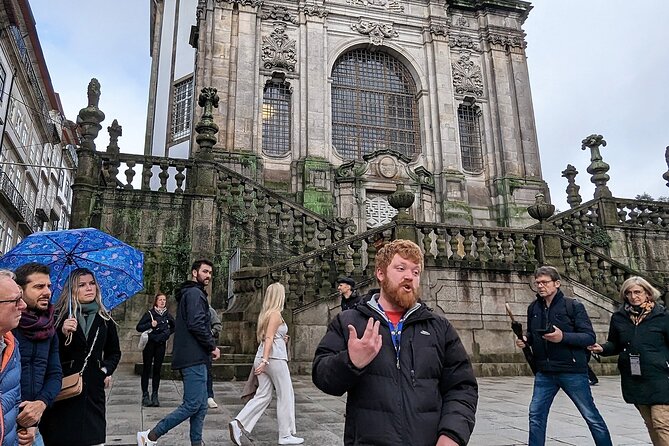
Reviewed · CITY TOURS
The Unvanquished Tour in Porto City Center
Porto city center can feel like a maze until someone gives you a map made of stories. This 2.5-hour walk strings together the big names and the smaller side streets, with stops timed for photos and explanations. I really like the pay-what-you-want setup at the end, and I also like that the tour is led in English by guides such as Tiago, who are praised for making the city make sense fast.
I also like the way the route balances famous postcard stops with less obvious corners, so you end up with Porto in your head, not just on your camera roll. The main consideration is that several stops are outside only, so if you’re hoping to go inside major attractions like Livraria Lello, you will be watching them from the outside instead.
Quick hits
- Aliados to Sé on foot: you get orientation of Porto’s main uphill spine and the viewpoints people talk about.
- Strong guide storytelling: names like Tiago, Diogo, Jaime Veloso, Sara, and Agata come up for a reason.
- Sao Bento Railway Station: expect one of Porto’s most stunning sights to anchor the walk.
- Lello without the queue: you admire the area, but you skip entering because lines can be long.
- Viewpoints and churches: Miradouro da Vitória and Igreja do Carmo add real character to the route.
- Smart walking pace: it moves steadily, with short breaks built in so you do not feel rushed.
Porto’s city center, stitched together in 2.5 hours
If you want to see Porto without spending your whole day “figuring it out,” this tour is built for that. The route is compact, and the time feels right for a first afternoon or a morning when you want to set your bearings.
You start near Monumento a Almeida Garrett at the top of Av. dos Aliados, one of Porto’s best starting points because it helps you understand the city’s uphill and downhill logic. From there, the walk descends toward the older center, then climbs again toward the cathedral area where the tour ends.
What makes it work is that the guide keeps you connected to the city, not just the attractions. You hear how the parts fit together, including local legends, the rhythms of university life, and why certain viewpoints feel like Porto’s emotional center. Past guides such as Diogo and Sara are especially praised for this storytelling approach.
More City Tours in Porto
- Porto: City Highlights 3-Hour Guided Electric Bike Tour
★ 4.8 · 3,092 reviews - Porto: City Train Tour, River Cruise & Wine Cellar
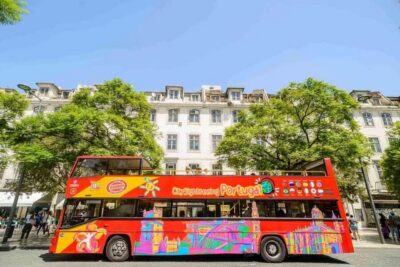
★ 3.9 · 2,601 reviews - Porto: City Sightseeing Hop-On Hop-Off Bus Tour
★ 4.0 · 2,588 reviews
Price and value: why $3.62 feels like a smart bet
At $3.62 per person, you are not paying for a big, all-access ticket bundle. You’re paying for an organized walk, a route that hits key areas efficiently, and a guide who turns those stops into something you can actually use later.
And the added value is the pay-what-you-want idea at the end. That means the tour’s main “currency” is your judgment. If the guide’s pacing and explanations click for you, you can reflect that. If you prefer to guide yourself, you still walk away with a usable map of central Porto.
A second value point: the tour is offered in English, uses a mobile ticket, and keeps the group to a maximum of 25 people. Smaller groups mean it’s easier to ask questions and hear answers, especially in narrower streets and at viewpoints.
Where you start and where you end (and why it matters)
You begin at Monumento a Almeida Garrett, Av. dos Aliados 291, and you finish near Porto Cathedral at Terreiro da Sé.
That matters because Porto is a set of hills and neighborhoods, not one flat city. By ending at the cathedral area, you land right where many visitors want to be next, whether that’s continuing the walk through the upper old town, finding dinner nearby, or catching public transportation back down.
Also, the meeting and ending points reduce your “dead walking.” You are not starting in a random alley far from transit, and you are not ending miles away from everything people want to see.
Aliados to Porto City Hall: getting oriented fast
The first stop is Porto City Hall at the top of Aliados. Even if you do not go inside, it is a useful anchor because Aliados is Porto’s main boulevard for orientation. You can look down the avenue and start understanding how the city’s layers shift as you move.
Next you hit Avenida dos Aliados itself. This section is about scale. Porto’s streets feel tight later on, so seeing the long avenue early helps your brain map the rest of the walk.
This is also where you learn the rhythm of the route. You are getting more than photos, you are learning where you are relative to the hills, viewpoints, and central landmarks.
Another Porto day, differently spent:
- From Porto: Douro Valley w/ Boat Tour, Wine Tasting & Lunch
★ 4.7 · 19,061 reviews - Complete Douro Valley Wine Tour with Lunch, Wine Tastings and River Cruise
★ 5.0 · 12,920 reviews - Porto: Six Bridges Cruise
★ 4.2 · 11,680 reviews - Porto: Douro Valley with Winery Lunch, Tastings & Cruise
★ 4.7 · 7,002 reviews
Lello Bookshop: admiring the icon without committing to the long line
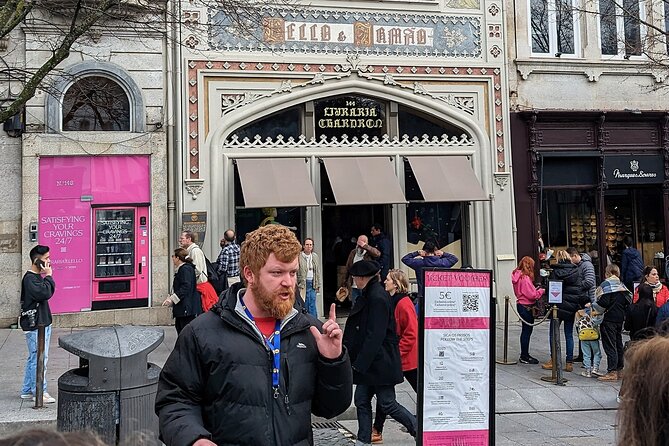
Livraria Lello is one of the most famous bookshops in the world, and it’s also famous for queues. In this tour, you do not enter, because the paid entrance is separate and the waiting time can be extensive.
That choice is practical. If you enter, you can lose the momentum of a short 2.5-hour tour, especially when a line is unpredictable. Instead, you get the context around why the place is so sought after and you can decide for yourself whether it’s worth the time later.
If you still want to visit Lello, treat it as an optional side trip after the tour. You’ll already know where it is, and you’ll understand what to expect from the surrounding streets.
Iglesia do Carmo and the narrow-house story
Next you reach Igreja do Carmo, right beside Igreja dos Carmelitas. This stop is small, but it is memorable because of the way the buildings relate to each other and to the street.
The tour points out that the church stands next to the narrowest house in Porto. That kind of detail helps you read the city like a puzzle. Suddenly you notice why the sidewalks feel cramped, why corners feel tight, and how centuries of construction shaped the city’s shape.
This is the kind of stop I like when I want a city walk to feel local. It’s not just “look at the church,” it’s “why this spot is like this.”
Universidade do Porto and the culture you can’t see on a postcard
Then it’s Universidade do Porto. You spend about ten minutes here, and the focus is not buildings only. The guide shares stories about university life, including urban legends, centenary cafes, and strange rituals.
Even if you are not a student, this makes the city feel alive. Porto is not only historic stone. It’s also people, habits, and traditions that keep changing while keeping old threads.
This is one of those stops where good guidance matters more than the architecture. If you care about the human side of a place, you’ll likely enjoy this part.
Jardim de João Chagas, aka Jardim da Cordoaria
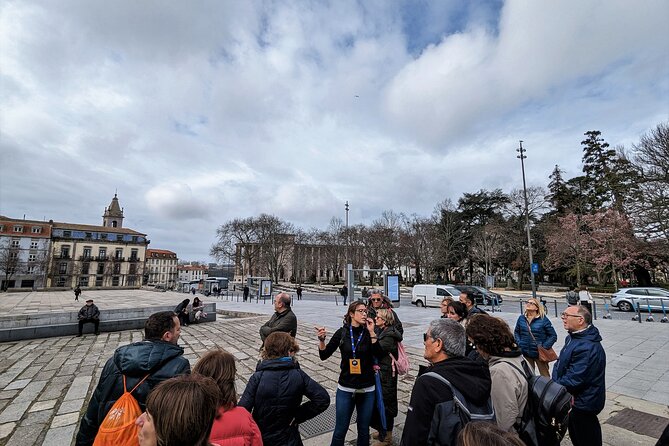
The route continues to Jardim de João Chagas, commonly known as Jardim da Cordoaria. It is a garden stop, but with a particular vibe. The description calls it a special place for Porto’s inhabitants and even frames it as haunting.
Garden stops can be hit-or-miss on tours, but this one works because it slows the pace for a moment and gives you a breather between streets. You get to reset your eyes from stone and signage and just watch the space for a minute.
If you’re walking in warmer months, this is also a nice moment to pause, sip water, and get back your energy before the next sights.
Former prison to photography center: seeing what you can from the outside
At Centro Português de Fotografia, the tour notes it’s located in a former Porto prison and contains much of Portugal’s photographic heritage. You do not go inside on this walk.
That’s okay because the purpose here is historical context and orientation. You learn why this site matters without committing to a museum-style visit in a time-limited tour.
If photography matters to you, you can always plan a separate museum visit later when you have time. You’ll know exactly where to go, and you’ll understand what you are walking into.
Torre dos Clérigos from the street, plus the Miradouro da Vitória payoff
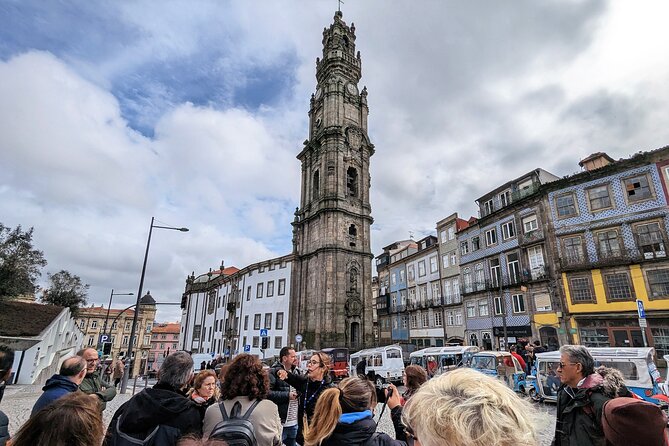
You then reach the area of Torre dos Clérigos, created by Nasoni. You do not enter, but the tower is part of the skyline, and the tour explains why it’s so central to Porto’s image.
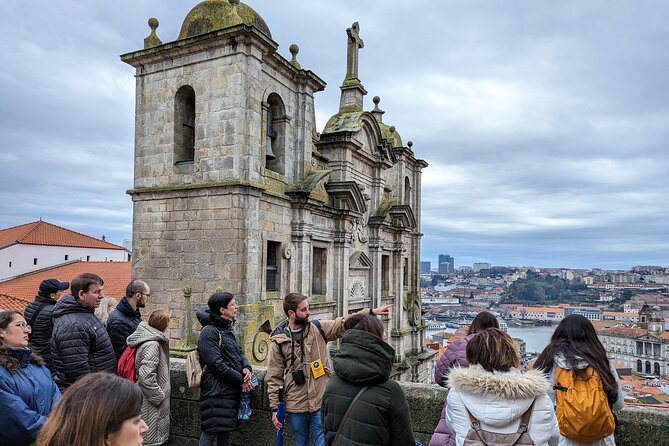
After that comes one of the walk’s best rewards: Miradouro da Vitória. This viewpoint is set in the older Jewish quarters, and it’s known for beautiful city views. It’s the kind of stop where you stop moving and actually absorb Porto’s layers.
This is also where you understand why Porto is so photogenic. The city doesn’t just look old. It looks stacked, angled, and full of depth.
Rua das Flores: charm with a historical edge
Next is Rua das Flores, one of Porto’s most charismatic streets. The walk connects it to what the street was known for in the past, including jewellery shops.
This is one of those “small street, big feel” stops. You get to stretch your legs, look at storefront details, and experience the vibe of central Porto before you hit the station and cathedral zones.
If you want to keep your energy up, this is a good moment to spot a café or a drink option nearby for later. Even if you do not stop here, you will know where to head after the tour ends.
Sao Bento Railway Station: the highlight that makes the walk real
Then you arrive at Sao Bento Railway Station, about a fifteen-minute stop. This is billed as one of the most beautiful train stations in the world, and it functions like an emotional checkpoint.
Stations are perfect for city walks because people notice them even when they are not trying. In Porto, Sao Bento also helps you feel the city’s culture and daily life. It’s a working transport hub, not a staged landmark.
If you enjoy taking photos, this is one of the best times to do it. You get a dense mix of details without needing to pay additional entrance fees.
Cathedral do Porto on the hill: ending near Sé
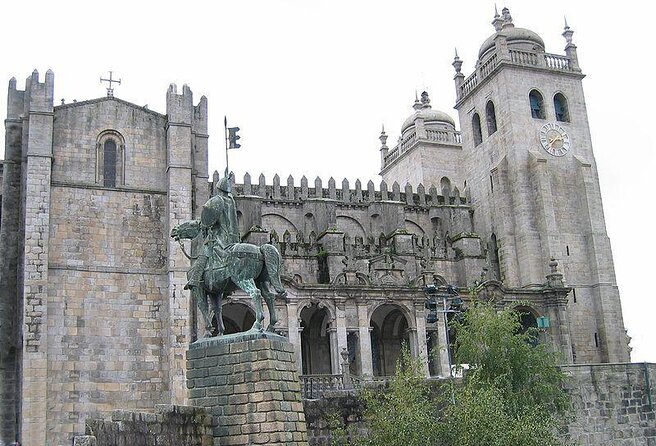
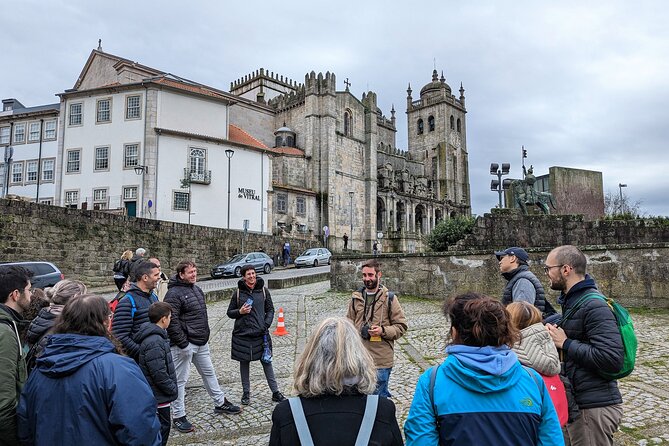
The last major sight is Catedral do Porto, at the top of Morro da Pena Ventosa. The tour explains that this is a place where Porto began to exist, and it gives stories and anecdotes you can carry with you after you finish.
You do not enter the cathedral during the walk. Still, the location and the viewpoint feel like the natural closing chapter of the route. You end here because it’s the highest-feeling point and it connects back to the early layers of the city.
Finally, the tour ends in the cathedral area at Terreiro da Sé, so you can keep exploring on your own right away.
What you won’t enter, and how to plan around that
This tour is efficient, but that efficiency comes with a few “outside only” decisions. You do not enter Livraria Lello, Centro Português de Fotografia, Torre dos Clérigos, or the cathedral interior.
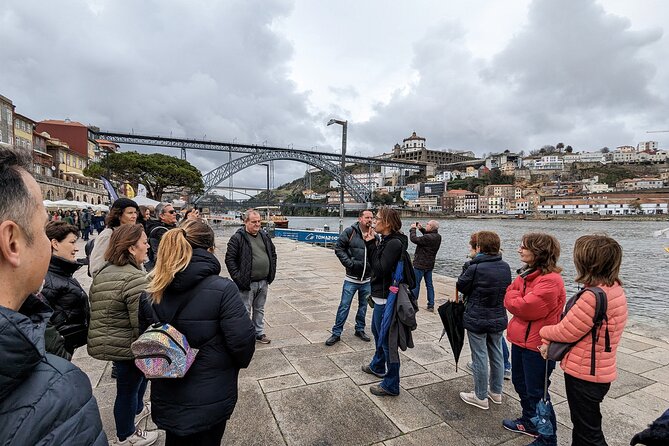
You also only mention Dom Luis I Bridge from afar when the timing and opportunity make sense. That means you’re getting orientation and skyline context, not a full bridge photo session with a lot of time for wandering.
Here’s the smart way to use that information: take this walk as your framework, then add separate visits based on your priorities. If your priority is museum time, plan those as standalone blocks. If your priority is walking and viewpoints, this itinerary fits nicely.
Shoes, heat, and rain: how to have a smooth experience
Porto is a city of hills, and the walking here includes steep sections. One practical tip that comes up is to bring water, especially if you’re walking in heat. Even a short walk feels longer when the ground tilts.
Good shoes matter. You’ll move across uneven sidewalks and tight corners, plus you’ll stop and start for explanations. If you’re prone to blisters, bring blister care or wear liners.
Weather is another reality. The tour is described as requiring good weather, and there can be rain. If forecasts look messy, pack a light rain layer so you can stay comfortable without ruining the day.
English guidance and group size you can actually talk to
The tour is offered in English, and the group size is capped at 25. That upper limit matters because it keeps the walk from turning into a silent shuffle line.
In the guide praise, you can see a pattern: guides like Tiago and Sara are remembered for being friendly, helpful, and entertaining while staying focused on facts and advice. If you like asking questions, this is a tour where that usually lands well, because you are not stuck in a crowd that moves too fast.
Also, because this is a city center walk, you can fit it into a broader day plan. Use it as a first-day primer, then decide what neighborhoods feel right for a longer wander later.
Who this Porto walking tour is for (and who might want something else)
This tour is a great fit if you want a fast start in Porto. It works especially well on your first day because it helps you understand what you’ll want to revisit later, from the big sights to the narrower streets.
It also suits you if you like history told as stories, not as a textbook lecture. The guides are praised for turning Porto into something you can picture, including legends, local habits, and why certain places feel important.
You might want a different style of tour if you hate walking uphill, or if your main goal is inside-the-building access. Since several major sites are not entered, it’s less of an attraction-hopping day and more of an orientation and storytelling walk.
Should you book this Porto city center walk?
Book it if you want context fast, a solid route through the center, and a guide who makes Porto click in a short window. The value is strong, the pacing tends to feel doable, and the ending near Porto Cathedral sets you up for what comes next.
Skip or pair it carefully if you’re laser-focused on entering ticketed attractions like Livraria Lello or if you want a longer deep-stay museum day. In that case, do this walk first, then build separate time blocks around the specific places you truly want to enter.
If you’re the kind of traveler who likes to walk, ask a few questions, and then use your own feet to explore, this is one of the most practical ways to start Porto.
FAQ
How long is the Unvanquished Tour in Porto City Center?
It runs about 2 hours 30 minutes (approx.).
Is the tour offered in English?
Yes, it is offered in English.
Where does the tour start and end?
It starts at Monumento a Almeida Garrett on Av. dos Aliados 291, and it ends near Porto Cathedral at Terreiro da Sé.
Do we enter Livraria Lello during the tour?
No. Livraria Lello is not entered during the tour, and the paid entrance is not included.
Are any other attractions entered during the walking route?
No. The Portuguese Photography Centre, Torre dos Clérigos, and the cathedral are also not entered during the tour.
Is there a required ticket purchase during the tour?
Some stops are admission free, but Livraria Lello is not included and the tour does not cover entry there. The experience also mentions a pay-what-you-want approach at the end.
Latest reviews from Porto
- Porto: City Center Walking Tour★ 4.6 · 227 reviews
- Porto Food Tour of 8 Tastings: Custard Tart, Bifana & Hidden Gems★ 5.0 · 229 reviews
- Aveiro and Coimbra Small Group Tour with Moliceiro Boat Cruise★ 4.5 · 236 reviews
- Day Trip Braga and Guimarães from Porto★ 4.5 · 237 reviews
- Transfer from Porto Airport to Porto City Hotels★ 5.0 · 236 reviews
- The Best Douro Boat Tour★ 5.0 · 243 reviews
- Beyond the Barrel: From Decadent to Down-home in the Heart of Porto★ 5.0 · 243 reviews
- Porto: Historic Center Tuk-Tuk Tour★ 4.5 · 244 reviews
City Tours, compared.
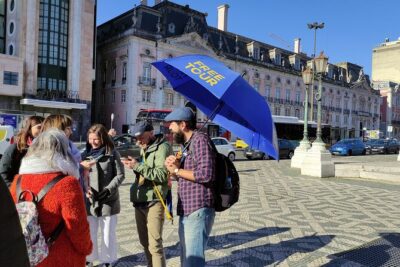
Lisbon City Center Tour – The Unmissable Lisbon
Read our review →
Daytime/Sunset/Night City Sailboat Tour with Drink
Read our review →
City Highlights 3-Hour Guided Electric Bike Tour
Read our review →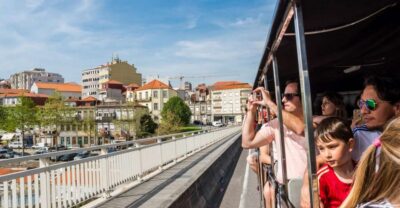

Browse the lists this tour appears in