

Reviewed · TUK-TUKS
Welcome Lisbon Tour with Local Guide in Private Eco Tuk Tuk
Lisbon’s hills can wear you out fast. This private tour in a 100% electric tuk-tuk is a smart way to cover serious ground without doing the stair workout. I like two things right away: the no-queue start and the way the ride lets you stop for photos without burning time on steep climbs. One drawback to keep in mind, though, is that the route and photo stops are preset, so you cannot fully customize the itinerary hour by hour.
What makes it feel worth it is the local guidance. Guides such as João, Carlos, Tiago, Arturo, Arthur, and Vitor are the kind who turn landmarks into stories you can repeat later, and who keep the pace comfortable even when the streets get rough. If you want a first-day orientation that also helps you plan what to see next, this is a strong match.
One more practical note: tuk-tuks are great for getting around, but the city’s cobblestones mean the ride can be bouncy. If you are sensitive to that, plan to sit steady and lean into the fun part.
Key things you’ll appreciate
- Private electric tuk-tuk for your group only, with a smooth, low-impact ride approach
- Zero line time at the start, so you actually get sightseeing time
- Preset stops for photos plus a local guide who explains what you are seeing
- Cover-ups and blankets for rain or wind, since tours run in typical bad weather
- Stops across Alfama, Graça, Chiado, Bairro Alto, and Baixa, so you see multiple “Lisbons” in one go
- Longer options can include cruise port pickup, when you choose that option in advance
Why a private electric tuk-tuk is perfect for Lisbon hills
Lisbon is gorgeous, and it is also stubborn. You feel it as soon as you step outside the train station, where sidewalks tilt and stairs multiply. A tuk-tuk changes the whole rhythm. You still get street-level sights and lookout moments, but you are not spending your energy climbing between neighborhoods.
This tour is also built for comfort. It is private, so you are not crammed into a large group schedule. And it is in a 100% electric vehicle, which fits the city’s push toward greener tourism, while keeping the experience easy to enjoy right from the first minutes.
If you want to understand the city layout quickly, this format helps. You get the “here’s where everything sits on the hills” feeling, which makes it easier to map out your next days on foot.
More Tuk-Tuk Tours in Lisbon
- True 4Hour Private Tuk Tuk Tour: Discover Lisbon with a Local!
★ 5.0 · 8,008 reviews - Lisbon: Private Guided Tuk-Tuk Tour with Hotel Pickup
★ 4.9 · 4,552 reviews - Private Lisbon Sightseeing Tuk-Tuk Tour: Alfama, Belém & More
★ 5.0 · 4,277 reviews
The ride itself: bumpy cobblestones, warm cover-ups, and real-world comfort
A tuk-tuk is not a limo. Lisbon’s old streets are uneven, and even on an electric vehicle, you will feel the cobblestones. That is not a dealbreaker, but it is worth knowing so you can plan your seating and posture.
The company provides blankets and protective covers against rain and wind, which is a big deal in Lisbon when weather changes fast. One of the smartest parts is that the tour runs in rain or heat, not just on perfect days. You are not left guessing, and your time on the ground stays productive.
Also, the guides are hands-on about getting you in and out. Vehicles are said to suit seniors, and drivers will help if needed, which matters when you are boarding on uneven surfaces.
How the route works across 1 to 4 hours
The experience comes in different lengths, about 1 to 4 hours. The stops are arranged in a preset set of photo moments, and the route is adjusted based on the time option you chose. That design is important: it keeps the tour realistic and ensures you cover the key neighborhoods.
Here’s what that means for you:
- You will not be able to change the photo-stop locations on the fly.
- Your guide can still answer questions, point out details, and steer the sightseeing feel in a way that fits your group.
- If you are delayed, the operator may reduce the time and can change the route based on lost minutes, and delays beyond 15 minutes can lead to cancellation without refund.
Bottom line: it is structured, but it is still a human experience guided by a local.
Cais do Sodré and Ribeira: markets, promenades, and fado night energy
You start in the Cais do Sodré area, a riverside neighborhood that carries Lisbon’s evening personality. Even if you do the tour earlier in the day, it helps to see the places that become lively after dark, because it changes how you later understand the city.
One highlight here is Ribeira Market, a historic 19th-century space with a food court that acts like a daily hub. It is the kind of place where locals drop in for quick bites, and where you can pick up the idea of Lisbon as a city of snacks and social energy, not just monuments.
From there you move toward Pink Street, known for bars and restaurants tied to fado evenings. If you have never heard fado live, hearing that this is where the sound hangs in the air makes you more motivated to plan a night performance later.
And when the weather cooperates, the Tagus River promenade along Ribeira das Naus is exactly the kind of stop that turns your ride into something calmer. You are not only moving between hills, you are also getting a sense of Lisbon’s waterfront scale.
Another Lisbon day, differently spent:
- Lisbon City Center Tour – The Unmissable Lisbon
★ 5.0 · 22,234 reviews - Lisbon: Sintra, Pena, Regaleira, Cabo da Roca & Cascais
★ 4.7 · 19,656 reviews - Lisbon Card: 24, 48, or 72-Hour Pass
★ 4.5 · 17,944 reviews - Lisbon: Jerónimos Monastery Entrance Ticket
★ 4.1 · 14,164 reviews
Chiado and Baixa: where Lisbon’s big rebuild story lives
Chiado is central Lisbon in a polished, cultural way. It sits between Baixa and Bairro Alto, and it is known for cafés, theaters, art galleries, and shopping that feels both classic and modern. If you want an area that helps you picture everyday Lisbon life, Chiado is a strong stop.
Two landmarks make this neighborhood extra easy to understand:
- Café A Brasileira, a historic café that anchors the area’s cafe culture.
- Livraria Bertrand, famous for being the world’s oldest operating bookstore, which tells you how much Lisbon loves paper, books, and ideas.
Then you slide into Baixa, the downtown grid famous for its architecture and its aftermath story. Baixa was rebuilt after the 1755 earthquake, with planning credited to the Marquis of Pombal. That matters for visitors because the streets feel intentionally organized compared with the city’s older hill districts.
You will also get a look at major Baixa set pieces:
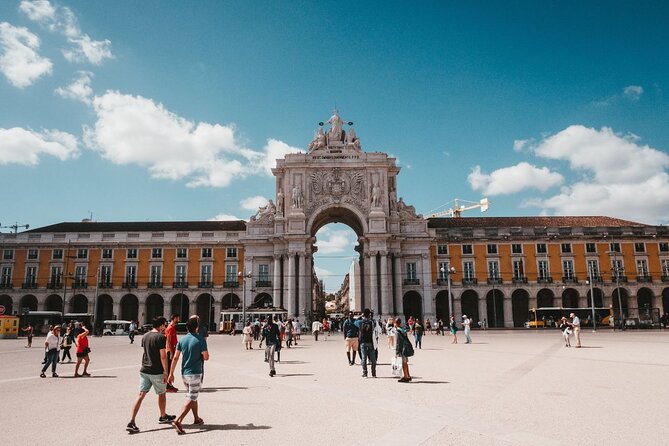
- Praça do Comércio, right on the Tagus waterfront, known for its huge open space and arch-lined edges
- Rossio Square, a lively downtown center for cafés and shops
- Arco da Rua Augusta, a monumental arch that marks the way traffic and people funnel toward the river
- Santa Justa Lift, a wrought-iron elevator that is part transportation icon, part city landmark
If you are worried that Lisbon is all hills and no planning, Baixa gives you the counterpoint: Lisbon can be designed.
Bairro Alto: the day-to-night change you will feel
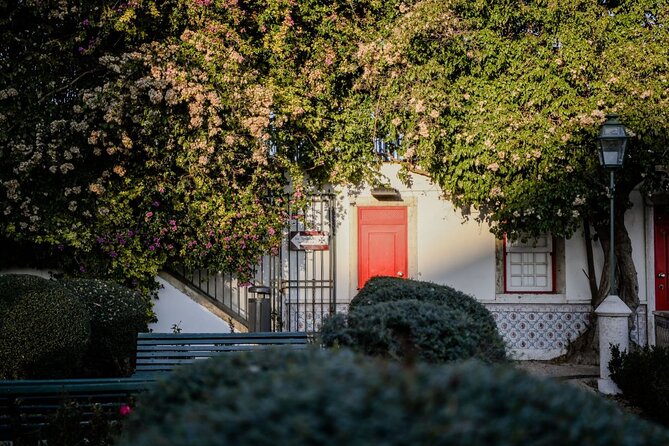
Bairro Alto is one of Lisbon’s most distinctive neighborhoods. It is built on a hill, with narrow, cobblestone streets that twist like they have their own agenda. It is known for bohemian energy and nightlife, with bars, restaurants, and fado venues.
The useful part for you is learning the contrast. By day, Bairro Alto can feel more relaxed, with antique shops and art-focused spots. Then the mood shifts as evening comes, and the streets become a show.
This is also where the tuk-tuk shines. Instead of walking those steep, uneven lanes, you can see the area and move on without burning your legs. You get to experience the “Lisbon style” of the neighborhood without paying for it in fatigue.
Alfama viewpoints and Sé Cathedral: the steep, scenic side of Lisbon
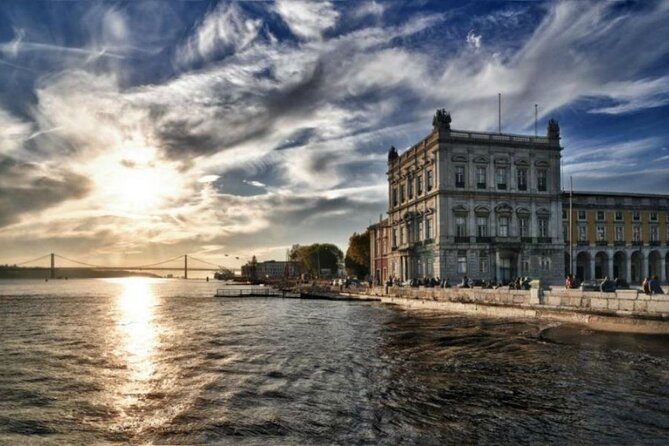
As your route trends toward Alfama territory, the story turns older and more dramatic. This is where Lisbon’s viewpoints matter because you are constantly looking across layers of the city.
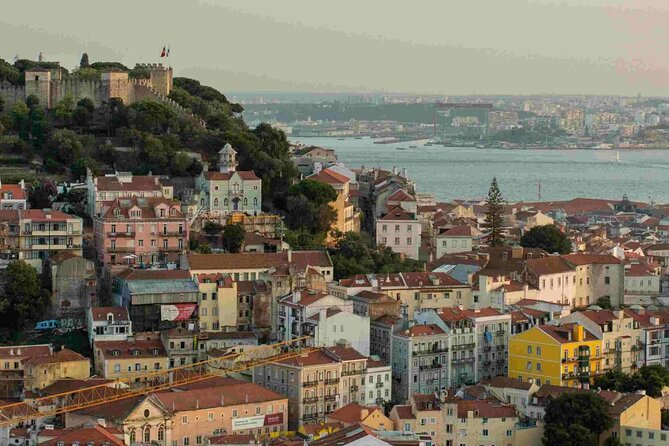
One standout stop is Largo das Portas do Sol, a square famous for a classic panorama. From here you can take in the Tagus River, the Baixa Pombalina grid, and the silhouette of Castelo de São Jorge. Even if you have seen photos, being in the exact viewpoint helps you understand distances and direction.
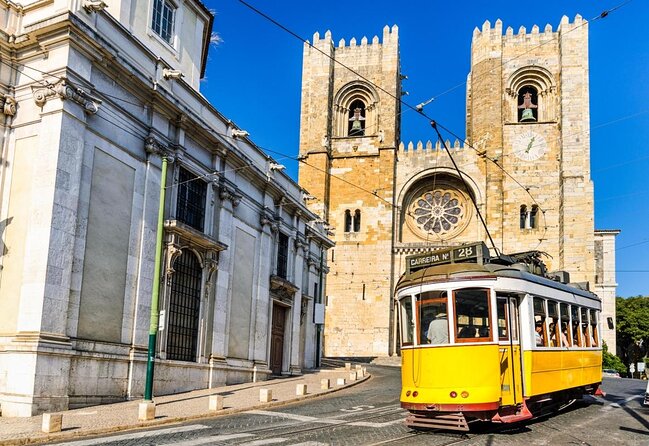
Another key historic anchor is Sé de Lisboa, the metropolitan cathedral, also called the Lisbon Cathedral. Construction began in 1148, shortly after Afonso Enriques conquered the city, and it is described as the oldest church in Lisbon. Whether you go inside or simply take in the setting, it gives you a strong anchor point for Lisbon’s long timeline.
This area is also ideal if you care about architecture that looks lived-in, not staged. Alfama works best when you slow down for a few minutes and then accept that Lisbon is naturally a “look around, then move” kind of city.
Graça, Senhora do Monte, and the Pantheon area

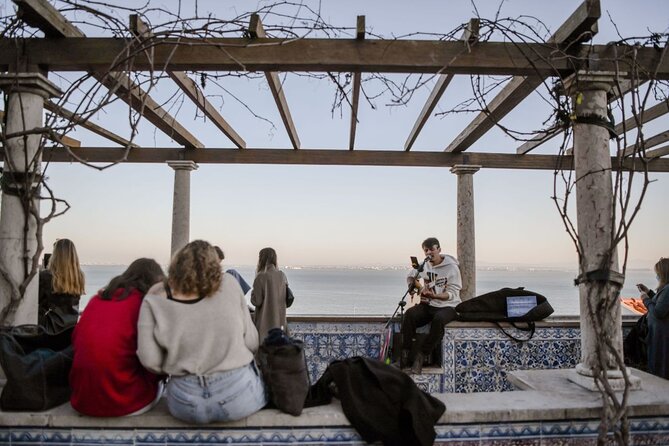
Graça is a hillside neighborhood where the city’s viewpoint culture becomes obvious. You get Miradouro Nossa Senhora do Monte, widely known as one of Lisbon’s iconic lookouts. This is the kind of place where the city suddenly makes sense in one glance: river, roofs, hills, and the way neighborhoods stack.
The tour then continues through the Graça area’s historic and community feel. Graça is described as traditional, with narrow cobbled lanes and a mix of local cafés, restaurants, and miradouros that bring people out.
Two major historic stops connect the view to the deeper story:
- São Vicente de Fora, a monastery on elevated ground near Alfama and Graça. It is called de fora because it was outside the city walls and the parish was not under the bishop’s jurisdiction at the time.
- National Pantheon (Panteão Nacional), located in the Church of Santa Engrácia. The current building stands on a site where a church was erected in 1568 by order of Infanta Maria, connected to the creation of the parish.
If you like seeing how Lisbon’s religious and civic power shaped the city, this sequence helps you connect the dots between scenery and institutions.
Chafariz de El-Rei and Praça do Comércio: water and power at human scale
Fountains sound like small details, but in Lisbon they often tell you something big. Chafariz de El-Rei is described as the first public ornamental fountain in the city, built in the 13th century during the reigns of Afonso III and Denis I. It also links to the practical fact that Alfama had excellent groundwater, which turned water access into a public feature.
After that, the tour returns to one of Lisbon’s biggest “wow spaces”: Praça do Comércio. The key idea here is scale. This is a wide riverside square tied to Portuguese royal history, and today it functions as a major public area.
You will see details that reinforce why it worked as a palace-adjacent center for centuries, including the architectural rhythm of arches along the sides.
This pairing, fountain and square, is a nice reminder that Lisbon is not only about viewpoints. It is also about systems that kept people fed, watered, and connected.
Price and value: what about $17-ish gets you
At around $17.23 per person, the value depends on how you see time. A private electric tuk-tuk tour is not just transport. You are buying:
- a local guide’s ability to explain what you are seeing in plain language
- a ride that saves your legs for the day after
- pre-set photo stops that prevent you from wandering in circles
- included warmth gear for weather, so you stay comfortable
If you are on a tight schedule, this can be one of the best ways to get your bearings fast. Many guides in this kind of tour space spend the day showing you angles for photos. What you want is someone who also tells you what each area meant, and how to plan your next stops.
You also get the benefit of a private vehicle for your group only, which usually makes the experience feel smoother for families, couples, or anyone who wants less friction than a group shuttle.
The one value warning is that some tours like this can feel less “guided” if the emphasis is mostly driving. If that concerns you, be proactive: ask your guide what to see next, what not to miss, and what a smart two-day plan looks like.
Who should book this Lisbon eco tuk-tuk tour
This tour is especially good if:
- you want a first-day overview that includes hills, waterfront, and downtown
- you do not want to walk up every slope just to get your bearings
- you prefer a ride-with-stops format, with viewpoints and photo moments planned
- you have kids, seniors, or anyone who needs a gentler pace over cobblestones
It may not be the best fit if:
- you want to fully customize where you stop and for how long, because the photo stops are preset
- you dislike any bumpy ride on uneven streets
- you need a hotel pickup as a standard service, since most travelers meet at the tour starting point
Should you book this Welcome Lisbon Tour?
If your main goal is to get oriented and save your legs for later sightseeing, yes, book it. This is the kind of tour that helps you return to Lisbon with a map in your head, not just a camera full of angles.
Choose it early in your trip if you want it to guide your planning. Pick the longer time option if you want a calmer pace across more neighborhoods, and if you are arriving by cruise, consider the pickup options where offered.
If you want something highly flexible and fully self-directed, this is not that. But if you want a structured, comfortable introduction powered by local storytelling, an electric private tuk-tuk is a very practical way to start Lisbon.
FAQ
How long is the Welcome Lisbon Tour?
It runs for about 1 to 4 hours, depending on the option you select.
Is this tour private?
Yes. It is a private tour, and only your group participates.
What vehicle do you use?
You ride in a 100% electric, sustainable tuk-tuk.
What language is the tour offered in?
The tour is offered in English.
Does the tour start with long waiting or queues?
The tour begins without queues or waiting times.
Can I change the route or photo stops during the tour?
No. The route and a series of photo stops are preset based on the duration you choose, and they cannot be modified.
Where is the meeting point?
The meeting point is Tv. do Carvalho 25, 1200-058 Lisboa, Portugal. The tour ends back at the meeting point.
Is hotel pickup included?
Hotel pickup and drop-off are not included. For the 3 and 4 hour options, pickup may be offered at either the Lisbon Cruise Port (Jardim do Tabaco Quay) or Time Out Market if you choose that option in advance.
Is the tour suitable for children?
The minimum age is two years, and the tour specifies no babies are allowed. There is also a minimum mandatory weight of 9 kg.
What happens if I cancel or I am late?
You can cancel for a full refund up to 24 hours before the start time. If you are delayed, the activity may be reduced based on lost time, and it is cancelled if the delay is more than 15 minutes without a refund.
Latest reviews from Lisbon
- Private Tour: Sintra, Cabo da Roca and Cascais Day Trip from Lisbon★ 5.0 · 225 reviews
- Lisbon: Food Tasting Tour by Tuk Tuk with 2 Stops★ 4.8 · 226 reviews
- Berlenga Island Small-Group Day Trip from Lisbon★ 4.5 · 227 reviews
- Sintra Deluxe from Lisbon with Pena Palace ticket★ 4.0 · 228 reviews
- Fátima, Nazaré, Óbidos and S. Martinho do Porto Small-Group Tour from Lisbon★ 5.0 · 229 reviews
- Évora and Monsaraz with Regional Wine Tasting from Lisbon★ 4.5 · 229 reviews
- Expert Plus Lisbon Tour with Local Guide in Private Eco Tuk Tuk★ 5.0 · 230 reviews
- Historic Walking Tour Through Lisbon’s Oldest Neighborhood★ 5.0 · 233 reviews
Tuk-Tuks, compared.

True 4Hour Private Tuk Tuk Tour: Discover Lisbon with a Local!
Read our review →
Guided Tour by Tuk-Tuk & Optional Douro River Cruise
Read our review →
Private Guided Tuk-Tuk Tour with Hotel Pickup
Read our review →
Private Lisbon Sightseeing Tuk-Tuk Tour: Alfama, Belém & More
Read our review →
Lisbon Highlights: Private Tuk Tuk Tour Adventure Sightseeing
Read our review →
Discover Porto’s Highlights on a 2-Hour Private Electric Tuk Tuk
Read our review →

Browse the lists this tour appears in