
Reviewed · COIMBRA TOURS
Conimbriga and The Roman Tour
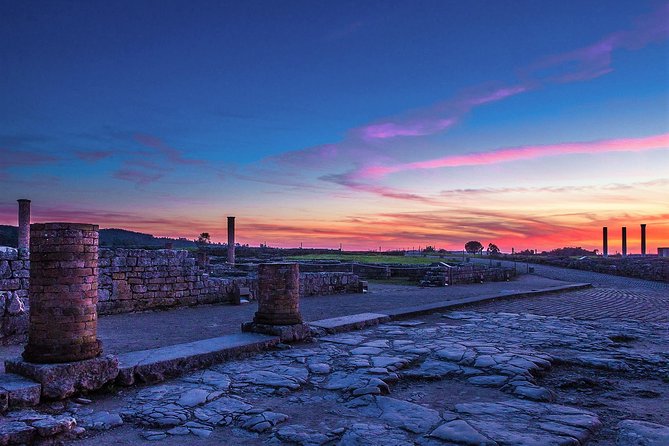
Conimbriga is one of Portugal’s most impressive Roman sites, and this tour strings it together with the water system that fed the city, plus museum time that puts the ruins into plain, human context. You get a compact route that feels like Roman engineering and everyday life, not just scattered stones. Roman ruins and the aqueduct water story are the big draw here.
I like that this is built for a small private group with a guide who keeps the pace calm. I also love the mix of ruins plus two museums, because the discoveries do not stay stuck in the dirt. You come away understanding what you are seeing, including forum space, thermal baths, and the kind of homes that made mosaics and fountains worth preserving.
My main caution is practical: museum admissions are not included, and one of the museums, PO.RO.S in Sicó, is closed on Mondays. That can change how much museum time you get and add a bit to your final spending.
Key highlights you will actually use
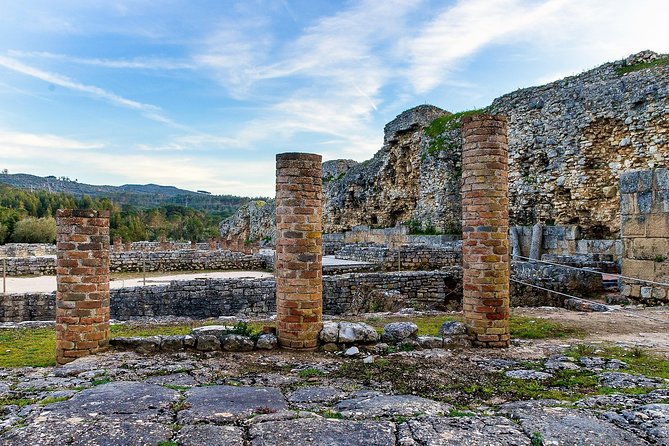
- Alcabideque’s spring-fed aqueduct start, where the collecting basin is still used as a village pond
- PO.RO.S multimedia museum in Sicó, designed as a Roman Portugal companion to Conímbriga
- Conímbriga’s everyday-life focus, from forum space to thermal baths and mosaics
- A small-group, private-vehicle setup, with hotel pickup offered in central Coimbra and nearby towns
- A guide who explains what you are looking at, including how the buildings worked
Alcabideque to Conímbriga: the 4 hours in real life

This is a true half-day outing, about 4 hours total, built around getting you close to major Roman remains without turning it into a self-guided scavenger hunt. You leave from central Coimbra, ride out in an air-conditioned vehicle, and come back to the same starting point.
The rhythm is simple. You first catch the Roman idea of water at Alcabideque. Then you shift gears into museums that explain the Roman world in Portugal. Finally, you spend the bulk of the time at Conímbriga, with guided walking through the ruins and time in the on-site museum where excavated objects bring daily life to the surface.
That timing matters. Conímbriga covers a lot of ground, and it is easy to walk through it like a postcard. With a guide, you spend less energy guessing and more time noticing patterns, like how the city was organized and why certain buildings were placed where they were.
More of Coimbra:
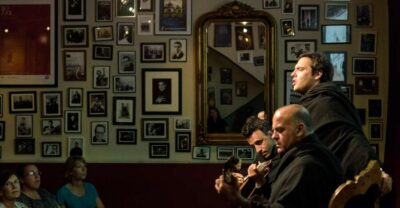
- Coimbra: Live Fado Show with Glass of Port Wine
★ 4.7 · 998 reviews - Fátima and Coimbra Full-Day Tour from Porto
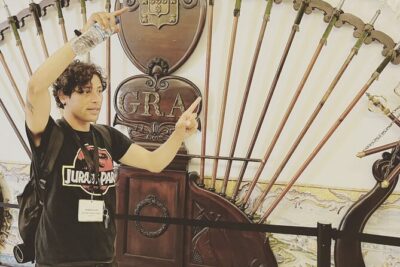
★ 4.8 · 696 reviews - University of Coimbra guided tours without queue
★ 5.0 · 518 reviews
Private comfort and easy logistics from Coimbra
If you want a break from planning, this tour gives it to you. It includes a driver/guide and round-trip transit by private vehicle, plus a professional photographer guide and one souvenir photo.
Pickup is offered from most hotels in central Coimbra, and also from Condeixa-a-Nova and Penela if parking is available. If you are not staying in those zones, pickup is still possible for an added fee (listed as 10€ to 20€). If you select hotel pickup, hotel pickup and drop-off are included.
The meeting point is Largo da Portagem, 3000-337 Coimbra, Portugal, and the tour ends back there. The tour is offered in English and is private, meaning only your group participates. Group size is capped at up to 10 people per booking, so it stays manageable even when you are walking.
One more detail that helps: they run in all weather conditions and ask you to dress appropriately. Still, be aware that experiences can be adjusted if weather turns bad, with an alternative date or full refund offered in those cases.
Stop 1 at Alcabideque: the aqueduct’s real starting point
Alcabideque is not just a pretty detour. It is where the story of Conímbriga’s water begins in a way that feels grounded and physical. The tour points you to the Conimbriga aqueduct start, connected to the original collecting basin of spring water.
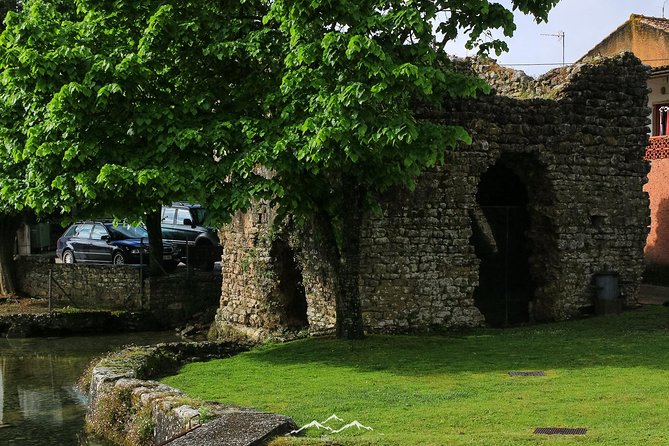
What makes this stop memorable is how Roman infrastructure overlaps with everyday village life. The collecting basin is still used as a local village pond. Next to that water feature are the ruins of a castellum, which acted as a cleaning basin in the system.
You can picture the job the Romans did. Water did not just flow. It was collected, treated, and moved onward through substructures over about 3.5 km until it reached Conímbriga. Your guide helps you connect that long route to what you later see at the city: fountains, fountainside houses, and the thermal bath mindset of water on tap.
Practical note: this stop is brief in time, about 30 minutes, so go in ready to look. It is the kind of place where one good explanation makes the difference between I saw ruins and I understood what they were built to do.
Stop 2 at Museu PO.RO.S in Sicó: what the museum adds
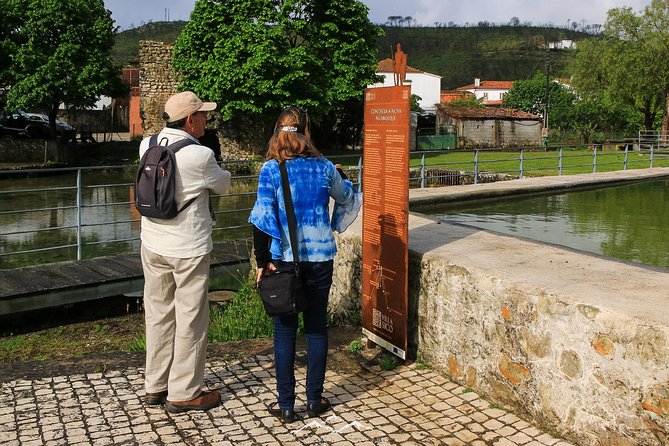
After Alcabideque, the tour shifts into museum mode with PO.RO.S, Roman Portugal Museum in Sicó. This museum is positioned as the newest municipal museum for Condeixa and is linked to the wider Roman legacy route, including Conímbriga.
You are looking at a multimedia and virtual space, so it is not only display cases. It is designed to help you mentally assemble the Roman world you are about to walk through. Think of it as the bridge between ruins you see at street level and the larger system behind them.
Timing is about 1 hour here. Admission is not included, so you will need to plan for that extra cost.
The other big consideration is the calendar. PO.RO.S is listed as closed on Mondays. If you travel on a Monday, expect the schedule to change, or the guide to optimize the day around what is available.
Another Coimbra day, differently spent:
- Guided tour of the University and city of Coimbra.
★ 5.0 · 377 reviews - Coimbra: Mondego River Kayaking Tour
★ 4.7 · 324 reviews - From Porto: Fátima and Coimbra Full Day Tour
★ 5.0 · 304 reviews - Aveiro & Coimbra Small Group Tour with Moliceiro Boat Cruise
★ 4.7 · 254 reviews
Stop 3 at Conímbriga: mosaics, baths, and the museum that ties it together
This is the main event. Conímbriga was inhabited long before the Romans, but Roman troops occupied it around 139 BC, and it later became the prosperous capital of the Lusitania province. Under Emperor Augustus, the urban area grew, and you can still track the footprint of major everyday buildings like the forum, the amphitheatre, and the thermal baths. Later, a three-nave basilica was built in the center.
On the tour, you do not just wander. You get guided context that helps you read the city plan as you walk. People love this place for the same reasons: Roman construction that still feels solid, and mosaics and water features that have survived in striking condition.
You also get museum time at the Museu Monografico de Conímbriga, Museu Nacional. This museum uses rooms to explain how people lived and worked, based on objects found during excavations. The museum approach covers things like everyday life, religious life, architecture and decoration, manor houses, and life at the forum.
Your time here is about 2 hours, and again, admission is not included.
If you are the type who cares about how buildings function, Conímbriga hits hard. You get to connect Roman engineering themes you saw at Alcabideque with what is visibly present in the city, like water systems and the way public and private spaces were arranged. Many guides use the ruins like a textbook, and this one tends to do that in a relaxed, conversational way.
Why the guide makes Conímbriga worth paying for
You can technically visit ruins on your own. The question is what you take away.
The best moments on this tour come from explanations that turn the site into something you can follow. In many of the accounts, Alfredo is singled out as a guide who brings Roman life to the surface with clear explanations and a friendly approach. There are also mentions of guides like Antonio and Ivone, and the common thread is the same: when the information clicks, the ruins feel larger and more meaningful.
What you gain is not a lecture. You get help seeing the logic of the city. Guides tend to point out what to focus on, how the buildings relate, and why certain mosaics, fountains, and room layouts mattered.
It also helps that the group size stays small. With up to 10 people per booking, your questions do not feel like an interruption. One review highlighted that the pace was customized for different walking abilities, which is exactly what you want in a site like Conímbriga where uneven ground can slow you down.
One more small detail that people notice: the tour includes a one souvenir photo. A few visitors said they expected that photo to be automatic, so be ready to coordinate with the guide and ask when the photo is taken if you want it to happen.
Price and value: is $102.80 a good deal
At $102.80 per person for about 4 hours, this tour is not the cheapest way to see ruins. But the value is in three places.
First, you get private, door-to-meeting point comfort with an air-conditioned vehicle and hotel pickup/drop-off if selected. In a place like Coimbra, that saves you time and stress.
Second, you get guided interpretation plus a professional photographer guide and an included souvenir photo. Paying for a guide here is often what turns a long site into a memorable narrative.
Third, you get two museum connections that explain what you are seeing outdoors. That is a huge difference versus doing only the ruins.
The catch, and it is worth planning for, is that museum admissions are not included. PO.RO.S and the Conímbriga museum require separate tickets. You also are responsible for food and drinks unless something else is specified. So your total cost will be a bit higher than the base price.
Still, for many people, the final math works because you see more in less time, and you understand what you are seeing.
Who should book this tour, and who might not
This is a strong fit if you want a Roman day that stays organized, focused, and not exhausting. You might especially enjoy it if:
- you like ruins but also want the meaning behind them
- you want museums time without doing ticket lines and guesswork
- you prefer a small group and a guide who can answer questions
It may feel less ideal if you dislike paying extra on-site for museum admissions, or if you are traveling specifically on a Monday and really want PO.RO.S. If you are flexible with dates, you will avoid that timing snag.
Should you book the Conimbriga Roman tour from Coimbra?
If you want Conímbriga to feel like a story, not a walk, I think this one is a good choice. The combination of the aqueduct beginning at Alcabideque, the museum explanation at PO.RO.S, and the Conímbriga museum that ties objects to daily life is what makes the day click. Add a private vehicle, pickup options, and a guide who has earned consistently high praise, and you get a smooth, high-value half-day.
Before you book, do two quick checks. First, look at your travel day if it is Monday, because PO.RO.S is closed. Second, budget for museum admissions since they are not included.
If those points work for you, this is exactly the kind of guided outing that saves you time, reduces confusion, and lets the best-preserved Roman details land in your memory.
FAQ
How long is the Conimbriga and The Roman Tour from Coimbra?
It lasts about 4 hours. The stops include roughly 30 minutes at Alcabideque, about 1 hour at Museu PO.RO.S, and about 2 hours at the Conímbriga museum.
Is this tour private or group-based?
It is a private tour/activity, and only your group participates. Group size is capped at a maximum of 10 people per booking.
Does the tour include hotel pickup?
Pickup is offered from most hotels in central Coimbra, and also from Condeixa-a-Nova and Penela if parking is available. Hotel pickup and drop-off are included if you select that option.
Where does the tour start?
The start and return meeting point is Largo da Portagem, 3000-337 Coimbra, Portugal.
What languages is the tour offered in?
The tour is offered in English. A guide may also be multilingual depending on operation.
Are museum tickets included in the price?
No. Admission tickets for Museu PO.RO.S and Museu Monografico de Conimbriga – Museu Nacional are listed as not included.
Is the tour offered on Mondays?
Museu PO.RO.S is closed on Mondays, so that can affect your schedule or museum time if you choose a Monday.
Is the tour weather dependent?
The experience operates in all weather conditions and you should dress appropriately. Separately, it can be canceled due to poor weather, with an alternative date or a full refund offered.
What is included in the tour price?
Included items are the driver/guide, one souvenir photo, hotel pickup and drop-off if selected, transport by private vehicle, and an air-conditioned vehicle. There is also one souvenir photo included.
What is the cancellation policy?
You can cancel for a full refund up to 24 hours before the experience starts. If you cancel less than 24 hours before, the amount paid is not refunded.
Is food included?
Food and drinks are not included, unless something is specified as part of the booking.
Latest reviews from Coimbra
- Discovering the charms and places of Coimbra★ 5.0 · 78 reviews
- Lousa Mountain Private Tour★ 5.0 · 88 reviews
- Lisbon to Porto Up To 5 Stops Óbidos Nazaré Fátima Coimbra Aveiro★ 5.0 · 90 reviews
- Fátima & Coimbra: Full Day Private Tour from Porto★ 5.0 · 96 reviews
- An adventure through the Schist Villages of Lousã★ 5.0 · 98 reviews
- Porto: Fatima and Coimbra Day Trip★ 4.5 · 110 reviews
- Schist Villages at Lousa Mountain★ 5.0 · 127 reviews
- Joanina Library & Coimbra University | Private Former Alumni Tour★ 5.0 · 135 reviews
Coimbra Tours, compared.

University of Coimbra guided tours without queue
Read our review →
Guided tour of the University and city of Coimbra.
Read our review →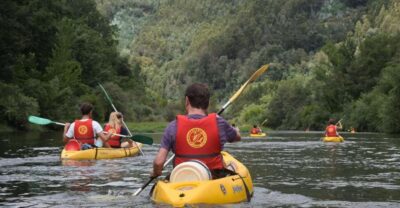
Aveiro & Coimbra Small Group Tour with Moliceiro Boat Cruise
Read our review →
Aveiro and Coimbra Small Group Tour with Moliceiro Boat Cruise
Read our review →Browse the lists this tour appears in