
Reviewed · CITY TOURS
Lisbon Walking Tour – The Perfect Introduction to the City
A good first day in Lisbon needs a walk that stitches landmarks to stories, and this one does it fast. I love that you get a close-up feel for Santa Justa Elevator and a clear explanation of the 1755 earthquake, right in the rebuilt core of the city. You also roll past the places tied to Lisbon’s later turning points, like the Carnation Revolution.
You’ll meet at Praça do Comércio, and I like that the guide is easy to spot, with an orange umbrella. Guides such as Tiago and Natalia are praised for lively storytelling plus practical add-ons, like where to eat and how to move around.
One thing to watch: the English delivery can feel quick for some people, and you might hear a blunt conversation about tipping at the start of the tour, which may not fit everyone’s style.
Key Highlights Worth Your Time
- Baixa plus Chiado in one smooth sweep, so you get your bearings fast
- Santa Justa Elevator viewpoint and the bigger story behind it
- 1755 earthquake context that makes the street layout make sense
- Carmo ruins and the Carnation Revolution site, for a modern history jolt
- Old squares and church interiors outside the main crowds
- Pay-what-you-fair tip at the end, after you’ve seen the work firsthand
Getting Oriented in Lisbon, From Praça do Comércio to Camões Square
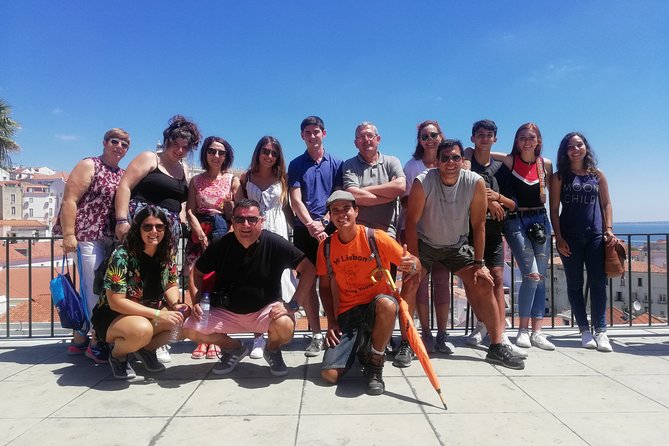
If Lisbon feels like a maze on day one, this walking tour is the fix. The route focuses on the downtown loop around Baixa and Chiado, where street signs, squares, and viewpoints line up like a map you can walk through. It is not just sightseeing. It is a guided explanation of why Lisbon looks the way it does, especially after the 1755 earthquake and the rebuild that followed.
The tour runs about 2 hours 30 minutes, and it stays friendly in size, with a maximum of 20 people. That matters because it keeps the walk conversational. You can ask questions, and you are not stuck in a herd.
Also, the price is unusually low at $1.25 per person, which is part of why people book it early. Do not let the low booking price trick you into thinking the tour is low effort. The structure is more like a pay-what-you-fair experience at the end, so you are buying access to a skilled local guide and their time, not a museum ticket.
More City Tours in Lisbon
- Lisbon City Center Tour – The Unmissable Lisbon
★ 5.0 · 22,234 reviews - Lisbon: Daytime/Sunset/Night City Sailboat Tour with Drink
★ 4.9 · 3,114 reviews - Lisbon: City Highlights and Viewpoints E-Bike Tour
★ 4.9 · 1,556 reviews
Meeting at Praça do Comércio, Spot the Orange Umbrella
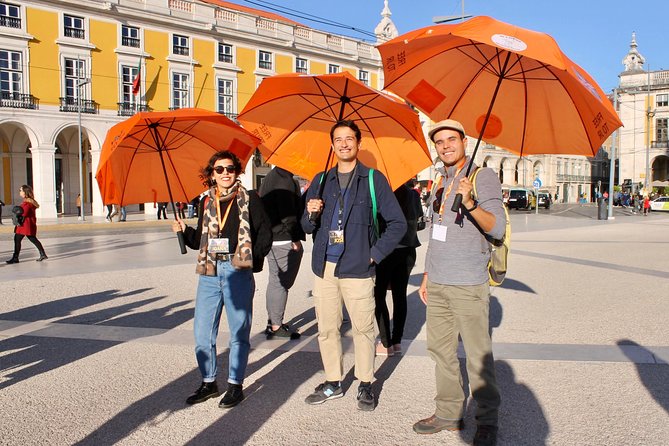
You start at Praça do Comércio, address 1100-148 Lisbon. The key detail is where you wait: between the big arch and the statue in the middle. Lisbon’s central square can feel huge when you are looking for a specific group, so this precision helps.
Here is the practical tip that makes everything easier: look for your guide with an orange umbrella. That single landmark cue turns an awkward search into a quick handoff.
You will also want to bring your mobile ticket. This tour uses a mobile ticket format, so it helps to have your confirmation ready on your phone before you arrive. If you travel with a service animal, the tour allows them, which is a comfort factor when you are planning a long-ish walk.
Baixa’s Grand Squares: Where You Learn Lisbon’s Layout
The walk kicks off near the statue of D. Jose I, then moves through the grand open space that is Praça do Comércio. This is Lisbon’s biggest square, and standing in it is the first reality check. You see how the city spreads outward from a central civic center, and you understand why so many famous streets begin here.
From there, you head toward Municipal Square, the area where the city hall is located. This part of the route is not about one single monument. It is about reading Lisbon’s “public face,” the places built for meetings, announcements, and ceremonies. The guide’s job is to translate those spaces from architecture into story.
Then comes Praca Dom Pedro IV, known as Lisbon’s oldest square. You can feel the age in how the square works, how it frames movement, and how people use it as a meeting point. If you are the type who likes to know where you are in a city’s timeline, you will appreciate this stop.
The practical payoff: by the time you reach the tighter streets, you understand how to navigate between big open spaces without guessing.
Rua Augusta and the Street That Carries the City
Rua Augusta is Lisbon’s most important street, and the tour uses it the right way. Instead of rushing you along, the guide typically ties the street to what happened historically and culturally around it. You get a sense of how this road became a spine, and why it is still one of the most recognizable paths in central Lisbon.
This is where many first-time visitors start to relax. The walk transitions from squares, which are easy to understand, into streets that curve and branch. When you know the “main line,” you stop feeling lost.
More Walking Tours in Lisbon
- Lisbon: History, Stories and Lifestyle Walking Tour
★ 4.8 · 10,902 reviews - Best of Lisbon Small-Group Guided Walking Tour
★ 5.0 · 4,869 reviews - Lisbon: Food and Wine Small Group Walking Tour
★ 4.9 · 4,082 reviews - Best of Lisbon Walking Tour: Rossio, Chiado & Alfama
★ 4.9 · 2,700 reviews
Santa Justa Elevator, Plus the Story Behind the View

One of the headline moments is the Elevador de Santa Justa. Even from the outside, it looks dramatic, and it is one of Europe’s most famous landmarks in terms of recognizability and style. The tour’s value here is not the machine itself. It is what the guide helps you connect: how Lisbon’s geography shaped daily life, and how different eras left their fingerprints on this part of downtown.
If you later decide to ride it, you will already know what you are seeing. If you do not, you still get the “why” behind the structure.
In a city where hills can make you sweat without warning, viewpoint landmarks like this also help you pace yourself mentally. You get a marker for where the city rises, where it falls, and how the center is arranged.
The 1755 Earthquake Explained Where It Matters
Lisbon’s history is dramatic, but the guide keeps it practical. A central theme is the Great Lisbon Earthquake of 1755, and the tour is paced so you encounter it in context, not as a random fact.
Once you understand the earthquake’s impact, Lisbon’s rebuilt areas stop feeling like just pretty streets. You start noticing patterns, and you understand why some areas feel straighter or more planned than others.
There is also a modern “after” in the tour, because the guide ties the long shadow of 1755 to later events. That flow is what makes this stop sequence feel like a narrative, not a checklist.
One of the reasons this tour earns high marks is the storytelling. Guides such as Tiago, Jose, and Walter have been praised for making the earthquake story feel like it happened to real streets and real people, not distant textbook pages.
Two Churches That Anchor the City’s Memory
The route includes Igreja De S Domingos and Igreja de Sao Roque, and both help you see Lisbon as a living place of worship, not just a tourist postcard.
Igreja de S Domingos is described as one of the most impressive churches in Europe, and it is a solid stop if you like interiors and architectural details. Even if you do not go deep into art history, the guide can help you notice what to look for.
Igreja de Sao Roque carries an extra punch because it is one of the churches in Lisbon to survive the Earthquake in 1755. That detail changes how you look at the building. You are not only seeing an old church, you are seeing continuity through disaster and rebuilding.
This is the kind of context that makes a walking tour worthwhile. It is hard to learn this just by reading a sign, especially when a city is visually overwhelming.
Largo do Carmo and the Carnation Revolution
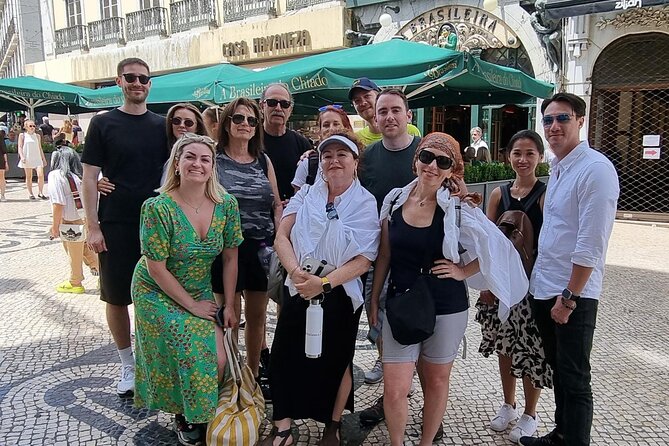
Largo do Carmo is where you hit a different kind of history. This is the place where the Carnation Revolution took place, and it gives the morning a modern edge. After you’ve spent time with earthquakes and reconstruction, it is refreshing to move into a moment that changed daily life in a more recent era.
The tour pairs this with other landmarks along the way, so the revolution feels like part of Lisbon’s timeline, not a separate lesson. If you like understanding how a city’s politics and culture show up in real places, you will like this section.
A Memorial That Adds a Needed Layer
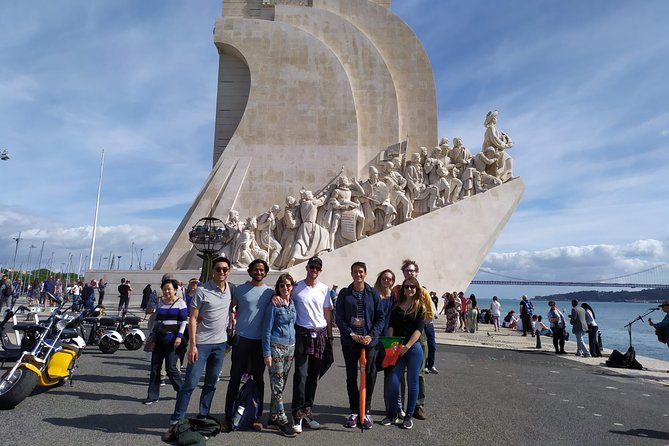
You also pass the Memorial as Vitimas do Massacre Judaico de 1506, honoring the Jewish victims of the massacre in 1506. It is a sobering pause, and it gives the walking tour emotional weight.
This stop matters because it prevents Lisbon’s history from becoming only famous kings and grand squares. It reminds you that the city’s story includes communities harmed and displaced.
If you prefer tours that keep things respectful and not too loud, this moment works well.
Avenida da Liberdade, Casa do Alentejo, and the More Polished Side
Next comes Avenida da Liberdade, Lisbon’s most fancy avenue. This is a different mood shift. The wide avenue changes how you see the city, making it feel more ceremonial and modern compared with the tighter medieval-feeling streets.
Casa do Alentejo is another interesting contrast. It is described as one of the most charming houses in Lisbon, and that stop is a good reminder that not everything meaningful is a cathedral or a major plaza. Sometimes it is the everyday buildings that shape what you remember.
Even if you are not shopping, this part of the route helps you imagine where style and life changed over time.
Rossio and the Long Central Station Story
The tour includes Estacao Do Rossio, the old central station of Lisbon. Stations are where cities show their habits, and Rossio is a strong anchor for that idea. You learn how movement and access shaped Lisbon’s growth and daily rhythm.
This stop is also useful for practical planning later. Once you see Rossio clearly, you can better judge routes for your remaining days, especially if you plan to hop to neighborhoods or nearby day trips.
Praca Luis de Camoes and the Easy Transition to Bairro Alto
Praca Luis de Camoes is one of Lisbon’s most iconic squares. It is a natural “breather” point, and it also sets you up for a fun next step. Many first timers like to end the tour already knowing where they will wander after.
Then the walk reaches Bairro Alto, Lisbon’s famous nightlife area. Even if you do not plan to go out that night, getting there with context helps. You see how the neighborhood sits in the city and why it became known for nightlife.
The Money Question: $1.25 Booking Price, Pay What You See Fit
Let’s talk value, because this tour is built on a pricing model that can surprise people. The booking price is listed at $1.25 per person, and the highlight says you can pay your guide whatever you see fit at the end.
That means you are effectively deciding your tip after you have experienced the guide. If you feel the guide made the city click, you can tip more. If you wanted slower pacing or more time at a specific stop, you can tip less. That flexibility is part of the deal.
One caution based on real-world experiences: some guides provide a very direct explanation early on about what they expect, and that can include a stated minimum tip amount. If you prefer a fixed-price model with no pressure, that is worth knowing before you join. On the other hand, if you like meeting a local guide and supporting good work directly, this structure can feel fair.
Pace, English Delivery, and How to Catch the Good Stuff
The biggest practical factor is pace. Some people found the guide spoke too quickly, which can be tough in a crowded outdoor setting. If you know you struggle with fast speech in English, you might want to ask a question early or stand closer so you can hear clearly.
The upside is that the small group size helps. With a maximum of 20, the guide can adjust when questions come up. Many guides are praised for being animated and engaging, with storytelling that keeps you moving without losing meaning.
Also, bring comfortable walking shoes. The tour covers a lot of ground across squares and streets, and the route is designed to get you through the highlights without stopping for long stretches.
And yes, it is Lisbon. Rain happens. I would pack a light poncho and be ready for wet pavement. One practical note from past experiences is that the tour has operated in rainy conditions, so plan for weather rather than waiting for perfect skies.
Who This Tour Fits Best
This Lisbon walking tour fits especially well if you:
- Are in town for only a couple days and want a fast introduction to downtown Lisbon
- Want the big historical anchors, like 1755 and the Carnation Revolution, explained in plain language
- Like learning what to look for at landmarks like Santa Justa Elevator and major churches
- Prefer small-group walking over hopping between stops on your own
It is also a good choice if you enjoy practical advice, like where to eat cheaply or where to go for viewpoints afterward. Several guides, including Tiago and Natalia, are praised for giving restaurant and neighborhood tips that help you plan your next moves.
Should You Book This Lisbon Walking Tour?
I think you should book it if you want a first-day orientation that feels personal and story-driven. The route hits a smart mix of major squares, key churches, and the modern turning point at Largo do Carmo, plus it weaves in why Lisbon looks the way it does after 1755.
Skip it or reconsider if you strongly dislike tip-based models with an upfront discussion about expectations, or if you know you will struggle with a fast-speaking guide. In that case, you might prefer a fixed-price tour where the style is less flexible.
If you do book, show up early, stand where you can see the orange umbrella, and be ready to walk with purpose. This is the kind of tour that helps Lisbon stop being confusing and start feeling navigable.
FAQ
What is the duration of the Lisbon Walking Tour?
The tour lasts about 2 hours 30 minutes.
How much does the tour cost?
The price is $1.25 per person.
Where does the tour start?
The tour starts at Praça do Comércio, Lisbon, Portugal.
Where does the tour end?
The tour ends around Praça Luís de Camões (Largo Luís de Camões), in Lisbon.
What language is the tour offered in?
The tour is offered in English.
Is there a mobile ticket?
Yes, this tour uses a mobile ticket.
Do I need to pay extra admission fees at the stops?
The information provided lists the stops as free admission, so you should not expect extra ticket costs tied to those specific points.
Can I pay the guide at the end?
Yes. The highlights note that you pay your guide whatever you see fit at the end of the tour.
What is the maximum group size?
The tour has a maximum of 20 travelers.
What is the cancellation policy?
Free cancellation is available up to 24 hours in advance for a full refund. If you cancel less than 24 hours before the start time, the amount you paid will not be refunded.
Are service animals allowed?
Yes, service animals are allowed on this tour.
Latest reviews from Lisbon
- Private Tour: Sintra, Cabo da Roca and Cascais Day Trip from Lisbon★ 5.0 · 225 reviews
- Lisbon: Food Tasting Tour by Tuk Tuk with 2 Stops★ 4.8 · 226 reviews
- Berlenga Island Small-Group Day Trip from Lisbon★ 4.5 · 227 reviews
- Sintra Deluxe from Lisbon with Pena Palace ticket★ 4.0 · 228 reviews
- Fátima, Nazaré, Óbidos and S. Martinho do Porto Small-Group Tour from Lisbon★ 5.0 · 229 reviews
- Évora and Monsaraz with Regional Wine Tasting from Lisbon★ 4.5 · 229 reviews
- Expert Plus Lisbon Tour with Local Guide in Private Eco Tuk Tuk★ 5.0 · 230 reviews
- Historic Walking Tour Through Lisbon’s Oldest Neighborhood★ 5.0 · 233 reviews
City Tours, compared.
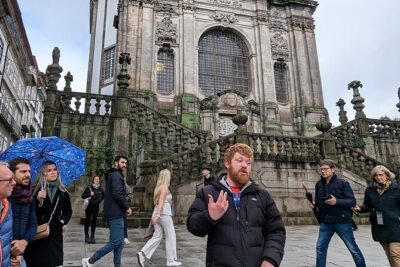

Lisbon City Center Tour – The Unmissable Lisbon
Read our review →
Daytime/Sunset/Night City Sailboat Tour with Drink
Read our review →
City Highlights 3-Hour Guided Electric Bike Tour
Read our review →

Browse the lists this tour appears in