
Reviewed · CITY TOURS
Faro: City Sightseeing Tourist Train
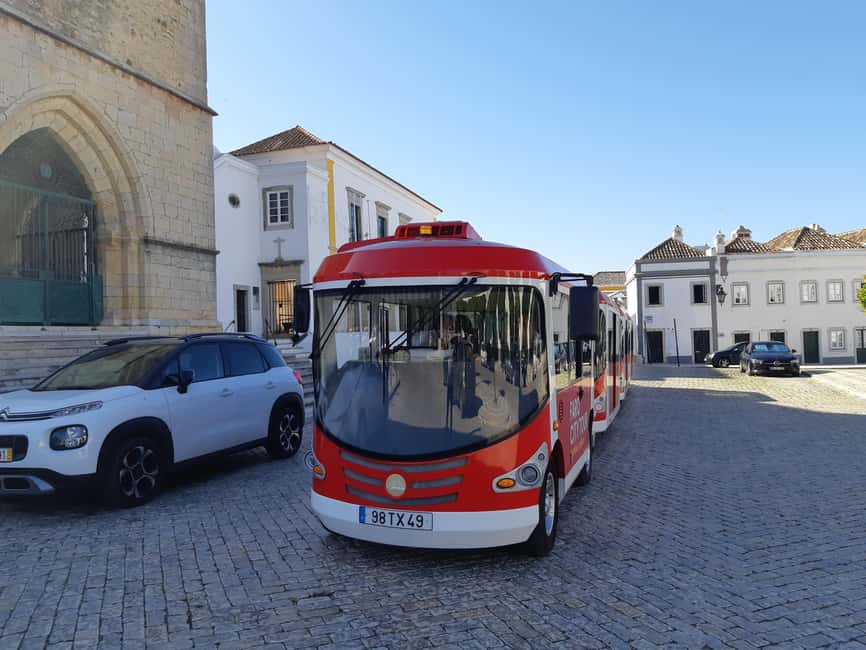
Faro feels like a small city, but it has layers. This tourist train turns a short visit into an easy circuit through the Old City and important landmarks, with a scenic pass by the Ria Formosa lagoon system.
I especially like the way the route strings together major sights, so you can connect places like Sé de Faro with nearby churches without walking a long loop. I also like the audio commentary options in English, Portuguese, French, and Spanish, which makes the trip work for mixed groups.
One thing to consider: the ride can be noisy, and the narration you hear from the speakers may not always be crystal clear, depending on where you sit. If you really want details in real time, pick your spot carefully.
Key Things to Know Before You Ride Faro’s Tourist Train
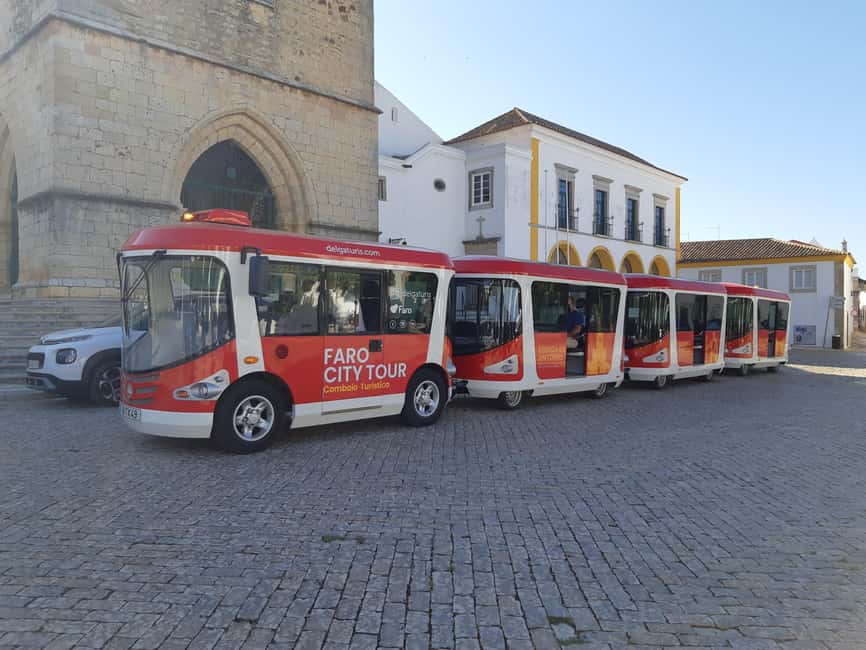
- 45 minutes is long enough to see several landmarks, short enough to fit between plans
- Old City plus monuments gives you quick orientation, including major churches and civic stops
- Ria Formosa pass-by adds a watery, Faro-specific contrast to the stone streets
- Audio in 4 languages helps most visitors follow along
- Same meeting and ending point at Praça Dom Francisco Gomes keeps navigation simple
- Comfort varies because the seats and the ride over old streets can feel a bit jolty
A 45-Minute Faro Tour That Connects Old Streets to Ria Formosa
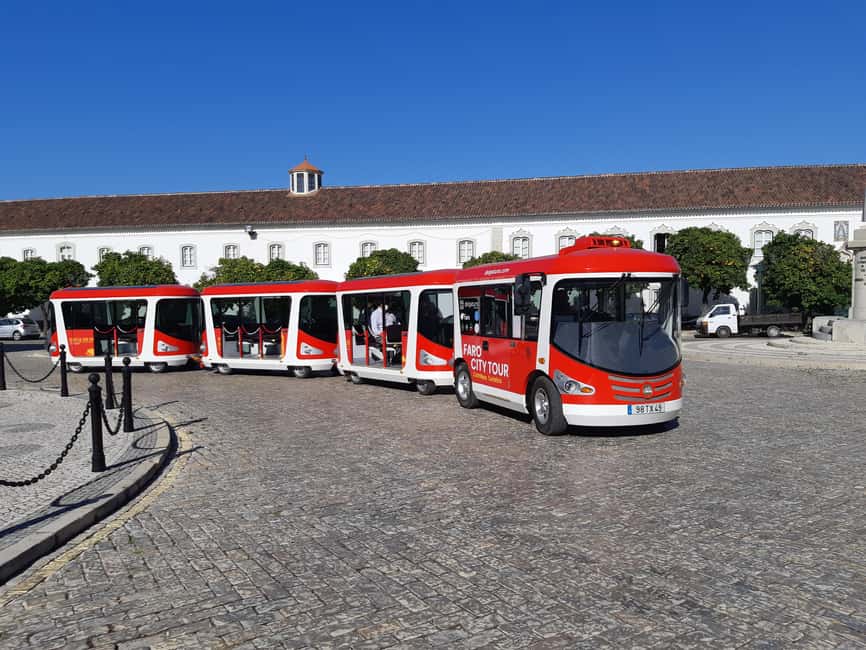
Faro is one of those places where a little context changes everything. Outside the historic center, it can look like a normal coastal town. But the minute you start linking the church fronts, the old plazas, and the water nearby, Faro makes more sense. This 45-minute train loop is designed for that. You glide through the core and get a taste of both the medieval-ish old streets and the open-water feel of the lagoon system.
What I like about this kind of “quick circuit” is that it gives you names and locations to hang on to. Then, when you walk on your own later, you are not just wandering. You are connecting what you saw from the train to the parts you want to revisit.
Still, you should go in with the right expectations. The experience is a ride with commentary, not a stop-and-stare walking tour. If you want long photo pauses at every monument, this format may feel a little too brief.
More City Tours in Faro:
- The Unvanquished Tour in Porto City Center
★ 5.0 · 26,497 reviews - Lisbon City Center Tour – The Unmissable Lisbon
★ 5.0 · 22,234 reviews - Lisbon: Daytime/Sunset/Night City Sailboat Tour with Drink
★ 4.9 · 3,114 reviews
Meeting at Praça Dom Francisco Gomes and Timing Your Day
The ride starts and ends at Praça Dom Francisco Gomes, which is a huge help in a city that can feel best on foot but is easy to get turned around in when you are short on time.
Departures run multiple times a day, typically at:
10:00, 11:00, 12:00, 13:00, 15:00, 16:00, and 17:00.
Why timing matters: if you schedule the train early, it works like a warm-up. You leave knowing what you just saw, so your later strolls feel purposeful. If you schedule it later, you can use it as a refresher and a way to fill gaps you missed earlier in the day.
Because the train is only 45 minutes, try not to pack it too tightly against a long meal or a timed ticket elsewhere. You do not want the end of the ride to steal time from what you actually want to linger over.
Riding the Route, So You Know Where You Are
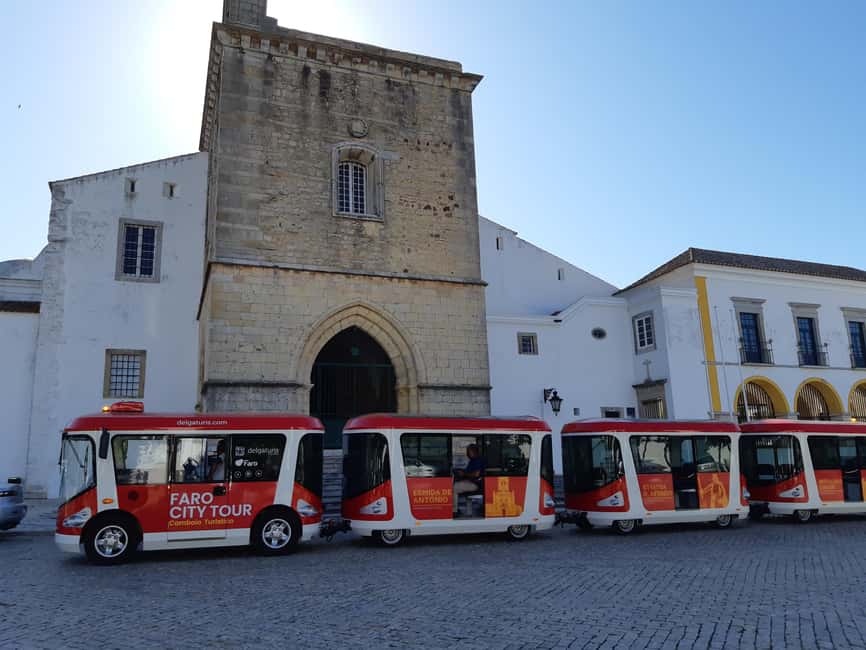
From the start, the route is built to link the old historic center with a broader sense of the city. You move past key points in Faro, including the Old City area, the Jardim Manuel Bivar, and multiple church stops. You also get a pass by the lagoon of Ria Formosa and the newer parts of town.
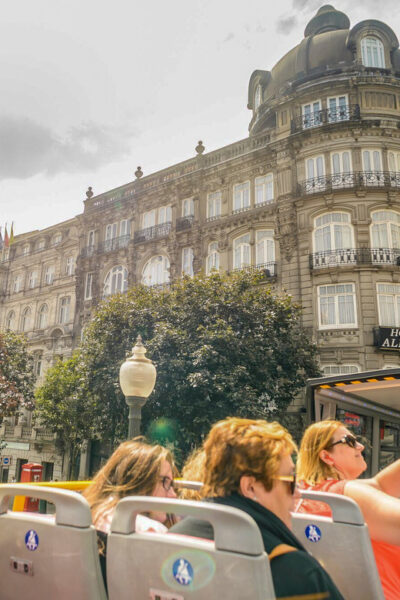
In practice, this means the train functions like a rolling map. You catch glimpses of building facades from the street level, and the audio is there to explain what you are looking at. If you listen closely, you get a framework fast: what is old, what is civic, what is religious, and why those places matter in Faro’s identity.
Just keep one practical expectation in mind. You are traveling through narrow streets and alleys, so the ride can feel a bit bumpy. Also, the seats may not feel like “sit back and nap” comfort for everyone.
Jardim Manuel Bivar: A Quick Green Pause in the Middle of Stone
One of the first stops on the circuit is Jardim Manuel Bivar. Even if you only catch it from the train, this is a meaningful waypoint because it breaks up the hard edges of church and monument facades. Gardens and open space are part of how historic cities breathe, and Faro is no exception.
Why this matters on a short tour: it helps you reset your eyes. If you are planning to walk after the train, having that brief open-space reference in your mind makes it easier to find your way around the center again.
If you are the kind of person who likes to orient through “landmarks you can picture,” this stop is useful. You do not need to read every plaque to benefit. You just need a mental marker of where the open area sits relative to the older blocks.
More of Faro to look at
- Porto: City Train Tour, River Cruise & Wine Cellar
★ 3.9 · 2,601 reviews - Porto: Douro Valley Full-Day Boat, Train, and Lunch Tour
★ 4.7 · 787 reviews - Porto: Magic Train Tour and Port Wine Cellar with Tastings
★ 3.9 · 730 reviews - Coimbra’s Timeless Tracks: An Enchanting Train Tour
★ 3.8 · 224 reviews
Church and Monument Highlights, from Igreja da Misericórdia to Teatro Lethes
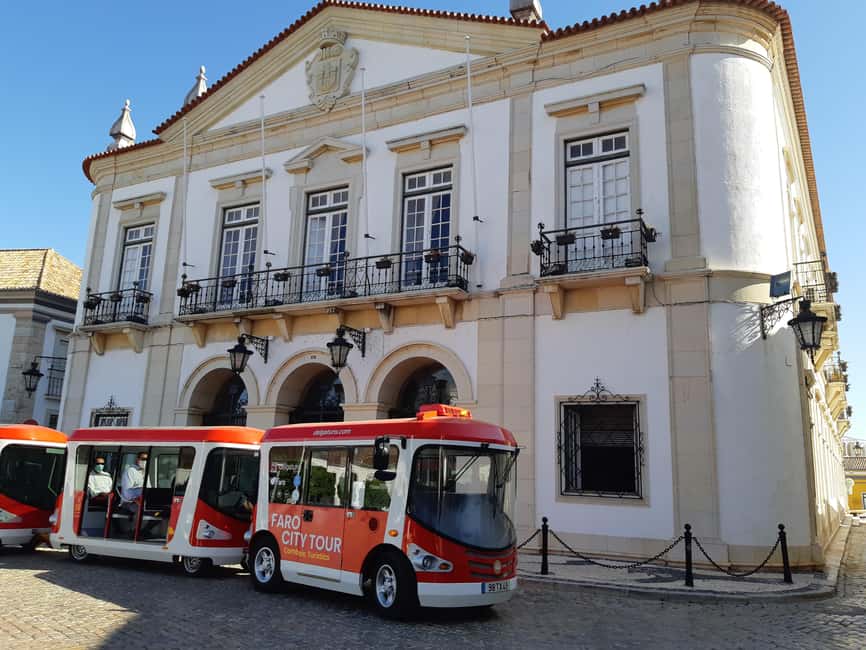
The heart of the route is religious and cultural architecture. You will pass or see several major churches and monument-linked streets, including:
- Igreja da Misericórdia
- Sé de Faro
- Teatro Lethes
- Igreja do Carmo
- Igreja São Pedro
For me, this cluster is where the train has its biggest value. Faro’s identity is tied to religious architecture and old civic life, and the train stitches those elements together without requiring you to plan a walking itinerary.
Here is the practical way to enjoy these stops:
- When the audio starts explaining a church or monument, focus on one thing you can later spot again, like the facade, a doorway, or the general frontage.
- If the speakers are clear where you are sitting, you will pick up names and basic context fast.
- If the narration is harder to hear, do not panic. Use the route as a visual checklist, then return on foot when you can see and read at your own pace.
Sé de Faro is especially important because it is a major landmark in the historic center. Having it placed in the middle of the circuit helps you understand that Faro’s old core is more than one street. It is a web of linked places.
Teatro Lethes is a nice contrast too. Even if you are not a theater person, it signals that Faro was not just religious life. There has always been a cultural rhythm here.
From the Sé de Faro Area to the Baixa Commercial Streets
After the monument-heavy part of the ride, you shift toward Zona Comercial da Baixa de Faro, the more commercial side of the center.
This is a smart shift for a 45-minute tour. It tells you where the everyday Faro energy sits. Churches are impressive, but commercial streets are where you actually feel the town. If you are going to spend time shopping, grabbing coffee, or eating later, you want this context.
What you gain: you start thinking in zones. “This is where the older structures are,” and “this is where daily life happens.” That makes your post-tour walking easier.
Also, this part of the route is helpful if you are traveling with kids or anyone who gets tired of pure architecture. Commercial streets usually offer more immediate visual variety, like storefronts and street activity.
Passing the Lagoon Ria Formosa: Faro’s Water Reality
One of the highlights is the pass by Ria Formosa, Faro’s lagoon system. Even from a moving viewpoint, it changes the feel of the experience. The historic center can feel tight and stone-heavy, but the lagoon reminds you why people flock to this part of Portugal.
Why I think the pass-by is valuable even if you do not stop: it gives you a mental geography. If you decide later to visit a viewpoint, a beach, or a lagoon boat trip, you are not starting from zero.
You also get a contrast that helps the whole day. Architecture gives you “Faro’s past.” The lagoon pass gives you “Faro’s present,” the water and the light that shape daily life in the Algarve.
Audio Commentary Reality Check: When It Works, and When It Doesn’t
The tour includes audio commentary, and it lists English, Portuguese, French, and Spanish. In theory, that is perfect. In reality, a lot depends on the sound environment and where you sit.
Here is what I suggest based on the most common issues people run into with narrated train tours:
- Sit where you can best hear the speaker. If you notice muffling or fuzzy sound quality, shift your attention toward the front or toward the speaker direction.
- Expect that noise from the train itself and street sounds can interfere, especially over narrow lanes.
- If you want every detail, do not plan to capture it all from the narration. Plan to use the ride to learn names and locations, then confirm details on foot.
If audio clarity is a make-or-break factor for you, you might still enjoy the route because the names are useful. But it is smart to treat the ride as orientation plus highlights, not as a substitute for reading plaques inside the churches.
Comfort is another variable. Some people find the seats and the ride over older streets a bit uncomfortable. If you are sensitive to jolts, consider it a short ride and plan to stretch afterward.
Price and Value: What 7 Dollars Buys You in Faro Time
At $7 per person for a 45-minute experience, this is priced for practicality. It is not a full-day tour and it does not promise extensive stops. Instead, it offers value by compressing multiple key locations into one simple loop.
So the real question is: what are you optimizing for?
- If you want fast orientation and you plan to walk more later, this is good value.
- If you want an in-depth guided experience where you hear every word clearly, the audio quality and noise level are the deal-breakers to consider.
- If you are flexible and the schedule is convenient for you, the low price lowers the risk. You can treat it like a primer, not a requirement.
Think of it like buying a shortcut map. You are paying for momentum and context, not for long guided stops.
Who This Tourist Train Suits Best
This is a solid choice if you fit one or more of these:
- You have limited time in Faro and want to cover major sights fast
- You like structure, and you want help connecting street corners to landmarks
- You are traveling with mixed language needs, since audio is offered in multiple languages
- You prefer staying seated and glancing at sights rather than walking a long route
It may be less ideal if:
- You rely heavily on audio for understanding everything as you go
- You are very sensitive to jostling or discomfort on short rides
- You expect the guide to stop the train for detailed viewing at every building
On the bright side, being on the train can make short sightseeing easier when weather turns. You still get the sights without fully switching to an indoor plan.
Should You Book Faro City Sightseeing Tourist Train?
I would book this if your priority is quick orientation. For $7 and 45 minutes, it can help you learn the main landmarks of Faro’s old center, including major churches like Sé de Faro, and it gives you a feel for the water via Ria Formosa.
I would hesitate if you hate noisy audio experiences or if you need rock-solid narration to enjoy a tour. In that case, you might prefer a walking tour where you can pause, read, and listen without street and train noise in the background.
My best advice: treat it as a helpful first pass. Then, if something truly grabs you, use your post-train time to go see that specific place up close.
FAQ
Where does the Faro tourist train tour start and end?
The tour starts at Praça Dom Francisco Gomes and ends in the same place.
How long is the Faro City Sightseeing Tourist Train ride?
Each departure is a 45-minute tour.
How much does it cost?
The price is listed as $7 per person.
What times do the tours run?
Tours depart at 10:00, 11:00, 12:00, 13:00, 15:00, 16:00, and 17:00.
What is included in the price?
The tour includes a 45-minute ride and audio commentary.
What languages is the audio commentary available in?
The audio is available in English, Portuguese, French, and Spanish.
Is the tour wheelchair accessible?
Yes, the activity is wheelchair accessible.
What major sights does the train cover?
You will see or pass by the Old City, Jardim Manuel Bivar, Igreja da Misericórdia, Sé de Faro, Teatro Lethes, Igreja do Carmo, Igreja São Pedro, Zona Comercial da Baixa de Faro, and you pass by the lagoon Ria Formosa and the new town.
Can I cancel, and how late can I cancel?
Free cancellation is available up to 24 hours in advance for a full refund.
Is there a reserve now and pay later option?
Yes. You can reserve your spot and pay nothing today.
Latest reviews from Faro
- Ilha Deserta and Farol Island: a small group boat trip in Ria Formosa from Faro★ 4.5 · 228 reviews
- Dolphin Watching + 2 Islands Tour – From Faro★ 5.0 · 281 reviews
- Private Transfers(Price varies)FARO-LISBON-SEVILLE-LAGOS-ALBUFERA★ 5.0 · 289 reviews
- Benagil Cave Tour From Faro – Discover The Algarve Coast★ 4.5 · 316 reviews
- Ria Formosa & Ilhas: Sunset Boat Trip★ 5.0 · 322 reviews
- Ria Formosa Sunset 1 hour Boat Trip in Faro★ 5.0 · 323 reviews
- Tour & Wine tasting – Authentic Algarve Flavours by Quinta da Tôr★ 5.0 · 343 reviews
- From Faro: Benagil Hiking Cliffs and the 4 Treasure Experience★ 5.0 · 424 reviews
City Tours, compared.
Lisbon City Center Tour – The Unmissable Lisbon
Read our review →
Daytime/Sunset/Night City Sailboat Tour with Drink
Read our review →
City Highlights 3-Hour Guided Electric Bike Tour
Read our review →

Browse the lists this tour appears in