

Reviewed · HISTORICAL TOURS
Half Day Historical Walking Tour about the Slave Trade in Lisbon
Lisbon has a reputation for grand discoveries and sunny waterfront photos. This walking tour takes the same city and asks a harder question: how Portugal’s Age of Discovery was tied to slavery.
I love that the route stays grounded in specific Lisbon streets and institutions, not vague lecturing. I also like that the guide, Rui, builds in visuals and leaves plenty of time for questions. The one drawback is that the topic is heavy, so it is not the kind of outing you want if you are craving light and fluffy.
Key things I’d book this for
- Small group size (max 8) for real Q and A, not one way talking
- Seven stops across Alfama, Baixa, and the downtown core, all tied to slavery
- Rui’s approach, factual, sensitive, and willing to correct misinformation
- You see where history happened, including a future memorial site
- A built in timeline, from early regional slavery to the empire’s end after 1974s upheaval
A Different Lisbon Lens: Slave Trade Connections You Can Actually See
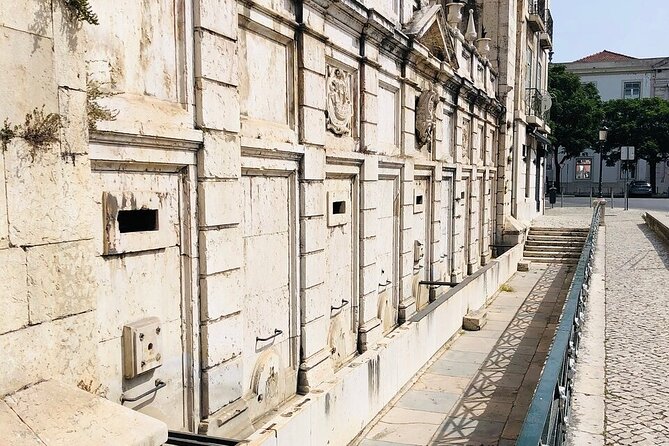
If you only learn Lisbon through postcards, you will miss a big part of the story. This tour keeps you in place while it explains how slavery connected to Portugal’s power, trade, and everyday life.
What makes it especially worthwhile is that it treats slavery as more than a distant headline. You get context for how different civilizations in the region used slavery over time, then how Portuguese involvement grew as Atlantic trade accelerated.
And yes, the emotional weight is real. I recommend this tour more for people who want clarity, honesty, and a city walk with purpose.
Price and Timing That Feel Fair for a Small-Group Street Lesson
At $39.78 per person for about 3 hours, the value is in the guide and the focus. You are not buying museum access or a long day. You are paying for a structured walking experience with a professional guide and local taxes included.
It also helps that the group is limited to 8 people. That matters because this is an active history talk where you will likely ask questions, and you will get answers.
If your dates are flexible, you can still find space. Still, the tour is often booked about 36 days in advance, so I would not wait until the last week if Lisbon is your tight schedule.
More Historical Tours in Lisbon
- Lisbon: History, Stories and Lifestyle Walking Tour
★ 4.8 · 10,902 reviews - Lisbon: Daytime or Sunset Boat Cruise with History and Wine
★ 5.0 · 1,053 reviews - Explore Lisbon by Tuk Tuk: History and Viewpoints
★ 5.0 · 840 reviews
Meeting Point, Route Shape, and What to Expect From the Walk
You start at Largo do Chafariz de Dentro 30, 1100-605 Lisboa and finish at Largo do Carmo, 1200-092 Lisboa. That start and end pair works well because it puts you in the old center for the heart of the walking and then lets you keep moving on your own afterward.
The tour runs in English and uses a mobile ticket. Confirmation comes at booking, and it also says service animals are allowed.
Physical wise, plan for a moderate walking experience. The tour is not recommended if you have walking difficulties, so bring that in mind if mobility is a question for you. For this kind of old Lisbon route, comfy shoes are non negotiable.
Stop 1: Largo do Chafariz de Dentro, Setting the Theme and Tone
You meet the guide at Largo do Chafariz de Dentro. The first minutes are about framing what you are about to learn, and why Lisbon needs to be understood as part of a wider system, not just a place that happened to participate.
This is a good start because it helps you follow the later stops without feeling lost. You also get an early sense that the tour is factual and organized, not chaotic or overly performative.
Stop 2: Alfama, Lisbon’s Old Neighborhood and the Long View on Slavery
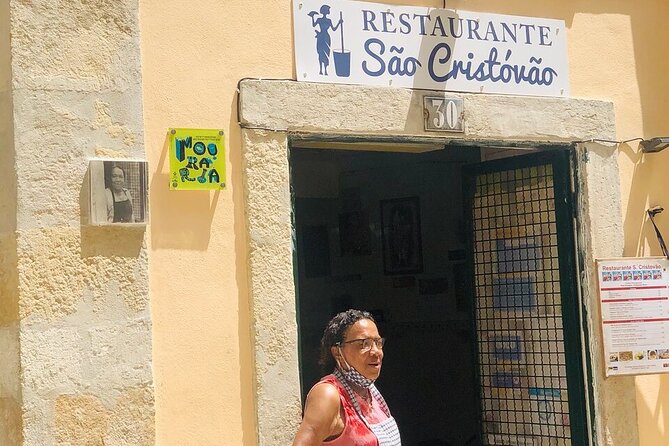
From Largo do Chafariz de Dentro, you head to Alfama, Lisbon’s oldest neighborhood. Here you learn how slavery was practiced across different eras, including references to the Romans and Moors, before focusing on how Portuguese involvement grew in the mid 15th century.
This stop is powerful because Alfama is not a museum room. It is the working geography of Lisbon, where layers of history sit next to each other in real streets.
A practical tip: Alfama rewards slower looking. Even when you are listening, keep glancing around at the street pattern and building density. It helps the guide’s timeline feel like it belongs to real people in real spaces.
More Walking Tours in Lisbon
- Best of Lisbon Small-Group Guided Walking Tour
★ 5.0 · 4,869 reviews - Lisbon: Food and Wine Small Group Walking Tour
★ 4.9 · 4,082 reviews - Best of Lisbon Walking Tour: Rossio, Chiado & Alfama
★ 4.9 · 2,700 reviews - Age of Discoveries Walking Tour in Belém
★ 5.0 · 1,513 reviews
Stop 3: Campo das Cebolas, The Future Memorial for Victims
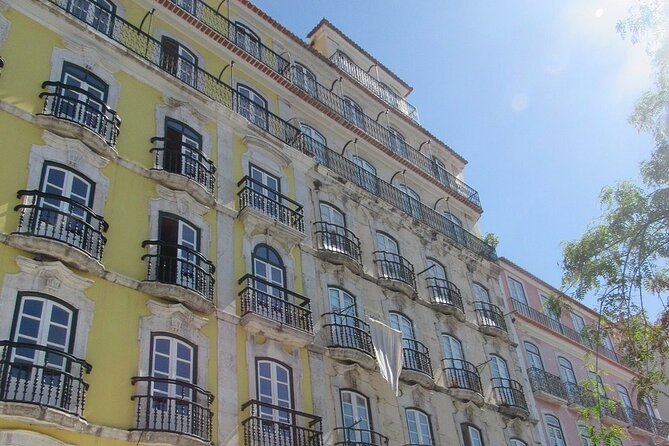
Next comes Campo das Cebolas, a location tied to what is planned as a monument to the victims of the Slave Trade in the future.
This stop works as a turning point. It shifts the story from past events into the question of memory and public recognition, which is part of why Lisbon matters today.
You are likely to leave this part thinking about what is missing from everyday sightseeing. A lot of cities remember battles and royals. Fewer mark the places where human beings were exploited and traded.
Stop 4: Praça do Comércio, When Colonial Trade Met Human Commodification
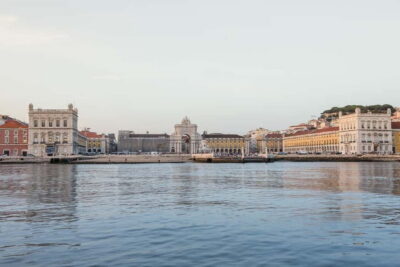
You then reach Praca do Comercio, also called Terreiro do Paco, the commercial heart of Lisbon. This is where the tour connects the slave trade to colonial trade, explaining how economic systems turned into something cruel and normalized.
This is one of the most strategic stops on the route because it links motive and mechanism. You are not only learning that slavery existed. You are learning how trade networks, ports, and commerce helped it function.
In plain terms, this is where the city’s layout makes the lesson click. Praça do Comércio is visually about trade and movement, so the conversation about profit and power lands with extra force.
Stop 5: Baixa, Rossio, and Restauradores, The Day to Day Lives Behind the Numbers
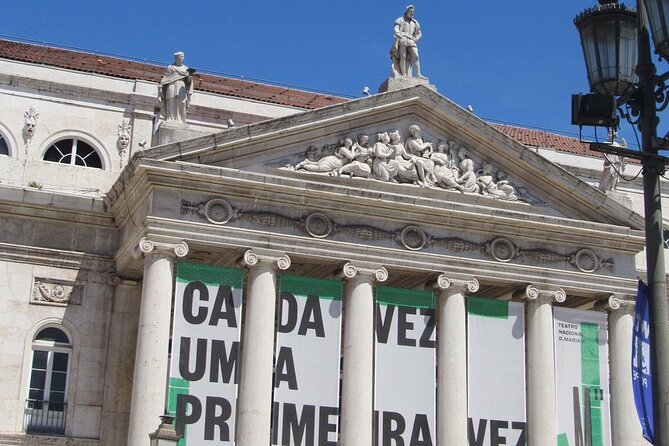
After the big commercial square, you move into the areas of Baixa, Rossio, and Restauradores. Here the focus shifts to the day to day lives of enslaved captives living in Lisbon, including people from Africa and beyond.
This part can feel more personal because the guide spends time on what life looked like, not just the mechanics of the trade. It is also where you start understanding that slavery was not only distant plantations. It was embedded in European cities too.
I like how this stop prevents a common trap. Many history walks stop at the headlines. This one keeps going toward lived reality.
Stop 6: Igreja de S Domingos, Religion, Power, and Institutional Interaction
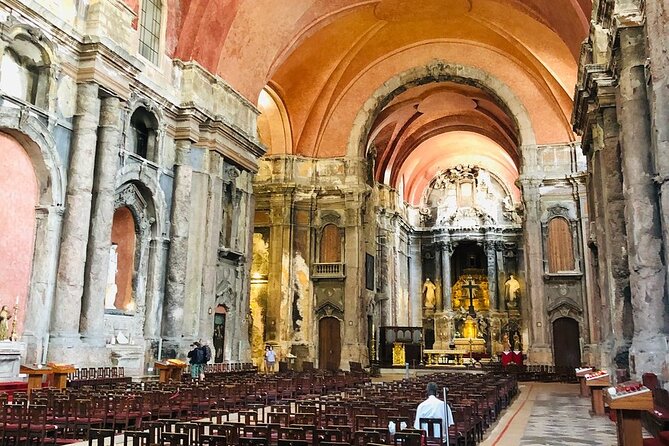
Next is Igreja de S Domingos. The tour explains how Lisbon’s enslaved captives interacted with religious organizations.
This is not a vague talk about faith. It is about institutions, authority, and how ideology can be used to justify hierarchy. You learn how religion sat inside systems that governed daily life and social status.
This stop can be emotionally demanding, but it is also one of the most clarifying. You leave it understanding that exploitation can be supported by words, structures, and official roles, not only by violence.
Stop 7: Largo do Carmo, Revolution and the End of the Colonial Empire Era
The final stop is Largo do Carmo. You connect the area to the 25th of April coup and revolution, and then to the subsequent demise of Portugal’s colonial empire in the mid 1970s.
This ending matters because it adds a modern thread. It does not end with history as a closed chapter. It frames how empire declined and how its legacy can linger in politics, identity, and social patterns.
If you are planning other Lisbon history stops later the same day, you will notice your attention shifts. You start looking for how modern Portugal speaks about the past, and what gets emphasized or ignored.
Rui’s Guide Style: Clear Facts, Visuals, and Lots of Room for Questions
The standout reason people rate this tour 5 stars is the guide. You will meet Rui (My Lisbon Tours), and his teaching style is built for street learning.
Multiple people highlight his research, his clarity, and the way he handles tough questions. One review even mentions Rui correcting misinformation without sugar coating the truth, using facts and evidence instead of argument for argument’s sake.
You will also see visuals. Reviews describe pictures and historical documents woven into the walk. That is a big deal for a topic this heavy. It helps your brain hold onto details without relying only on memory.
On top of that, Rui’s responsiveness shows up in practical ways too. One person noted that he contacted them on arrival, and on a rainy day he tried to keep the group out of bad weather as much as possible. Another noted that he gives thoughtful restaurant recommendations at the end, which is a nice way to turn the walk into a complete afternoon plan.
And for a personal touch, one review mentions Rui sharing a family connection, including his grandfather, which adds human context without turning the tour into a memoir.
How to Prepare for a Heavy Topic Without Checking Out
This is a tour about slavery and its legacy, and it can land hard. If you tend to avoid difficult topics while traveling, consider what kind of trip you want.
I recommend going in with two expectations:
1) You will learn facts and patterns, not just sad stories.
2) You might feel uncomfortable, and that does not mean you are doing it wrong.
A helpful mindset: treat it like education, not entertainment. The goal is understanding, and understanding can be uncomfortable.
Also, bring a question list. This tour is built for Q and A, and the guide is prepared to answer, including with nuance. If you leave no questions behind, you get more than a route. You get a sharper lens for the rest of Lisbon.
Where This Walk Fits in Your Lisbon Day Plan
This tour ends at Largo do Carmo, which is a convenient launch point for continuing around the central parts of the city. If you are doing a classic Lisbon highlights route the same day, I’d place this tour early enough that you have time to process what you learned.
One useful way to think about it is pairing. A standard Lisbon walk can show you streets and landmarks. This one explains what those spaces were connected to.
If your schedule is tight, the half day format helps. You get 3 hours of focused content and still keep the rest of the day free for viewpoints, museums, or simply walking again with smarter eyes.
Should You Book This Lisbon Slave Trade Historical Walking Tour?
Book it if you want Lisbon beyond the usual discovery story and you are ready to face how slavery shaped the city. The pricing feels fair for a professional guide, and the small group size makes it worth it when the topic requires questions and careful answers.
Skip it if you strongly prefer light cultural sightseeing only, or if walking is a challenge for you. Also, if you are very sensitive to discussions of racial hierarchy and institutional exploitation, give yourself permission to take breaks mentally.
For most people who love cities, history, and honest context, this is an exceptional use of a half day in Lisbon.
FAQ
How long is the Half Day Historical Walking Tour?
The tour runs for approximately 3 hours.
How much does the tour cost?
It costs $39.78 per person.
Is the tour offered in English?
Yes, it is offered in English.
Where do I meet the guide?
You meet at Largo do Chafariz de Dentro 30, 1100-605 Lisboa, Portugal.
Where does the tour end?
The tour ends at Largo do Carmo, 1200-092 Lisboa, Portugal.
What should I wear or bring for the walking?
You should have a moderate level of physical fitness and wear comfortable shoes, since it is a walking tour.
Is food or drink included?
No, food and drinks are not included.
What is included in the price?
Local taxes and a professional guide are included.
Is there free cancellation?
Yes, you can cancel for a full refund up to 24 hours in advance of the experience start time.
Latest reviews from Lisbon
- Private Sailing Cruise in Lisbon with Drinks★ 4.5 · 70 reviews
- Lisbon Food and Wine Tasting Tour of HIDDEN GEMS (Small Groups)★ 4.5 · 70 reviews
- Lisbon: Jewish Quarter Guided Walking Tour★ 4.4 · 70 reviews
- Lisbon: Ajuda National Palace Entry Ticket★ 4.5 · 71 reviews
- Lisbon Portuguese Food Tour★ 4.5 · 71 reviews
- Queer Lisbon – A Treasure Hunt in LGBT History★ 5.0 · 71 reviews
- Lisbon Street Art – Private Guided Tour in a Electric Tuk Tuk★ 5.0 · 72 reviews
- Private Lisbon Walking Tour★ 5.0 · 72 reviews
Historical Tours, compared.
Douro Valley: Historical Sites, Wine Experience, Lunch & Cruise
Read our review →
Daytime or Sunset Boat Cruise with History and Wine
Read our review →
Private Tour of the Historic City in a Ford T Car
Read our review →
Browse the lists this tour appears in