
Reviewed · TUK-TUKS
Porto Guided Tour to the Historical Center on a Tuk Tuk
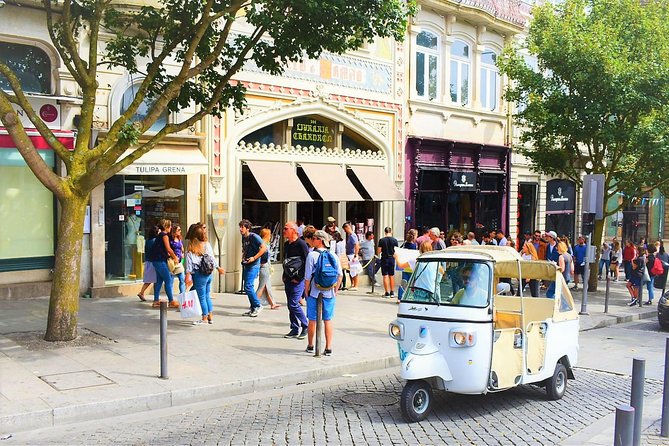
A tuk tuk tour of Porto’s historical center is interesting because it solves two problems at once: you cover ground fast, and you still get those short, walkable moments at the good stops. I like the time-saving route through tight, cobbled lanes, and I like that you get a Port wine glass during the ride, not at some random place far from the sights. One drawback to plan for, though, is that the tour runs outdoors for most of the time and it depends on traffic and good weather.
This is also a solid choice if you want structure. You’ll see emblematic landmarks and a handful of lesser-known corners, with a guide who can point out why each building looks the way it does. The catch is simple: you’ll be moving, so if you want long museum visits or deep independent exploring, you’ll need to come back for round two.
If you’re the type who likes quick orientation plus memorable photos, this tour is built for you. Just be ready for short stop times and bring your questions, so you can get the most out of the guide while you’re there.
Key things to know before you ride
- Tuk tuk access in Porto’s tight center, including narrow streets that would slow down a standard bus
- Port wine included, a small break that feels very Porto, right in the middle of the sights
- Photo-focused viewpoints, including a standout stop at Serra do Pilar
- Big-name highlights without a long day, about 1 hour 50 minutes total
- Monument entry not included, so you may pay separately if you want inside time
- Multiple vehicles for bigger groups, so you stay together even if not everyone fits in one tuk tuk
Why a tuk tuk makes sense in Porto’s historic center
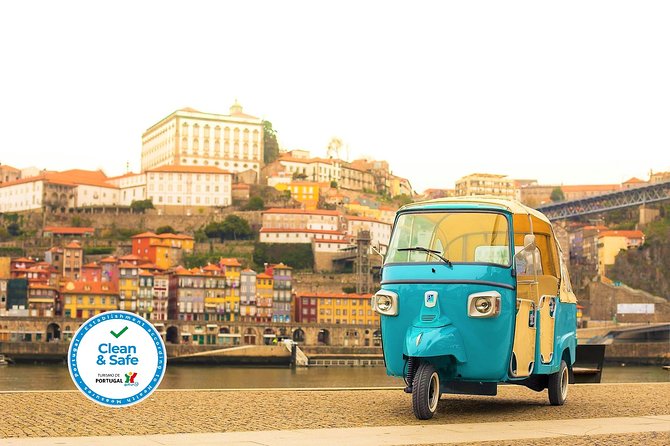
Porto’s historical core is charming, but it is also a workout. Streets can be steep, narrow, and paved in uneven cobblestones that make long walks feel longer than they should. A tuk tuk lets you glide between key areas while still giving you time to step out and look around.
I also like the pacing because it gives your brain a map. You start to understand how the cathedral area, old squares, churches, and river landmarks relate to each other. That matters on a first visit, because later you can plan your own walks with confidence instead of guessing.
One more practical point: each vehicle fits 2 to 4 adults, and groups may use multiple tuk tuks while still making the same stops. That keeps it from feeling like a crowded, chaotic bus ride, but you should still expect some logistics time at the meeting point and at stops.
More Historical Tours in Porto
- Douro Valley: Historical Sites, Wine Experience, Lunch & Cruise
★ 5.0 · 5,133 reviews - Porto: An Intimate Fado Show in a Historical Tavern
★ 4.8 · 2,055 reviews - Porto: Historic City Center Walking Tour
★ 4.7 · 1,172 reviews
Price and what you truly get for $42.33
At $42.33 per person for about 1 hour 50 minutes, this tour is priced like a guided city sampler. You are paying for three things: a local guide who ties landmarks together, a vehicle that saves walking time, and a Port wine glass that makes the experience feel festive rather than purely informational.
You do not pay extra for the guide itself, and you do not pay for the Port wine glass. What you might pay separately is monument admission when you want to enter buildings. The schedule includes time at places where entry is not included, so it is smart to decide in advance whether inside time matters to you.
If you’re on a tight itinerary, the value is in getting a lot of “where to go next” ideas fast. If you have several days and you love slow museum time, you may find a less guided approach cheaper. For many visitors, though, this hits a sweet spot: you get orientation now, then you choose deeper visits later.
The route start: Teatro Nacional São João area and the feel of old Porto
The tour begins at R. de Augusto Rosa 180 and you end back at the same meeting point. After you settle in, one of the first big “why Porto looks like this” stops connects the modern city to a dramatic past.
You’ll see the Teatro Nacional São João building, completed in 1910 on top of the ruins of the old Real Theatre, which burned down in 1908. The architecture uses symbolic decoration meant to represent emotions and themes, and the façade renovation draws on a style inspired by Luís XVI, a nod to how European taste traveled. It is not just a pretty building, it is a reminder that Porto keeps rebuilding and reshaping its cultural life.
This stop is a good warm-up. You get a quick explanation of how the city layers eras on top of earlier ones, and then the tour starts moving you toward older, tighter streets where your legs will appreciate the tuk tuk.
Fernandina Walls: one of Porto’s best “wow, I didn’t know that” moments
Next comes Muralha Fernandina do Porto, the Fernandine Walls. This is one of those historical details that makes Porto feel bigger than its postcard photos.
The wall was built between 1368 and 1437, using funding linked to the Sisa do Vinho tax on wine. It stretches about 3,000 steps and averages around 30 feet in height. Even if you only see sections from the street, it changes how you read the city, because suddenly you understand how defensive lines shaped where people built, lived, and moved.
If you like history explained in plain terms, this is where the guide can earn their keep. A strong driver-guide will help you picture the wall as part of daily life, not just a piece of stone.
More Tuk-Tuk Tours in Porto
- Porto: Guided Tour by Tuk-Tuk & Optional Douro River Cruise
★ 4.5 · 5,980 reviews - Discover Porto’s Highlights on a 2-Hour Private Electric Tuk Tuk
★ 4.5 · 1,860 reviews - Porto: Guided Tuk Tuk Tour
★ 4.6 · 1,390 reviews - Historic Porto by Private Electric Tuk Tuk to Top Landmarks
★ 4.5 · 735 reviews
Cathedral of Porto complex: Romanesque roots, later reshaping
Your next major stop is Catedral do Porto. Construction dates to the 12th and 13th centuries in Romanesque style, then it was expanded and renewed over time until its final twentieth-century reconstitution. That is a big clue about what to expect when you see it: you are not looking at one single moment in time, you are looking at a shaped, restored medieval landmark.
There is about 10 minutes here, and admission is not included. So you should treat the cathedral as a quick visual moment unless you plan to pay for entry on your own. If you want inside time, decide fast and commit when you arrive, because 10 minutes disappears before you know it.
Near the cathedral you also visit Pelourinho Se Catedral Porto, a stone monument tied to local government. After buildings around the cathedral were demolished in 1940, a paved terrace was created, and the pelourinho reproduction was installed in 1945 based on an older drawing. This is one of the places where a good explanation makes you realize you are looking at governance history, not just a random monument.
Paco Episcopal and the quick look at church power
Another short stop is Paco Episcopal, sometimes described as a seat tied to the bishop. The text points to probable 13th-century foundations, with a major remodel in 1737 connected to work by Nicolau Nasoni. The façade uses an arch opening framed by pilasters, topped with a decorated fronton.
You get about 5 minutes here, and admission is not included. That means your main value is exterior viewing and the story behind the architecture. If you are the type who enjoys details, focus on the façade design, especially the central window elements and the bishop’s coat of arms mentioned in the description.
In a short tour, this is exactly the kind of stop that pays off if your guide can explain the “why” in a few sentences.
São Bento Railway Station: the tile story you can’t unsee
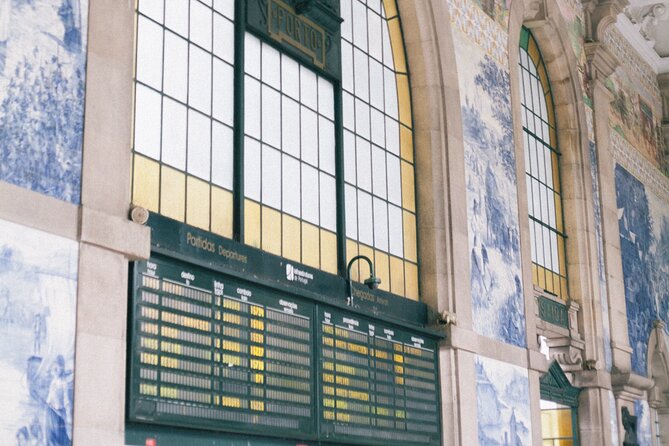
Then you hit one of Porto’s most famous modern icons: São Bento Railway Station. The station sits in the city center and dates to the early 20th century, with a glass and cast iron roof designed by Marques da Silva.
The real star is the lobby covered with about 20,000 narrative tiles by painter Jorge Colaço. Even if you do not read every scene, the sheer visual volume is the point. It turns a functional train station into a gallery you can experience without buying a ticket.
You get about 10 minutes here, and admission is free. This stop is also where I recommend slowing your pace just a bit. Stand still long enough to let the tiles “resolve” into stories, then move on. Otherwise, it just turns into colorful wall patterns.
Squares, Fonte dos Leões, and the rococo church vibe
From there, the route shifts into Porto’s square life. You’ll see a square that traces back to early 18th-century urban planning, including the start of a project around 1718 that created streets and an ample square known as Praça Nova. Another nearby area connects to a time when it was called Praça dos Ferradores, linked to blacksmith workshops, and to the later guesthouse period connected to the exiled king Charles Albert from Sardinia, honored in the square’s current name.
There’s a practical reason I like this stretch: squares help you orient. When you know where the open areas are, you understand the city’s pedestrian routes for the rest of your trip.
You’ll also visit Fonte dos Leões, the Fountain of Lions. It is a 19th-century fountain built by a French company and cast at the Val d’Osne foundry in France, with most of it modeled after a fountain in Leicester, England. It’s the kind of detail that makes Porto feel connected to Europe, not isolated. Another 5 minutes here, and it is free to see.
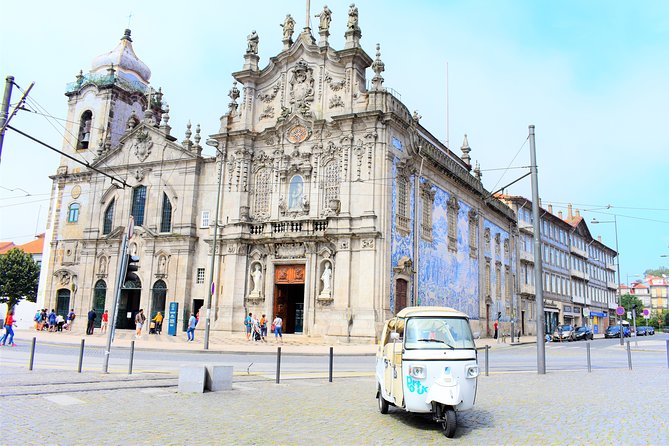
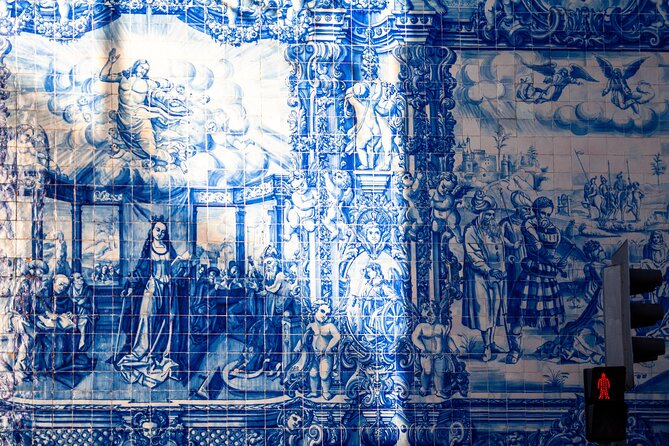
Then the tour includes two church moments tied to Porto’s rococo style. One has a classical façade dated to 1850s over a 17th-century core, with a Porto rococo altarpiece described as stylistically revolutionary. The other is built in the second half of the 18th century, known for remarkable carvings and a side façade covered with tiles in 1912, with drawings designed by Silvestre Silvestri related to the cult of Nossa Senhora. Both are described as national monuments, and admission is not included.
Because these are quick stops, decide what you care about most. If you want inside viewing, be ready for separate tickets. If you prefer exterior architecture and short snapshots, focus on the façade layout and the tile coverage where mentioned.
Jardim da Cordoaria and Torre dos Clérigos: a break and a skyline icon
Next you get a pause at Jardim da Cordoaria, also associated with the name João Chagas Garden since 1924. The garden’s name connects to rope makers who worked in the area for about 200 years. In the 1865/1866 period, the municipality turned the area into a public garden designed by the German landscaper Emile David.
There are statues and even sculptures by Juan Muñoz from 2001, and the garden has a nicer feel than a drive-by photo. If you get a windy or rainy day, this kind of stop gives you a moment to reset. Time on this stop is not labeled, but it is part of the mid-tour pacing.
Then comes one of Porto’s most recognizable silhouettes: Torre dos Clérigos, the Clérigos Tower tied to the Clérigos Church. The tower is visible from many points around the city, and that visibility is exactly why it works as a landmark. It helps you feel where you are spatially, even before you see the viewpoint later.
You get about 5 minutes here, and admission is not included. Again, if you want to go inside, you will likely need to plan separately.
São Bento da Vitória and the Palácio da Bolsa highlight stretch
The tour continues with another major historic-religious complex, described through its restoration and later uses. The key point: Benedictine monks occupied the monastery again after restoration, and the Porto National Orchestra and the Porto District Archives are also connected to the site. In the Porto 2001 period, an acoustic shell covered the Noble Cloister for performances, and later parts of the wing connected to the Teatro Nacional de S. João for concerts and events.
You might not have time to explore every corner, but the tour’s value is you learn why these buildings have kept evolving, instead of turning into static monuments.
After that, you reach Palácio da Bolsa, the Stock Exchange Palace, a national monument with major appeal for visitors. It is tied to the Commercial Association of Porto and designed in neoclassical style in 1842 by Joaquim da Costa Lima. The Arabian Room is singled out as the major highlight, and it is part of the Urban Wine Route.
Admission is not included, so this stop is best as a visual introduction unless you plan paid entry. Still, even from the exterior context, it is impressive how much “palace energy” Porto packs into the historical center.
Dom Pedro statue, Biblioteca Almeida Garrett, and Ferreira Borges market
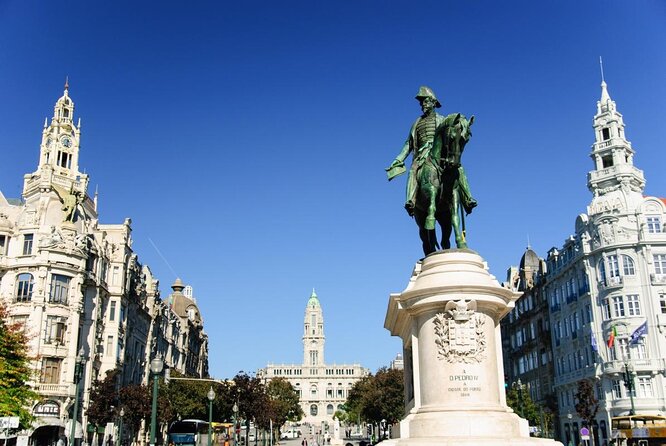
A short stop takes you past a statue connected to D. Pedro. The description says Célestin Anatole Calmels created the sculpture and Joaquim da Costa Lima did the architecture. The monument was unveiled in October 1866, with two sides telling two parts of the story: the donation of D. Pedro’s heart to Porto representatives and the arrival in Mindelo. The figure on the pedestal shows D. Pedro offering the constitutional charter to the city, with the statue cast in Belgium.
Then you go to Biblioteca Almeida Garrett, inaugurated in 1906. This is where Porto’s design story gets very real. The Art Nouveau façade with neo-Gothic details sets expectations, and inside you get painted plaster imitating wood, a grand staircase with one of the early reinforced concrete elements mentioned in the description, and a huge stained-glass skylight featuring the library’s monogram and motto: Decus in Labore.
Admission is not included, but even just knowing what is there makes it easier to decide whether to pay. This is also a place that rewards a guide who tells you what to look for, because otherwise you might rush through the design details.
Next is Mercado Ferreira Borges, built in 1885 to replace an older Ribeira Market. The building is an important example of iron architecture in Porto. It was renovated later into an entertainment venue where Hard Club is now located. That’s a great example of Porto reusing old structures for modern life.
Infante D. Henrique monument and São Francisco Church, also known as the Church of Gold
Then you step into the area described as a square surrounded by Mercado Ferreira Borges and Palácio da Bolsa. Under the square there is a small garden above an underground car park, and there is a Monument to the Infante D. Henrique inaugurated for the 5th centenary of his death. Construction started in 1894 and finished in 1900, and it represents Portuguese navigation and faith.
From there, the tour reaches São Francisco Church, often described as Porto’s most important Gothic temple. Construction began in the 14th century, and the interior has gilded work from the 17th and 18th centuries. A famous description calls it the Church of Gold, and the text also points to the Tree of Jesse and the catacombs. It is listed as a National Monument since 1910 and UNESCO World Cultural Heritage since 1996.
Admission is not included here. That matters because the “wow” for many people comes from inside, especially if you want to see the gilded carvings and catacombs. If you only have this one planned church stop, you should consider whether you will buy entry or treat it as a dramatic exterior moment with photos.
Alfândega Nova and the engineering side of Porto
Next is Alfândega Nova do Porto, described as a neoclassical building from the 19th century with two facades, one facing the Douro River and one facing the city. The design used iron combined with other materials, stone, brick, or wood, depending on the space’s function.
This building now connects to the Museum of Transport and Communications, and the restoration and adaptation work is linked to architect Eduardo Souto Moura. The site also manages a Congress Centre across various areas in the building. Admission is not included, and in a tuk tuk tour, this stop often serves as a “this is where the engineering story lives” moment rather than a full museum visit.
Even if you skip the museum, it is a good reminder that Porto’s identity is not only churches and towers. It is also trade, shipping, and the built world that made the city powerful.
Miradouro time at Serra do Pilar, then two famous iron bridges
One of the most praised parts of this tour is the view stop at Mosteiro da Serra do Pilar, where you can see Porto and Gaia spread out below. The monastery was started in 1538 and completed around 1670. It began for Augustinian Friars, and later during the Civil War of 1832-1834, the liberal army occupied it, with the building falling into disrepair after attacks.
The recovery is linked to the creation of the Royal Brotherhood of Lady of the Pilar in 1834, and later efforts by friends of the monastery in 1925. The church has a circular plan with a dome surrounded by a balcony. The cloister is also circular, with 36 Ionic columns, noted as the only example of its kind in Portugal.
The best part for your trip: the monastery’s terrace offers wide views across the riverside area of Porto and Gaia all the way toward Arrábida Bridge, and it also frames the historic center with emphasis on the Cathedral and Dom Luís I Bridge. Time here is about 15 minutes, and admission is free.
Then the tour drives past the bridges, with details that make them more than just bridges. Dom Luís I Bridge was inaugurated in 1886, designed by engineer Teófilo Seyrig (disciple of Eiffel) and made of two overlapping iron decks. The bridge is 395 metres long and the arch is considered the world’s biggest one in forged iron, with the upper deck used by the Porto Metro today. The other bridge mentioned is the Arrábida Bridge, inaugurated in 2003, a Maillart-type arch designed by engineer Adão da Fonseca, with a span described as a world record for its type.
Even if you do not enter anything, the way these bridges connect city sections gives you a clearer picture of Porto’s geography. After this, you will understand why locals talk about hills, river crossings, and shortcuts with a kind of pride.
What makes the guides the difference
The stops themselves are great, but the tour’s success usually depends on your driver-guide. In the examples shared with this tour, guides like Victor, Natalia, Anna, Ana, Bernardo, Gabby, Fabian, and Gonçalo show up with high energy and quick, friendly explanations. The most helpful guides also know where to pause so you can actually photograph what you came to see.
So here is my practical advice: ask your guide one question early, like what area you should walk on your own afterward or where the best views are at different times of day. If your guide is good, they will connect your answer to the next stop in a way that makes the whole loop feel purposeful.
Should you book this Porto tuk tuk tour
Book it if you want a first-day orientation, you are short on time, or you hate wasting hours figuring out the city layout on your own. It also makes sense if you want a low-effort way to see multiple landmark types, cathedral area, station tiles, rococo churches, gardens, and river bridges, all with a Port wine included.
Skip it if you are coming with a strict schedule for paid interior visits and you know exactly which sights you want to spend time inside. This tour is built around short stops, and monument entry is not included, so you may feel rushed if inside time is your priority.
If you can match it to a day with stable weather, you’ll have a smoother experience. And if traffic slows things down, treat it as part of the tradeoff for avoiding long walks across Porto’s slopes.
FAQ
How long is the Porto historical center tuk tuk tour?
It runs for about 1 hour 50 minutes.
How much does the tour cost?
The price listed is $42.33 per person.
Is the tour private?
Yes. It is private, and only your group participates.
What is included in the price?
You get a Port wine glass, plus a driver/guide and a local guide.
Are monument entrance tickets included?
No. Monuments entrance is not included.
What language is the tour offered in?
The tour is offered in English.
Where does the tour start and end?
It starts at R. de Augusto Rosa 180, 4000-528 Porto, Portugal and ends back at the meeting point.
How many people can fit in a single tuk tuk?
Each tuk tuk can carry 2, 3, or 4 adults of average height, up to 75 kg each. Larger groups use multiple vehicles.
Does the schedule change if there is traffic?
Yes. Times are subject to change due to local traffic conditions.
Do I need good weather?
Yes. This experience requires good weather. If it is canceled due to poor weather, you will be offered a different date or a full refund.
Is cancellation free?
Yes. You can cancel for a full refund up to 24 hours before the experience starts.
Latest reviews from Porto
- Porto: City Center Walking Tour★ 4.6 · 227 reviews
- Porto Food Tour of 8 Tastings: Custard Tart, Bifana & Hidden Gems★ 5.0 · 229 reviews
- Aveiro and Coimbra Small Group Tour with Moliceiro Boat Cruise★ 4.5 · 236 reviews
- Day Trip Braga and Guimarães from Porto★ 4.5 · 237 reviews
- Transfer from Porto Airport to Porto City Hotels★ 5.0 · 236 reviews
- The Best Douro Boat Tour★ 5.0 · 243 reviews
- Beyond the Barrel: From Decadent to Down-home in the Heart of Porto★ 5.0 · 243 reviews
- Porto: Historic Center Tuk-Tuk Tour★ 4.5 · 244 reviews
Tuk-Tuks, compared.
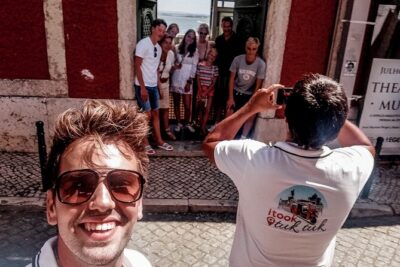
True 4Hour Private Tuk Tuk Tour: Discover Lisbon with a Local!
Read our review →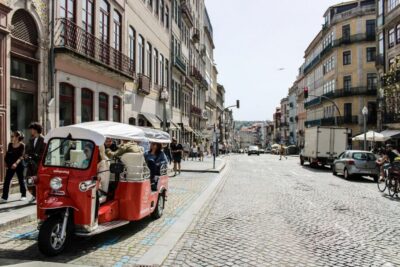
Guided Tour by Tuk-Tuk & Optional Douro River Cruise
Read our review →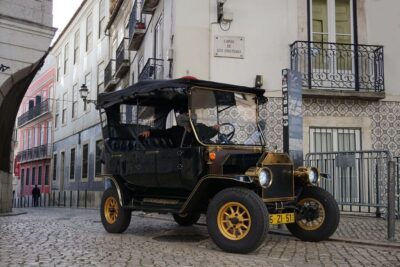
Private Guided Tuk-Tuk Tour with Hotel Pickup
Read our review →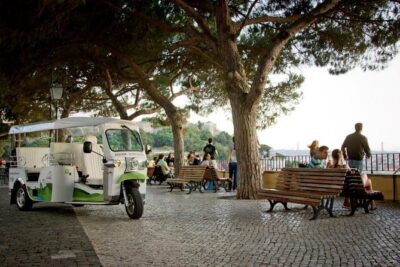
Private Lisbon Sightseeing Tuk-Tuk Tour: Alfama, Belém & More
Read our review →
Lisbon Highlights: Private Tuk Tuk Tour Adventure Sightseeing
Read our review →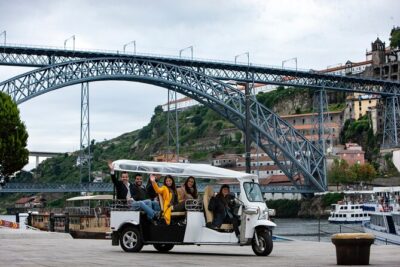
Discover Porto’s Highlights on a 2-Hour Private Electric Tuk Tuk
Read our review →
Welcome Lisbon Tour with Local Guide in Private Eco Tuk Tuk
Read our review →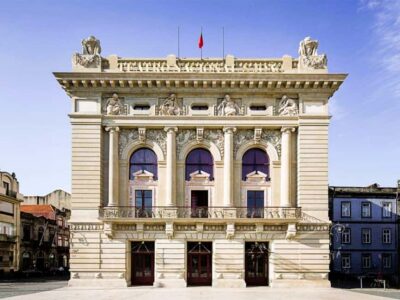
Browse the lists this tour appears in