
Reviewed · EVORA TOURS
Tour Évora and Alentejo in a private tour
A private day trip to Évora from Lisbon is interesting because you leave the city and walk into a walled maze of Roman, medieval, and Renaissance Portugal. You also get a stop that most people skip, a cork factory where you see how the raw material becomes everyday products.
I love the focus on real monuments in a tight route, not random photo pull-offs. I also like the way this is built for comfort, with hotel pickup and round-trip transport so you can relax while the guide sets the day’s pace.
One consideration: it is a long day with time on the road, so if you hate car time, adjust your expectations. Also, a couple of the biggest sites, like the Chapel of Bones and the cathedral, are not included in the base ticket.
Key highlights to pay attention to
- Corticarte cork factory: see the full cork process, from cork oak trees to finished products
- UNESCO Historic Center of Évora: medieval streets and walls, shaped by Roman, Celt, Arab, Jewish, and Christian influences
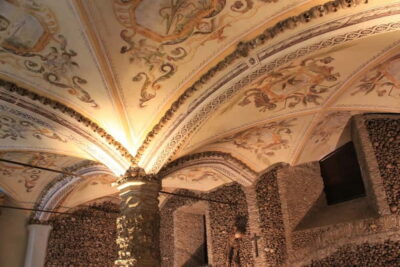
- Capela dos Ossos: a memorable, eerie chapel with thousands of human bones
- São Francisco and Gothic-Manueline details: maritime-era symbols and fine stonework
- Temple of Diana area and aqueducts: the Roman story is still visible in the landscape
Évora from Lisbon, the long ride that pays off
Évora is one of those places where the old stuff is not behind glass. Even when you are just walking between stops, you feel the layered timeline: Roman rules, medieval power, and Portuguese Renaissance ambition. That is why this private format works so well, you spend your time looking at sights, not waiting in lines with strangers.
The day runs about 9 hours starting at 8:30am, and you should plan for substantial driving time from Lisbon. One strong theme in the experience is that guides keep the road time useful, pointing out context as you travel and giving you a clear game plan once you arrive.
This is also a good private-tour setup for travelers who want a calmer day. You are in charge of your pace, and the guide can slow down when you want photos, or speed up when you just want to keep moving.
More of Évora:
- Évora and Megaliths Full-Day Tour from Lisbon
★ 4.7 · 456 reviews - From Lisbon: Évora and Monsaraz with Regional Wine Tasting
★ 4.7 · 345 reviews - Évora and Monsaraz with Regional Wine Tasting from Lisbon
★ 4.5 · 229 reviews
Corticarte cork factory: more than souvenirs
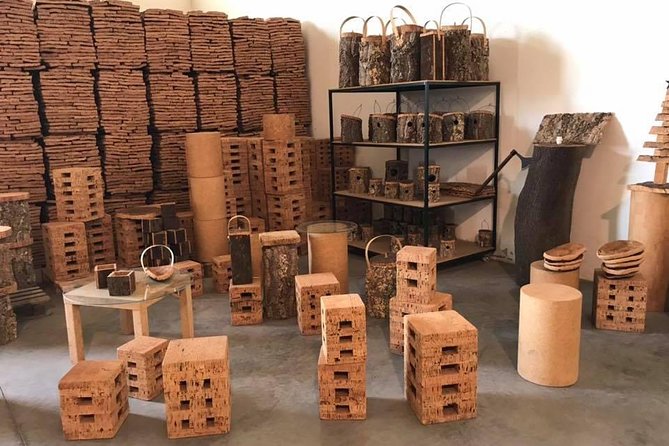
The cork stop at Corticarte, called Arte em Cortica, is one of the best ways to start the day because it turns cork from a background detail into a real product story. You spend about 1 hour learning the process, starting with the cork oak tree and going through extraction, preparation, and what comes out at the end.
Here are a few facts you will likely hear, and they make the visit click:
- the bark grows back every year
- it is removed about every nine years, and the cork can reach around 25 cm thick
- cork is naturally resistant to heat, cold, and fire
- Portugal produces about 55% of the world’s cork
- cork is used beyond wine, including decorative wall and floor coverings, and even sporting goods like items such as baseball components and fishing rods
Why I like this stop for you: you get “hands-on context” even though you are not doing manual work. You see how cork is harvested and handled, and then you can shop with actual knowledge, not just a hunch that something is cute.
A practical tip: wear comfortable shoes. The factory visit is easier on your legs than a long hike, but you are still walking around a working setting and going through areas where you will want to look closely.
UNESCO Historic Center: wandering inside Évora’s walls
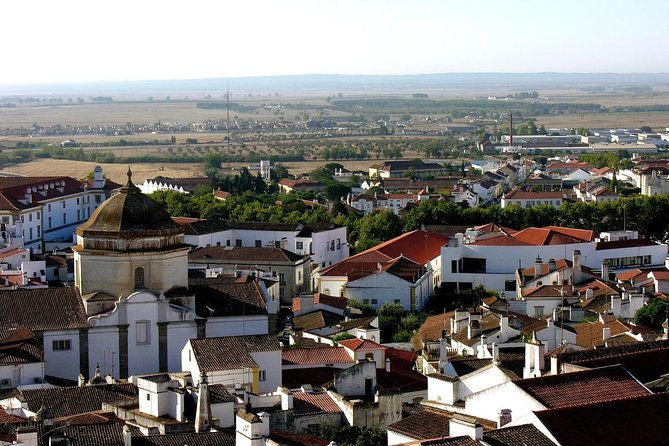
Once you step into the Historic Center, you understand why Évora earned UNESCO status in 1986. This is an “inside the walls” city, a city-museum with roots stretching back to Roman times and shaped by later waves of influence from Celts, Romans, Arabs, Jews, and Christians.
The core vibe is narrow streets, patios, and wide open squares when you break out of the maze. The medieval walls outline an area of about 107 hectares, with more than 3 km of walls you can sense even when you are not staring at maps.
You will get around 45 minutes here, which is enough time to get your bearings. I like that the guide’s role is not just narration, it is helping you connect the architecture you see to why it exists. You end up noticing details like white houses, tilework, and wrought-iron balconies, especially across the 16th to 18th centuries.
Potential drawback: 45 minutes can feel short if you love wandering slowly. The good news is that this is private, so if your guide is flexible and you have the energy, you can often spend extra time in your favorite lanes.
Água de Prata aqueduct: Renaissance water engineering
Between town stops you have the chance to see the Água de Prata Aqueduct (Aqueduto da Água da Prata). This is Renaissance hydraulic engineering built for a practical mission: supplying Évora with water.
It was inaugurated in 1537, built under King João III, and designed and built by royal architect Francisco de Arruda. The aqueduct system carries water from springs located in Graça do Divor, linked to the São Bento de Castris Convent grounds, with a route of about 18 km.
Why this belongs on your itinerary: it gives you a “backstage” view of how cities like Évora worked. You are not only seeing monuments made for power or worship. You are seeing the infrastructure that made life possible.
More time in Lisbon:
- Lisbon City Center Tour – The Unmissable Lisbon
★ 5.0 · 22,234 reviews - Lisbon: Sintra, Pena, Regaleira, Cabo da Roca & Cascais
★ 4.7 · 19,656 reviews - Lisbon Card: 24, 48, or 72-Hour Pass
★ 4.5 · 17,944 reviews - Lisbon: Jerónimos Monastery Entrance Ticket
★ 4.1 · 14,164 reviews
Temple of Diana and the Roman thread you can still see
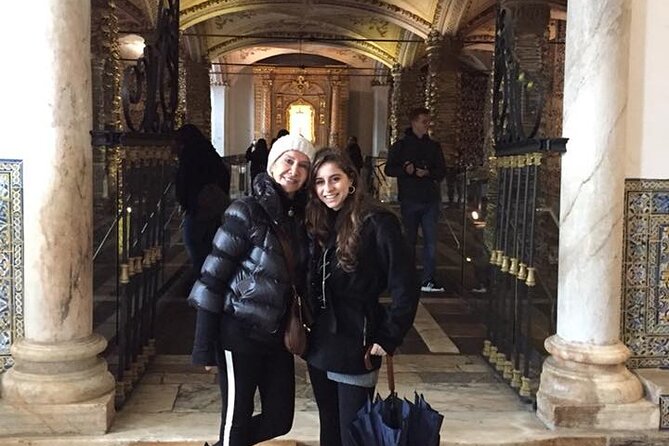
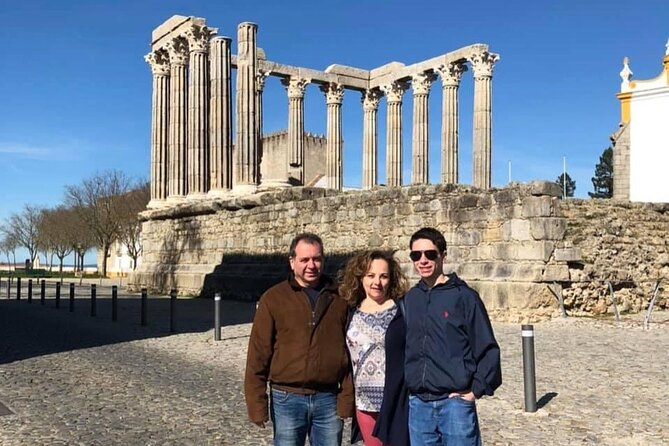
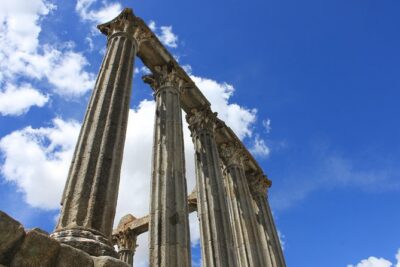
Next up is the Temple of Diana (Templo Romano de Évora), with about 15 minutes on site. The big reason it matters is location and relationship to other features. The temple sits near the cathedral area, so you quickly connect Roman presence to later Christian and civic building.
Even if you do not read every stone, you get a clear sense of how Romans valued Évora. And if your guide points it out, you can also connect the temple area to the “Water of the Silver” aqueduct beyond the walls.
The Water of the Silver aqueduct extends from outside the city and even has arches visible within the city. It was built in the 16th century to keep the water system working. That mix, Roman temple close to later hydraulic work, is a very Évora way of telling history.
Practical note: times here are short by design. If you love Roman ruins and wish you had longer, plan to return later with a slower day or add a separate half-day on your own.
Capela dos Ossos: unsettling on purpose, and worth the pause
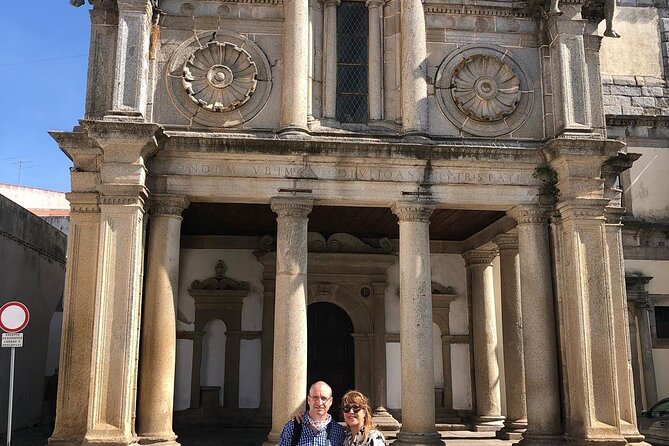
The Chapel of Bones, Capela dos Ossos, is one of the most talked-about stops in Évora for a reason. It is estimated to include remains of more than 5,000 monks, and the interior uses bones and skulls as part of a meditation on life and mortality.
You have about 30 minutes at the chapel. Admission is not included, so budget for it depending on what tickets cost on the day. The tone is not horror-movie scary, but it is definitely not a casual stroll either.
If you are sensitive to medical, human remains, or grim displays, this is the one stop where you should decide ahead of time. Also, take a breath before you go in. A short mental pause helps you get something from it rather than just feel startled.
Igreja de São Francisco and the Gothic-Manueline story
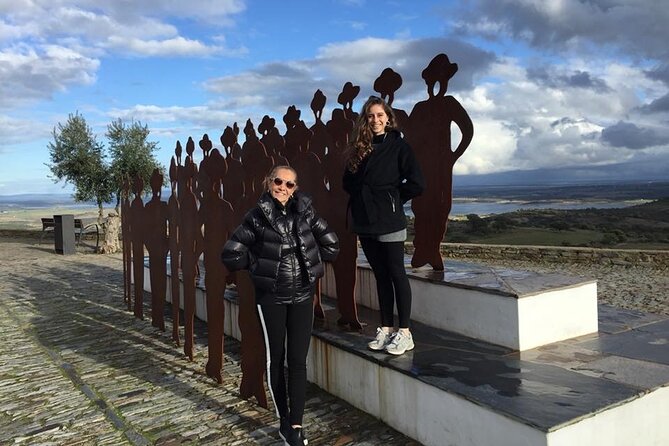
The Church of São Francisco gives you a different kind of Portugal beauty, Gothic-Manueline architecture with a clear political backstory. You have about 20 minutes, and admission is free.
Built between 1480 and 1510, it was constructed by stone masters Martim Lourenço and Pero de Trilho. It was decorated by royal painters Francisco Henriques, Jorge Afonso, and Garcia Fernandes.
Here is what to look for: the church is tied to Portugal’s maritime expansion era. Your guide can point out symbols in the monumental nave, including the cross of the Order of Christ and emblems linked to the founding kings D. João II and D. Manuel I.
What you get from this stop: it is not just “pretty church.” It is a visual reminder that art and power were tightly connected in this period.
Praça do Giraldo: a square with a personality
Praça do Giraldo is where you reset your energy between heavier sights. You get around 15 minutes, and entry is free.
This square is tied to the legend of Geraldo Geraldes, Sem Pavor, who conquered Évora from the Moors in 1167. In thanks, D. Afonso Henriques named him mayor of the city and frontier of the Alentejo, a role tied to the region’s conquest history.
Why you should care: the square gives you breathing room and a human scale. If you are taking photos, this is often where the light and angles feel forgiving.
Convent of Nossa Senhora da Graça: Renaissance lines and the Meninos da Graça
The Church of Graça, also known as the Convent of Nossa Senhora da Graça, is a Renaissance monument worth your attention. It is located at Largo da Graça and connected with hermit monks of Saint Augustine.
Founded in 1511 and designed by architect Miguel de Arruda, it is especially known for the Atlantean figures on the façade. The people of Évora call them the Meninos da Graça, “the boys of Grace,” sitting on the decorative edges of the façade above.
Time here can feel tight on a day trip, so focus on the façade details rather than trying to read every element. These figures are the kind of feature you remember later.
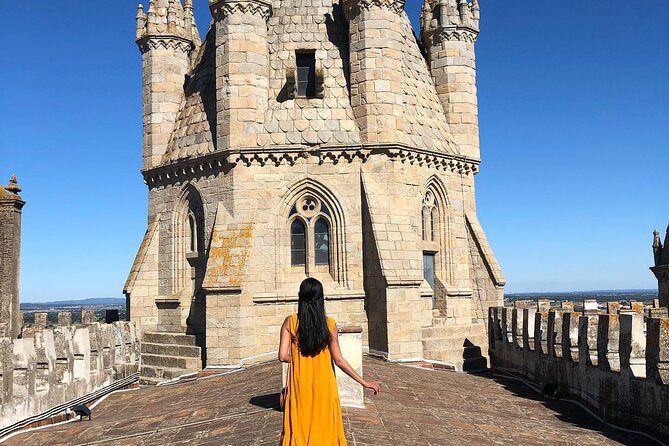
Cathedral of Évora (Se Catedral de Évora): granite power and a staged skyline
The cathedral is the heavyweight stop. You have about 45 minutes, and admission is not included.
Construction started in 1186, it was consecrated in 1204, and completed around 1250. It is all granite, and it reflects a transition from Romanesque to Gothic style.
Your guide will likely point out the towers and façade layout, including two medieval towers on each side. The bell tower rings in city time, which gives you a sense of how the cathedral still works as part of the living town.
Look for the portal sculptures of 14th-century Apostles by Mestre Pêro, and then shift your gaze to the dome. The dome and the lantern tower with a stone scales-needle crown, linked to the reign of D. Dinis, is a big visual payoff.
One practical tip from the way this tour is run: churches often have ticket windows you buy at your own pace, and the guide can help you navigate what you need. I recommend planning to keep a little cash or card ready for entrances that are not included.
Diana’s Garden: the calm closer that matches the temple
The day often ends or begins with Diana’s Garden, right near the temple area in the city cultural center. The garden extends from Largo do Conde de Villa Flor and is described as being in harmony with the Roman temple nearby.
Why this works: it gives your brain a softer landing after the cathedral and bones chapel. You get open air, a slower pace, and a chance to frame photos with less crowd pressure.
If you want souvenirs, keep your eyes open in the surrounding lanes, since this route can place you near streets known for handicrafts. Rua 5 de Outubro comes up on this itinerary, so it is a good moment to browse.
Price and what you really get for $169.31 per person
This tour runs about 9 hours and costs $169.31 per person. For a private day trip, that price is mostly paying for time and transportation, plus a guide dedicated to your group.
What is included:
- private guide and accompaniment at monuments
- air-conditioned vehicle
- private transportation
- pickup and drop-off at your accommodation
- compulsory insurance
- WiFi on board
What is not included:
- lunch
- entrance fees, with a note that museum tickets are listed as €10 per person
Also note: some specific monuments are free while others require tickets. For example, the Chapel of Bones and the Cathedral are marked as not included, while several churches and the temple are free.
My take on value: if you are the type who hates waiting and wants a guide to explain what you are seeing, private routing can be worth the cost fast. If you are comfortable roaming alone and you plan to do your own entrance bookings, you might spend less on your own. But you would also lose the “get your bearings fast” advantage that makes Évora easier.
Who should book this private Évora and Alentejo day trip
Book it if you want:
- a structured day that still feels flexible, because it is private
- the main Évora monuments without wrestling big-city logistics
- a cork-factory visit that actually teaches you something you can use later when you shop
This works well for couples, small families, and travelers who want a break from Lisbon but still want their time handled. It also fits English speakers since the experience is offered in English.
Consider skipping or tailoring it if:
- you hate long car rides. This is a full day and the drive takes real time
- you are very uncomfortable with the Chapel of Bones
Should you book this private Évora and Alentejo day trip from Lisbon?
I think it is a strong choice for most first-time visitors who want Évora’s major sights plus one unusual stop that gives you a fresh angle: cork.
I would book it if you want a relaxed, private format with pickup and a guide like João or Anastasiya who can keep the day moving and explain the places clearly. The cork factory is repeatedly described as a highlight, and it often ends up being more than an entertaining detour.
I would hesitate only if you are short on time or deeply prefer independent travel, because the value here is in coordination and interpretation.
If you have one day to spare, Évora is that “big payoff per hour” stop. And once you see how cork oak bark becomes everyday products, you start looking at Portugal’s materials in a totally different way.
FAQ
How long is the private tour and what time does it start?
The tour is about 9 hours and it starts at 8:30am, with pickup from your accommodation in Lisbon or Porto de Cruzeiros.
Is hotel pickup and drop-off included?
Yes. Pickup and drop-off at your hotel or apartment are included, along with private transportation in an air-conditioned vehicle.
Are monument entrance fees included?
Some are free, and some are not included. The Chapel of Bones is marked not included, and the Cathedral of Évora is marked not included, while several other stops list free admission.
Is lunch included in the price?
No. Lunch is not included, so you will want to budget time and money for a meal on your own or with the guide’s help.
What extra costs should I budget?
The information provided lists museum tickets as €10 per person. Entrance fees vary by monument, so expect to pay at least for the sites marked not included.
What is the cancellation policy?
You can cancel for a full refund if you cancel at least 24 hours before the experience’s start time. If you cancel within 24 hours of the start, the amount paid is not refunded.
Latest reviews from Lisbon
- Lisbon Street Art – Private Guided Tour in a Electric Tuk Tuk★ 5.0 · 72 reviews
- Private Lisbon Walking Tour★ 5.0 · 72 reviews
- Pastel de Nata Workshop in Lisbon★ 5.0 · 72 reviews
- Palace Penna entrance included, Sintra, Cascais, Cabo Roca, private★ 5.0 · 72 reviews
- Group to Pena Palace, Sintra (pass by Regaleira) and Cascais★ 5.0 · 73 reviews
- Lisbon: Transfer to Porto with Obidos and Nazare★ 4.9 · 73 reviews
- Secret Walking Food Tours in Lisbon – Belém★ 5.0 · 73 reviews
- Lisbon: Private Food Tour – 10 Tastings with Locals★ 4.8 · 73 reviews
Evora Tours, compared.

Évora and Monsaraz with Regional Wine Tasting from Lisbon
Read our review →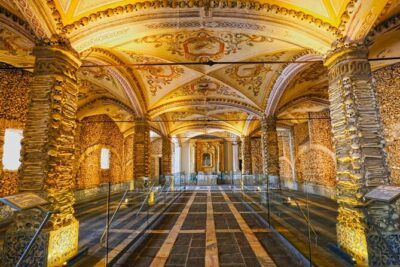
Private walking tour with tickets to main monuments
Read our review →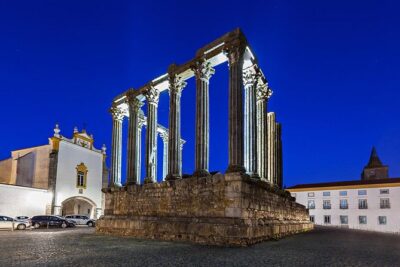
Private Day Tour With Guide to Évora and Monsaraz
Read our review →
From Lisbon to Alentejo: Évora and Megaliths Full-Day Tour
Read our review →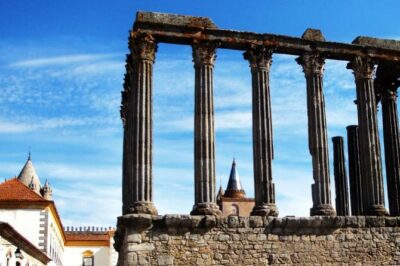
From Lisbon to Alentejo: Évora and Megaliths Full-Day Group Tour
Read our review →Browse the lists this tour appears in