
Reviewed · WALKING TOURS
Évora: Private walking tour with tickets to main monuments
Évora is the kind of place where every street corner feels like a timeline. This private walking tour strings it together in about 2.5 hours, and it also includes entry tickets for the two big-ticket stops: the Cathedral of Évora and the Chapel of Bones. You’ll get the city’s story in a way that makes the monuments feel connected, not random.
Two things I really like: you’re not stuck figuring out what matters on your own, and you can ask questions as you go. Also, the guide-led pace is built for seeing a lot without feeling rushed, which is exactly what you want in a compact UNESCO town like Évora. One thing to consider is that this is a walking tour with a few stops that are visually intense, like the Inquisition memorial and the bones, so it’s not a purely light, feel-good route.
Key takeaways
- Tickets are included for the Cathedral and Chapel of Bones, so you avoid the hassle of sorting entry on the spot
- You start at Praça do Giraldo, the city’s heart, and build your understanding from there instead of jumping straight to monuments
- Expect a tight history loop, moving from Roman Évora to Renaissance power and beyond to fortress walls
- The Cathedral visit is more than a quick glance, with access that includes cloisters and a memorable roof view
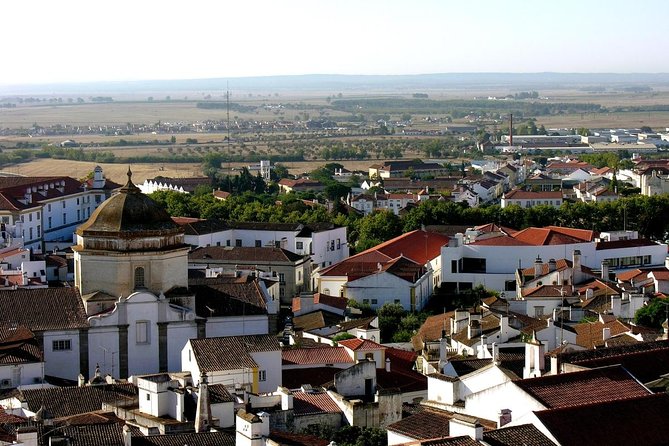
- You’ll pass major city icons on foot, including Templo Romano, Igreja da Graça, and the Aqueduto da Água de Prata
- A true private setup means the guide can match the tone and pace to your group
Évora in 2.5 hours, with tickets you actually use
This tour is a smart fit if you’re short on time but still want more than a check-the-box sightseeing loop. Évora can overwhelm you with scale and details, so the value here is the structure, plus the fact that the guide keeps you focused on what to notice.
The price, $105.26 per person, is not “cheap,” but it’s reasonable for a private guide in a UNESCO town, especially since entry tickets are included for the Cathedral and the Chapel of Bones. If you compare it to paying for those attractions on your own and then hoping you also get context, the math usually makes sense.
Because it’s private and in English, you’re also not competing with other groups for attention when you stop to look closely. That matters in Évora, where the best moments are often the small ones, like what a facade is hinting at or what a ruin suggests about where power once sat.
More of Évora:
- Évora: Private walking tour, By Local Guide
★ 5.0 · 87 reviews - Évora and Megaliths Full-Day Tour from Lisbon
★ 4.7 · 456 reviews - From Lisbon: Évora and Monsaraz with Regional Wine Tasting
★ 4.7 · 345 reviews
Starting at Praça do Giraldo and building a mental map fast
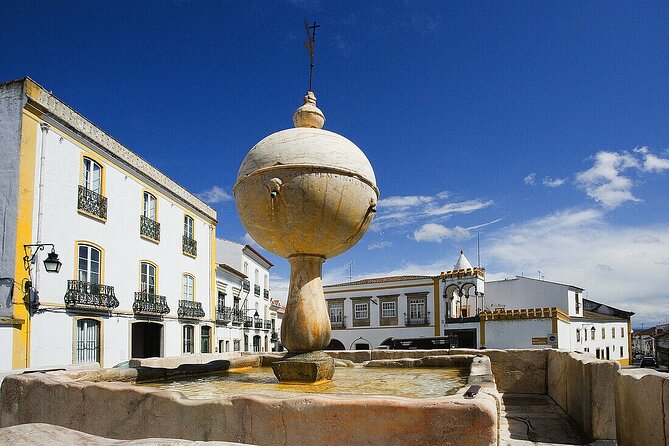
The walk begins at Praça do Giraldo (right by the fountain), which is the central meeting point and social heart of the city. It’s also where Évora’s civic life has long focused, so using it as the starting point is a shortcut to understanding the whole town.
What I like about this opening is that it sets expectations. The guide gives you the historical framework of Évora and Portugal in a universal way, so you’re not just collecting facts. You’re learning how to connect the dots between periods, rulers, and the shape of streets and monuments.
There’s also a practical side: starting here makes the rest of the walk easier. You quickly learn where “center” is, which helps when you later wander on your own.
Inquisition memorial, then the everyday streets where Alentejo crafts show up
Early on, you pass the Homenagem às vitimas da Inquisicao em Portugal, a memorial connected to the Portuguese Inquisition. This institution began in 1536 and lasted for nearly 300 years, and the guide frames it as a symbol of intolerance tied to brutal punishment. It’s heavy material, but it’s also part of understanding how religion and power shaped Évora.
Right after that, the tone shifts back to the human, daily side of the city: you move through a traditional commerce street where Alentejo handicrafts are part of the experience. You’ll have a chance to spot items like cork objects, pottery, painted furniture, chocalhos (rattles), painted pieces, and capotes (traditional cloaks).
This is a good moment for practical shopping and not just browsing. If you plan to buy gifts, you’ll see the most “local” items in the zone where you’re already walking, and your guide can point out what looks authentic.
If you want a tip that keeps this route smooth, it’s simple: use this stretch to slow down. Look at materials and details now, because later you’ll be focused on architecture and monuments.
Se Catedral de Évora: Gothic scale plus cloisters and the roof panorama
The tour’s Cathedral stop, Se Catedral de Evora, is the big Gothic moment and it’s worth treating as more than a quick photo stop. It’s described as the largest Portuguese Gothic cathedral, built on lines associated with Notre Dame de Paris, and it’s packed with references that invite curiosity.
One reason this stop feels like good value is the way the included access is planned. You don’t just enter the church. The included tickets cover the Cathedral, the cloisters, and a visit up to the roof, which gives you a panoramic view over Évora.
That roof view is the payoff for the walking. From above, you can see how the old city layout fits together, and how the defensive and religious layers overlap in real space, not just in your imagination.
A quick consideration: cathedrals can be emotionally intense if you’re not expecting it. You’re not there for a quiet nap. You’re there for scale, symbolism, and stories that connect older religious ideas with what came later.
More of the Arrábida coast:
- Setúbal: Dolphin Watching Tour
★ 4.8 · 801 reviews - Sesimbra: Arrábida Dolphin and Whale Watching tour with biologist
★ 5.0 · 248 reviews - Observation of Dolphins and Whales with Marine Biologist in Arrábida
★ 5.0 · 224 reviews - Sesimbra : Guided Kayak Tour in Arrábida Natural Park & Caves
★ 5.0 · 153 reviews
Templo Romano and Pateo de São Miguel: two quieter stops that add depth
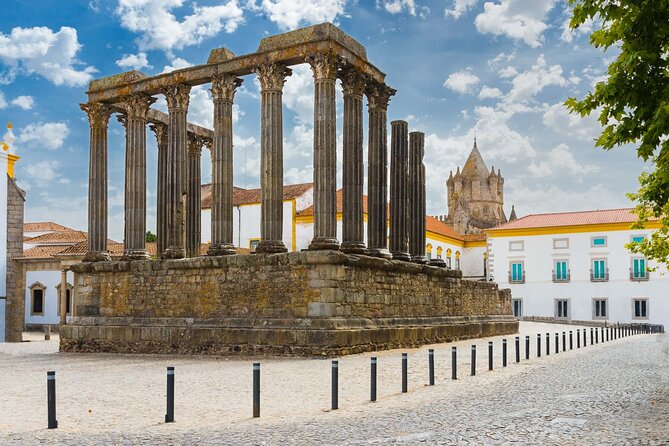
Next comes the Templo Romano de Evora, also known as the Templo de Diana. This Roman temple has around 2,000 years of history, and it’s presented as one of the best preserved and oldest temples of the ancient empire. The guide adds the context of Roman power and Évora’s ancient identity, including references tied to Julius Caesar.
Even if Roman ruins aren’t your main interest, this stop works because it changes how you view the city. You start recognizing that Évora was shaped long before the Renaissance buildings rose.
Then you reach Pateo de São Miguel, a beautiful space that many people miss because it’s a little hidden. The guide frames it as an ancient alcove that was heavily fortified, connected to governors and old kings. It’s also tied to the origins of religious and military orders, with a later connection to the Order of Avis and the second dynasty of Portuguese kings.
This is a great pause for art-history lovers, but it’s also just a good reset. You get a calmer, more enclosed atmosphere after the big monuments, and that makes the next church stops hit harder.
Igreja da Graça and the 1556 fountain: Renaissance power in stone and detail
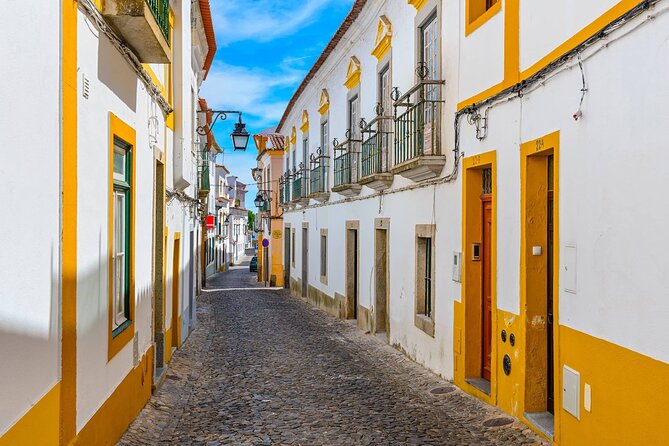
In the Renaissance segment, you pass Igreja da Graça, described as a larger example of Portuguese Renaissance architecture with elements inspired by Mannerism. The guide points out the famous story of the boys of Graça and how the facade carries symbolic meaning.
If you tend to ignore facades because you think they’re just decorative, this stop is a good correction. It teaches you to read stone like a text, where the “why” matters as much as the “what.”
You’ll also see a fountain noted as one of the first examples of Mannerist art in Portugal, inaugurated in 1556. It’s described as an important example of Portuguese urban architecture and tied to Cardinal D. Henrique as a mark of power and progress during his time. This is the kind of detail that makes Évora feel personal, because power wasn’t only in palaces. It was in what cities chose to display.
Chapel of Bones: macabre, yes, but also art and history
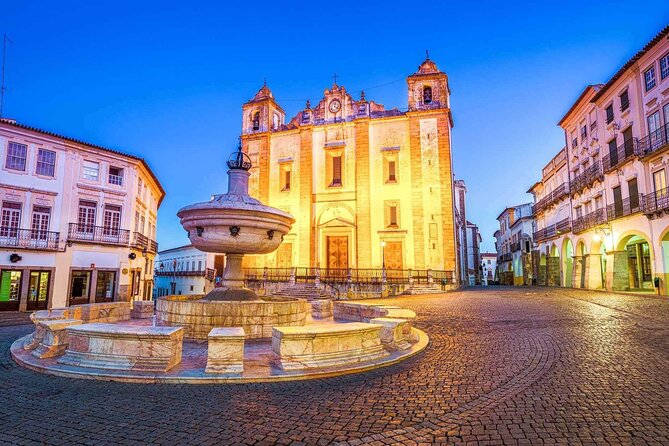
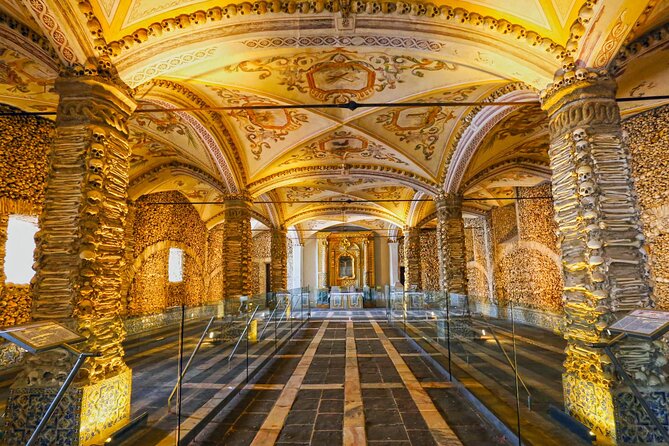
The Capela dos Ossos (Chapel of Bones) is included by ticket, so you can go in without scrambling. It’s presented as unique in the world for the size of the bone display, with walls covered in real human bones connected to thousands of people who lived in Évora. It dates to the 17th century and comes with secrets and legends that the guide shares as you walk through.
Here’s the practical truth: this stop can feel unsettling at first glance. But the tour’s storytelling keeps it from becoming pure shock value. It becomes a lesson in how communities dealt with mortality, and how architecture can turn a grim concept into a place of reflection.
One big strength of this portion of the tour is timing and guidance. You spend a dedicated chunk of time here, not just a quick stop. That makes it easier to look, understand the context, and decide how you feel without rushing yourself.
Igreja de São Francisco and the royal complex that shaped Portugal
After the Chapel of Bones, you reach Igreja de São Francisco, often tied to the idea of the golden convent and known for innovative architecture in its era. The guide connects it to an older Franciscan convent site and explains how this royal church hosted weddings and baptisms that influenced Portuguese history and even larger events beyond Portugal.
Then the walk continues to Palácio de Dom Manuel, where only the Ladies’ Gallery remains from the palace complex. This is a romantic-sounding name, but the point is the opposite of romance. It shows where royal life and ceremony were physically staged, and how that legacy still shapes what you see today.
If you like photos, this is also a good zone for it. You’re moving through spaces with strong visual geometry, so even a short pause can produce meaningful shots.
Ruinas Fingidas and the city walls: when ruins start telling political stories
You finish a chunk of the historic center at Ruinas Fingidas, described as a romantic setting made from elements and ruins of an old 16th-century palace. It also ties to romanticism that became popular at the end of the 19th century, which is a fun reminder that ruins are never only ancient. People later “curate” ruins with new meanings.
The defensive walls are woven into the late portion of the walk. You pass by Muralhas de Évora, where Roman walls from the 3rd and 4th centuries get reused by later civilizations, including Visigoths and Muslims between the 8th and 12th centuries. You’ll also see medieval walls from the 14th century and bastioned structures from the 17th, reinforced in the early 19th century to deal with French troops during Napoleonic invasions.
This is one of those moments where Évora stops being a list of monuments and becomes a living idea. The city didn’t just grow. It defended itself, adapted, and kept rewriting the meaning of its perimeter.
Aqueduto da Água de Prata: Renaissance engineering and everyday beauty
The tour ends with the Aqueduto da Água de Prata, the Silver Waters aqueduct. It’s framed as one of the most iconic Portuguese civil works of the Renaissance, opened in 1537 and tied to an impressive extension of about 18 km.
The coolest detail here is that the aqueduct is not just “a structure.” It interacts with the city’s look, with houses inserted between its arches. That mix of infrastructure and Renaissance detail is why this feels like a proper finale rather than a random roadside stop.
It also helps that you’re outside and walking. By now, you’ve trained your eye for how one era overlaps another, so the aqueduct lands as part of the same story as the churches and palaces. It’s power and planning, not just decoration.
Price, pace, and private guide value in a compact UNESCO town
Let’s be real about pacing. This is a private walking tour with about 2 hours 30 minutes of time on foot. You’ll see a lot, but it’s not meant to replace a day of slow wandering. It’s built for a clear run through the key sights with context.
Because it’s private, you also get the kind of tailoring that group tours rarely manage. Guides often start by checking your interests, then adjust where they spend time. In this kind of setting, that makes a noticeable difference at stops like the Cathedral roof, where the “what to look for” can vary depending on whether you’re into art, architecture, or history.
I also appreciate that the tour uses a mobile ticket, which cuts down on ticket lines and paper searching. And while meals aren’t included, the guide can help you make smart plans for food after, since you’ll likely be in the center when the tour ends back at Praça do Giraldo.
One more small value point: the route includes major entrances like the Cathedral and Chapel of Bones. That means the tour isn’t only “walk past and maybe peek inside.” You actually get inside the places that most people plan their day around.
Who this tour is best for, and who should pick a different plan
This is a strong match if you want an organized introduction to Évora with tickets included and enough time to take in the big architecture plus a few quieter stops like Pateo de São Miguel.
It’s also ideal if you like history that links religion, politics, and art. The route doesn’t stay comfortable and generic. It includes the memorial connected to the Inquisition, and it doesn’t shy away from the bones at the Chapel of Bones.
If you want only light sightseeing, or if you’d rather avoid morbid themes, you might prefer a different focus day. The same logic applies if you’re the type who wants hours in one place. This tour gives you breadth, not deep time.
Should you book this Évora private walking tour?
Book it if you’re visiting Évora for the first time and you want to understand what you’re seeing, fast. The best “yes” reasons are the included tickets, the tight route through major landmarks, and the fact that the experience is private, with time for questions.
Skip it or reconsider if you’re trying to turn Évora into a zero-history stroll with lots of independent roaming. For that style, you’ll probably want fewer scheduled stops and more open time.
If you do book, come prepared with comfortable shoes and a mindset that Évora is layered. By the time you reach the aqueduct and look back at the city, the whole walk will finally click into place.
FAQ
How long is the Évora private walking tour?
The tour lasts about 2 hours 30 minutes.
What is the price per person?
The price is $105.26 per person.
Is this tour private or shared?
This is a private tour, so only your group participates.
What language is the tour offered in?
It is offered in English.
What ticketed monuments are included?
Entrance tickets are included for the Chapel of Bones and the Cathedral.
Does the Cathedral stop include anything beyond the main church?
Yes. The entrance tickets cover the Cathedral, the cloisters, and a visit to the roof.
Do I receive a mobile ticket?
Yes, the tour includes a mobile ticket.
Where does the tour start and end?
It starts at Giraldo Square Fountain at Praça do Giraldo 7, 7000-508 Évora, Portugal, and it ends back at the meeting point.
Are meals included in the price?
No, meals are not included.
Can I cancel for a full refund?
Yes. You can cancel up to 24 hours in advance for a full refund.
More Walking Tours in Setubal District
- Lisbon: History, Stories and Lifestyle Walking Tour
★ 4.8 · 10,902 reviews - Best of Lisbon Small-Group Guided Walking Tour
★ 5.0 · 4,869 reviews - Lisbon: Food and Wine Small Group Walking Tour
★ 4.9 · 4,082 reviews - Porto Walking Tour, Lello Bookshop, River Cruise and Cable Car
★ 5.0 · 3,354 reviews
Latest reviews from Setubal District
- Lisbon: Kayaking and snorkeling in Sesimbra with photos!★ 5.0 · 74 reviews
- Clear Boat Experience: departure from Sesimbra★ 5.0 · 77 reviews
- Arrábida: Guided Transparent Kayaking Tour★ 5.0 · 81 reviews
- Sesimbra Discovery by Kayak★ 5.0 · 84 reviews
- Évora: Private walking tour, By Local Guide★ 5.0 · 87 reviews
- Lisbon: Try Scuba Diving in Arrabida Marine Reserve with photos★ 5.0 · 99 reviews
- Arrábida Secret Beaches and Caves with Snorkeling Stop★ 5.0 · 109 reviews
- Coasteering in the Arrabida Natural Park (Lisbon region)★ 5.0 · 123 reviews
Walking Tours, compared.
Best of Lisbon Small-Group Guided Walking Tour
Read our review →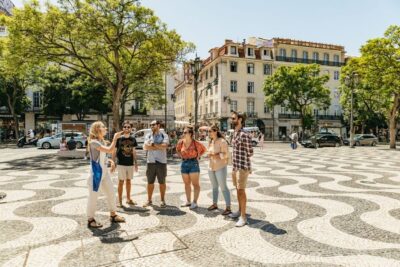
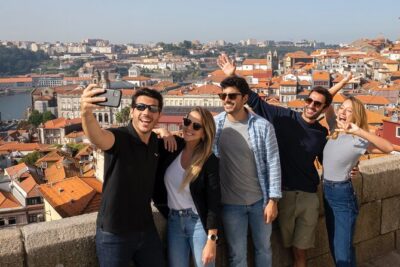
Porto Walking Tour, Lello Bookshop, River Cruise and Cable Car
Read our review →
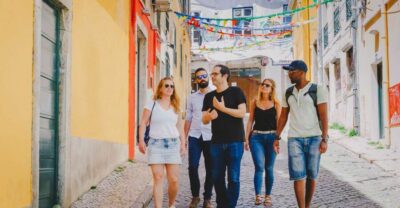
Best of Lisbon Walking Tour: Rossio, Chiado & Alfama
Read our review →
Experience Porto’s Charm: 3-Hour Guided Walking Tour
Read our review →
Enjoy a Guided Levada Walk in the Rabaçal Valley
Read our review →Browse the lists this tour appears in