
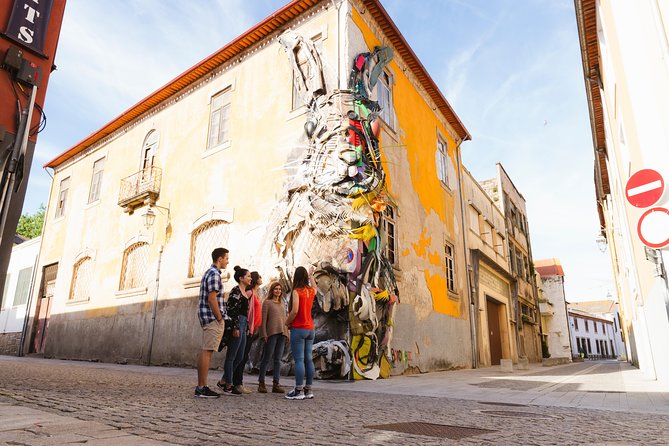
Reviewed · WALKING TOURS
Experience Porto’s Charm: 3-Hour Guided Walking Tour
Porto is one of those cities where you can see centuries stacked on the sidewalk. This 3-hour guided walk connects the big names in the UNESCO historic core to the iconic iron bridge and the Douro River, so you leave with both photos and context. UNESCO streets and Ponte de Dom Luis I are the headline acts.
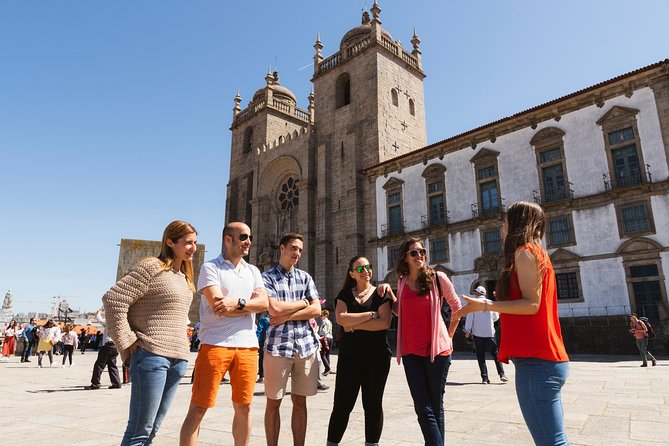
I love the small-group feel, because it keeps the pace human and the questions coming. I also like the way the tour leans on strong storytelling, with guides such as João, Diogo, and Maria frequently mentioned for making Porto history feel like something you can point at on the street.
One consideration: you will do real walking, including some uphill stretches, and the tour runs even when the weather turns. Pack comfortable shoes and a rain layer, and you will be happier.
Key highlights worth your attention
- Roman roots, Moorish rule, and 19th-century scars explained as you move through the center
- Photo-ready stops at Porto Cathedral and the Clerigos Tower area
- Sao Bento Station tile panels as a perfect, free “wow” moment
- A mid-tour café pause near the Belle Époque look of Café Majestic, with more local pricing
- Crossing to Gaia over Ponte de Dom Luis I and learning how rabelo boats fit the grape-to-wine story
- Maximum group size of 15, so the tour stays interactive
Porto’s UNESCO center, in just 3 hours
The best use of a short Porto trip is to get your bearings early, and this tour does that fast. You start in central Porto and focus on the historic core that’s recognized for its cultural importance, then you fan out to the riverfront and Gaia.
The tour’s structure is the key. It is not just a checklist of monuments. You get a guided storyline, so the places you stop at make sense together, like one long street conversation instead of disconnected sights.
You will also get live, in-person commentary in English, and the pace is designed for a single morning or afternoon window. That matters, because Porto’s hills can turn a “quick walk” into a leg workout if you are not expecting it.
More Walking Tours in Porto
- Porto Walking Tour, Lello Bookshop, River Cruise and Cable Car
★ 5.0 · 3,354 reviews - Porto: 3-Hour Guided City Highlights Walking Tour
★ 4.8 · 2,050 reviews - Porto: Wine Tasting with Tapas Walking Tour
★ 4.4 · 1,541 reviews
Starting point and how the meeting works in real life
You meet at Bluedragon City Tours at R. de Alexandre Herculano 251 in Porto. The tour is meant to be easy to find if you are in the central area, and the meeting spot is close to public transportation.
Plan to arrive about 15 minutes early. This is not busywork. It gives you time to confirm you are in the right group and get set before you start moving through tight streets and viewpoints.
Also note the practical side: this tour uses a mobile ticket, and you will get a general briefing before you set off. In other words, you are not guessing where you should be next, and you are less likely to end up wandering off when a group funnels into a viewpoint.
Roman walls to Moorish tiles: how the story gets told on foot
The tour begins by entering the historic UNESCO zone around Porto’s center. From there, the guide ties together the city’s shifting eras. The big idea you hear is that Porto started as a Roman outpost, later came under Moorish rule, and then faced heavy disruption in the 19th century.
As you walk, you are not stuck reading facts off a plaque. You see the physical clues too, including old Romanesque-looking walls. That is one of the reasons walking tours work in places like Porto. You can connect architecture to events immediately.
A particularly fun section is when the guide points out the color and pattern of Moorish tiles. You will start noticing the tilework as a city language, not just decoration. Once that click happens, even ordinary building facades start to feel like clues to the past.
Porto Cathedral and Santa Clara: the “look up” stops
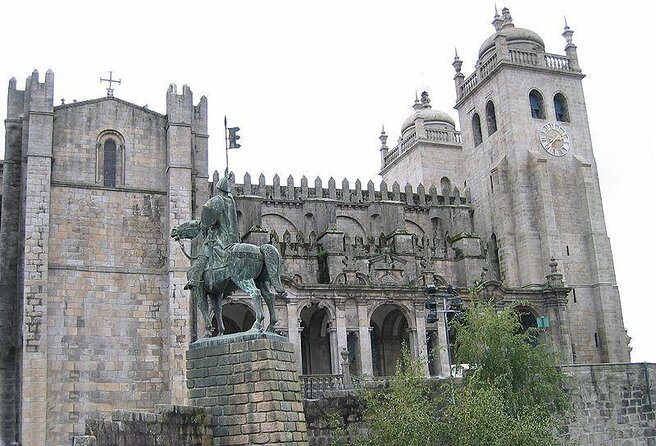
Porto Cathedral is one of the anchors of the historic center, and the tour gives you time to appreciate it in context. It is located right in the heart of the older streets, so you are not traveling far just to see one landmark.
If you want to go inside specific religious sites, entrance fees are not included. That means you should decide upfront if your priority is photos and exterior views, or whether you want to pay additional tickets during your visit.
You also pass by the Church of Santa Clara and its surrounding architecture. Even if you do not enter, it is a good change of pace: Baroque style in Porto can feel grand, but it also shows up in small details around doorways, facades, and street-level edges.
Another Porto day, differently spent:
- The Unvanquished Tour in Porto City Center
★ 5.0 · 26,497 reviews - From Porto: Douro Valley w/ Boat Tour, Wine Tasting & Lunch
★ 4.7 · 19,061 reviews - Complete Douro Valley Wine Tour with Lunch, Wine Tastings and River Cruise
★ 5.0 · 12,920 reviews - Porto: Six Bridges Cruise
★ 4.2 · 11,680 reviews
Aliados Avenue, Liberdade Square, and King Peter IV
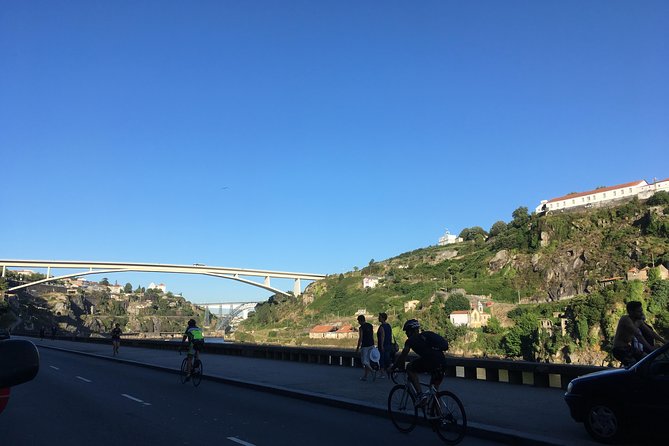
Once you leave the tightest medieval feeling streets, the tour shifts toward broader avenues and squares. The route along Aliados Avenue and into Liberdade Square is where Porto feels more civic and modern, and you hear locals in the everyday flow of the city.
A key stop here is the monument to King Peter IV of Portugal. This is also where the guide explains why he is known as The Liberator, and how the city ties him into a larger story. If you have ever wondered how kings and Portugal’s overseas empire connect to city monuments, this part helps that click.
What I like about this section is the pacing. It is a break from the constant up-and-down of narrow lanes, but it still feels like you are progressing through Porto’s layers rather than switching to a different town.
Sao Bento Station tiles: free art with a real story
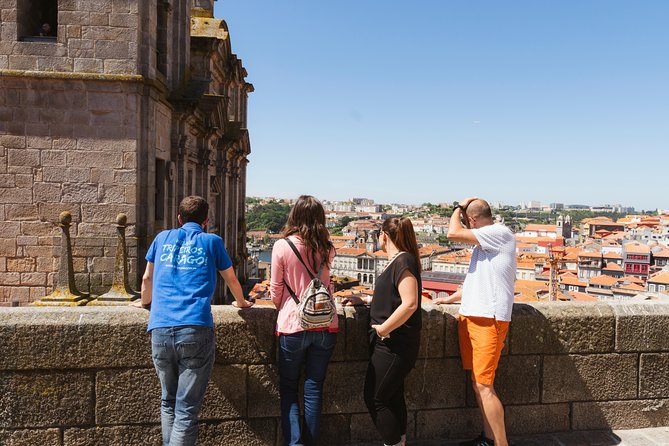
Sao Bento Railway Station is one of those stops that feels like a cheat code. The building is famous for its tile panels, and the tour uses that moment well.
You learn that it connects the Minho and Douro Valley railway lines, and you also get the architectural context, including the Portuguese architect José Marques da Silva and its inauguration date. Then you get the real reward: you see the tile panels and understand why this station is such an important visual landmark.
The station stop is also the smart kind of pause. You are not burning time traveling between neighborhoods, and it keeps the tour moving while giving you a clear “wow” moment without an admission fee.
Café Majestic area and the smarter coffee break
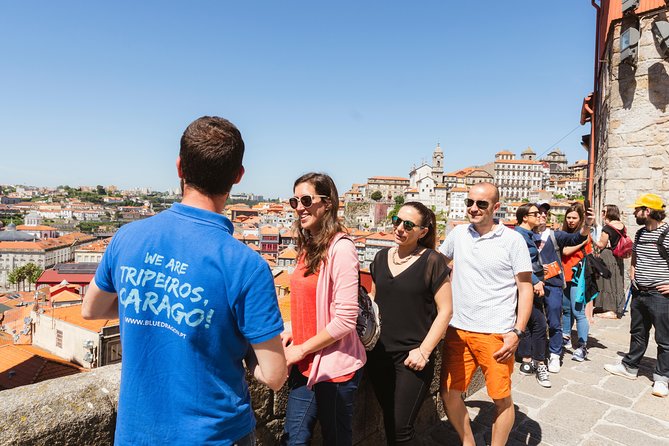
Half the fun of Porto walking tours is eating like a local, not like you are trapped in a museum gift shop. The tour includes a café stop around the Santa Catarina Street area.
Café Majestic itself is known for its Belle Époque style, and it was even recognized as the sixth most beautiful coffee shop in the world back in 2011. But you do not have to pay Majestic prices to get the experience of a café break in the right neighborhood.
One tip from the real-world experiences you can expect: the café stop happens just past Majestic, and you may find much lower prices there for drinks and pastries. Food and beverages are not included, so you choose what you want. Just plan on using this stop as your mid-tour recharge.
Mercado do Bolhão: watching local life in motion
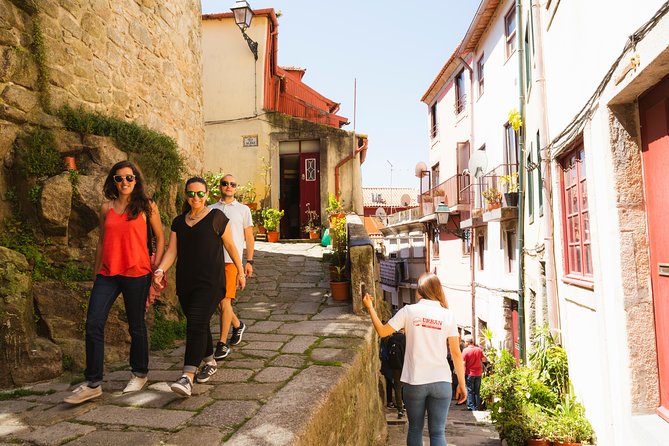
After the café break, you head toward Mercado do Bolhão, one of Porto’s emblematic markets. This is a neoclassical building, and it is set up in product zones like fish, meat, vegetables, fruits, and flowers.
Even if you do not buy anything, the market is useful because it shows how Porto shops work in daily life. It is not a staged food hall. It is a working market, and you can feel the rhythm in how people browse and move.
Admission is free for this stop, so you get the benefit without extra ticket costs.
Clerigos Tower and the Porto photo circuit
The Clerigos complex is one of the city’s most recognizable silhouettes. The guide brings you to the Torre dos Clerigos area, where the 18th-century architecture and Baroque style really show up.
If you plan to go into the tower or church areas, remember that admission is not included. You can still get strong exterior and street-level photos as part of the tour, but inside access is a separate decision based on your priorities.
This stop is also a good moment to slow down. Porto has lots of viewpoints, but this is one where the tower acts like a navigational landmark. Once you have seen it, you can re-spot it later as you explore on your own.
Lello & Irmão bookstore: a strange but fun detour
Lello & Irmão is treated as a meaningful Porto stop, partly because it is often described as one of the world’s most beautiful bookstores. More importantly, its staircase design is tied to the imagination of Hogwarts stairs, since J.K. Rowling lived in Porto.
This is one of those stops that gives you a different flavor. You go from architecture and markets to literature and design. Even if you are not a bookworm, the building is a photo magnet, and the guide’s framing helps you understand why it matters.
If you want to enter, you would need to handle any entry choices yourself. The tour focuses on the experience of seeing the storefront and getting the context as you walk.
Ponte de Dom Luis I: the Douro view plus the rabelo boat connection
Then comes the big shift from city streets to river theater. You walk to Ponte de Dom Luis I, the famous double-decker iron bridge linking Porto and Gaia.
You learn who designed the bridge design, with the detail that it has an Eiffel touch thanks to being linked to Gustave Eiffel’s protege. If that name means anything to you, you will enjoy how the guide connects industrial-era thinking to Porto’s landscape.
This is also where you get the Douro perspective. The guide explains how traditional rabelo boats used to transport grapes to the cellars. Seeing the river while thinking about moving barrels and grape shipments changes the way the water looks. It is not just a view anymore.
The bridge stop is not just a single minute of photos. It is positioned so you understand why this crossing was vital for the wine economy, and why Porto’s riverfront culture grew where it did.
Gaia’s cellars and Cais de Gaia: wine-making context on the walk
After the bridge, you move into Gaia along Cais de Gaia, where the riverfront feel turns more focused on wine. You pass cellars and hear how Port, the fortified wine, is made, with the guide explaining the logic behind the process.
This section works best if you are the type of person who likes to understand what you are looking at. If your only interest is taking pictures, it still feels scenic. If you care about what the city produces and why, it becomes more meaningful.
Because the tour is only three hours, you do not get a full tasting. But you do get the “why” behind the cellars, so later, if you do a wine tour or tasting, you already have a mental map.
Ribeira Square finish: where to go next
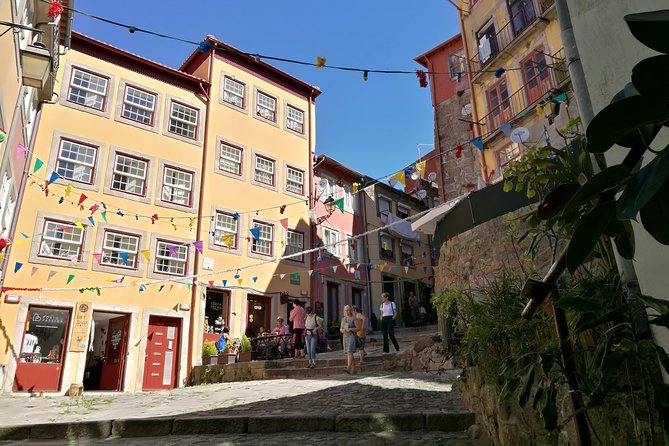
The tour ends back down at Ribeira Square, in the Ribeira neighborhood. This area is along the river and it is part of the UNESCO listing, and you can feel that it is built for eating, drinking, and strolling.
Ribeira is also a strong finish because it hands you the next move. Once you are here, you can keep walking on your own without needing another big guide-driven transition.
If Porto was new to you, you will likely leave with a short list of places you want to return to. That is the real value of a good orientation tour. It helps you decide what deserves more time, because you already know what you are looking at.
Price and pacing: is it good value?
At $35.07 per person for about three hours, this tour sits in a reasonable range for a guided walk through major Porto icons. The value comes from two things you actually feel while you are there: live commentary and a guided route that covers a lot without making you run around town.
You also get company liability and personal injury insurance listed with the experience, which is the kind of behind-the-scenes item you do not think about until something goes wrong. It is not the reason you book, but it helps you feel calmer while you walk.
The pacing is built for a small group, with a maximum of 15 people. That matters because it prevents the classic large-tour problem, where you are always waiting while the guide negotiates with crowds.
The main trade-off is also straightforward: entrance fees are not included. If you want to go inside several sites, you should expect to add a few extra euros depending on which places you choose.
Who this tour is best for
This is a great fit if you want a fast, guided intro to Porto without spending your first day in “where do I even start” mode. It is also a good match if you like history but prefer it explained in plain language while you walk between real locations.
It tends to suit first-time visitors, couples, and solo travelers who want a guided backbone for the rest of their trip. If you hate walking, you might feel the hills and stair angles as a strain. If you can do a few kilometers and handle uneven sidewalks, you will be fine.
And if you are the kind of person who loves a strong guide, this tour is often the reason you end up liking Porto even more. Multiple guides are cited for being energetic, friendly, and able to manage rain and pacing well.
Should you book Porto’s Charm?
Yes, you should book this tour if you want a smart orientation to Porto in a short window. It hits the UNESCO center, gives you major photo moments like Porto Cathedral and Clerigos Tower, and then connects the wine story to what you see at the Douro.
I would skip it only if you want a sit-down museum style trip, or if you cannot handle walking on hills and rain. Otherwise, this is a practical way to turn three hours into a much longer stay, because it teaches you what to notice when you return on your own.
FAQ
How long is the Porto walking tour?
It is approximately 3 hours.
How much does the tour cost?
The price is listed as $35.07 per person.
What language is the tour offered in?
The tour is offered in English.
What is included in the price?
It includes live commentary, company liability insurance and personal injury insurance, and a general briefing. Entrance fees and food or drinks are not included.
Are entrance tickets included for monuments like Porto Cathedral or Torre dos Clerigos?
No. Entrance fees are not included, and admission for some stops is listed as not included.
Where does the tour meet and where does it end?
The meeting point is at R. de Alexandre Herculano 251, 4000-053 Porto. The tour ends back at Bluedragon City Tours at the same address.
Do I need to bring comfortable shoes?
Yes. There is a small amount of walking involved, and comfortable shoes are recommended.
What should I do if it rains?
The tour operates in rain, so check the weather and dress accordingly.
Can I cancel for a full refund?
Yes. You can cancel up to 24 hours in advance for a full refund.
Latest reviews from Porto
- Porto: City Center Walking Tour★ 4.6 · 227 reviews
- Porto Food Tour of 8 Tastings: Custard Tart, Bifana & Hidden Gems★ 5.0 · 229 reviews
- Aveiro and Coimbra Small Group Tour with Moliceiro Boat Cruise★ 4.5 · 236 reviews
- Transfer from Porto Airport to Porto City Hotels★ 5.0 · 236 reviews
- Day Trip Braga and Guimarães from Porto★ 4.5 · 237 reviews
- The Best Douro Boat Tour★ 5.0 · 243 reviews
- Porto: Historic Center Tuk-Tuk Tour★ 4.5 · 244 reviews
- Beyond the Barrel: From Decadent to Down-home in the Heart of Porto★ 5.0 · 243 reviews
Walking Tours, compared.
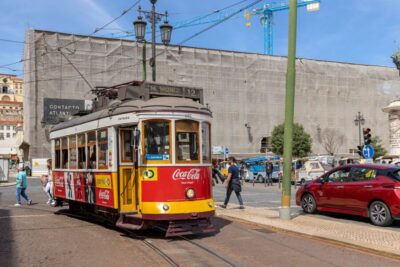
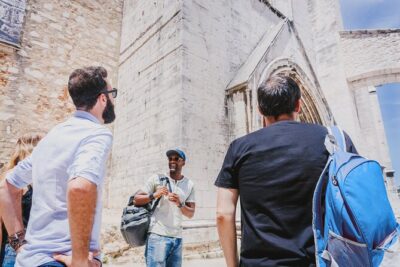
Best of Lisbon Small-Group Guided Walking Tour
Read our review →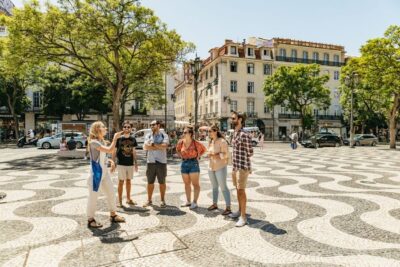
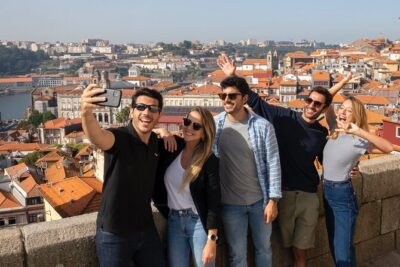
Porto Walking Tour, Lello Bookshop, River Cruise and Cable Car
Read our review →
Best of Lisbon Walking Tour: Rossio, Chiado & Alfama
Read our review →
Enjoy a Guided Levada Walk in the Rabaçal Valley
Read our review →
Browse the lists this tour appears in