
Reviewed · WALKING TOURS
Évora: Private walking tour, By Local Guide
Évora is interesting because this little walled city stacks centuries on top of each other in walkable distances. I like that this is completely private, so you are not squeezed into a group shuffle. I also like the focus on great landmarks you can actually see from the street, with clear context as you walk. The one drawback to plan for is that most visits are outside only, so you will not get interior access unless you book those sites separately.
What makes this work well for real travelers is the pacing: about six stops, around 15 minutes each, with a guide to connect the dots from early Portugal to Roman Évora and the Renaissance. If you want to use your time wisely, this tour helps you decide what deserves more time later. Do note that it is best with good weather, and some people prefer to do this earlier in the day so they have maximum flexibility for any extra stop.
Key Highlights If You Want the Best Part First
- True private format: your guide is allocated only to your group.
- Street-level storytelling: you learn what you are seeing as you walk past major monuments.
- Roman hit right away: the walk includes the Templo Romano de Évora (Templo de Diana).
- Renaissance and Mannerism spotlight: you get context for Igreja da Graça.
- Manueline-era architecture theme: exterior focus on Palacio de Dom Manuel.
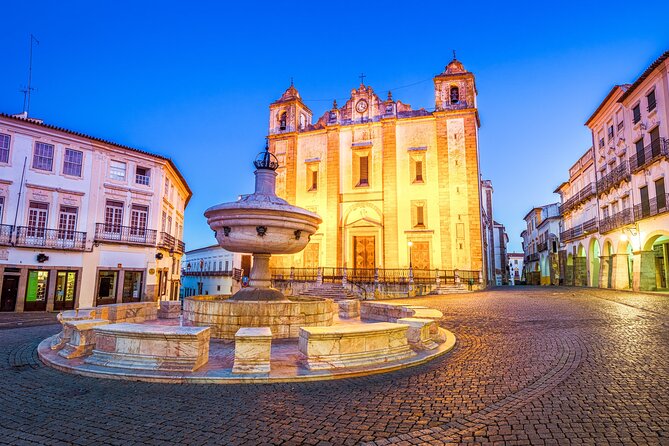
- Calm, compact route: start and end at Giraldo Square, built for an easy 1.5-hour loop.
Why Évora Works So Well on Foot (Especially on a 1.5-Hour Private Walk)
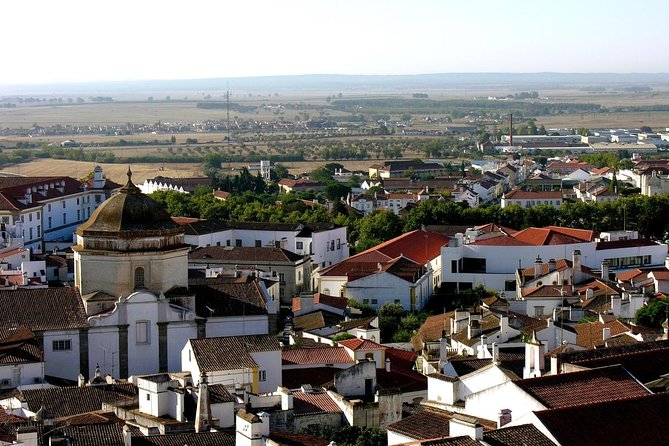
Évora is built for walking. You can get a lot of context in a short time because the city center is compact and the monuments sit right where people already pass by every day. This kind of tour is not about checking boxes. It is about learning how the city grew, so when you look at a facade, an arch, or a church doorway later, you know what period it belongs to and why it matters.
The private format matters more than it sounds. Instead of stopping for 20 seconds while a crowd moves on, you can ask questions and get answers tied to what you are currently standing beside. It is also a good fit if you are traveling as a couple, a small family, or solo, because you can move at a human speed without waiting on other people.
You should also know the tradeoff. Entrance tickets are not included, and the tour stays outside monuments and historic streets. That is not a dealbreaker, but it does change how you should plan the rest of your day.
More of Évora:
- Évora: Private walking tour with tickets to main monuments
★ 5.0 · 223 reviews - Évora and Megaliths Full-Day Tour from Lisbon
★ 4.7 · 456 reviews - From Lisbon: Évora and Monsaraz with Regional Wine Tasting
★ 4.7 · 345 reviews
Your Route Starts at Praça do Giraldo (A Central Place to Get Oriented Fast)
The meeting point is Praça do Giraldo, at the fountain at Praça do Giraldo 7. This is a smart starting spot because it gives you an immediate “city center” reference point. You are not wandering to find where you should be. You are already in the middle of the historic core.
At the first stop, the guide gives you a short introduction to the city’s historical development in the larger story of Portugal. You will also pause to look at different architectural aspects of the surrounding buildings and monuments. This matters because Évora can feel like a lot at once. A good orientation early on turns later sightseeing from random photos into a clear timeline you can follow.
If you are the kind of traveler who likes to map places in your head, you will appreciate this. You are basically being handed a set of “labels” for what you will see over the next 90 minutes.
Rua 5 De Outubro and Alentejo Crafts (What You Notice Changes After This Stop)
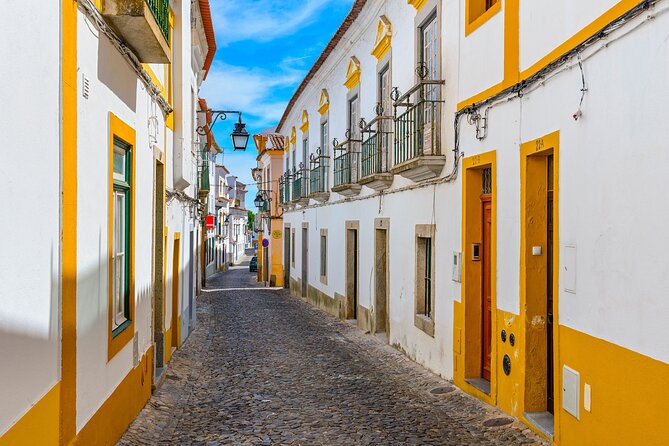
Next comes Rua 5 de Outubro. This is a shorter, more focused stop with a big payoff. The guide points out typical Alentejo handicrafts and how they show up in the streets and everyday life of the region.
Why this is useful: it is easy to visit a historic city and only pay attention to stone, towers, and ruins. But local crafts tell you how people lived, worked, and expressed culture here. Even if you do not buy anything, you will start noticing details that most people walk right past.
Practical tip: after this stop, if you feel like shopping, you will have more confidence about what you are actually looking at. If you do want to buy a small handcrafted souvenir, keep your bag light during the first part of the walk, so you do not hate yourself later.
Évora Cathedral From the Outside (Interior Access Is Not Part of This Tour)
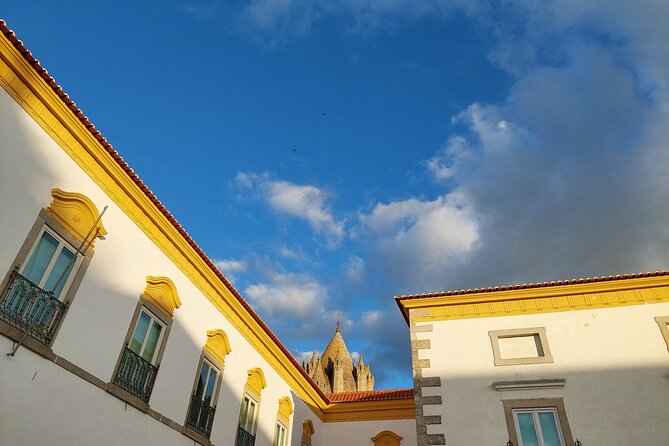
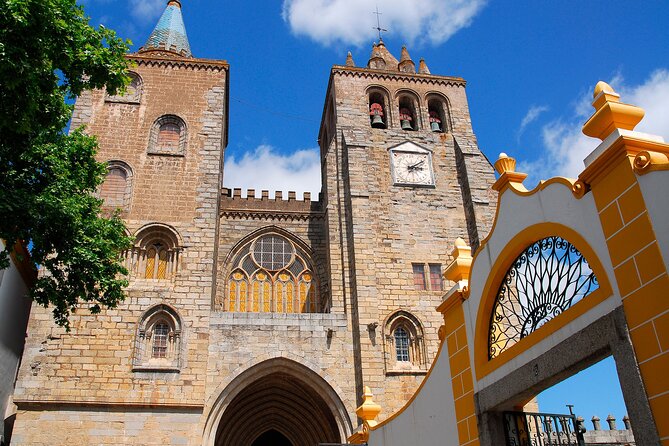
One of the main monuments on the list is the Cathedral of Évora, also called Se Catedral de Évora. In this experience, you do an outside visit and get historical and architectural context. The interior visit is not included, so you would need to do that separately at another time.
This is where you should calibrate your expectations. You will not get the full cathedral experience in the moment. But you can still get a lot out of an outside look if the guide helps you read what you are seeing: the structure, the style cues, and why this cathedral sits where it does in the city.
For many travelers, the outside viewpoint is still enough to understand the cathedral’s role in Évora and to decide whether you want to pay for interior time later. If you are trying to keep your day efficient, that is a good approach.
More of the Arrábida coast:
- Setúbal: Dolphin Watching Tour
★ 4.8 · 801 reviews - Sesimbra: Arrábida Dolphin and Whale Watching tour with biologist
★ 5.0 · 248 reviews - Observation of Dolphins and Whales with Marine Biologist in Arrábida
★ 5.0 · 224 reviews - Sesimbra : Guided Kayak Tour in Arrábida Natural Park & Caves
★ 5.0 · 153 reviews
Templo Romano de Évora (Templo de Diana): The Roman Anchor Point
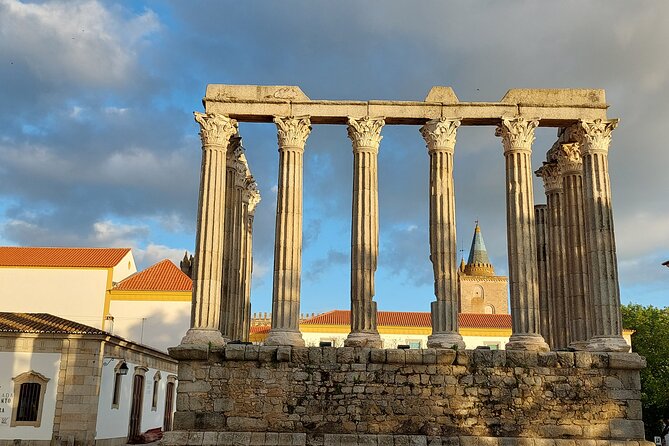
Then you get a standout: the Templo Romano de Évora, often linked to the Temple of Diana. You will visit it with a historical and cultural framework from the Roman period.
This stop tends to be a highlight because Roman structures in Portugal feel both familiar and surprising. You are seeing how Roman design shows up here, and the guide connects it to the wider story of how Évora evolved. Even if you are not a Roman-nerd, the explanation helps the temple stop being just another old stone and start being a clue about who was here and how the city functioned in that era.
Timing note: this is one of the 15-minute segments. That is short, but it is enough to learn what matters most and take in the structure. If you later want more time, you will know what to focus on.
Igreja da Graça: Renaissance and Mannerism Without the Ticket Line
Next is Igreja da Graça. Like the cathedral, this visit is framed around history and cultural context, and you will see it as part of the city walk. The tour specifically calls out that the church is one of the great constructions of Portuguese Renaissance and Mannerism.
This is a big deal because it gives you a theme for the walk. Instead of jumping from Roman to something unrelated, the guide keeps pulling you forward through time, showing how architectural styles changed.
The practical limitation remains: the tour does not include an interior visit. But the outside still teaches you how style shows up on the exterior and why this church is considered important. If you want a deeper look at the interior later, you can plan it as a separate stop when it fits your schedule.
Palacio de Dom Manuel: Reading Power Through an Exterior
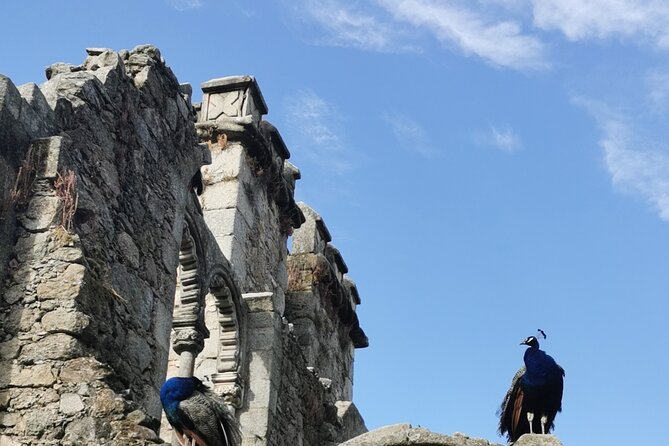
The final monument stop is Palacio de Dom Manuel, with interpretation of the building’s exterior. This is another “outside only” segment, and it helps you see the building’s importance in the broader narrative of Portuguese monarchy and architecture.
Why this one works for a walking tour: a palace does not need to be entered to make sense. Even from the exterior, you can understand how grand buildings visually communicate authority and status. With the right guide, you can connect architectural features to the period and the kind of power the building represented.
After this, your tour ends back at the meeting point, so you are not stuck figuring out how to get back to where you started.
What Makes the Guides Different (And Why That Changes the Value)
The highest-rated part of this experience is the guide. People mention guides such as João, Elsa, and Paulo, and the pattern is consistent: clear English, strong enthusiasm, and answers that do not feel rehearsed.
One review also points out that a guide had advanced academic training in antiquities, which is a big plus if you like history that feels precise rather than generic. Even when you are not hunting for academic detail, you still benefit because the guide explains what you are looking at and why the city developed the way it did.
Another strong theme: flexibility. In at least some cases, guides tailor the morning to your interests and offer practical recommendations for what to do next in Évora, like shops and places to eat. That makes this more than a “stand here, look there” tour. It helps you build a smarter second half of your day.
Price and Value: Is $74.82 Per Person Worth It?
At $74.82 per person for about 1.5 hours, the price feels reasonable if you compare it to the cost of doing multiple guided entries or paying separately for tickets. The key value is that you are paying for interpretation, not entrances.
Because entrance tickets are not included, this is best viewed as a learning and orientation experience. You will likely come away with a better sense of what to prioritize if you want to return. That is often the difference between spending your next hours wandering and spending them with a plan.
It is also private, which usually costs more than group tours. If you are traveling as two people, a private format can still pencil out well when you consider you are not splitting into a crowd and waiting for a tight schedule. If you are solo, it can still be worth it when you want your time to be efficient and personal.
Best Time to Book and How to Pair It With Other Évora Plans
This tour runs in English and is designed for good weather. That matters because you are outside most of the time. If the forecast looks shaky, you will do better with a day slot you can reschedule.
Pairing ideas that fit the tour style:
- Use this as an early introduction, then return later to enter the cathedral or go deeper into one monument.
- If you already know you want Roman and Renaissance emphasis, this is a good match and keeps you from missing the obvious anchors.
- If you are squeezing Évora into a single day from Lisbon, this kind of guided orientation helps you spend the rest of your time more intelligently.
One caution: because the tour stays outside and interiors are not included, do not book it expecting a full guided inside sweep. Your best results come when you see it as the street-level “read the city” version, then choose any interior tickets separately.
Who This Tour Suits Best
You will probably like this tour if:
- You want a history and architecture guide, but you do not want to line up for entrances.
- You like learning patterns, like how Roman structures and later Renaissance styles show up in the same city.
- You travel with someone who wants clarity and someone who wants flexibility. A private guide can respond better than a scripted group tour.
- You want a compact plan that starts and ends at the same central spot.
You might skip it if:
- You want lots of indoor time during the tour itself.
- You expect entrances to be included without extra tickets.
- You prefer unguided wandering, where you can spend as long as you want at every corner without a set structure.
Should You Book This Private Évora Walking Tour?
I think you should book it if you want a fast, high-quality introduction to Évora that helps you understand what you are seeing. The strongest reasons are the private, one-on-one feel, the outside-only but expertly explained major landmarks, and guides who consistently bring energy and clear context, including examples like João, Elsa, and Paulo.
If you are the type who loves architecture and wants to leave with a mental map, this is a solid way to get there in 1.5 hours. Just plan the rest of your day knowing that interiors like the cathedral are not included, so you can add those only if you truly want them.
More Walking Tours in Setubal District
- Lisbon: History, Stories and Lifestyle Walking Tour
★ 4.8 · 10,902 reviews - Best of Lisbon Small-Group Guided Walking Tour
★ 5.0 · 4,869 reviews - Lisbon: Food and Wine Small Group Walking Tour
★ 4.9 · 4,082 reviews - Porto Walking Tour, Lello Bookshop, River Cruise and Cable Car
★ 5.0 · 3,354 reviews
Latest reviews from Setubal District
- Lisbon: Kayaking and snorkeling in Sesimbra with photos!★ 5.0 · 74 reviews
- Clear Boat Experience: departure from Sesimbra★ 5.0 · 77 reviews
- Arrábida: Guided Transparent Kayaking Tour★ 5.0 · 81 reviews
- Sesimbra Discovery by Kayak★ 5.0 · 84 reviews
- Lisbon: Try Scuba Diving in Arrabida Marine Reserve with photos★ 5.0 · 99 reviews
- Arrábida Secret Beaches and Caves with Snorkeling Stop★ 5.0 · 109 reviews
- Coasteering in the Arrabida Natural Park (Lisbon region)★ 5.0 · 123 reviews
- Coasteering at Portinho da Arrábida★ 5.0 · 139 reviews
Walking Tours, compared.
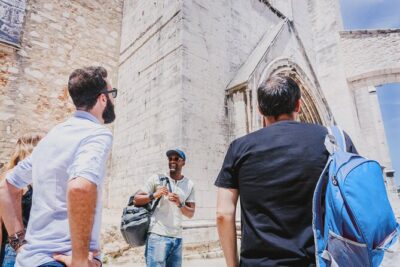
Best of Lisbon Small-Group Guided Walking Tour
Read our review →
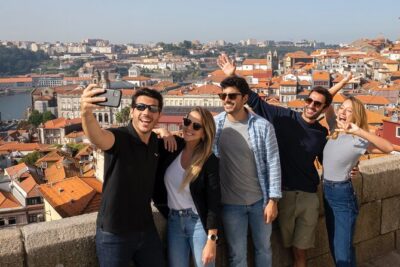
Porto Walking Tour, Lello Bookshop, River Cruise and Cable Car
Read our review →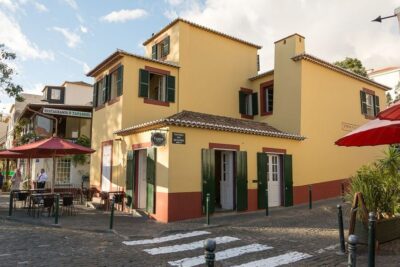

Best of Lisbon Walking Tour: Rossio, Chiado & Alfama
Read our review →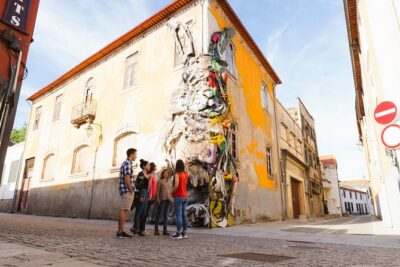
Experience Porto’s Charm: 3-Hour Guided Walking Tour
Read our review →
Enjoy a Guided Levada Walk in the Rabaçal Valley
Read our review →Browse the lists this tour appears in