
Reviewed · WALKING TOURS
Lisbon: Jewish Walking Tour
Lisbon has a way of rewarding slow attention, and this tour is interesting because it traces Jewish Lisbon through what you can still see, plus what archaeology helps you imagine. Starting at Portas do Sol means you get a killer look over the Tagus and Alfama before the stories begin.
I especially like that the guide is an archaeologist, and that name you will hear a lot is Luciano Waldman (also known as Zelig). I also like the route logic, from the viewpoint at Portas do Sol toward the places where Lisbon’s old Jewish life once clustered, ending at Largo de São Domingos.
One possible drawback is pace and sound: you will be moving through parts with heavy tourist traffic, and the tour is English only. If you rely on clear audio, plan for moments when it is harder to catch every detail.
Key things I think you’ll care about
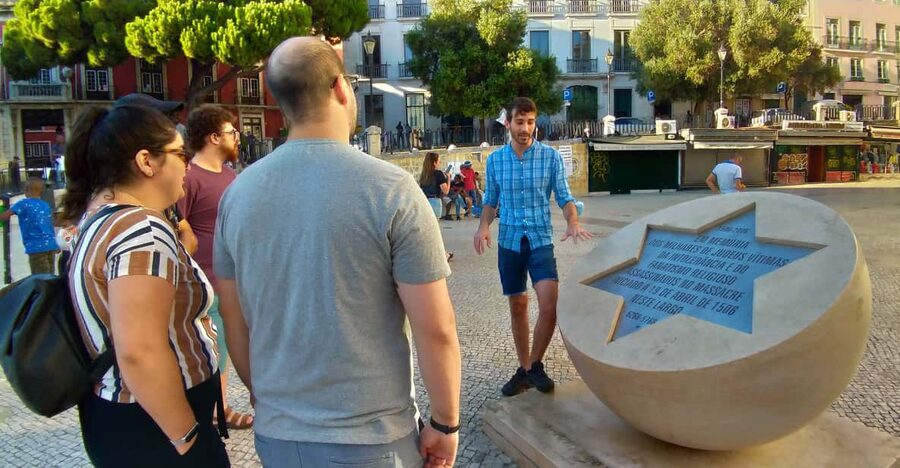
- Archaeologist-led storytelling: you do not just hear dates, you get help reading the city through digs and historical clues
- Portas do Sol start: Tagus and Alfama views set the scene fast, then you start walking right away
- Jewish Cultural Center connection: the tour supports a local institute tied to keeping memory alive
- Stops where the old quarters were: even when buildings are gone, the guide helps you place what used to be there
- 3-hour Old Town walking route: plan on comfy shoes, water, and plenty of stairs and street corners
- English live guide, with possible accent: handy for most people, but expect that hearing can be tricky in crowded areas
Jewish Lisbon on foot, starting with the view at Portas do Sol
This tour is built around a smart idea: start with a vantage point, then match history to the real geography. You meet at the view point Largo Portas do Sol, at the statue of Saint Vicente. Before you even hit the first stop, you are looking out over the Tagus and Alfama, which makes the rest of Lisbon feel less like a maze.
Portas do Sol also does something practical. It helps you orient fast. In old cities like Lisbon, your brain works best when it can anchor itself to a skyline and a river. Here, once you understand where you are looking, later references to neighborhoods make more sense.
Then you move off the viewpoint into the Old Town flow. Expect a guided walk that threads through historical sites, monuments, and archaeological excavations, not a “drive-by” sightseeing loop.
More Walking Tours in Lisbon
- Lisbon: History, Stories and Lifestyle Walking Tour
★ 4.8 · 10,902 reviews - Best of Lisbon Small-Group Guided Walking Tour
★ 5.0 · 4,869 reviews - Lisbon: Food and Wine Small Group Walking Tour
★ 4.9 · 4,082 reviews
Your guide, Luciano Waldman, and why the tone matters
The headliner for many departures is Luciano Waldman, an archaeologist who leads in English. A lot of tours can feel like reciting facts. This one leans more human. Based on how the tour is described, Luciano combines research with a personal voice, including discussion of Jewish life and his own connection to the subject.
That matters because Lisbon’s Jewish story does not survive in one neat, intact quarter the way you might hope. Many physical markers are gone. So you want a guide who can translate absence into meaning. Luciano’s strength is that he helps you picture what used to be there, then connects that picture back to the streets you are actually standing on.
You should also know the tour can be a bit of an audio challenge in crowded spots. The guide’s Portuguese and Hebrew background can come through in English, and the Old Town can be loud. If you are the type who wants to hear every word, I suggest you come a touch earlier, get a good spot in the group, and be willing to ask follow-up questions when you can.
The route in order: Portas do Sol to Largo de São Domingos
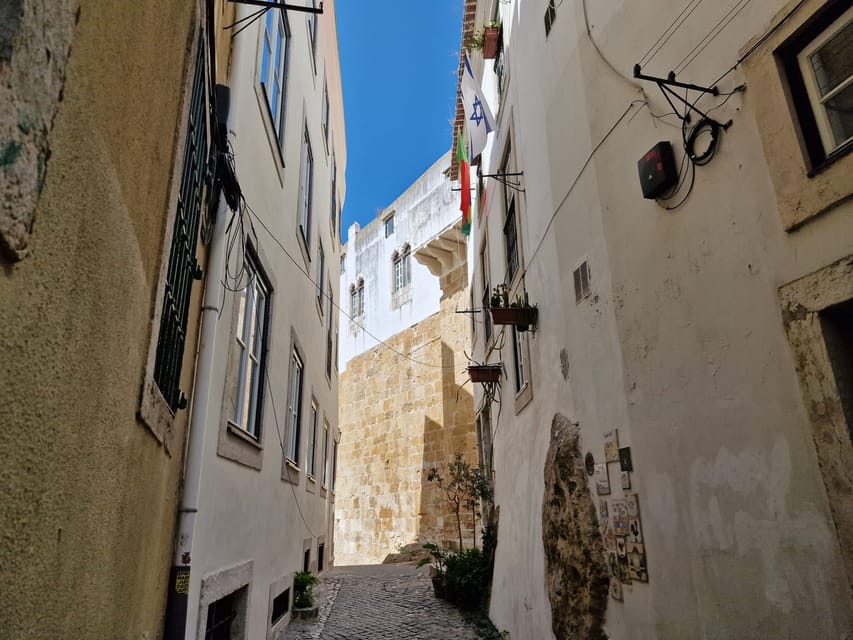
Think of the walk as a route that moves from “here is what you see” to “here is what used to be here,” and then ends where Jewish history is honored in the present.
1) Portas do Sol viewpoint: set the stage over Tagus and Alfama
You start where the city spreads out: the Largo Portas do Sol area, with the Statue of Saint Vicente as your meeting landmark. From there, you get the Tagus and Alfama in one frame, which is useful even if you know Lisbon already.
Why this opening works: it makes the later walking feel purposeful. When your guide references where things were in relation to the river and older streets, your brain already has a map.
Another Lisbon day, differently spent:
- Lisbon City Center Tour – The Unmissable Lisbon
★ 5.0 · 22,234 reviews - Lisbon: Sintra, Pena, Regaleira, Cabo da Roca & Cascais
★ 4.7 · 19,656 reviews - Lisbon Card: 24, 48, or 72-Hour Pass
★ 4.5 · 17,944 reviews - Lisbon: Jerónimos Monastery Entrance Ticket
★ 4.1 · 14,164 reviews
2) Through Old Town sites and monuments: learning by walking
After the initial view, the tour passes different historical sites and monuments. This is where the “why” beats the “what.” The goal is not to collect photos of a few preserved buildings. It is to understand how Jewish life in Lisbon formed part of a wider city story.
You will be going at a pace that gives you time to stop, look, and listen. It is a guided walk, not a fast hop-on hop-off route.
3) Archaeological excavations: reading the city’s buried layers
A highlight is the inclusion of archaeological excavations along the route. For a topic where many visible pieces have disappeared, archaeology becomes your evidence.
In practical terms, this means your guide can point out clues that you would normally walk right past. Even if you are not a “history person,” this section can click because it turns blank spots and ordinary streets into something you can interpret.
4) The Jewish Cultural Center and the former Jewish quarters
Next comes the heart of the “Jewish Lisbon” focus: the Jewish Cultural Center and the places connected to the Jewish quarters once found in Lisbon.
Two important realities shape what you will experience here:
1) Many physical Jewish monuments are gone, so the city looks different than older descriptions.
2) The tour is designed to rebuild the mental picture using guidance, location cues, and the connection to local cultural work.
That last part is key. The tour’s sustainability angle is real in how it’s positioned: you are not just learning history, you are supporting a local cultural institute devoted to Jewish heritage in Lisbon. Reviews also point out that the guide and the center do active work around preserving memory and keeping Jewish presence visible today.
5) Largo de São Domingos: the ending with Portuguese Judaism significance
You end at Largo de São Domingos, described as a place of great historical value to Portuguese Judaism. Ending here matters because it gives you closure. You start with a wide view and finish at a location tied to identity and memory.
By the time you reach the end point, you should feel you have not only seen Lisbon, but also learned how to “read” it for what survives and what does not.
Price and value: what $90 gets you for a 3-hour walk
At $90 per person for about 3 hours, this is not a bargain-bin stroll. But it also is not priced like a luxury museum evening. The value comes from three things working together.
First, you are paying for a live guide who is also an archaeologist, not just a scripted city guide. Second, the tour includes liability and personal accident insurance, which is a small line item that can matter when you are in a crowd and walking on uneven streets. Third, the tour is framed as sustainable tourism because it supports a local cultural institute.
If you care about history, context, and the human side of heritage, that combination is the sweet spot. If you only want glossy highlights that are easy to photograph, you might find the “missing pieces” aspect emotionally heavy.
What to bring, and how to get the most out of the walk
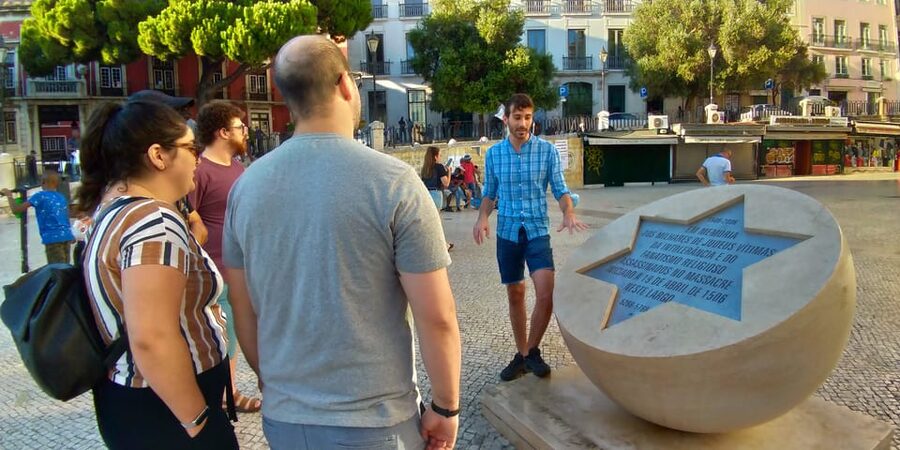
This tour stays practical. Bring water and comfortable shoes. The Old Town streets and corners can be slick or steep depending on the day, and reviews suggest you may spend a lot of time moving downhill. Either way, you want footwear that lets you look up and stop without constantly bracing yourself.
Also plan for no food or drinks on the ticket. You have a 3-hour window, so it is smart to eat before you start, then use your walking energy for listening, not for hunting snacks.
Who this tour fits best, and who should choose something else
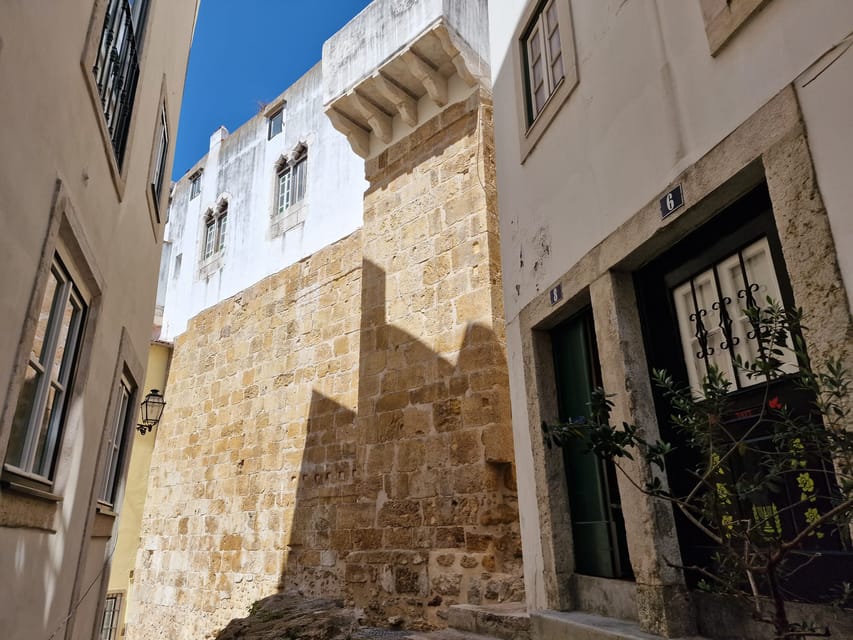
This experience is best for you if you want:
- A guided Old Town walk focused on a specific cultural thread
- Storytelling backed by archaeology and location-based explanation
- A tour with a mission to support local heritage work today
It is less ideal if:
- You need mobility support. The tour is not suitable for people with mobility impairments.
- You depend heavily on hearing every word in a noisy area. Heavy tourist traffic and English-only delivery can make it harder.
If you are traveling with limited time and want your history intake to hit a lot of major stops in one go, this fits. If you are traveling with someone who just wants the biggest tourist viewpoints and monuments, you might need an agreement on priorities.
A small reality check: when monuments are gone, the guide becomes the guidebook
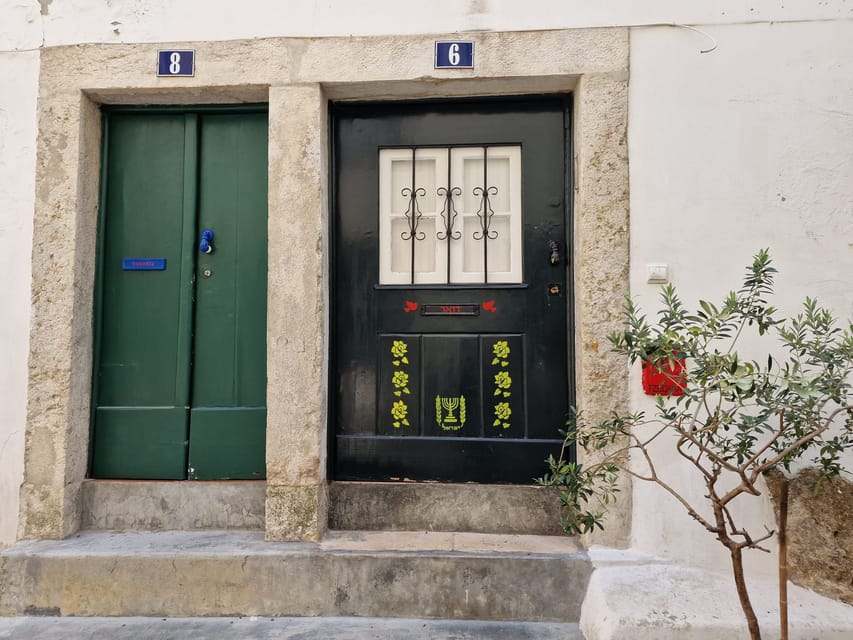
Lisbon’s Jewish past is not preserved in one intact route of major buildings you can visit one after another. The tour explicitly acknowledges that many monuments are destroyed. That could disappoint you if your expectation is “see these specific buildings.”
But it also explains why the tour exists. When the physical markers are missing, you have to work with evidence, place names, archaeology, and the careful pointing-out of former locations. This is where a strong guide makes the difference. With Luciano, the tone is described as warm, engaging, funny at times, and focused on turning the erased parts into something you can understand.
Should you book this Lisbon Jewish Walking Tour?
Book it if you want a focused, meaningful walking experience with an archaeologist guide, and you like history explained through streets, not just through photos. At $90 for 3 hours, it is a fair price for the combination of guided expertise and the local institute support that comes with it.
Skip it or pick a different style if you need fully preserved monuments, wheelchair-friendly mobility, or quiet conditions to follow a guide’s English explanations.
If your goal is to leave Lisbon feeling like you can actually “place” Jewish history in the city you walked, this one is a strong match.
FAQ
Where is the meeting point for the Lisbon Jewish Walking Tour?
You meet at the view point Largo Portas do Sol, at the Statue of Saint Vicente.
How long is the tour?
The duration is 3 hours.
Is the tour available in English?
Yes. The live tour guide speaks English only.
What should I bring?
Bring water and comfortable shoes.
What is included in the $90 price?
The price includes the walking tour, the tour guide, and liability and personal accident insurance.
Is the tour suitable for people with mobility impairments?
No. The tour is not suitable for people with mobility impairments.
Latest reviews from Lisbon
- Lisbon Street Art – Private Guided Tour in a Electric Tuk Tuk★ 5.0 · 72 reviews
- Private Lisbon Walking Tour★ 5.0 · 72 reviews
- Pastel de Nata Workshop in Lisbon★ 5.0 · 72 reviews
- Palace Penna entrance included, Sintra, Cascais, Cabo Roca, private★ 5.0 · 72 reviews
- Group to Pena Palace, Sintra (pass by Regaleira) and Cascais★ 5.0 · 73 reviews
- Lisbon: Private Food Tour – 10 Tastings with Locals★ 4.8 · 73 reviews
- Lisbon: Transfer to Porto with Obidos and Nazare★ 4.9 · 73 reviews
- Secret Walking Food Tours in Lisbon – Belém★ 5.0 · 73 reviews
Walking Tours, compared.
Best of Lisbon Small-Group Guided Walking Tour
Read our review →

Porto Walking Tour, Lello Bookshop, River Cruise and Cable Car
Read our review →

Best of Lisbon Walking Tour: Rossio, Chiado & Alfama
Read our review →
Experience Porto’s Charm: 3-Hour Guided Walking Tour
Read our review →
Enjoy a Guided Levada Walk in the Rabaçal Valley
Read our review →Browse the lists this tour appears in