

Reviewed · TUK-TUKS
Heart of Lisbon Private Tuk Tuk Tour
Private tuk tuk tours in Lisbon are fun. But the real win here is how this one strings together a lot of big scenery and old-stone landmarks in a short time, with live local commentary as you move. You get a tight loop that starts in Lisbon’s grid-like Baixa and pushes into the steep, story-heavy streets that people picture when they think Alfama.
I especially like two things. First, the electric tuk tuk private setup keeps you from burning time on transfers between neighborhoods. Second, the guide experience feels personal, and the name I kept seeing come up in feedback is Joao Tuk, praised for clear, wise explanations that make the places click fast.
One thing to consider: this is a short, efficient route. You’ll spend limited time at each stop, so if you want to linger for long photo sessions or slow museum-style visits, you may need extra time on your own after the tour.
Key highlights worth your attention

- Electric tuk tuk, private and easy to pace: You cover big distances without the long slog.
- Baixa Pombalina rebuild story: Wide grid streets and neoclassical squares with meaning behind them.
- Two famous viewpoints: Portas do Sol and Senhora do Monte, both with free time for photos.
- Cathedral and two major religious stops: Santa Maria Maior plus São Vicente de Fora.
- Lisbon’s dome power: The National Pantheon is a major sight, visible across the city.
- Feira da Ladra timing: It only happens on Tuesdays and Saturdays, so plan accordingly.
Why an electric tuk tuk is the smart “first-day” move in Lisbon
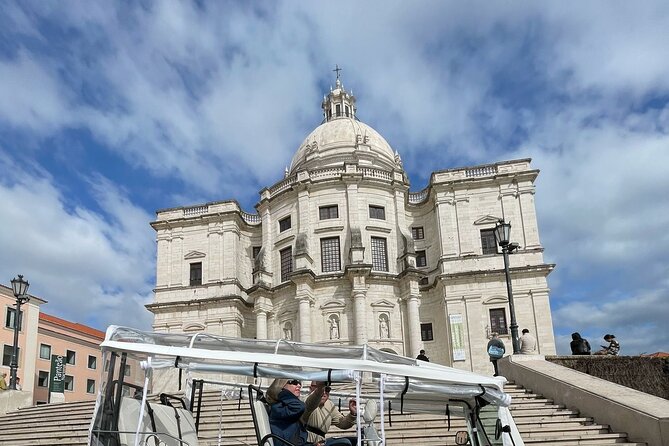
Lisbon can feel like it has two gears. There’s the level, planned city around Baixa, then there’s the hilly old core where the streets twist and climb. A tuk tuk is a practical way to see both in one go, without turning your day into a marathon.
This tour also makes sense for people who want structure. You’re not trying to guess which viewpoints are best, which streets matter, or what to connect to what. You’re given a guided flow, so you understand why you’re in each place, not just what it looks like.
And because it’s private, it tends to feel calmer than the usual public-group circus. I like that you’re not stuck waiting for strangers to buy snacks, stop for phone charging, or argue about which photo angle is correct.
The electric vehicle part matters too. Lisbon hills are no joke, and having an assist helps you keep your energy for the stops that actually require walking and standing.
More Tuk-Tuk Tours in Lisbon
- True 4Hour Private Tuk Tuk Tour: Discover Lisbon with a Local!
★ 5.0 · 8,008 reviews - Lisbon: Private Guided Tuk-Tuk Tour with Hotel Pickup
★ 4.9 · 4,552 reviews - Private Lisbon Sightseeing Tuk-Tuk Tour: Alfama, Belém & More
★ 5.0 · 4,277 reviews
Baixa Pombalina, Rossio, and Praça do Comércio: the city’s plan with real scars
The tour starts in Downtown Lisbon, in the Baixa Pombalina area. This is the heart of the city and, more importantly, it’s a lesson in Lisbon’s ability to rebuild. After the 1755 earthquake, the area was redesigned with a grid plan under the Marquis of Pombal, giving you wide, straight streets and neoclassical façades that feel unusually orderly for a city known for steep twisting alleys.
From there, you’ll see classic squares like Rossio, Praça da Figueira, and the grand Praça do Comércio. Rossio is known for its famous cafés and the wavy cobblestone pavement, so even if you’re just watching from the tuk tuk, you get a strong sense of how people actually use the space. It’s not a dead postcard square. It’s part of daily life.
Then comes the moment that helps you orient fast: Praça do Comércio. It faces the Tagus River, so you instantly get your mental map of where the city turns toward the water. This is the kind of view that makes later neighborhoods easier to understand.
The main drawback of this segment is time. Baixa is broad and visually packed, so you’ll only get a snapshot from the vehicle and quick looks where it counts. Think of this as setup for the deeper neighborhoods, not a full Baixa walking tour.
Lisbon Cathedral, Santa Maria Maior: Romanesque weight and earthquake survival
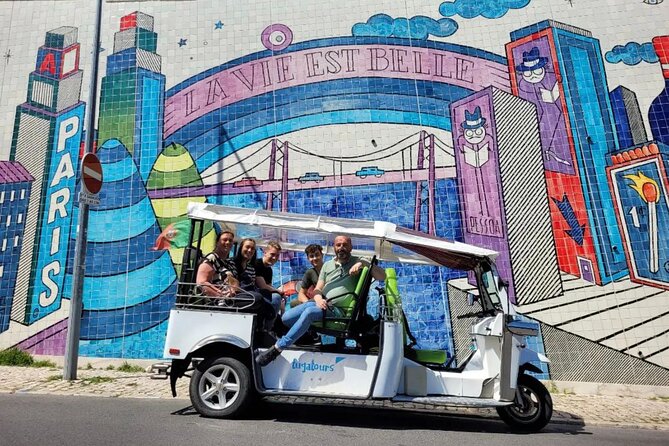
Next you’ll stop at Lisbon Cathedral, also called the Church of Santa Maria Maior. It’s the oldest cathedral in Lisbon, built in the 12th century after the reconquest. Even before you walk up close, the setting matters. This is an anchor point for understanding how the city’s story stretches back well beyond the viewpoints people chase for photos.
What I love about this stop is the blend of layers. The façade is Romanesque, and the two fortified towers make it feel more like a stronghold than a simple church. Over the centuries, the building was modified and restored, picking up Gothic, Baroque, and Neoclassical elements along the way.
The 1755 earthquake survival is one of the key story points your guide can connect to other Lisbon landmarks. If you’ve been hearing Lisbon has a resilience reputation, here’s where it becomes concrete. The cathedral also has archaeological remains you can encounter inside, including traces from Roman and Visigothic periods.
If you’re hoping for a long interior visit, keep expectations realistic. This tour is time-friendly, so you’ll likely do a careful look rather than an all-day cathedral deep study. Still, it’s a strong pause that adds meaning before you head upward and outward toward viewpoints.
Portas do Sol and Senhora do Monte: two viewpoints with different energy
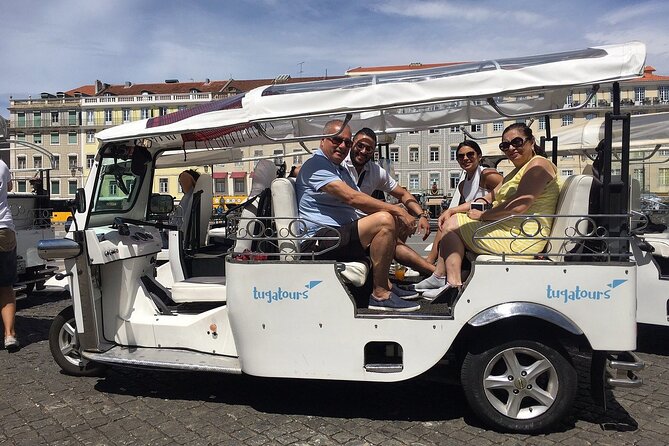
After the cathedral, you shift from major monuments to wide-open sky views. The first viewpoint is Largo Portas do Sol, where you get the classic panorama over Alfama and toward the Tagus River. You’ll also see landmarks like the National Pantheon and the Church of São Vicente de Fora.
I like Portas do Sol because it gives you both history and atmosphere. It’s linked to the ancient Moorish wall gates that once stood nearby, which helps explain why this specific spot became a gathering place. It’s also known for its light and for being a photo magnet, so you’ll find people there with cameras up and heads tilted.
Then the tour takes you higher to Miradouro da Senhora do Monte in Graça. This viewpoint is often less crowded, and it’s known for one of Lisbon’s broadest sightlines. You can see from São Jorge Castle across toward the Tagus River, with views passing through areas like Baixa and Avenida da Liberdade, and even the 25th of April Bridge when the weather cooperates.
This stop is especially good if you want a calmer moment. Even with other visitors present, the vibe tends to be more relaxed than the most famous lookouts.
Both viewpoints are listed as free, and each is a short stop, around 10 minutes. That’s perfect for quick photos and orientation, but it also means you should treat it like a highlight break, then plan to return later if you want more time.
Another Lisbon day, differently spent:
- Lisbon City Center Tour – The Unmissable Lisbon
★ 5.0 · 22,234 reviews - Lisbon: Sintra, Pena, Regaleira, Cabo da Roca & Cascais
★ 4.7 · 19,656 reviews - Lisbon Card: 24, 48, or 72-Hour Pass
★ 4.5 · 17,944 reviews - Lisbon: Jerónimos Monastery Entrance Ticket
★ 4.1 · 14,164 reviews
São Vicente de Fora and the National Pantheon: azulejos, tombs, and a white dome you will recognize

After the viewpoints, you move into stops that feel more “Lisbon culture and power” than “pretty view.”
First is the Church of São Vicente de Fora. The name de Fora refers to its location outside the old city walls, which gives you a simple way to picture where it sits in the city’s historical geography. The church and monastery were built in the 17th century during the reign of King Philip I, mixing Mannerist and Baroque design.
The façade hints at what’s inside. Your guide can point you toward the monastery’s decoration, including marble and Portuguese azulejos from the 17th and 18th centuries. There’s also a political history thread here, because the monastery houses tombs of the Braganza dynasty, including kings and queens.
The cloister is another key stop for visual detail, with azulejo panels showing La Fontaine’s fables. And if you’re a fan of combining architecture with views, this stop includes a terrace perspective over Alfama and the Tagus River.
Then comes the National Pantheon, also known as the Church of Santa Engrácia. This building is hard to miss in Lisbon because of its grand white dome, visible from many parts of the city. Construction began in the 17th century but only finished in the 20th. That long timeline is why there’s a saying tied to Santa Engrácia projects, meaning something that feels endless.
Inside, you can find tributes to major Portuguese figures, including Amália Rodrigues, Humberto Delgado, and Eusébio. If you’re the type who likes to see how a country remembers its icons, this is where it becomes real rather than abstract.
You’ll also get strong views from the dome viewpoint area. So even though you already visited two miradouros, the Pantheon adds a different viewpoint style, more framed by monument scale than rooftop chaos.
Feira da Ladra and Alfama: market day clues and fado streets

The tour finishes by feeding you directly into Alfama’s daily mood. You’ll stop at Feira da Ladra, Lisbon’s oldest and best-known flea market. It runs Tuesdays and Saturdays, in the Alfama area near the National Pantheon.
So here’s a practical tip: if your visit lands on a different day, you might not see the market setup. But even without the market active, the area still makes sense after the Panthéon stop, because it sits in the same neighborhood rhythm.
When it is operating, you can expect a wide mix of items like antiques, books, vintage clothing, handicrafts, and all sorts of interesting everyday finds. It’s also known for a story behind its name, tied to petty theft in the past, although today it’s mostly about trading, street energy, and people watching.
Then you end up in Alfama itself, Lisbon’s oldest neighborhood. Alfama is famous for narrow streets, steep hills, colorful houses, traditional azulejos, and flowered balconies. This is also where fado is felt deeply. Even though fado’s deeper roots are in Mouraria, Alfama today is one of the main places to hear it in taverns and houses that keep the tradition alive.
This part matters because Alfama can look confusing when you’re just wandering. After the guided stops, you have landmarks and story clues to latch onto, so your self-guided walk after the tour will feel less random.
Expect to do at least some walking or standing. The tuk tuk gets you close, but Alfama’s layout is built for feet, not vehicles. Wear comfortable shoes and plan for hills, even if your tour pace stays friendly.
Price and value: is $58.65 worth it for this route?
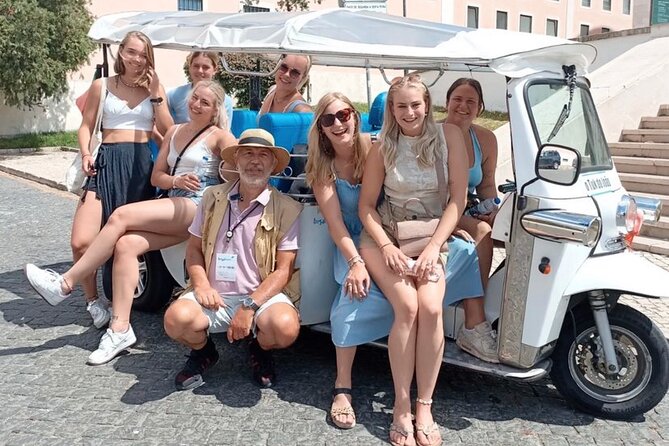
At $58.65 per person for about 1 hour 30 minutes to 2 hours, you’re paying for convenience, private pacing, and a guided narrative. This isn’t a long, slow day tour. It’s a concentrated sampler, and the value depends on how you like to travel.
Here’s what you get that helps justify the price:
- Private tour in an electric vehicle, so you cover Baixa, cathedral area, viewpoints, and Alfama in one storyline.
- Live commentary from a local guide, and the quality seems to matter, since the tour holds a 5 out of 5 rating and a 100 percent recommendation rate across 115 reviews.
- Insurance coverage for civil liability and personal injury, which is reassuring when you’re on the move.
- Group discounts, which can improve cost per person if you’re traveling with others.
- Mobile ticket and English commentary.
Also, you’re not paying to enter every viewpoint. The itinerary lists admissions for the viewpoints as free, which trims costs a bit.
What might feel less like a bargain is if you’re the kind of traveler who prefers long stops and deep museum time. This tour keeps momentum. It’s designed to get you oriented and moving through key sights without turning your day into a half-finished checklist.
If you have extra energy afterward, the end point is helpful. The tour finishes at Restauradores Square, which is a central place to keep exploring on foot or by public transport.
Practical notes you should plan for before you go
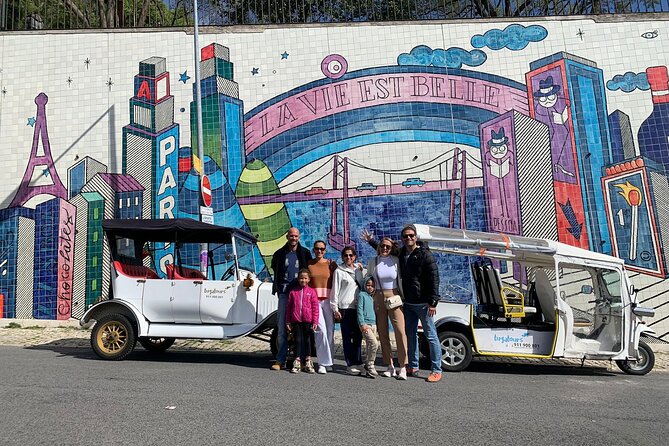
A few details can make or break your comfort level on a short tuk tuk day.
First, children under 7 are not allowed. That’s a clear rule, so plan an alternative if you’re traveling with younger kids.
Second, you’ll want to be ready for standing and quick looks. The big sightseeing moments are timed, including the two viewpoints at about 10 minutes each. Bring a sense of what “quick and meaningful” feels like.
Third, language and guide style matter here. The tour is offered in English, and it relies on live narration. That’s ideal if you like explanations as you go, and it matches why Joao Tuk’s explanations got special praise in the feedback.
Lastly, Lisbon weather can change fast. If you want the best bridge and river views, you’re at the mercy of clouds and light, especially from higher viewpoints.
Who should book this Heart of Lisbon tuk tuk tour?
This tour fits best if you want a guided, efficient first look at central Lisbon plus the classic Alfama viewpoints. It’s also a good match if you like architecture, squares, churches, and city orientation, but you do not want to spend hours crossing the city on your own.
You’ll probably enjoy it if:
- You want a private vehicle and a local guide, not a crowded bus rhythm.
- You plan to explore more after, using the tour as your navigation and context tool.
- You like “story behind the stone,” like why Baixa was rebuilt after 1755 and what Santa Engrácia’s long build means.
You might skip it if you want slow pacing, deep museum time, or long sits in one place. This is designed to connect dots, not to let you camp out in one neighborhood for hours.
Should you book? My take in plain terms
Book it if you want the easiest path through Lisbon’s headline sights, with an expert guide voice guiding you from Baixa to viewpoints to Alfama. The combination of a private electric tuk tuk, strong guide feedback including Joao Tuk, and a route that helps you understand Lisbon fast makes the price feel more reasonable than it might at first glance.
Skip it if you already know you will spend most of your day wandering independently and you don’t need help connecting history and locations. In that case, you could save money by using public transport and walking only the parts you personally care about.
FAQ
How long is the Heart of Lisbon Private Tuk Tuk Tour?
The tour lasts about 1 hour 30 minutes to 2 hours.
What does it cost and is it private?
It costs $58.65 per person, and it is a private tour, meaning only your group participates.
Where does the tour start and end?
It starts at Rua de Arroios 120A, 1150-260 Lisboa, Portugal and ends at Restauradores Square in the heart of Lisbon.
What language is the commentary in?
The tour offers live commentary in English.
Are children allowed?
Children under 7 years old are not allowed.
When does Feira da Ladra take place?
Feira da Ladra takes place on Tuesdays and Saturdays in the Alfama area near the National Pantheon.
Is there free cancellation?
Yes, you can cancel up to 24 hours before the experience for a full refund.
If you tell me what day you’re going and what you care about most, I can help you judge whether the timing will line up with Feira da Ladra and how to plan your extra time after the tour.
Latest reviews from Lisbon
- Private Sailing Cruise in Lisbon with Drinks★ 4.5 · 70 reviews
- Lisbon Food and Wine Tasting Tour of HIDDEN GEMS (Small Groups)★ 4.5 · 70 reviews
- Lisbon: Jewish Quarter Guided Walking Tour★ 4.4 · 70 reviews
- Lisbon: Ajuda National Palace Entry Ticket★ 4.5 · 71 reviews
- Lisbon Portuguese Food Tour★ 4.5 · 71 reviews
- Queer Lisbon – A Treasure Hunt in LGBT History★ 5.0 · 71 reviews
- Lisbon Street Art – Private Guided Tour in a Electric Tuk Tuk★ 5.0 · 72 reviews
- Private Lisbon Walking Tour★ 5.0 · 72 reviews
Tuk-Tuks, compared.

True 4Hour Private Tuk Tuk Tour: Discover Lisbon with a Local!
Read our review →
Guided Tour by Tuk-Tuk & Optional Douro River Cruise
Read our review →
Private Guided Tuk-Tuk Tour with Hotel Pickup
Read our review →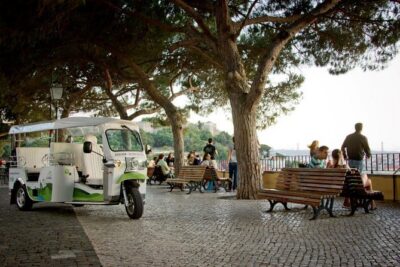
Private Lisbon Sightseeing Tuk-Tuk Tour: Alfama, Belém & More
Read our review →
Lisbon Highlights: Private Tuk Tuk Tour Adventure Sightseeing
Read our review →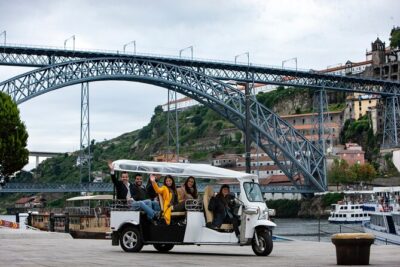
Discover Porto’s Highlights on a 2-Hour Private Electric Tuk Tuk
Read our review →
Welcome Lisbon Tour with Local Guide in Private Eco Tuk Tuk
Read our review →
Browse the lists this tour appears in