
Reviewed · WALKING TOURS
Best of Lisbon Small-Group Guided Walking Tour
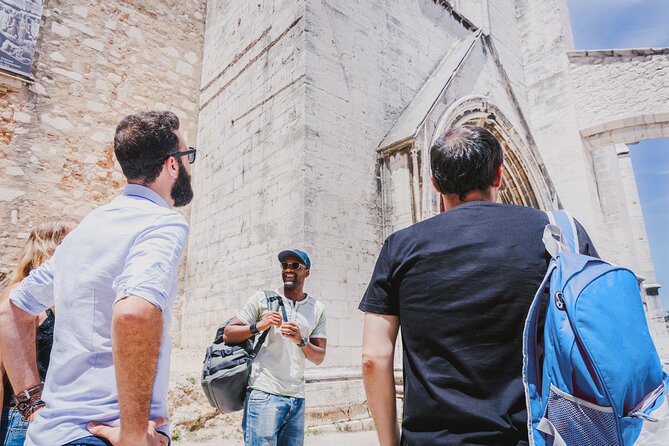
What makes this Lisbon small-group walk feel so worth your time is the way it strings together the city’s biggest “I get it now” moments in just half a day. I like that it mixes landmark architecture and street-level stories, and I also like that you get included bites, not just nonstop walking. You’ll cover key neighborhoods without needing a map in your hand the whole time.
One thing to consider: this is an active walk with moderate hilliness, so you’ll want comfortable shoes and a steady pace. The route also focuses on major sights, so if you already know central Lisbon well, the highlights can feel familiar, even if the guide storytelling keeps it engaging. In the best cases, guides like Felipe and Maria can make the walking feel smooth and fun, with smart timing and plenty of Q&A.
Key highlights that make this tour click
- Small group size (max 14) for better interaction and a less chaotic pace
- Classic Portuguese stops plus city-scale context, from independence to the Carnation Revolution
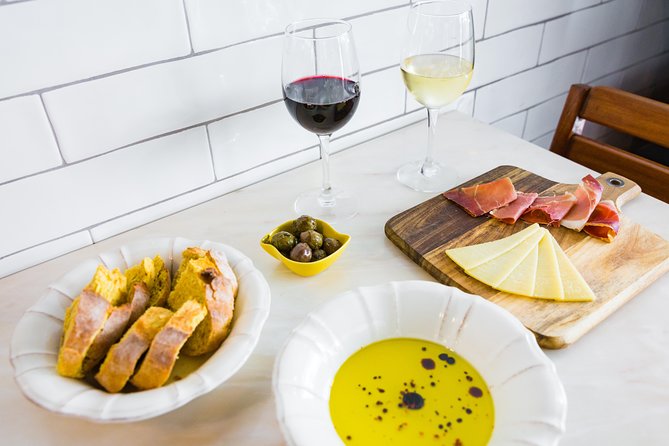
- Pastel de nata plus wine tasting and a tapa/snacks, so you actually get a taste of Lisbon
- Rossio station and the obelisk in Restauradores, two big “wait, that’s impressive” moments
- Alfama and Chiado in one go, so you see both the old and the refined sides of Lisbon
- End at Praça do Comércio with a natural landing zone for more exploring by the Tagus
A half-day Lisbon orientation that keeps you moving, but not rushed
This is the kind of tour I recommend when you want to get your bearings fast in Lisbon. The route is designed to take you through central zones that feel different from block to block: formal squares, busy shopping streets, steep old quarters, and finally open river space at the waterfront.
The duration is about 3 to 4 hours, and the walking is broken up with short stops at major sights. You’re not stuck at one museum door for hours. Instead, you learn how the city’s different layers connect, especially how Lisbon rebuilds itself after shocks like the 1755 earthquake and then reshapes identity later through political change.
The small-group feel matters. With up to 14 people, it’s easier to hear your guide, ask questions, and keep the group together on narrow streets. That’s also why people often praise specific guides like Felipe, Maria, and Jose for staying responsive and pacing things well.
More Walking Tours in Lisbon
- Lisbon: History, Stories and Lifestyle Walking Tour
★ 4.8 · 10,902 reviews - Lisbon: Food and Wine Small Group Walking Tour
★ 4.9 · 4,082 reviews - Best of Lisbon Walking Tour: Rossio, Chiado & Alfama
★ 4.9 · 2,700 reviews
Starting at Praça Dom Pedro IV, where the pavement tells a story
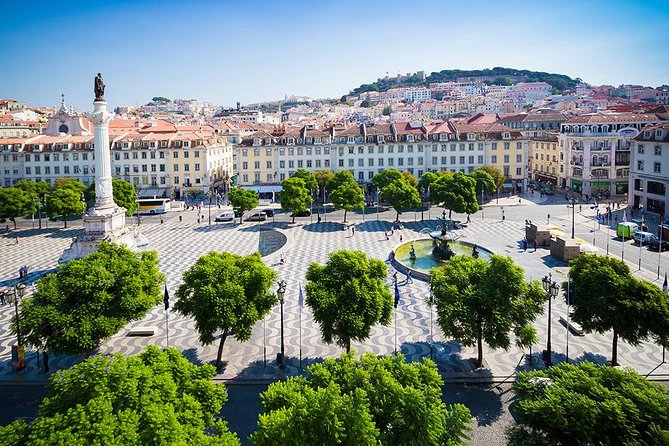
Your tour begins at Praça Dom Pedro IV (Rossio Square) in Lisbon’s Baixa area. This square is often your first clue that Lisbon loves design details. Early on, your guide points out how the space uses typical Portuguese stonework arranged to echo the look of ocean waves from nearby water.
This is also where the tour sets a rhythm. Rossio Square is a practical starting point because it’s central and easy to find. You get a quick introduction, then you’re ready to walk into the city’s core on foot, with your guide acting like a live map.
A drawback to keep in mind: Rossio is lively, and that can mean a bit of bustle at the start. If you’re sensitive to crowds, arrive a few minutes early so you’re not trying to join the group while everyone is already moving.
São Domingos Square and a church stop that anchors the walk
Next you’ll head toward Igreja de São Domingos on São Domingos Square. This short stop is a reminder that Lisbon’s history is not only in grand buildings and monuments. It’s also in the everyday anchors that locals pass by and rely on over generations.
From a practical perspective, it’s also a useful pause. The tour keeps moving, but these small stops help you reset, catch your breath, and take photos without turning every block into an endurance test.
If you care about architecture, pay attention to how the church fits into the surrounding streetscape. The guide tends to connect these details to the broader city story you’re building across the afternoon.
Restauradores Square and the Independence obelisk you can’t miss
Then comes Praca dos Restauradores, a square dedicated to Portugal’s restoration of independence in 1640, after years under Spanish domination. In the center rises an obelisk inaugurated in 1886, and it bears names and battle dates connected to the Portuguese Restoration War.
This stop is more than a photo op. It helps you understand why Lisbon’s squares feel political even when they look like civic space. Portugal’s identity shows up in public spaces, not only in textbooks.
A consideration: this part of the route is short and focused, so if you want more time inside monumental buildings, this tour won’t replace museum time. It’s a street tour, not a slow crawl through one site.
Another Lisbon day, differently spent:
- Lisbon City Center Tour – The Unmissable Lisbon
★ 5.0 · 22,234 reviews - Lisbon: Sintra, Pena, Regaleira, Cabo da Roca & Cascais
★ 4.7 · 19,656 reviews - Lisbon Card: 24, 48, or 72-Hour Pass
★ 4.5 · 17,944 reviews - Lisbon: Jerónimos Monastery Entrance Ticket
★ 4.1 · 14,164 reviews
Rossio Station’s engineering look, and why it matters for Lisbon
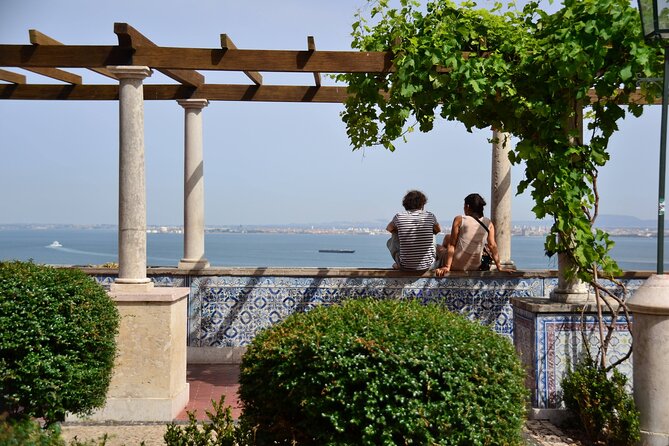
You’ll also spend time at Estação do Rossio, one of the city’s most impressive historic railway buildings. Even though you’re outside, the exterior draws on Manueline-inspired architecture, giving the station a decorative, Portuguese flavor rather than a plain transport feel.
The guide ties this to the story of the train system and how it connects to bigger places like Sintra. If you’ve ever seen Lisbon’s hills and thought, how do people move around here, this is where the answer starts to click.
This stop is worth it even if you’re not a train person. The architecture makes the city feel engineered, not random. And stations in old cities often act like landmarks for how power, travel, and daily life overlap.
Largo do Carmo and the Carnation Revolution in 1974

One of the most emotionally grounded parts of the walk is Largo do Carmo. It’s linked to the Carnation Revolution in 1974, when Portugal’s dictatorship collapsed after a 48-year rule. The square feels small compared to grander plazas, but that’s part of the power. Big political moments often happen in places that do not look like movie sets.
If you like understanding what you’re seeing, this stop adds weight. Lisbon stops feeling like postcards and starts feeling like a place where real decisions changed the country.
Photo note: the square itself is not the only reason to pay attention. Look at the way side streets open and how the city’s layers feel close together. Your guide’s timing here can help you get the feeling of the neighborhood without rushing.
Santa Justa, Chiado, and Rua Augusta as you shift from old to polished

As the tour moves toward the center of town again, you’ll pass the Elevador de Santa Justa, a landmark where Lisbon’s “view culture” becomes obvious. Even if you don’t use the elevator, it’s an iconic structure to see in person. The guide frames it as one of the city’s most interesting monuments in the historic core, and it gives you a chance to look out and orient.
Then you head into Chiado, Lisbon’s elegant neighborhood tied to 19th-century intellectual and wealthy elites. You’ll see storefronts and older facades that help you time-travel with your eyes. Chiado is also a good place to notice how Lisbon mixes style with daily life. You’re not only looking at buildings, you’re watching how people use streets.
Finally comes Rua Augusta, often described as Lisbon’s main central avenue. It’s a good segment for a quick reset, because it feels more straightforward to walk than the steep lanes that come later. The street is also where your energy is checked honestly. If your shoes are not comfortable, you’ll feel it here.
What I like about this sequence is the contrast. Santa Justa and Chiado read as “Lisbon refined,” while what comes next, Alfama, pulls you back into older and narrower street patterns.
Baixa after the 1755 earthquake, and why the design still shapes your walk
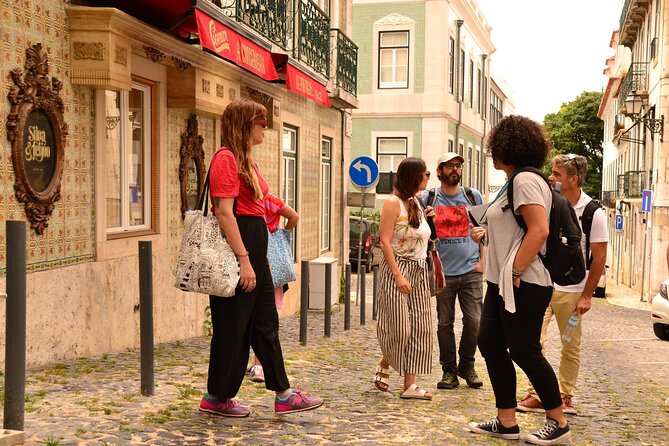
Next is Baixa de Lisboa, the downtown area rebuilt after the 18th-century earthquake. Your guide explains that new rules of urbanism and anti-seismic thinking shaped the redesign, using innovative solutions for its time. This isn’t just a story about disaster and rebuilding. It helps you understand why some areas feel so planned, straightened, and intentionally laid out compared to older quarters.
In other words, this stop gives you the “why the city is shaped this way” answer. When you understand that, everything you see afterward makes more sense.
In the walk, this is also where your guide may use practical shortcuts. In strong guide examples, Felipe is praised for using public elevators and escalators where available, keeping the route easier than it sounds on paper. That matters because Baixa is flatter than many surrounding areas, but you can still lose time if you fight hills the hard way.
Baixa is also a good place for quick photos, but keep your head up. Lisbon’s streets change quickly, and you don’t want to miss the turn that leads you toward the panoramic viewpoint.
Miradouro Chão do Loureiro and the payoff of walking uphill
The tour includes a stop at Miradouro Chão do Loureiro, a panoramic view point. This is where the effort earns its reward. You get a wider sense of Lisbon’s layers, and it helps you understand how the neighborhoods you just walked through connect to the ones ahead.
If you’re the type who likes photos, aim to pause and watch the skyline for a minute before you snap. Lisbon hills can trick the eye, and a quick look without your phone in hand helps you read the city properly for the rest of your trip.
This is also a good moment to mentally pace yourself. Alfama comes next, and that neighborhood is where your walking comfort matters most.
Alfama’s narrow streets, Moorish heritage, and the fado atmosphere
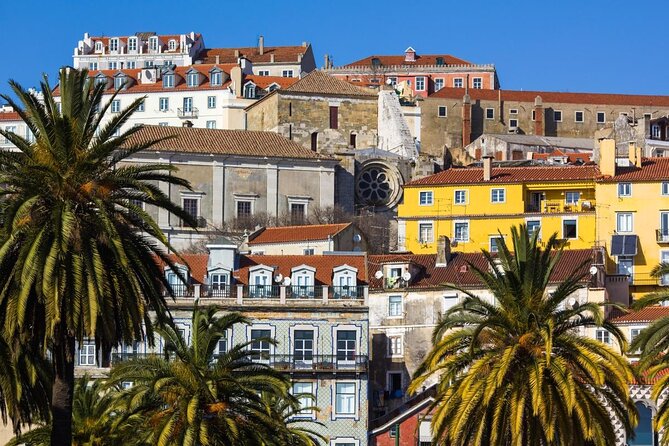
Now the route shifts into Alfama, Lisbon’s oldest neighborhoods, known for Moorish heritage and fado music. As you walk, the guide points out how fado restaurants often hide in between alleys and down winding streets, which explains why it can feel like you stumble into music instead of finding it on a brochure page.
This stop is excellent for learning the mood of Lisbon. Fado is described as melancholic, and the guide connects that feeling to the street patterns and the way people live and move through older parts of town.
Practical note: Alfama’s lanes are narrow and uneven. The tour doesn’t turn into a crawl, but you’ll walk at least some portions where your footing matters. Comfortable shoes are not optional here.
Also, I appreciate how the guides in the strong reviews describe the experience as educational without turning it into a lecture. People mention guides like Maria, Jose, and Guillermo for keeping the pace friendly, answering questions, and maintaining interest through the afternoon.
Ending at Praça do Comércio, where Lisbon opens toward the river
The tour finishes at Praça do Comércio (Praça do Comércio / Terreiro do Paço) near the Tagus river. This square is still commonly known as Terreiro do Paço because it was the site of the Paços da Ribeira (Royal Ribeira Palace) until it was destroyed by the 1755 Lisbon earthquake.
After the earthquake, the area was completely remodeled as part of the rebuilding of the Pombaline Downtown. The guide frames this as the city’s reception hall, once used to welcome travelers arriving from the Atlantic.
This ending works well because the square gives you space. After hours of streets and corners, you arrive at a broad public area where you can decide what comes next. You’re not trapped at a single attraction. You can head toward water views, nearby cafés, or additional neighborhoods on your own.
Price and what you actually get for $23.94
At $23.94 per person, the value is strongest if you want three things at once: a structured orientation, local storytelling, and small food sampling. This tour includes a local guide, a pastel de nata, plus wine tasting and a tapa/snacks.
Think of it as buying back time. If you tried to plan this route alone, you’d likely spend effort figuring out which squares matter, where independence and revolution stories fit in, and how to connect neighborhoods without backtracking. Your guide solves that puzzle while also keeping your walking practical.
Two quick reality checks:
- This is not a full lunch. Plan for a meal afterward unless you’ve got a light-food day.
- It’s not a museum-focused tour. You’ll see major exteriors and street context, but you shouldn’t expect long entries into monuments.
Pace, group size, and comfort tips that make the tour easier
The route is listed as 3 to 4 hours, and there are short stops throughout, often around 5 to 15 minutes per highlight. That means you keep moving, but you do get breaks where the guide can explain what you’re looking at and let you take photos.
The tour calls for moderate physical fitness, which I interpret as: you can do it if you’re steady, but you should not plan to treat it like a sit-down sightseeing class. One review specifically mentions hilliness as an active part of the experience, though guides often help manage it well with timing and optional help from facilities like nearby escalators.
My simple advice:
- Wear shoes with real grip, not just nice style.
- Bring water if you’re going in warm weather.
- If you want a cathedral or another specific major interior, add it separately, because the focus here is on a curated walking arc.
One more small heads-up based on feedback: the highlights are broad and central. If you already know the city well, you might want a deeper, more niche tour instead. But as an introduction and orientation, this route is built to satisfy.
Should you book this Lisbon walking tour?
Book it if you want an easy way to connect Lisbon’s neighborhoods into one clear mental map. I’d especially recommend it for first-time visitors who want Baixa, Chiado, Alfama, and Praça do Comércio in one afternoon, plus included food and drink.
Skip it if you already feel you know the city center well and you’re craving a tour that goes far beyond the standard sights. Also, if you’re only interested in museum interiors or specific grand churches, this format may leave you wanting more on your own after the walk.
If you do book, you’ll likely be happiest if you go in with the mindset of a guided orientation. This tour is at its best when you lean into the street stories, slow down for viewpoints, and let the route do the work of helping you understand Lisbon quickly.
Latest reviews from Lisbon
- Private Tour: Sintra, Cabo da Roca and Cascais Day Trip from Lisbon★ 5.0 · 225 reviews
- Lisbon: Food Tasting Tour by Tuk Tuk with 2 Stops★ 4.8 · 226 reviews
- Berlenga Island Small-Group Day Trip from Lisbon★ 4.5 · 227 reviews
- Sintra Deluxe from Lisbon with Pena Palace ticket★ 4.0 · 228 reviews
- Fátima, Nazaré, Óbidos and S. Martinho do Porto Small-Group Tour from Lisbon★ 5.0 · 229 reviews
- Évora and Monsaraz with Regional Wine Tasting from Lisbon★ 4.5 · 229 reviews
- Expert Plus Lisbon Tour with Local Guide in Private Eco Tuk Tuk★ 5.0 · 230 reviews
- Magical Day Trip: Pena Palace, Sintra, CaboDa Roca & Cascais★ 5.0 · 232 reviews
Walking Tours, compared.



Porto Walking Tour, Lello Bookshop, River Cruise and Cable Car
Read our review →

Best of Lisbon Walking Tour: Rossio, Chiado & Alfama
Read our review →
Experience Porto’s Charm: 3-Hour Guided Walking Tour
Read our review →
Enjoy a Guided Levada Walk in the Rabaçal Valley
Read our review →
Browse the lists this tour appears in