
Reviewed · TUK-TUKS
Porto: Fun Private Tuk Tuk Tour
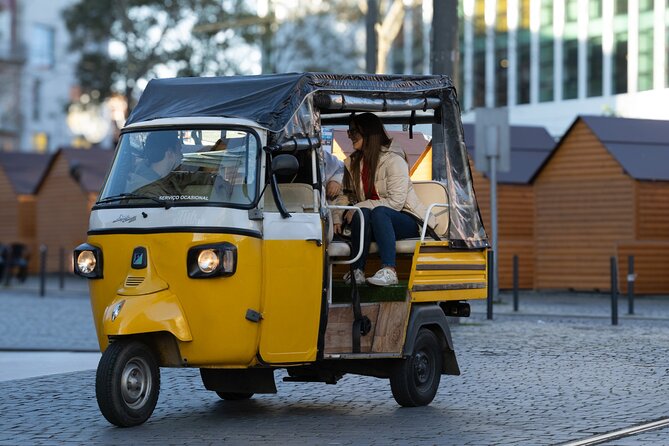
Porto is hilly, old, and packed with great photo corners, so a private tuk tuk tour is an easy, fun way to see more without turning your day into a leg workout. I love the mix of short rides with brief pauses at standout places, and I love how the route keeps bouncing between landmark buildings and the river, so everything feels connected. The one drawback to plan around is simple: this experience is weather-dependent, and it works best when you can get outside comfortably.
You start at the São João National Theatre area by Praça da Batalha, then you roll through central Porto and the Douro riverfront, with lots of “get your bearings fast” viewpoints along the way. I especially like that it is truly private, so you can ask the guide to spend a little extra time at the stuff you care about, and guides such as José or Leandro have a track record of keeping the stops useful and fun. If you’re picky about comfort, do note one past booking flagged rough seats on a backup tuk tuk, though the provider said they fixed that afterward.
Key things I’d plan for on this Porto tuk tuk tour
- Truly private: only your group rides, so pacing is yours.
- English local guide: built for first-time orientation and quick context between stops.
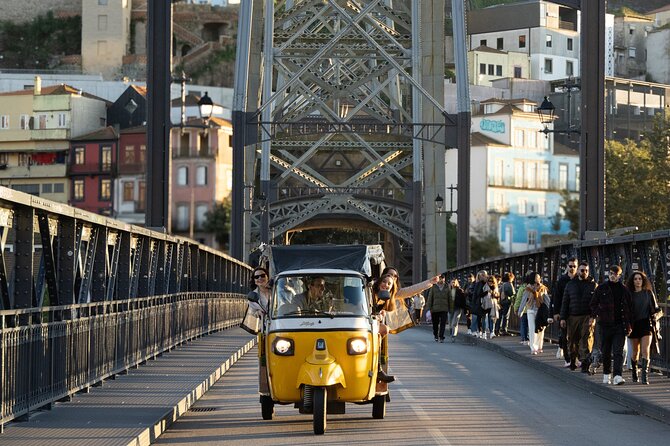
- Douro bridge route: you see major crossings without walking long stretches.
- Short, smart walking breaks: enough time to look closely, not so much that you’re exhausted.
- Most stops are free to enter: a mix of views plus architecture you can appreciate on arrival.
- Weather matters: the tour is designed for good conditions, and it may be changed or refunded if not.
Porto feels easier when you stop fighting the hills
Porto’s geography is the whole deal. The city climbs, turns, and drops right down toward the Douro, which is why so many big sights come with stairs, steep sidewalks, and that not-so-fun “why is the ground still rising?” feeling.
A tuk tuk solves that in a very practical way. You get the overview and the landmark-to-landmark flow with far less effort. And because the vehicle is open air, you still get that sightseeing buzz, the breeze, and the quick sense of what neighborhood you’re passing through.
This is also why the 1 hour 30 minutes feel like the right length. It’s long enough to hit central highlights and a few major viewpoint spots, but short enough that you won’t burn the rest of your Porto day by the time you’re done.
One extra point that makes this tour feel like good value: you’re not just riding past monuments. The stops are chosen for shape, scale, and location, so you understand why Porto’s bridges and churches matter, not just what they look like.
More Tuk-Tuk Tours in Porto
- Porto: Guided Tour by Tuk-Tuk & Optional Douro River Cruise
★ 4.5 · 5,980 reviews - Discover Porto’s Highlights on a 2-Hour Private Electric Tuk Tuk
★ 4.5 · 1,860 reviews - Porto: Guided Tuk Tuk Tour
★ 4.6 · 1,390 reviews
Kicking off at São João National Theatre, the elegant Porto baseline
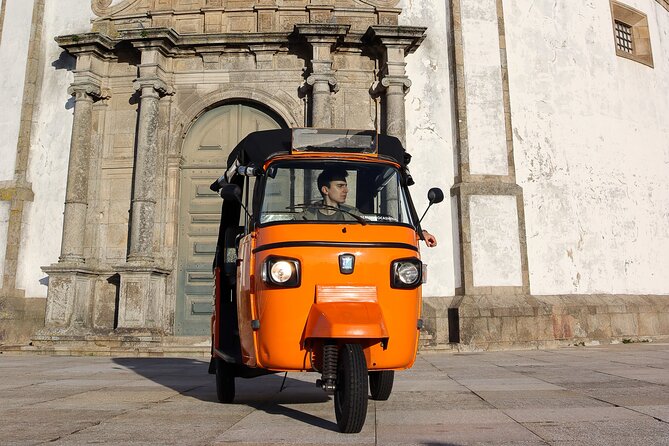
Your tour starts at the São João National Theatre at Praça da Batalha, which is a fitting first move. This building is a cultural landmark that opened in 1798, was rebuilt in 1920 by architect José Marques da Silva, and is known for its neoclassical architecture and luxurious interior.
Even if you do not go inside, you’ll feel the contrast quickly. Porto can be medieval, rugged, and river-worn, but this theatre represents the polished, formal side of the city too. It helps set the tone for what comes next: a blend of old defenses, big engineering, and grand interiors.
If you want a quick win for your first day in Porto, arrive here with a calm mindset. This is your orientation point. Once you’re seated and rolling, the guide can pace the stories so you can place the landmarks on the map in your head, without struggling to connect them on foot.
Medieval wall to circular monastery: Fernandina Wall and Serra do Pilar
One of the most satisfying ways to understand Porto is to see how it used to protect itself, then how it later turned those same hills into view decks.
You start with the Fernandine Wall, a 14th-century defensive structure built during King Fernando I’s reign. It replaced earlier walls as the city expanded. Some sections were partially demolished in the 19th century, but there are still meaningful stretches in areas like Ribeira and Morro da Sé. Seeing it from the right angle gives you a sense of how the city’s layout was shaped for defense and movement.
Then you head to Mosteiro da Serra do Pilar in Vila Nova de Gaia. This 16th-century monastery is famous for its circular church and Renaissance architecture. It was built by monks of the Order of Saint Augustine, and it also delivers panoramic views over Porto and the Douro River.
What I like for practical travelers is that this stop isn’t just about a building. It’s a “context shot” for the entire river system. You get the skyline in front of you, and suddenly the next bridges make more sense.
The Douro bridge run: São João, Maria Pia, and Dom Luís I
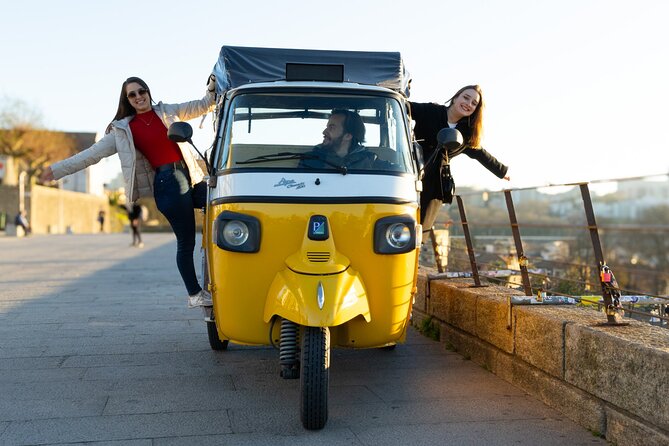
Porto’s river crossings are not just transportation. They are city symbols, and seeing them close up helps you understand why locals talk about the Douro like a character in the story.
First comes the São João Bridge in Porto, a railway bridge inaugurated in 1991. It replaced the old Maria Pia Bridge, and it’s known for its modern reinforced concrete design, connecting both banks with a mix of efficiency and elegance.
Then you reach Ponte D. Maria Pia, inaugurated in 1877 as the first railway bridge over the Douro. Designed by Gustave Eiffel, it’s remembered for its iron structure and elegant arch. Even though it was decommissioned in 1991, it remains a landmark of Portugal’s transportation history.
After that, you cross into one of Porto’s most iconic sights: the Dom Luís I Bridge. Inaugurated in 1886 and designed by Théophile Seyrig, it has two metal decks linking Porto to Vila Nova de Gaia. You’ll see how it carries vehicles and pedestrians, and it also connects with the metro today.
Tip for your photo planning: the bridges look different from multiple angles, and the tuk tuk route is designed to keep you near good viewpoints without turning this into a long walking day. If you care about photography, ask the guide to stop at the angle where the river and the deck both show.
Another Porto day, differently spent:
- The Unvanquished Tour in Porto City Center
★ 5.0 · 26,497 reviews - From Porto: Douro Valley w/ Boat Tour, Wine Tasting & Lunch
★ 4.7 · 19,061 reviews - Complete Douro Valley Wine Tour with Lunch, Wine Tastings and River Cruise
★ 5.0 · 12,920 reviews - Porto: Six Bridges Cruise
★ 4.2 · 11,680 reviews
Ribeira and the grand buildings: Infante Garden to Palácio da Bolsa
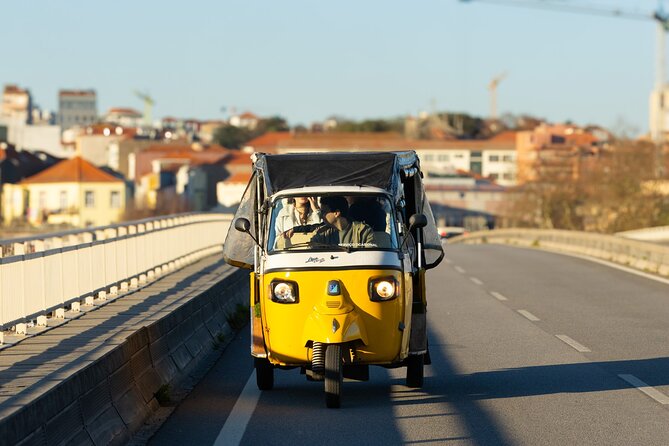
This is where Porto starts to feel like a set of picture-perfect rooms you can walk into.
Jardim do Infante Dom Henrique sits in the Ribeira area and was created in the 19th century. At its center is a statue of Prince Henry the Navigator, a key figure tied to the Age of Discoveries and maritime exploration in the 15th century. The garden’s setting, near other major landmarks, makes it a pleasant reset point between big river views and indoor beauty.
Next comes the Ferreira Borges Market. It was inaugurated in 1885 and is known for its imposing iron structure in a neoclassical style. Today it no longer functions as a market, but it operates more as a cultural and leisure space for events and exhibitions.
A short ride farther you reach Palácio da Bolsa, a UNESCO World Heritage Site and a 19th-century neoclassical building. It was once the Porto Commercial Association headquarters, and it’s especially famous for the Arab Room. Even if you do not spend hours inside, knowing what it was built for helps you appreciate why it feels so elaborate.
Then you move toward one of Porto’s signature church moments: the Church of São Francisco. The exterior is only part of the story. Inside, you get a Gothic framework with a Baroque-style interior that features gilded woodwork, plus the Jesse Tree sculpture.
This whole stretch works well because it balances texture: gardens for breathing space, architecture for scale, and church details for that “wow, they really went all in” feeling.
Miragaia, bridges again, and short breaks for street-level Porto
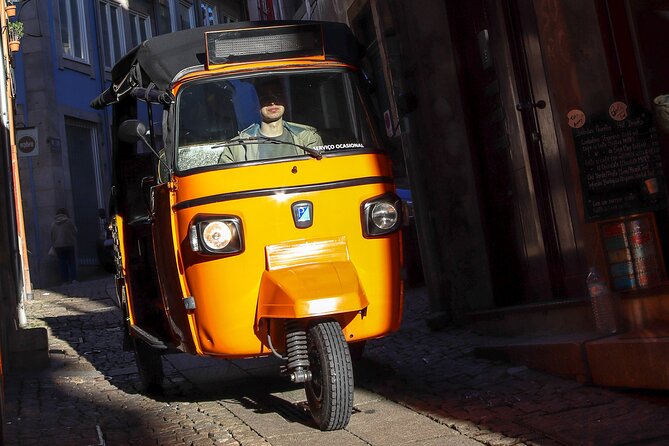
Miragaia is a neighborhood you’ll recognize fast once you see it. It sits by the Douro River and is known for narrow streets, colorful houses, and an old-city atmosphere. The area has medieval origins and was once tied to merchants and artisans, so it feels less like a museum zone and more like the city lived in.
From there, you continue toward another engineering landmark: Ponte da Arrabida. This road bridge, inaugurated in 1963 and designed by Edgar Cardoso, is known for a reinforced concrete arch that was among the largest in the world at the time, plus a clean, elegant structure connecting Porto to Vila Nova de Gaia.
These “in-between” stops matter because they give your brain a break from big monuments. You get to see the city at human scale, then you reconnect with the river structures that made Porto’s growth possible.
Churches by foot, Clérigos Tower viewpoints, and the Crystal Palace Gardens
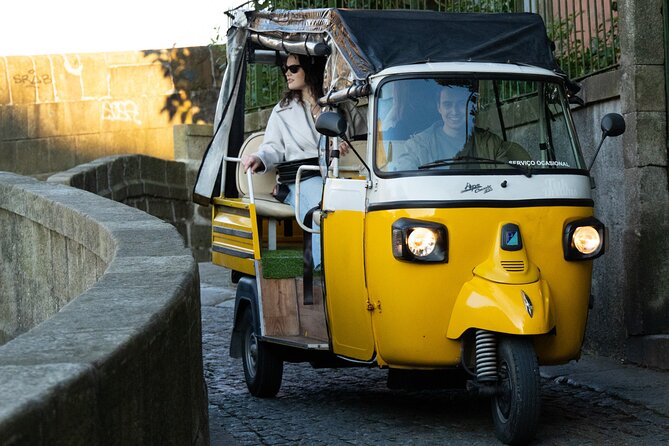
Porto has multiple ways to see it, and this tour uses them in a smart order.
Around the Cordoaria Garden area, you get a chance for short walking views rather than a long hike. Cordoaria Garden is a 19th-century green space with century-old trees and sculptures, including The Boys by Juan Muñoz. It’s also near sights like Clérigos Tower and the Portuguese Photography Center, which helps you understand why this area is a magnet for visitors.
Then there’s a church pairing: Church of Carmo and Igreja dos Carmelitas. Church of Carmo is 18th-century Baroque-Rococo and is known for a large tile panel on its side façade. Admission for this specific church is not included. Right next to it is Igreja dos Carmelitas, built in the 17th century in a Baroque style, with a richly decorated interior and gilded woodwork. For this one, admission is included.
After that, you reach Clérigos Tower, one of Porto’s most recognizable icons. The tower was built in the 18th century in Baroque style by Nicolau Nasoni and rises about 75 meters. You get panoramic views over Porto, which is a huge payoff in a short time.
Finally, you hit Jardins do Palácio de Cristal, part of a series of view stops. This area is tied to the old Crystal Palace concept and offers green space plus strong Douro river views. It’s a good place to slow down for a few minutes before you go back toward the city core.
São Bento’s azulejos and Sé Cathedral, ending with Porto’s center of gravity
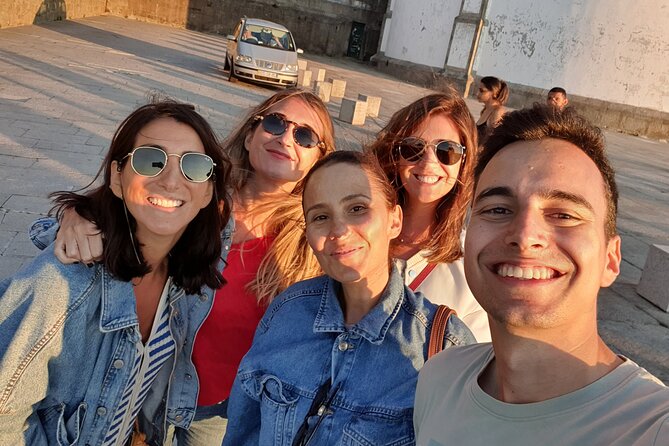
As the tour nears the end, you end up where Porto’s identity is on full display: art, trains, and ancient architecture.
São Bento Railway Station is the big one. The station opened in 1916 and is famous for Portuguese azulejos (painted ceramic tiles) covering the walls with historical and cultural scenes. Even if you are not planning to ride a train, this is a “stand here and look” moment, because the tile work tells stories across the walls like a moving timeline.
Then you finish with Porto Cathedral, also known as Sé do Porto. Built between the 12th and 13th centuries, it is predominantly Romanesque with some Gothic and Baroque influence from later renovations. It’s located in the heart of the historic center and offers a good view over the city and the Douro.
This ending is useful. It ties the day together by giving you a final anchor point in the oldest part of the city, after you’ve seen the bridges and river neighborhoods that show how Porto expanded.
Price and timing, and how to make the 90 minutes feel worth it
At $57.45 per person for about 1 hour 30 minutes, this is not the cheapest way to tour Porto. But private transportation plus a local guide is doing real work here. You are paying for two things you would otherwise struggle to buy on your own: coordination and viewpoint efficiency.
You also get value from the stop design. Many stops are listed as free to enter, and you’re not forced into expensive add-ons to enjoy the main sights. You do have one church where admission is not included, while another adjacent church’s admission is included, so it’s worth keeping an eye on that when you’re mentally budgeting.
Timing-wise, average bookings happen around 31 days in advance, which is a clue that this is a popular slot. If you’re traveling in a busy season or have a narrow window, I’d book early to protect your preferred day and guide style.
The biggest “value lever” is how you use the private format. If you want extra time on photographs, ask early. If you want more story, ask for it. The tour format is built for flexibility, and the strongest guide experiences in this style are usually the ones that respond to what you care about.
Should you book this private Porto tuk tuk tour?
If you want to get oriented quickly, see major bridges and river viewpoints, and keep your feet from turning into prunes on Porto’s hills, I think this is a smart booking.
I’d especially recommend it if:
- you have limited time in Porto and want a tight hit list,
- you want a guide to connect the dots between architecture and the city layout,
- you prefer not to spend the whole day climbing streets on foot.
I’d hesitate only if:
- you are traveling on a day likely to be rough weather, since the experience is designed for good conditions,
- you are extremely sensitive to vehicle comfort and need a very specific seat setup, since one past booking raised an issue and the provider later said they upgraded seats.
FAQ
How much does the Porto fun private tuk tuk tour cost?
It costs $57.45 per person.
How long is the tour?
The duration is about 1 hour 30 minutes.
Is this tour private?
Yes. It is a private tour, and only your group participates.
Where does the tour start, and does it end nearby?
It starts at São João National Theater, Praça da Batalha, 4000-102 Porto, Portugal, and it ends back at the meeting point.
What’s included, and what isn’t?
Included are private transportation and a local guide. Tips are optional and not included.
Do you need to pay entrance tickets during the tour?
Many listed stops have free admission. Church of Carmo is listed as admission ticket not included, while Igreja dos Carmelitas is listed as admission ticket included.
What happens if the weather is bad?
This experience requires good weather. If it’s canceled due to poor weather, you’ll be offered a different date or a full refund.
Latest reviews from Porto
- From Porto: Port Wine Sunset Rooftop Walking Tour★ 4.5 · 73 reviews
- Porto: 6 Bridges Cruise on a Traditional Rabelo Boat★ 4.1 · 73 reviews
- Porto Legends, the Underground Experience★ 4.0 · 73 reviews
- Porto: 6 bridges tour, Douro river with 4 Port Wine tasting★ 5.0 · 74 reviews
- World of Discoveries Entrance Ticket in Porto★ 4.0 · 74 reviews
- Fado Concert with Welcome Drink★ 5.0 · 75 reviews
- From Porto ↔ Lisbon with up to 4 stops : Aveiro, Nazaré, Óbidos★ 5.0 · 76 reviews
- Boat Trip to Régua Through the Douro Valley with Breakfast and Lunch★ 4.5 · 76 reviews
Tuk-Tuks, compared.
True 4Hour Private Tuk Tuk Tour: Discover Lisbon with a Local!
Read our review →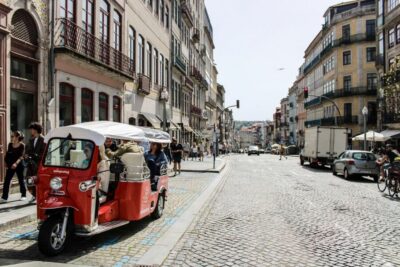
Guided Tour by Tuk-Tuk & Optional Douro River Cruise
Read our review →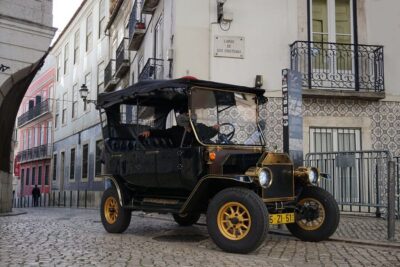
Private Guided Tuk-Tuk Tour with Hotel Pickup
Read our review →
Private Lisbon Sightseeing Tuk-Tuk Tour: Alfama, Belém & More
Read our review →
Lisbon Highlights: Private Tuk Tuk Tour Adventure Sightseeing
Read our review →
Discover Porto’s Highlights on a 2-Hour Private Electric Tuk Tuk
Read our review →
Welcome Lisbon Tour with Local Guide in Private Eco Tuk Tuk
Read our review →
Browse the lists this tour appears in