
Reviewed · WALKING TOURS
Lisbon: Walking Tour in the Center (Max 12 Participants)
Lisbon is most fun when you get the city’s rhythm on foot, and this route does a smart job of stringing neighborhoods together in a way that makes the hills feel logical instead of random. I love the Tagus River viewpoint in Alfama, and I also love how the walk spotlights Elevador de Santa Justa plus the dramatic Carmo Convent ruins. The main drawback is also the point, it’s a fair amount of walking and you’ll climb up and down several hills.
This is a small-group tour (max 12) with a live guide in German, so you get time for questions without the usual herd feeling. Guides you might encounter, like Pedro, Sara, and Melina, tend to keep the stories clear and entertaining, even when the weather is less than perfect.
Key Points Worth Knowing
- Small-group pacing (up to 12), so you can actually hear the guide and not just follow a dot on a map
- 3 hills covered in a way that connects viewpoints to real neighborhoods
- Icon mix: Elevador de Santa Justa, Carmo Convent ruins, and Tagus riverside views
- Alfama for the good angles, winding streets, and a classic overlook
- Liquor tasting included, a quick taste of Portuguese culture without turning the tour into a food crawl
- Ends in Praça do Comércio, right on the Tagus, so you finish with open space and easy photos
Entering Lisbon by Walking the City’s Layers
This tour is built for people who want more than a checklist of sights. You’re walking through the lower town, the center where daily life happens, then up toward viewpoints and old quarters where Lisbon feels older and more personal. By the time you reach Alfama, you’ll understand why locals talk about hills the way other cities talk about neighborhoods.
What makes it work well is the flow. You start in the busy center around Rossio, move through Baixa’s structured streets, then shift into Chiado and Bairro Alto where the city changes tempo. Finally you land in Alfama, where alleys tighten, viewpoints open up, and the Tagus does its classic show. You also get a couple of anchor stops that make the history easier to picture: Santa Justa Lift for Lisbon’s engineering ambitions, and Carmo Convent ruins for its survival story.
The tour runs about 3.5 hours in rain or shine, and that means you should plan for slippery pavement if storms roll in. It is not an all-flat stroll, so wear shoes you trust on hills. If your body hates stairs, you may want to think twice. This is specifically not suitable for wheelchair users or people with mobility impairments.
More Walking Tours in Lisbon
- Lisbon: History, Stories and Lifestyle Walking Tour
★ 4.8 · 10,902 reviews - Best of Lisbon Small-Group Guided Walking Tour
★ 5.0 · 4,869 reviews - Lisbon: Food and Wine Small Group Walking Tour
★ 4.9 · 4,082 reviews
Rossio Square to Baixa de Lisboa: Lisbon’s Lower Town Comes First
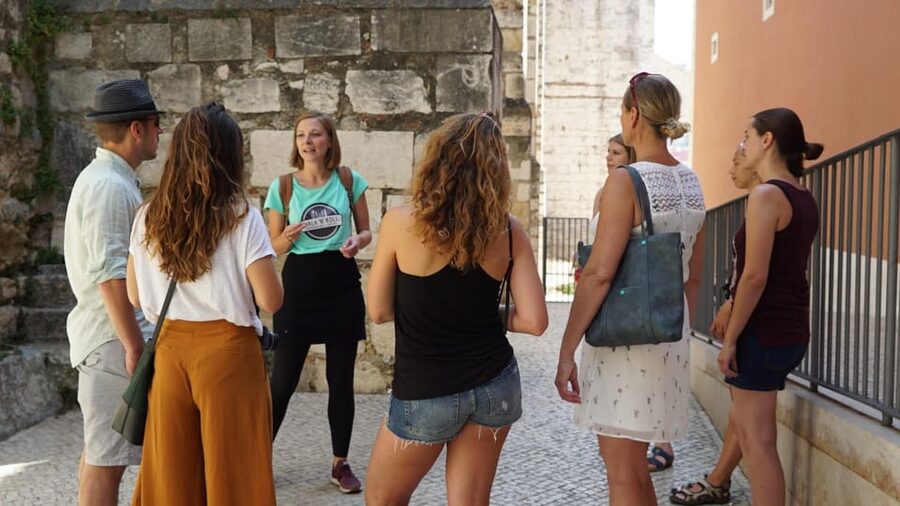
The walk begins at Rossio Square, at the North Fountain, between the National Theater and the Royal Statue. If you’re looking for your guide, they’re waiting at that fountain wearing a mint-colored WALK N ROLL t-shirt or carrying a mint-colored burlap bag. That detail matters more than you think, because Rossio can feel busy and signage can be confusing when you’re meeting at street level.
From there, you move into Baixa de Lisboa, the lower town. Baixa is where you get your bearings fast. Streets are more orderly, building lines are tighter, and it’s the part of Lisbon that feels designed for movement. The guide helps you see what you’re looking at, not just what’s famous.
Baixa also sets you up for what comes next. When you later see the vertical drama of Santa Justa Lift and the aftermath story of Carmo Convent ruins, you’ll notice how Lisbon balances practicality in the lower town with personality up above.
Practical note: this is where you’ll feel the “walking tour” rhythm settle in. It’s not rushed, but it is continuous. I’d treat this as the time to sip water if you’re likely to need it later, because you’ll spend more energy on the hills afterward.
Santa Justa Lift and Carmo Convent Ruins: Engineering Meets a Scar
One of the strongest parts of the route is that it doesn’t just point at Santa Justa Lift. You actually get the context that makes it more than a pretty structure.
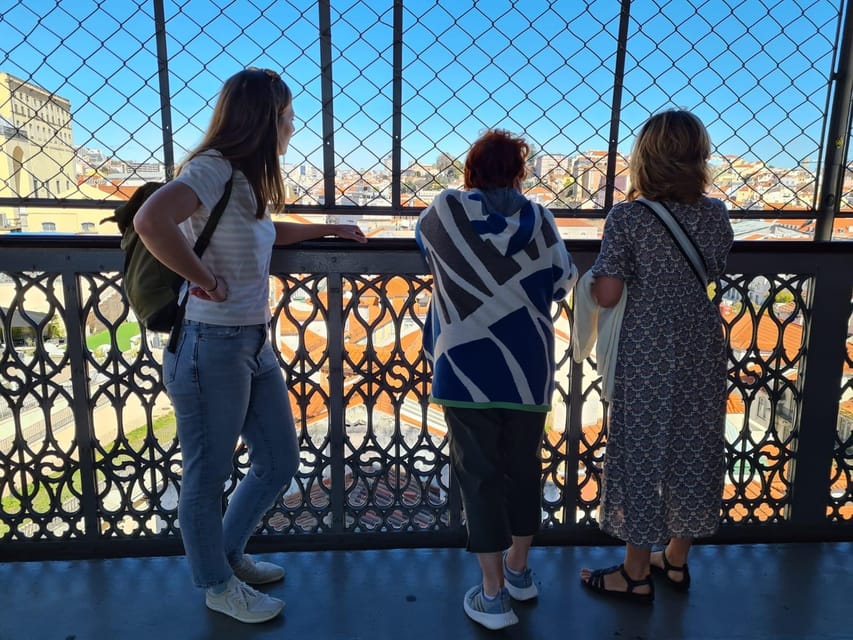
Seeing Elevador de Santa Justa from the walking perspective is especially helpful, because the lift connects the lower town with higher ground in a very Lisbon way. It signals ambition, but it also signals the constant push and pull of geography. You’re reminded that the city isn’t flat, it’s built on decisions.
Then the tour heads toward Carmo Convent and the ruins of the convent complex. The ruins are visually striking, but the real value is how your guide frames them in Lisbon’s story. You start to understand that not everything historic here is “perfectly preserved.” Some of it is scar tissue, and that’s part of Lisbon’s emotional texture.
This is also a good spot to pause and look around. Even if you don’t go inside, you can notice how space, arches, and surrounding streets shape the way light moves through the area. It makes the city feel three-dimensional instead of like postcards stacked in a folder.
If you’re sensitive to crowds, note that this central section can be busy. A small-group tour helps here because your guide can steer you to the best angles without you having to fight everyone else for a moment.
Chiado and Praça Luís de Camões: Poets, Shops, and Street Life

After the lower-town to lift to ruins sequence, the tour shifts into the Chiado quarter. Chiado is a noticeable change in feel. The streets feel more intimate than the broad Baixa avenues, and the vibe is more of a strolling-and-people-watching neighborhood.
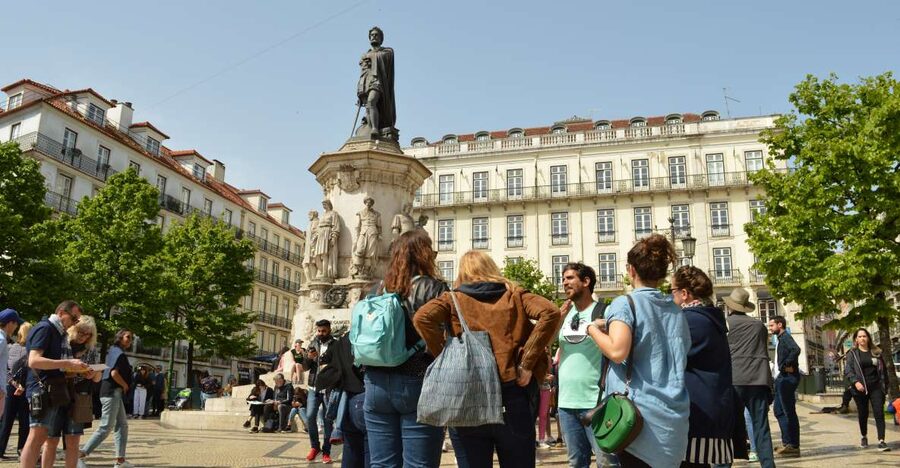
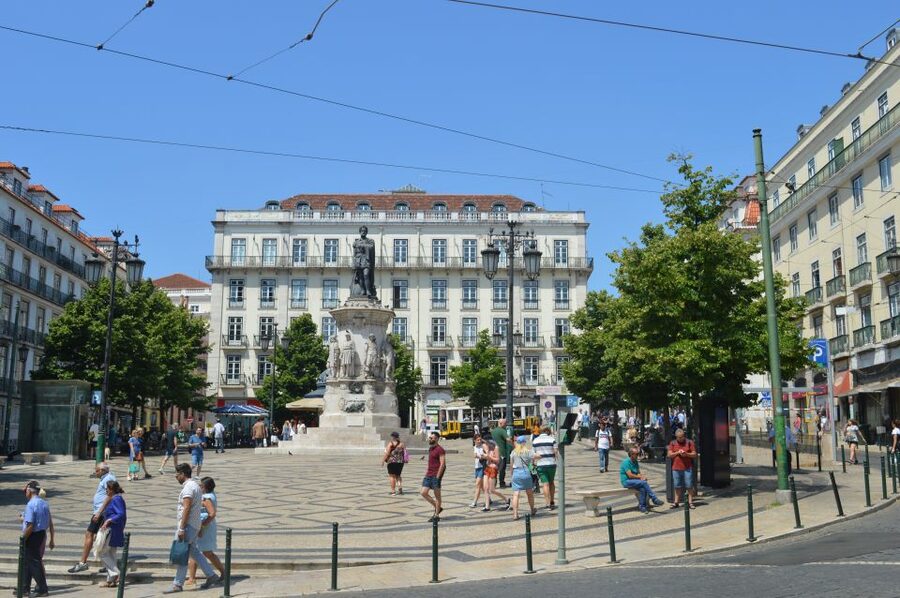
You’ll pass by Praça Luís de Camões, which helps place the tour in a cultural map of Lisbon. Camões is one of those names that keeps popping up when you learn Portuguese history and literature, and the guide uses that association to connect what you’re seeing to larger themes.
Chiado is also a good time to reset your eyes. If you’ve been looking at major structures and major viewpoints, Chiado gives you smaller, lived-in moments. Lisbon’s center isn’t only grand architecture. It’s also daily life, conversations, storefront signs, and the way people move through the streets.
A minor consideration: the tour keeps a steady pace, so if you want lots of independent wandering, you’ll probably want to save extra time later after the tour ends. Think of this walk as your “get oriented and learn the why” phase.
Another Lisbon day, differently spent:
- Lisbon City Center Tour – The Unmissable Lisbon
★ 5.0 · 22,234 reviews - Lisbon: Sintra, Pena, Regaleira, Cabo da Roca & Cascais
★ 4.7 · 19,656 reviews - Lisbon Card: 24, 48, or 72-Hour Pass
★ 4.5 · 17,944 reviews - Lisbon: Jerónimos Monastery Entrance Ticket
★ 4.1 · 14,164 reviews
Bairro Alto and the Miradouro Rhythm: Nightlife Quarter with Real Views
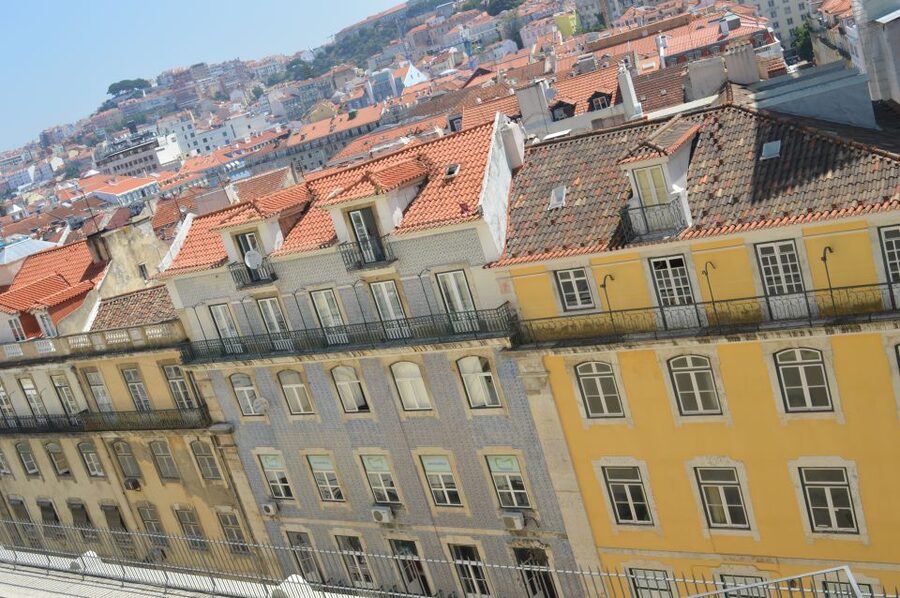
Next up is Bairro Alto, a district that carries Lisbon’s nightlife reputation. Even during the day, you can feel that energy in the way streets slope and how the neighborhood is layered like a stack of rooms. Your guide steers you through residential lanes and street corners, so it doesn’t feel like you’re just passing through a party district. You’re learning how the neighborhood works and why locals like spending time up here.
Then the tour takes you to Miradouro de São Pedro de Alcântara. This is one of those viewpoints where the city opens up all at once, and it’s one reason the walk is worth the uphill effort. You get a classic vantage point, with the kind of sightlines that make Lisbon’s river setting click.
There’s also a scheduled break here, about 30 minutes. Use it well. This is the moment to refill your water, check your photos, and decide whether you want to keep an eye on the light for a second round later. If you’re traveling in cooler months, take advantage of the break to warm up. If it’s summer, find a spot with at least a little shade.
Alfama and Tagus Views: Tiles, Alleys, and the Best Story-Backdrop
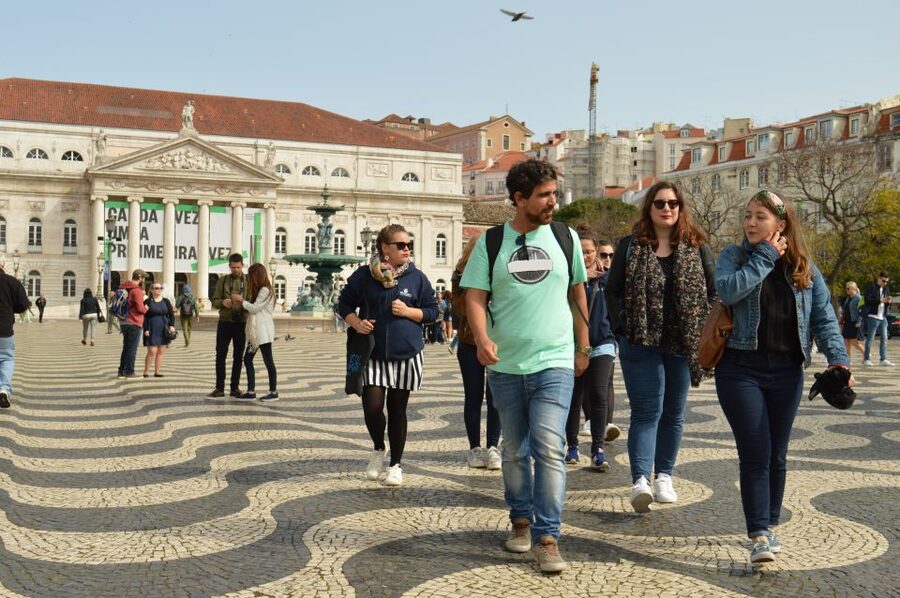
The last big neighborhood shift is Alfama, and it’s where Lisbon feels most distinct. Alfama’s streets are narrower, more winding, and less concerned with neat geometry. That’s the point. Here, the city feels like it grew the way stories grow, one twist at a time.
This part of the tour is built around the Tagus River viewpoint. When you finally look out over the water, it ties together everything you’ve seen so far. Lisbon’s hills make sense. The river becomes more than a background, it becomes the stage.
You also get the “Lisbon tiles” moment, the famous azulejo look that covers walls and frames street corners. You’ll notice the patterns more clearly after your guide points out what to watch for. Tiles aren’t just decoration. They’re part of how Lisbon communicates identity, memory, and style at street level.
One of the subtle benefits of reaching Alfama at the right time is that you’re already warmed up to the city. Early on, you’re orienting. Later, you’re absorbing. If you rush Alfama on your own without context, you can miss the deeper texture.
Another practical note: Alfama can be slippery and uneven, especially if it’s rained. Stick to your most stable shoes and take your time on corners. You’ll get better photos that way anyway.
Ending at Praça do Comércio and Arco de Rua Augusta: The River Finale
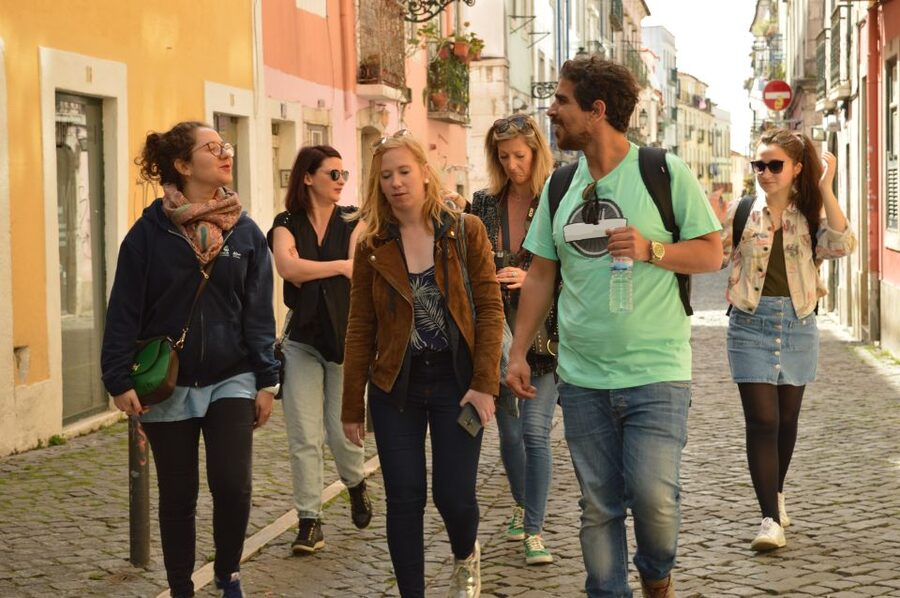
You end near the river at Praça do Comércio, finishing by the Arco de Rua Augusta. This finale is more than a sightseeing stop. It’s a mental reset from the tight alley feeling of Alfama. You step into a wide riverside space, and the city looks like a city again.
This ending point also gives you an easy option for the rest of your day. You’re right by the Tagus, so you can continue with your own plan, whether that means walking along the banks for a slower look or hopping on a nearby route to get somewhere else.
Before you reach the end, there’s also a short stretch on Rua Augusta that includes a brief food tasting moment. The tour does not turn into a full meal plan, so come ready to handle your own food needs later. But that quick tasting helps the day feel less like a museum circuit and more like a real local day.
Liquor Tasting and the Value of Small Moments
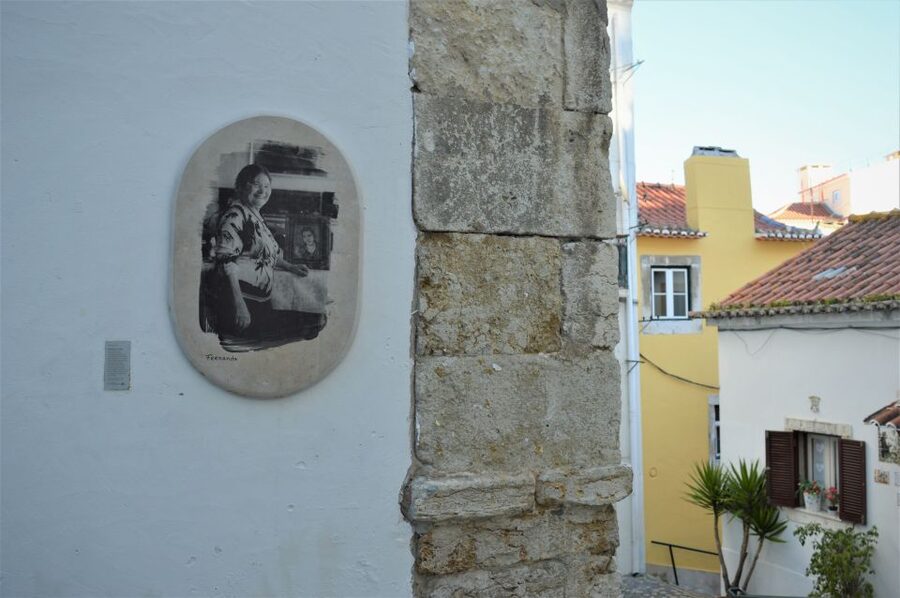
One inclusion that’s easy to overlook until you’re doing the tour is the liquor tasting. It’s not a huge time sink, but it adds personality and gives the day a cultural rhythm beyond architecture and viewpoints.
From a value perspective, that matters. You’re paying for a guided walk that covers multiple neighborhoods, includes a tasting, and still stays compact at about 3.5 hours. For Lisbon, where you can spend money quickly on lots of separate paid sights, this kind of guided route can feel efficient, especially if you want history and context without spending your whole day hopping between attractions.
Price is $47 per person for this group experience with a max of 12. I see the value here mainly in three places: (1) the guide’s storytelling across several districts, (2) the way viewpoints and ruins are timed into the walk so they land emotionally, and (3) the included tasting that gives you something to remember that isn’t just a photo.
Pace, Comfort, and Who Should Book
This tour is best if you like a guided walking format and you’re okay with hills. The route covers 3 of Lisbon’s 8 hills, and the itinerary includes uphill and downhill sections. Even if you’re reasonably fit, plan for legs that feel it by the end.
Bring comfortable shoes, water, and sunscreen. If you’re traveling in rainy season, treat that as a clue to pack a light rain layer and expect wet cobblestones.
Because the guide language is German, this is a strong fit if you’re comfortable with German. If you’re not, you might find it harder to follow the history pieces, which are a big part of the value.
It is also a good fit for first-time Lisbon visitors who want a “center-to-old-quarter” orientation. If you already know Lisbon well, you may still enjoy it for the viewpoints and ruins, but you’ll likely want to add extra independent time for neighborhoods that you love most.
If you want more flexibility or you’re traveling with people who need a calmer pace, you can book a private tour option. The route and concept stay the same, but private groups usually feel less crowded and easier to manage.
Should You Book This Lisbon Center Walking Tour?
I’d book this if you want a high-signal overview of Lisbon’s center without spending half the day on transport. The blend is strong: Baixa structure, Santa Justa Lift and Carmo Convent ruins, Chiado culture, Bairro Alto energy, and then Alfama plus the Tagus viewpoint finale.
Skip it if you need step-free access, because this is not built for wheelchair users or limited mobility. Also skip it if German is a dealbreaker for you, since the guide is live in German and a big chunk of the experience is the history and cultural context.
If you’re the kind of traveler who likes to walk a city first, then plan the rest with sharper instincts, this route is a smart place to start.
FAQ
How long is the Lisbon walking tour?
The tour lasts about 3.5 hours.
Where does the tour start and where does it finish?
It starts at Rossio Square, North Fountain, and it finishes at Praça do Comércio.
What is the maximum group size?
The group experience is capped at a maximum of 12 participants.
What language is the live guide speaking?
The live tour guide speaks German.
What is included in the price?
The tour includes a tour guide and a liquor tasting.
Is there food included?
Food is not included. There is a short food tasting stop of about 5 minutes during the walk.
Does the tour run in bad weather?
Yes, the tour takes place rain or shine.
What should I bring and what is not allowed?
Bring comfortable shoes, sunscreen, and water. Baby strollers are not allowed, and luggage or large bags are not allowed.
Latest reviews from Lisbon
- Private Tour: Sintra, Cabo da Roca and Cascais Day Trip from Lisbon★ 5.0 · 225 reviews
- Lisbon: Food Tasting Tour by Tuk Tuk with 2 Stops★ 4.8 · 226 reviews
- Berlenga Island Small-Group Day Trip from Lisbon★ 4.5 · 227 reviews
- Sintra Deluxe from Lisbon with Pena Palace ticket★ 4.0 · 228 reviews
- Fátima, Nazaré, Óbidos and S. Martinho do Porto Small-Group Tour from Lisbon★ 5.0 · 229 reviews
- Évora and Monsaraz with Regional Wine Tasting from Lisbon★ 4.5 · 229 reviews
- Expert Plus Lisbon Tour with Local Guide in Private Eco Tuk Tuk★ 5.0 · 230 reviews
- Historic Walking Tour Through Lisbon’s Oldest Neighborhood★ 5.0 · 233 reviews
Walking Tours, compared.


Best of Lisbon Small-Group Guided Walking Tour
Read our review →

Porto Walking Tour, Lello Bookshop, River Cruise and Cable Car
Read our review →

Best of Lisbon Walking Tour: Rossio, Chiado & Alfama
Read our review →
Experience Porto’s Charm: 3-Hour Guided Walking Tour
Read our review →
Enjoy a Guided Levada Walk in the Rabaçal Valley
Read our review →Browse the lists this tour appears in