
Reviewed · WALKING TOURS
Best of Porto Private Walking Tour
Porto is at its best when you connect the dots, and this private walking tour does it for you in about 3 hours. I like the private guide aspect, so you can ask questions as you go, and I like that it hits big name landmarks without turning the whole day into a hop-on hop-off commute. One possible drawback is simple: it is still a walking route, so if you want lots of long breaks, plan for it.
You start near Fonte dos Leões and end in Jardim do Morro in Vila Nova de Gaia, with a view across the Douro that makes a great bookend to your first day in town. The tour is offered in English, and it is designed so most people can participate, as long as your legs are game for steady city walking.
Key highlights worth planning around
- Private pacing: only your group, so you move at a comfortable speed and can steer the conversation toward your interests
- Porto UNESCO focus: you see why Porto is treated as one heritage story, not a random list of sights
- Iconic architecture stops: Clerigos Tower area, Igreja do Carmo tile work, and São Bento station tiles
- Discoveries era storyline: Henry the Navigator ties Porto to Portugal’s Age of Discoveries
- Douro payoff at the end: you finish in Gaia with one of the best viewpoints over the river
- Free entry at key stops: some locations on the route list free admission time on the visit
Why this Porto highlights walk is a smart first move
If you have only a day or two in Porto, the hardest part is deciding what matters most. This tour is built for that moment, because it strings together the city’s headline landmarks, then explains how they connect into a bigger story of trade, faith, and learning.
A big plus for me is the feel of a private tour. In a larger group, you often end up half listening while you shuffle along. Here, your guide can slow down for the parts you care about, like architecture details or how Porto’s riverside wealth shaped what you see today. If your group includes kids, you also benefit from the guide adjusting the pace and keeping things fun, something I noticed from multiple guide-led experiences with Monica.
The other thing I like is the timing. Three hours is long enough to feel like you got oriented, but short enough that you can still plan the rest of your trip with confidence. You come away knowing what to return to on your own, instead of guessing.
More Walking Tours in Porto
- Porto Walking Tour, Lello Bookshop, River Cruise and Cable Car
★ 5.0 · 3,354 reviews - Experience Porto’s Charm: 3-Hour Guided Walking Tour
★ 5.0 · 2,432 reviews - Porto: 3-Hour Guided City Highlights Walking Tour
★ 4.8 · 2,050 reviews
Getting from Fonte dos Leões to Jardim do Morro (and why the finish matters)
The route starts at Fonte dos Leões in Porto, right in the classic old-town orbit. That is a good choice, because you begin near places that help you understand how the city is laid out, before you get pulled in different directions later for day trips, river cruises, or port tastings.
You end at Jardim do Morro in Vila Nova de Gaia. That end point is not random. It is chosen because it gives you a big final view over the Douro, which helps your brain link the whole experience to the river that shaped Porto’s economy and identity. Even if you are not a scenery person, the viewpoint makes the walking feel worth it.
Another practical advantage is that the tour is near public transportation. That means if you are staying somewhere outside the historic center, you can still get to the meeting point without turning the start time into a logistics headache.
Stop-by-stop: Porto City Hall, Clerigos Tower, book culture, and the fountains
Your first leg is focused on getting the “wow, that is Porto” moments in early.
Porto City Hall
You begin with Porto City Hall, a charming stop that sets the tone. The visit is short, but it works as a warm-up. You see a building that feels like it belongs in a postcard, and your guide uses it to start explaining the city’s identity through civic life and architecture.
This is also a nice mental trick: start with something you can point to, then expand outward. Instead of wandering hoping you spot the important stuff, you begin with a landmark that anchors your sense of direction.
Another Porto day, differently spent:
- The Unvanquished Tour in Porto City Center
★ 5.0 · 26,497 reviews - From Porto: Douro Valley w/ Boat Tour, Wine Tasting & Lunch
★ 4.7 · 19,061 reviews - Complete Douro Valley Wine Tour with Lunch, Wine Tastings and River Cruise
★ 5.0 · 12,920 reviews - Porto: Six Bridges Cruise
★ 4.2 · 11,680 reviews
Clerigos Tower, the signature silhouette
Next comes the most important symbol of Porto: Clerigos Tower. This is the kind of place you notice from other streets and viewpoints, so being there early helps you understand why it keeps popping up in photos.
In plain terms, Clerigos Tower gives you a vertical reference point. When later you look across rooftops or study the skyline, you will have a mental marker for where you are. That alone is worth the stop, even if you do not have the urge to climb.
A world-famous bookshop moment
Then you reach one of the most famous and beautiful bookshops in the world. Even if you just peek inside and thumb through a page or two, it changes the mood. Porto has strong religious and civic architecture, but this stop reminds you it also has a strong culture of learning and books.
If you like details, this is the part where a good guide can point out what makes it special beyond the Instagram shot. You might find the story of why books belong at the heart of a city that prized knowledge during the Discoveries era.
The famous fountain
Porto’s most famous fountain gets its own mention too. Short stops like this are not filler. They help you understand the city’s public spaces, where people gather, pause, and meet. They also help you remember Porto as more than monuments. It is street life and small moments, not just big buildings.
A top university in the north of Portugal
You also see one of Porto’s most famous universities in the north or Portugal. This matters because it reinforces that the city is not only about trade and shipping. Education and ideas have played a big role too, and your guide connects that to broader Portuguese history.
A quick note on admissions
Some stops on the route list free admission tickets with the time you are given there, which makes the pacing easier. You can spend energy looking around, not worrying about entry fees at each moment.
Igreja do Carmo: the tile work that earns its reputation
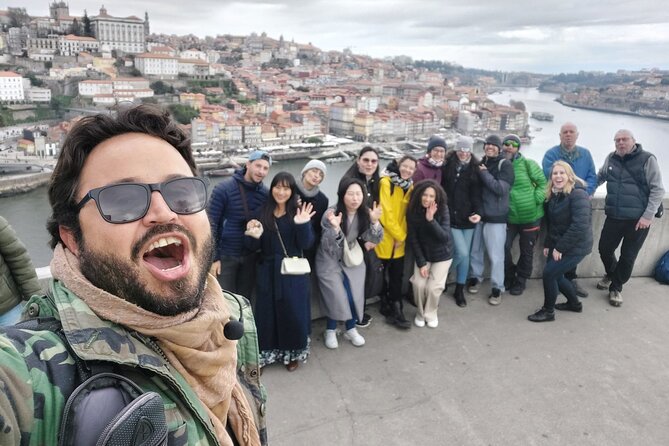
Next you head to Igreja do Carmo, and the big reason to care is the incredible tile work on the façade. This is one of those places where the art is not just decoration. It is a wall of storytelling, and your guide can help you read it.
The visit is brief, about 10 minutes, but that is the right amount for most people on a walking route. You do not need an hour to appreciate the design. You need a guide to point out what you would likely miss if you walked past on your own, like where your eyes should go first and how the façade fits the church’s identity.
I also like that this stop breaks up the rhythm. After tower and civic energy, you switch into a calmer, more artistic moment. It makes the later “heavier history” stops easier to absorb.
São Bento Railway Station: tiles, arrival vibes, and why it is worth the detour
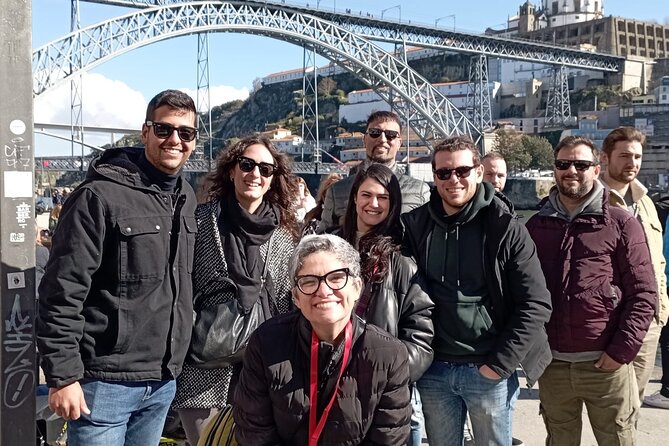
São Bento Railway Station is often on lists for a reason. It is considered one of the most beautiful stations in the world, and the real highlight is the tile work.
You get about 10 minutes here, which is enough time to step in, look up, and actually take in the scenes. The key is to not rush. Even if you are not a museum person, you can see the value immediately because the tiles are designed for attention from a close viewing distance.
This is also a clever stop for orientation. Stations tell you where cities move. Porto’s station becomes a doorway to understanding how people and ideas moved through the region, and your guide usually links that to the city’s broader history.
If you are wondering whether 10 minutes is too short, I would say it is perfect for this tour format. On your own, you can always return if you want more time. Here, your goal is to leave with a clear mental picture, not to spend your whole trip staring at walls.
Porto’s oldest church feeling, a landmark bridge, and the Stock Exchange story
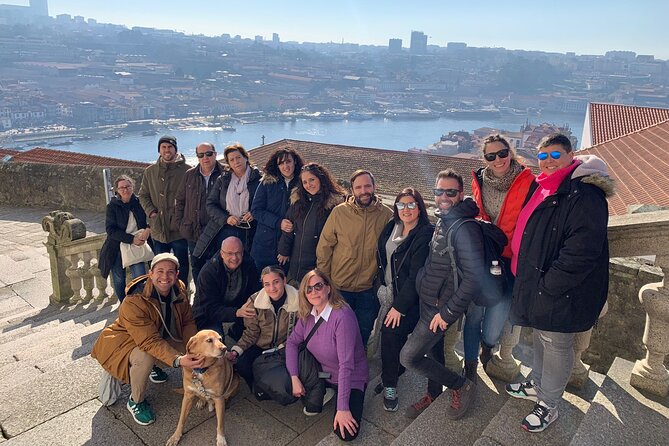
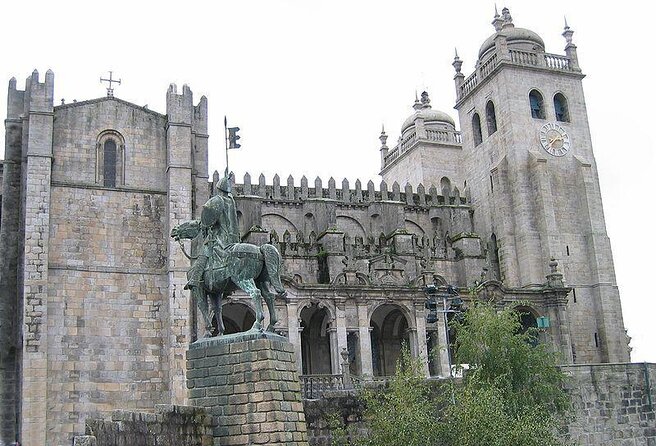
After the station, the route shifts into classic old-Porto landmarks, including the most important church in Porto and one of the oldest ones. Even without lingering long, this kind of stop helps you understand why Porto’s architecture feels layered. The city did not build in one style and then stop. It kept adding, adapting, and redefining itself.
A landmark bridge built by an Eiffel disciple
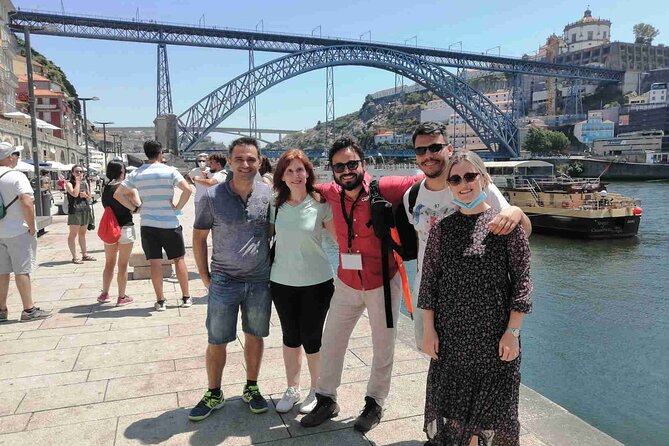
Then you see a bridge built by one of Eiffel’s disciples. That phrase is useful because it tells you the design is part engineering, part European design culture, not just local tradition. In the field of architecture, steel bridges represent a particular confidence in modernity, and your guide uses the story to connect Porto to the wider world.
This is one of those moments where a guide helps you look past the obvious. The bridge is pretty, but you are meant to understand why it became such a remarkable landmark, and what it signaled for movement and river crossing.
The former Stock Exchange
You also stop at the former Stock Exchange. This is the economic heart behind the views you came for. Porto’s prosperity was not magic, it was organized trade, ships, merchants, and finance.
If you like history with a practical angle, this stop delivers. You can almost feel how the city’s wealth needed a physical place to conduct business, then you look around and see how the built environment reflects that.
Henry the Navigator, the Discoveries connection
One of the most memorable elements of this tour is the birthplace of Henry the Navigator, the father of the Discoveries. Even if you learned about the Discoveries in school, this stop brings it down to geography. You see how Porto fits into the story of exploration and maritime ambition.
This is where the tour starts making sense as a timeline. Clerigos Tower and churches represent faith and civic life, while the bridge and Stock Exchange reflect the city’s movement and commerce. Henry the Navigator provides the link to the Age of Discoveries, so the whole walk feels like more than a checklist of sights.
UNESCO Porto: why the oldest riverside area makes the route click
Your last meaningful storyline is Porto’s oldest area, named an UNESCO Heritage Site in 1996. You are not just passing through charming streets. You are walking through a place that was recognized for how its urban fabric tells the story of Porto itself.
This is the part that turns “I saw buildings” into “I understand the city.” Your guide can tie together what you saw earlier, like why towers matter in the skyline, why churches matter in the cultural identity, and why the river remains the gravitational center.
Also, finishing in Gaia after this UNESCO-focused segment gives you a smooth sense of closure. You get the history first, then the view, which makes it feel complete.
Guides can make this tour feel personal, and that shows in the reviews
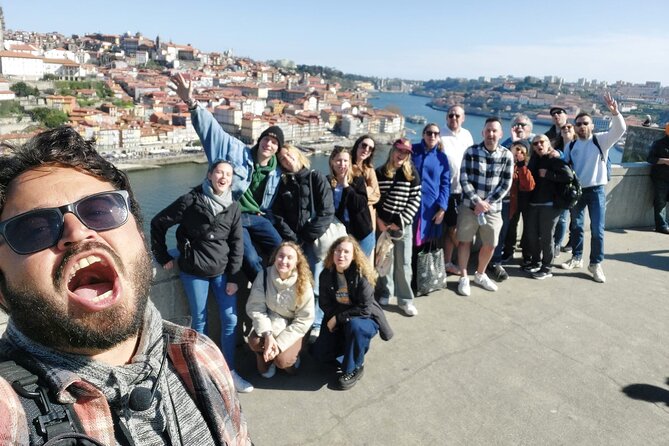
What truly separates a private walking tour from a self-guided stroll is the guide. Here, the name comes through in the glowing feedback.
I kept noticing how guides like Jorge and Gianfranco were praised for fun, engaging storytelling, with clear city context that helped people feel ready to explore the rest of Porto afterward. Guides like Caoi were highlighted for personality and strong history and city context, which is exactly what you want when you are trying to learn fast without feeling lectured.
Monica appears again and again in the positive feedback. People highlighted how she kept the tour light for kids, even with rain interrupting plans. That matters because Porto weather can change quickly, and you do not want your first day derailed by clouds. Monica was also praised for being easy to chat with and for adding practical extras after the tour, like sending a list of places to go and suggestions for where to eat.
Artur also stood out in one account for energy and fast-moving conversation, mixing Portuguese and Brazilian terms when he got excited. That kind of lively approach can be great if you like guides who bring the city to life rather than reading off facts.
Bottom line: you are paying for a person who knows how to explain Porto at walking speed.
Price and value: what $84.48 buys you in the real world
At $84.48 per person for about 3 hours, this tour sits in the midrange for a private experience in a top European city. Here is what you should compare it against.
First, you are not just getting someone to lead you from place to place. You are getting help deciding what is important, and why. A good portion of the route hits the major visual icons quickly, then adds context so you can remember it later.
Second, some stops include free admission for the time you are there, which helps you avoid surprise add-ons during the walking route. Third, the private setup means you are less likely to waste time waiting for everyone to catch up or standing around while someone else decides whether they want to keep moving.
There are group discounts too. If you have friends or family who can match your schedule, you may be able to reduce the per-person cost, which is one of the best ways to make private touring feel like a smarter deal.
One practical note: this kind of tour is popular, so booking about two months ahead is typical. If you are traveling in peak season or on a tight itinerary, I would not wait.
How to get the most out of your 3-hour walk
To enjoy this tour fully, I recommend you treat it as a first-day map and a history primer, not as a museum visit.
Wear shoes you trust. You will be moving between multiple parts of the historic center and ending with viewpoint stairs or uneven ground near Gaia.
If you travel with kids, ask your guide to keep the pacing light. Based on past experiences, the guides who do well with families actively adjust the tour so it feels like a fun story, not a history class.
Bring your curiosity. When you get a good guide, you will learn more than dates. You will learn what to notice next time you pass the same building, like why the tower is a skyline reference or how the tile art functions as a visual narrative.
If the weather turns, stay flexible. One of the recurring themes in the feedback is that guides kept things moving even when rain threatened the plans. A private guide has more freedom to adapt than a mass tour.
Should you book the Best of Porto Private Walking Tour?
Book it if you want a smart first-day orientation in Porto, with a private guide who can explain the big landmarks and connect them to Portuguese history. It is a great fit for couples, small families, and anyone who gets annoyed by huge groups and wants a paced route.
Skip it only if you hate walking or you need long sitting breaks, because this is still a concentrated 3-hour stroll across key sights. Also, if the forecast looks shaky, plan to go with the tour’s weather requirement approach.
If you do book it, you can also nudge your decision by guide style. People praised Jorge and Gianfranco for fun and clarity, Monica for handling kids and rainy moments while still keeping the tour memorable, Caoi for personality and strong history context, and Artur for energetic storytelling. In other words, you are not just choosing a route, you are choosing how Porto feels while you learn it.
FAQ
How long is the Porto private walking tour?
It runs for about 3 hours.
What is the price per person?
The price is $84.48 per person.
Is the tour private?
Yes. It is a private tour or activity, so only your group will participate.
What language is the tour offered in?
The tour is offered in English.
Where does the tour start and end?
It starts at Fonte dos Leões (Praça de Gomes Teixeira 10, 4050-161 Porto) and ends at Jardim do Morro (4430-210 Vila Nova de Gaia).
Are there any entry fees at the stops?
Some stops on the route list free admission tickets, including Porto City Hall, Igreja do Carmo, and São Bento Railway Station.
What happens if the weather is bad?
This experience requires good weather. If it is canceled due to poor weather, you will be offered a different date or a full refund.
Latest reviews from Porto
- From Porto: Port Wine Sunset Rooftop Walking Tour★ 4.5 · 73 reviews
- Porto Legends, the Underground Experience★ 4.0 · 73 reviews
- Porto: 6 Bridges Cruise on a Traditional Rabelo Boat★ 4.1 · 73 reviews
- Porto: 6 bridges tour, Douro river with 4 Port Wine tasting★ 5.0 · 74 reviews
- World of Discoveries Entrance Ticket in Porto★ 4.0 · 74 reviews
- Fado Concert with Welcome Drink★ 5.0 · 75 reviews
- From Porto ↔ Lisbon with up to 4 stops : Aveiro, Nazaré, Óbidos★ 5.0 · 76 reviews
- Boat Trip to Régua Through the Douro Valley with Breakfast and Lunch★ 4.5 · 76 reviews
Walking Tours, compared.
Best of Lisbon Small-Group Guided Walking Tour
Read our review →
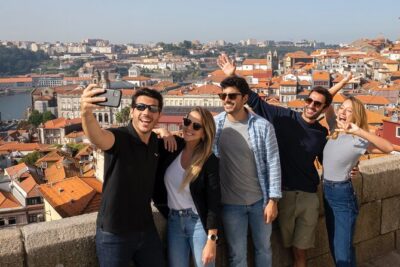
Porto Walking Tour, Lello Bookshop, River Cruise and Cable Car
Read our review →
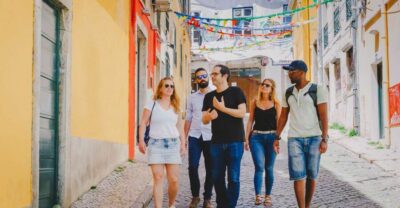
Best of Lisbon Walking Tour: Rossio, Chiado & Alfama
Read our review →
Experience Porto’s Charm: 3-Hour Guided Walking Tour
Read our review →
Enjoy a Guided Levada Walk in the Rabaçal Valley
Read our review →Browse the lists this tour appears in